
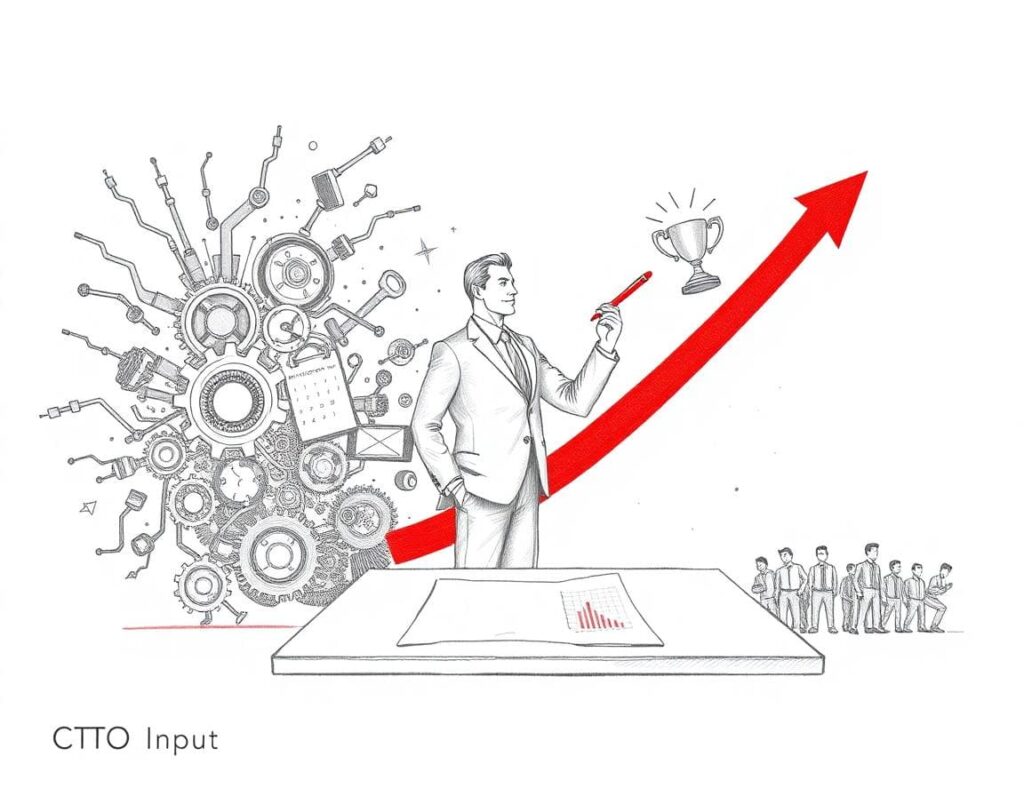
Modern business leaders are confronted with a defining challenge as a new year approaches. Technology is evolving at an unprecedented pace, making it essential not just to keep up, but to actively drive growth and outperform competitors.
This guide is designed to equip executives with a practical framework for business-driven technology planning. Every decision you make should connect technology investments directly to organizational goals, maximizing value at every step.
Inside, you will discover how to align business objectives with technology strategy, follow a proven planning process, anticipate the future’s key trends, manage risk, and learn from real-world success stories. Take control of your technology future and secure your competitive advantage.
The Imperative for Business-Driven Technology Planning Today
This year organizations will encounter a rapidly shifting digital landscape that demands more than incremental change. The convergence of accelerated innovation cycles, disruptive market entrants, and heightened customer expectations means that traditional approaches to technology are no longer sufficient. Leaders must recognize that business-driven technology planning is not just a competitive advantage, but a necessity for sustained growth.
The Digital Turning Point
Technology and business are becoming inseparable. The pace of change is intensifying, making it critical for organizations to align every technology investment with business objectives. As digital transformation accelerates, companies face new challenges: innovation occurs at breakneck speed, customer demands evolve overnight, and the threat of market disruption looms large.
Consider that 70% of digital initiatives fail due to misalignment between technology and business goals, according to Gartner. This stark reality highlights why business-driven technology planning must be a top priority for executives.
Key Business Challenges and Risks of Misalignment
Misaligned technology investments often result in lost revenue, operational inefficiencies, and diminished market relevance. When technology decisions are made in isolation from business strategy, organizations risk falling behind competitors who adapt quickly.
Common pitfalls include:
- Investing in tools that do not address core business needs
- Siloed decision-making between IT and business units
- Delayed responses to market changes due to rigid legacy systems
A recent Digital Transformation Survey Insights report reinforces the importance of aligning technology investments with organizational goals to maximize returns and minimize wasted resources.
The Benefits of Business-Driven Technology Planning
A business-driven technology planning approach delivers agility, resilience, and measurable value. By starting with clear business objectives, organizations can prioritize technology initiatives that support growth, efficiency, and customer satisfaction. This shift transforms IT from a traditional cost center into a strategic enabler of innovation.
Benefits include:
- Faster response to market opportunities
- Improved operational efficiency
- Enhanced customer experiences
- Data-driven decision-making at every level
Real-World Impact: Examples and Data
Leading companies are already realizing the benefits of business-driven technology planning. For example, retail chains leveraging AI for personalized customer experiences have reported significant increases in customer loyalty and sales. Similarly, manufacturers that align technology investments with supply chain resilience strategies have reduced costs and improved delivery times.
Statistics further underscore this trend. IDC projects that global digital transformation investments will reach $3.4 trillion this year, reflecting the scale and urgency for organizations to rethink their technology strategies.
The Essential Role of Leadership
C-suite engagement is critical for successful business-driven technology planning. When executives champion a unified vision, they foster cross-functional collaboration and ensure accountability at every stage. Leadership involvement helps break down silos, align budgets with strategic priorities, and drive cultural change across the organization.
In summary, this year marks a pivotal time for organizations to embrace business-driven technology planning. Those who act decisively will be positioned to outpace competitors, deliver exceptional value, and thrive in an era of constant disruption.
Step-by-Step Framework for Business-Driven Technology Planning
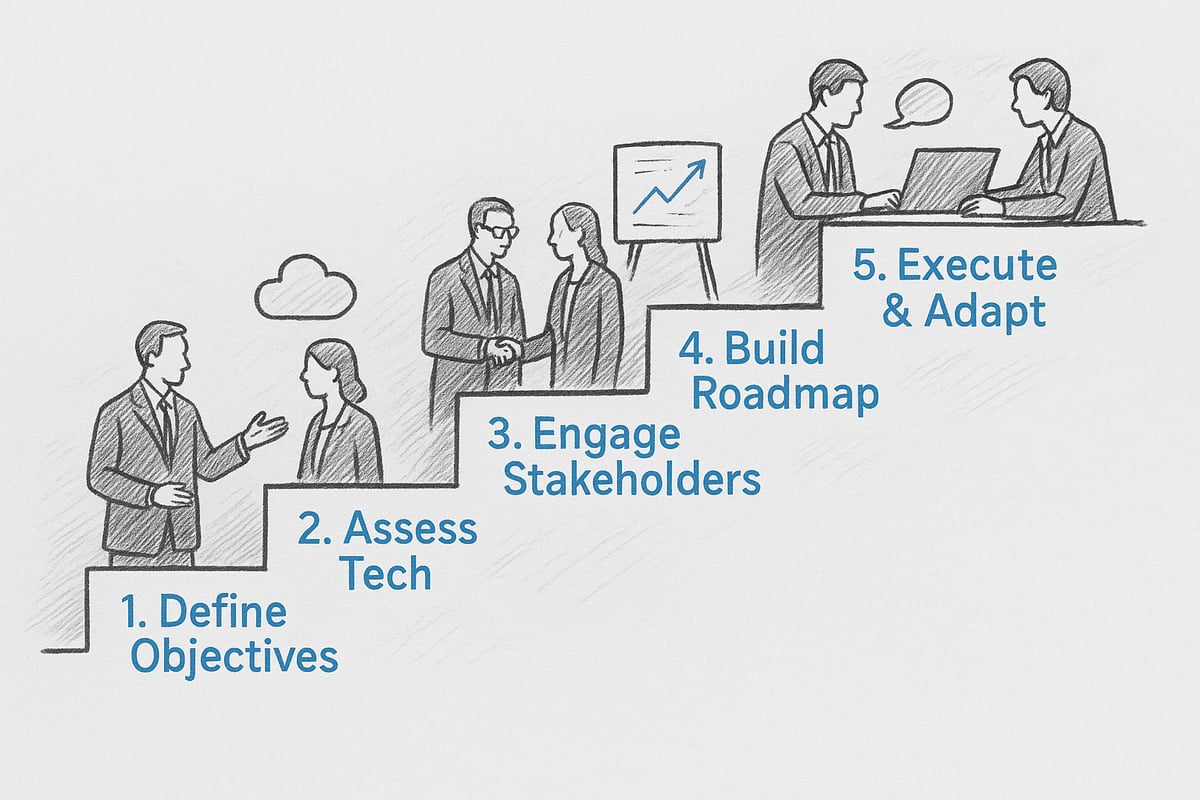
Modern organizations require a structured approach to business-driven technology planning for success. By following a clear, actionable framework, leaders can ensure technology initiatives directly support business goals. The steps below guide you through aligning technology with strategy, engaging stakeholders, and building a flexible roadmap for this year.
Step 1: Define Clear Business Objectives
The foundation of business-driven technology planning is a precise understanding of your organization’s goals. Rather than starting with tools or platforms, begin by asking, “What business outcomes do we need to achieve?” This approach ensures technology serves as a means to an end, not the end itself.
Use structured methods such as OKRs (Objectives and Key Results) or formal strategic planning to identify and prioritize your objectives. For example, a manufacturer aiming to improve supply chain resilience after the pandemic might set an OKR like:
Objective: Increase supply chain resilience by 30% in 12 months.
Key Results:
- Reduce supplier-related delays by 20%.
- Implement real-time inventory tracking in all warehouses.
Align stakeholders at every level around these outcomes. Hold workshops or leadership sessions to foster clarity and unity. Common pitfalls in business-driven technology planning include setting vague goals and not securing executive buy-in, which can derail progress.
- Avoid ambiguous objectives.
- Involve leadership early.
- Revisit goals regularly for continued relevance.
Having clear business objectives ensures every technology investment accelerates your organization’s vision.
Step 2: Assess Current Technology Landscape
A comprehensive audit is vital for business-driven technology planning. Map out your current systems, processes, and skillsets to form a baseline. This step uncovers gaps, redundancies, and risks that may hinder innovation or scalability.
Leverage established tools and frameworks such as SWOT analysis or capability maturity models to structure your assessment. For detailed guidance, refer to Technology Assessment Frameworks, which outlines methods for evaluating your technology environment.
Consider this real-world example: A financial firm discovered significant vulnerabilities in legacy systems during an audit, prompting a strategic overhaul. Legacy technology is a widespread barrier, with 60% of organizations citing it as a major obstacle to innovation, according to Forrester.
Action steps for this stage include:
- Inventory all hardware, software, and integrations.
- Identify outdated or redundant solutions.
- Evaluate current IT skillsets and capacity.
A thorough assessment ensures your business-driven technology planning is grounded in reality, not assumptions.
Step 3: Engage Stakeholders Across the Organization
Effective business-driven technology planning depends on broad, cross-functional engagement. Involve business units, IT teams, and even customers when feasible. Diverse perspectives surface needs and opportunities that might otherwise be missed.
Techniques for gathering input include:
- Cross-departmental workshops
- Surveys and interviews with key users
- Customer advisory boards
Building a culture of shared ownership increases accountability. For instance, a healthcare provider involving both clinical and administrative staff in selecting a new electronic health record (EHR) system achieved higher adoption rates and better outcomes.
According to PMI, projects with strong stakeholder engagement are 1.5 times more likely to succeed. Make stakeholder engagement a cornerstone of your business-driven technology planning by:
- Clearly defining roles and responsibilities
- Sharing progress updates regularly
- Encouraging open feedback and iteration
This collaborative culture ensures technology aligns with real business needs.
Step 4: Develop a Strategic Technology Roadmap
Translating business objectives into a concrete roadmap is the next step in business-driven technology planning. A strategic roadmap prioritizes initiatives, sets timelines, and defines measurable KPIs.
Use prioritization frameworks such as the impact vs. effort matrix to rank technology investments:
| Initiative | Impact | Effort | Priority |
|---|---|---|---|
| Omnichannel platform | High | Medium | Top |
| Legacy system upgrade | Medium | High | Medium |
| AI-powered analytics | High | Low | Top |
Map initiatives to quarterly or annual targets. For example, a retailer planning omnichannel improvements might set milestones for each quarter, tracking progress via dashboards.
Remember, a roadmap is a living document. Review and adjust it as business conditions evolve. Avoid treating it as static, as this can limit agility.
Key tips:
- Link every tech initiative to a business goal.
- Set clear, achievable milestones.
- Build in flexibility for change.
A dynamic roadmap keeps your business-driven technology planning on track and adaptable.
Step 5: Execute, Monitor, and Adapt
Implementation is where business-driven technology planning delivers real value. Adopt agile methodologies to break projects into manageable sprints, allowing for rapid iteration and feedback.
Change management is crucial. Prepare teams for transition, communicate benefits, and address resistance early. Use dashboards and analytics to monitor progress in real time, adjusting tactics as needed.
For example, a SaaS company pivoted product features within weeks in response to customer feedback, outpacing competitors. McKinsey reports agile projects achieve 30% faster time-to-market.
Lessons from failed implementations highlight the importance of flexibility:
- Build feedback loops into every project phase.
- Be willing to pivot as business needs evolve.
- Celebrate quick wins to maintain momentum.
Continuous monitoring and adaptation ensure business-driven technology planning remains aligned with organizational priorities and market shifts.
Key Technology Trends Shaping Business Planning in The Year To Come
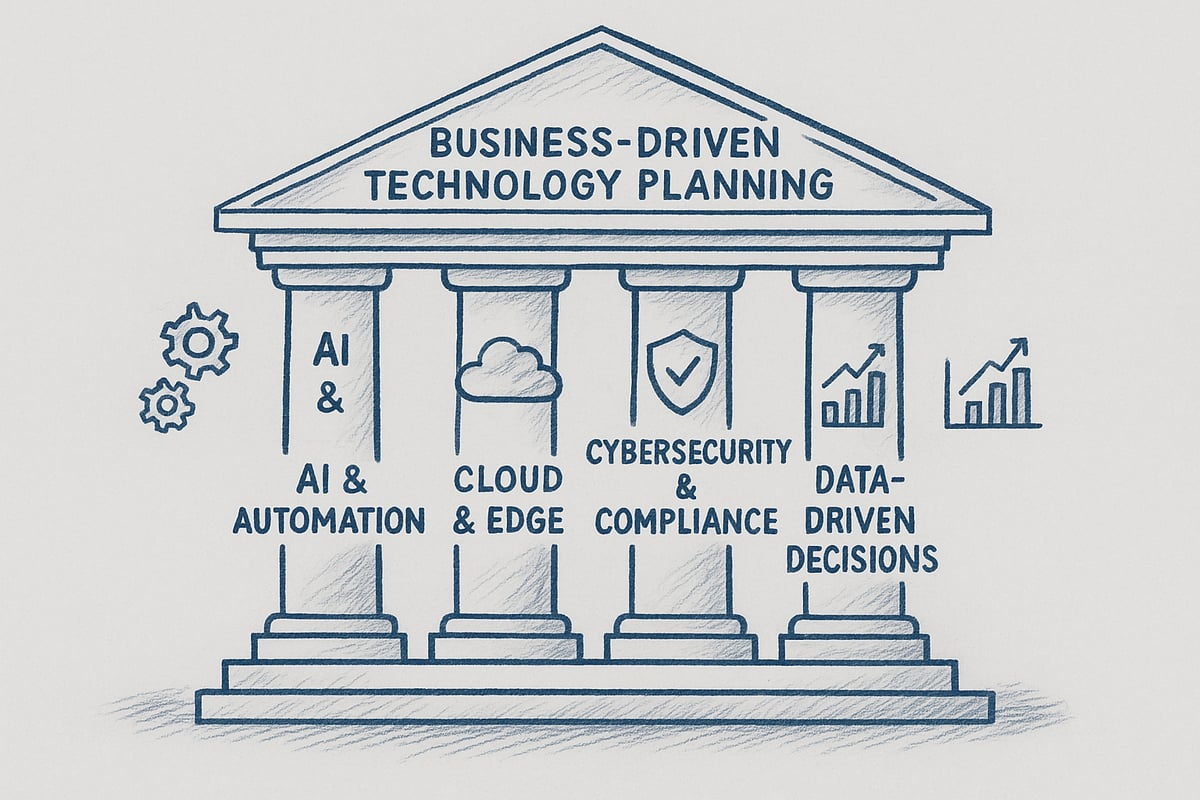
Modern organizations face a fast-evolving technology landscape. For leaders focused on business-driven technology planning, understanding the key trends shaping the year to come is crucial. These trends are not just shaping IT, but transforming how companies deliver value, manage risks, and achieve growth.
Artificial Intelligence and Automation
Artificial intelligence is redefining business-driven technology planning across all industries. AI and automation are reshaping decision-making, customer experience, and operational efficiency. From predictive analytics in supply chain management to automating HR onboarding, AI is embedded in critical business functions.
Gartner projects that 80% of enterprises will use AI-driven insights for strategic decisions. This shift is not just about technology adoption, but about aligning AI capabilities with business goals. For example, retailers use AI to personalize shopping experiences, while manufacturers leverage automation to optimize production.
However, leaders must balance innovation with ethical considerations and transparency. Responsible AI practices are essential to build trust with stakeholders. For in-depth insights, see this AI’s Expanding Role in Business report.
Cloud Transformation and Edge Computing
Cloud transformation is a cornerstone of business-driven technology planning this year. Companies are embracing cloud platforms for scalability, resilience, and cost efficiency. The ability to rapidly scale resources enables businesses to respond to changing market demands.
Edge computing is gaining momentum, allowing real-time data processing closer to the source. This reduces latency and empowers organizations to deliver instant insights, particularly in retail and logistics. For example, retailers deploy edge devices in stores for analytics, enhancing customer engagement and inventory management.
IDC predicts that 75% of enterprise data will be processed at the edge. As organizations integrate cloud and edge solutions, aligning these technologies with business strategy ensures agility and competitive advantage.
Cybersecurity and Compliance
Cybersecurity is central to business-driven technology planning, given the rising threat landscape. Organizations face increasing risks from ransomware, phishing, and insider threats. Protecting sensitive data and maintaining compliance with regulations like GDPR and CCPA are top priorities.
Best practices include adopting Zero Trust architectures, continuous monitoring, and regular employee training. For instance, a healthcare provider achieved HIPAA compliance by integrating security into their technology roadmap from the outset.
Cybercrime costs are projected to reach 10.5 trillion dollars annually, highlighting the urgency for robust risk management. Embedding cybersecurity into every stage of technology planning helps safeguard reputation and operational continuity.
Data-Driven Decision Making
A data-driven culture is a defining feature of business-driven technology planning. Organizations are harnessing big data and advanced analytics to guide strategic decisions. Building data literacy across teams enables faster, evidence-based responses to market shifts.
For example, e-commerce companies optimize pricing and inventory in real time using analytics dashboards. According to MIT Sloan, 70% of high-performing organizations attribute their success to a data-driven approach.
To maximize value, leaders must ensure data quality, invest in analytics tools, and promote collaboration between IT and business units. Embedding these practices into technology planning drives measurable business outcomes.
Risk Management and Governance in Business-Driven Tech Planning
Navigating risk is a core responsibility of modern leaders, especially as business-driven technology planning becomes central to growth. This year, organizations face increasing threats from cyberattacks, regulatory shifts, and operational disruptions. Ignoring risk management can jeopardize digital transformation efforts, erode stakeholder trust, and inflict financial losses.
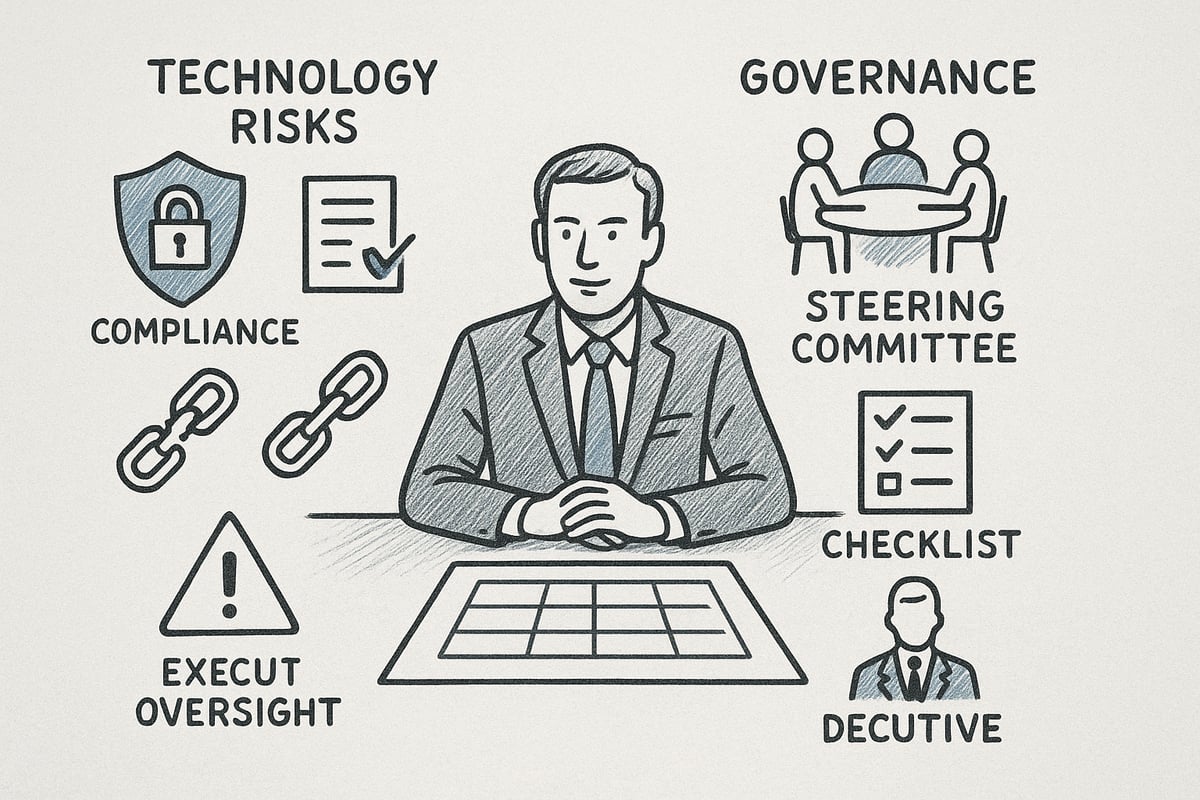
Effective business-driven technology planning starts by identifying key risks across operational, financial, and reputational domains. Leaders should map out potential vulnerabilities in digital systems, third-party dependencies, and data privacy. According to Deloitte, 60% of organizations lack a formal technology risk management process, leaving them exposed to unexpected challenges.
Adopting proven frameworks is essential for robust risk assessment. NIST and ISO 27001 are widely recognized standards that guide organizations in evaluating threats, assessing impacts, and implementing controls. These frameworks help ensure that business-driven technology planning is systematic and measurable, not reactive or fragmented.
Strong governance structures are crucial for aligning technology with business objectives while managing risk. Establishing steering committees, defining executive oversight, and enforcing clear accountability all contribute to effective governance. For example, a major bank successfully navigated digital transformation by introducing a dedicated governance model, which included cross-functional leadership, scenario planning, and regular risk reviews.
Balancing innovation with security and compliance is a delicate but necessary act. Rapid adoption of new technologies must be matched by rigorous controls and ongoing monitoring. Scenario planning and business continuity strategies protect organizations from unforeseen disruptions and help maintain progress toward strategic goals.
Embedding risk management into the earliest stages of business-driven technology planning is not optional—it is a competitive advantage. By prioritizing governance and leveraging strategic leadership, organizations can accelerate transformation while safeguarding assets and reputation. For a deeper look at how executive oversight drives alignment and mitigates risk, explore Business-Driven Technology Leadership.
Real-World Examples of Business-Driven Technology Success
Business-driven technology planning turns strategic vision into measurable business outcomes. Across industries, organizations that align technology with business objectives not only outperform competitors, but also unlock sustainable growth. Let’s explore how this approach delivers tangible results in the real world.
Retail Chain: Omnichannel Transformation Drives Sales Growth
A leading retail chain faced stagnating sales and fragmented customer experiences. By embracing business-driven technology planning, leadership mapped each technology investment directly to business goals like customer personalization and seamless shopping.
Using a Digital Transformation Roadmap, the company integrated in-store analytics, mobile apps, and unified loyalty programs. As a result, sales surged by 25 percent within a year, and customer engagement soared. This case highlights how aligning technology with strategic objectives creates a competitive edge.
Manufacturing: IoT Reduces Downtime and Boosts Efficiency
A global manufacturing firm prioritized operational excellence after pandemic-related disruptions. Through business-driven technology planning, the company identified IoT as the key to real-time equipment monitoring and predictive maintenance.
Sensors were deployed across production lines, enabling data-driven decisions and early detection of equipment issues. Downtime dropped by 40 percent and maintenance costs plummeted. This example demonstrates how targeted technology solutions, rooted in business priorities, drive resilience and efficiency.
Financial Services: Cloud Migration Delivers Reliability
For a financial services provider, uptime and data security were non-negotiable. Business-driven technology planning guided a strategic migration to the cloud, replacing legacy systems that hindered agility.
With robust cloud architecture, the company achieved 99.99 percent uptime, improved disaster recovery, and enhanced compliance. The result was not only operational stability but also the agility to launch new services faster. This case underscores the value of integrating technology planning with business imperatives.
Lessons Learned: What Sets Success Apart
Successful business-driven technology planning shares several traits:
- Strong executive sponsorship and cross-functional collaboration.
- A clear link between each tech initiative and business outcome.
- Agility to adapt plans as market conditions change.
- Commitment to continuous improvement and data-driven measurement.
Organizations with integrated tech and business strategies are twice as likely to exceed performance targets, according to Accenture. Leadership and culture play pivotal roles, and leveraging specialized expertise, such as Fractional Technology Leadership Benefits, accelerates progress and sustains results.
These real-world examples prove that when business-driven technology planning is at the core, measurable value, resilience, and competitive advantage become reality.
As you reflect on the strategies and real-world examples we’ve explored, it’s clear that successful technology planning isn’t just about adopting new tools—it’s about aligning every decision with your business goals and building a roadmap for measurable growth. If you’re ready to take the first step toward a smarter, more strategic technology future, let’s connect. With the right guidance, you can turn technology from a source of frustration into your organization’s greatest asset. Take the lead and Schedule A Strategy Call to unlock a clear, actionable path tailored to your business objectives.