
The pace of technological change is accelerating rapidly, and the demands placed on business leaders are higher than ever. In 2026, CEOs face a landscape where innovation, agility, and resilience are not optional—they are essential for survival and growth.
A well-crafted technology strategy for ceos is now a critical differentiator, driving business growth, reducing risk, and ensuring alignment with evolving objectives. The stakes are real, as organizations that fail to adapt risk falling behind their competitors.
This guide will walk you through the essential role technology plays in CEO leadership, examine the challenges and opportunities of the 2026 landscape, and provide a clear, actionable framework for building a future-proof strategy.
Now is the time to lead with confidence and embrace the tools that will shape your organization’s future.
The Evolving Role of Technology in CEO Leadership
The landscape for CEOs is rapidly changing, with technology now at the heart of strategic decision-making. In today’s boardrooms, technology strategy for ceos is not just an operational concern, but a driving force for value and growth. Let’s explore how these shifting expectations and emerging priorities are redefining leadership in 2026.

Shifting Expectations for CEOs
Today’s CEOs are expected to be far more than seasoned business leaders. The modern executive must serve as a tech-savvy visionary, actively shaping the technology strategy for ceos that drives competitive advantage. Boards now prioritize technology leadership, making it a core part of governance and oversight. For example, 65% of Fortune 500 CEOs identified digital transformation as a top focus in 2023 (Gartner).
This shift is also reflected in the growing emphasis on board-level technology governance, where strategic alignment between technology and business goals is non-negotiable. CEOs who understand this dynamic are better positioned to create long-term value.
Technology as a Strategic Enabler
Technology is no longer seen as a mere cost center. Instead, it operates as a vital partner in innovation and resilience. A strong technology strategy for ceos enables organizations to respond quickly to change, foster agility, and support ongoing transformation.
Consider how cloud adoption allowed companies to pivot rapidly during the pandemic, enabling new business models and digital customer experiences. The key for CEOs is to ensure every tech investment aligns with clear business outcomes, unlocking both operational efficiency and growth.
Risks of Technology Misalignment
When technology strategy for ceos is not tightly aligned with business needs, the consequences can be costly. Outdated or poorly integrated systems create security vulnerabilities, reduce efficiency, and cause missed opportunities.
Common pain points include:
- Increased risk of cyberattacks
- Fragmented workflows
- Failure to capitalize on new markets
According to McKinsey, 70% of digital transformation efforts fail due to lack of leadership alignment. The cost of inaction can far outweigh the investment needed for a robust, future-ready strategy.
The CEO’s Technology Mindset for 2026
To lead effectively, CEOs must foster a technology strategy for ceos that embraces learning, digital literacy, and collaboration. This mindset includes:
- Prioritizing continuous upskilling
- Encouraging a tech-forward culture
- Using data to guide decisions
- Building bridges between business and IT
These traits empower CEOs to adapt in a fast-evolving environment and ensure technology remains a catalyst for sustainable growth.
Assessing the 2026 Technology Landscape
Navigating the rapidly evolving technology landscape is a critical step in building a robust technology strategy for ceos. The next wave of innovation, regulation, and disruption will shape how leaders create value, manage risk, and secure competitive advantage.
Key Technology Trends CEOs Must Watch
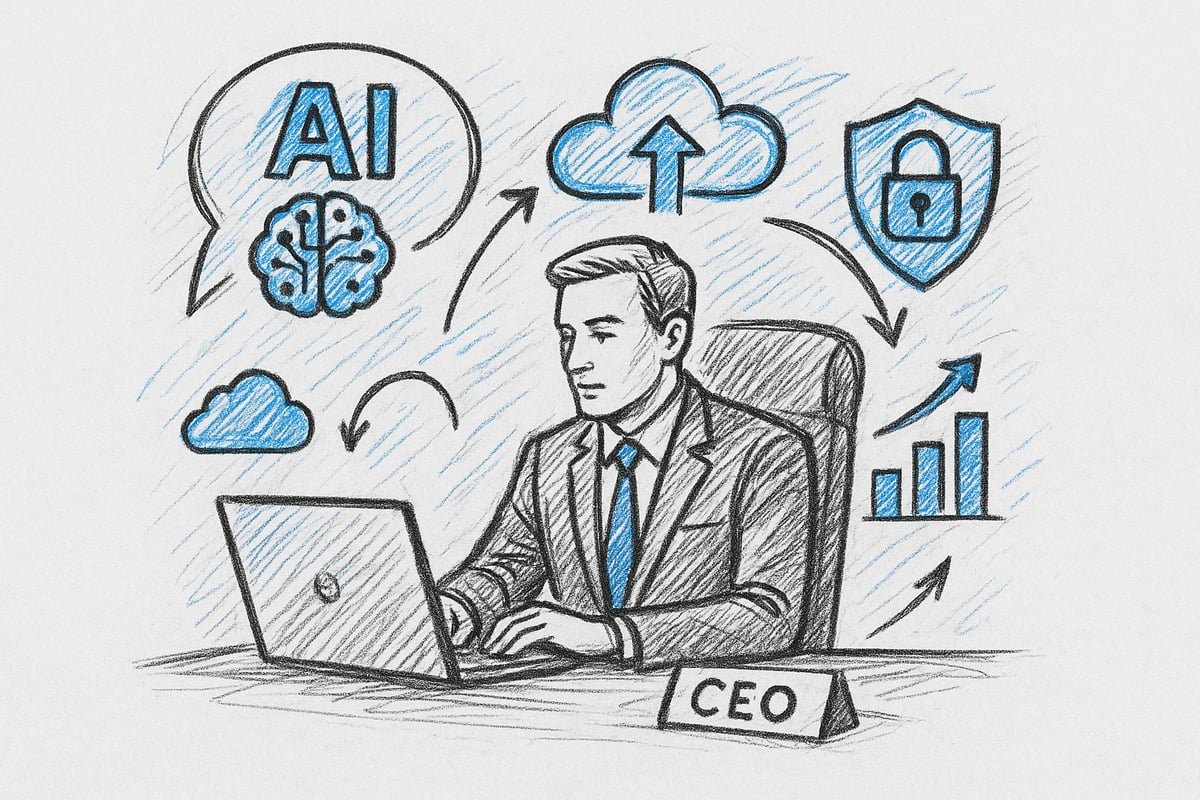
The pace of technological advancement is accelerating, requiring a proactive technology strategy for ceos. Artificial intelligence and automation are fundamentally reshaping business models, unlocking new efficiencies and opportunities.
Cybersecurity threats are growing more sophisticated, making resilience a top priority. Edge computing, 5G, and expanding IoT ecosystems are driving real-time data processing and new forms of connectivity.
According to Gartner, 80% of CEOs plan to increase AI investments by 2025, highlighting its importance for future growth. For a deeper dive, explore 3 Trends Driving Tech CEO Strategy in 2025. Staying ahead of these trends positions leaders to harness innovation rather than react to disruption.
Regulatory and Ethical Considerations
A strong technology strategy for ceos must anticipate a tightening regulatory environment. Data privacy requirements, such as GDPR and CCPA, are expanding worldwide, imposing new compliance obligations.
AI ethics is moving to the forefront, requiring responsible innovation and transparent decision-making. Regulatory fines for non-compliance are increasing, raising the stakes for organizations that lag behind.
Environmental, Social, and Governance (ESG) factors are now intertwined with technology investments. CEOs must ensure that digital initiatives support sustainability and social responsibility goals. Navigating this landscape demands vigilance and adaptability.
Industry-Specific Disruptions
Every sector faces unique challenges and opportunities as part of a technology strategy for ceos. In finance, fintech disruptors are reshaping traditional banking. Healthcare is experiencing a digital revolution, with telehealth adoption surging 38 times during COVID-19.
Manufacturing is leveraging automation and IoT for smarter production, while retail is transforming through omnichannel experiences and advanced analytics. Each industry requires tailored strategies to address sector-specific risks and opportunities.
Leaders must benchmark against peers, anticipate disruption, and adapt their approach to stay competitive in their market.
Talent and Workforce Transformation
A forward-looking technology strategy for ceos must address the digital skills gap. As demand for technical roles outpaces supply, 62% of CEOs report difficulty hiring qualified tech talent.
Upskilling and reskilling initiatives are essential to build an adaptable workforce. Remote and hybrid work models are here to stay, requiring new approaches to collaboration and management.
Organizations that invest in talent development and flexible work environments will be better positioned to attract, retain, and empower the teams needed for digital transformation.
Competitive Benchmarking and Market Intelligence
Continuous market analysis is a cornerstone of an effective technology strategy for ceos. Data analytics tools enable leaders to monitor competitors’ tech initiatives and identify emerging disruptors in real time.
Competitive benchmarking helps organizations understand their position in the market and uncover gaps in their digital capabilities. Leveraging these insights supports informed decision-making and timely adjustments to strategy.
By staying vigilant and responsive, CEOs can ensure their technology investments drive lasting differentiation and business value.
Building a Future-Proof Technology Strategy: Step-by-Step Guide
A robust technology strategy for ceos is not just a roadmap—it is a living framework that evolves with market demands, business goals, and emerging innovations. As CEOs look towards 2025, building a future-proof approach means adopting a systematic, step-by-step process that aligns technology with business value.
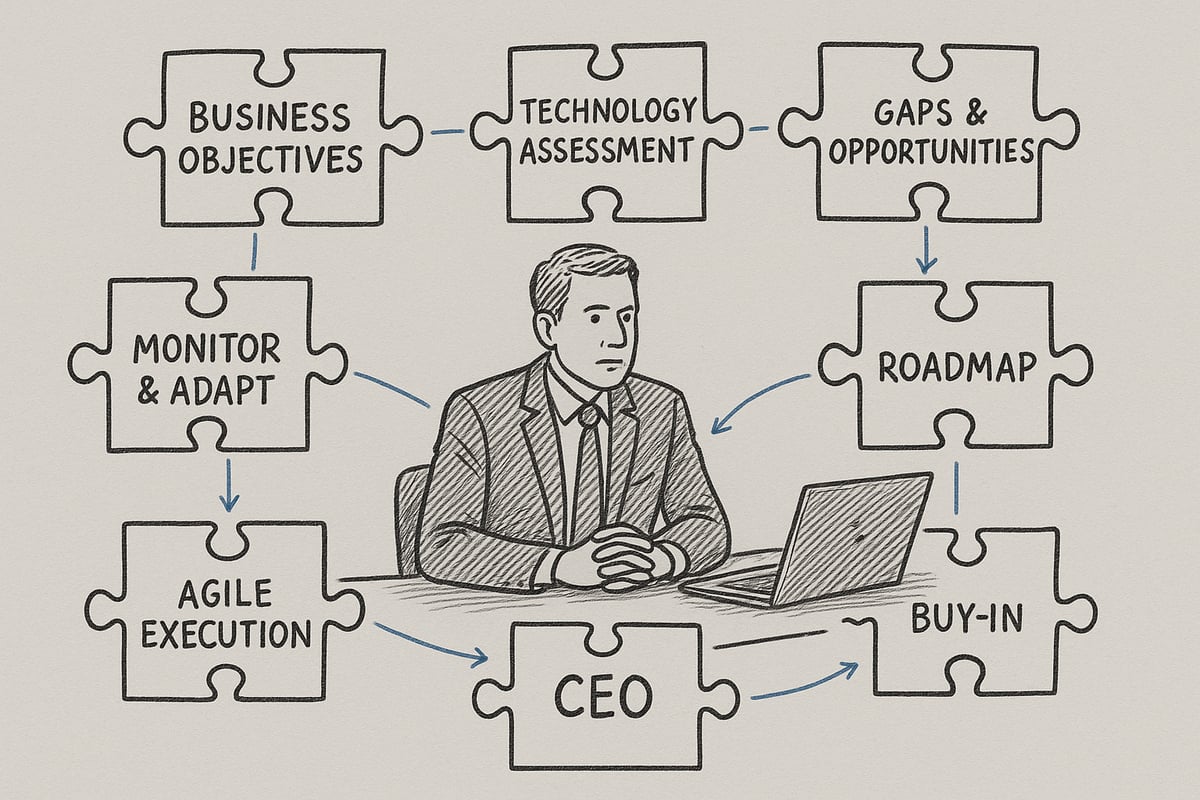
Below is a concise summary table of the seven essential steps for creating a technology strategy for ceos:
| Step | Focus Area | Outcome |
|---|---|---|
| 1 | Define Business Objectives | Clarity and alignment |
| 2 | Assess Technology Capabilities | Baseline for improvement |
| 3 | Identify Gaps and Opportunities | Targeted modernization |
| 4 | Develop a Technology Roadmap | Prioritized action plan |
| 5 | Secure Leadership Buy-In & Investment | Executive commitment |
| 6 | Build Agile, Resilient Execution | Adaptive delivery |
| 7 | Monitor, Measure, and Adapt | Continuous optimization |
Step 1: Define Clear Business Objectives
Every effective technology strategy for ceos begins with a sharp focus on business objectives. Without clear goals, technology investments risk becoming fragmented or misaligned.
Start by identifying what the organization seeks to achieve—whether it is revenue growth, improved customer experience, or greater operational efficiency. Bring in key stakeholders early to surface priorities and ensure company-wide alignment.
Ask: What will success look like in 2025? How can technology accelerate progress toward these goals? Defining measurable outcomes at this stage creates a north star for all subsequent decisions within your technology strategy for ceos.
Step 2: Assess Current Technology Capabilities
Once objectives are clear, the next step in a technology strategy for ceos is a comprehensive assessment of existing technology. This includes infrastructure, applications, cybersecurity, and data management.
Conducting a thorough IT audit helps identify strengths, weaknesses, and technical debt. Utilize frameworks and benchmarking tools to compare current maturity with industry standards. For further guidance, consider a Technology assessment for leaders to structure this evaluation and ensure nothing is overlooked.
This foundational step ensures the technology strategy for ceos is grounded in reality, setting a baseline for improvement.
Step 3: Identify Gaps and Opportunities
After mapping the current landscape, the technology strategy for ceos requires pinpointing where capabilities fall short of future needs. Analyze gaps in systems, processes, and skills that could impede progress.
Modernization opportunities often surface here, such as upgrading legacy ERP platforms or integrating new digital tools. Prioritize areas that will yield the highest impact on business goals.
By systematically identifying gaps and opportunities, a technology strategy for ceos becomes proactive, targeting transformation where it matters most.
Step 4: Develop a Technology Roadmap
A technology strategy for ceos must translate insights into action. The roadmap stage involves prioritizing initiatives based on strategic value, feasibility, and available resources.
Set clear milestones and key performance indicators (KPIs) for each initiative. Balance quick wins—such as process automation—with longer-term investments like cloud migration. A phased approach minimizes disruption while maximizing progress.
The roadmap serves as a visual guide, ensuring the technology strategy for ceos advances in a structured, manageable manner.
Step 5: Secure Leadership Buy-In and Investment
No technology strategy for ceos succeeds without executive sponsorship and adequate funding. Build a compelling business case that communicates projected ROI, risk mitigation, and alignment with corporate goals.
Engage leaders across departments to foster shared ownership. Highlight how the strategy supports resilience and competitiveness.
A well-communicated vision encourages buy-in, unlocking the resources and momentum necessary to execute a technology strategy for ceos effectively.
Step 6: Build Agile, Resilient Execution Capabilities
Execution is where a technology strategy for ceos moves from theory to reality. Adopting agile methodologies enables rapid iteration, faster delivery, and the ability to pivot as conditions change.
Establish robust change management processes to support adoption and minimize resistance. Plan for continuous feedback and iterative improvements.
By embedding agility and resilience, the technology strategy for ceos can adapt to unforeseen challenges and seize new opportunities as they arise.
Step 7: Monitor, Measure, and Adapt
The final step in a technology strategy for ceos is ongoing monitoring and adaptation. Use data analytics and real-time dashboards to track progress against KPIs.
Schedule regular reviews to ensure initiatives stay aligned with evolving business needs. If market dynamics shift, be prepared to pivot priorities or adjust the roadmap.
Continuous improvement ensures a technology strategy for ceos remains relevant and effective, sustaining growth and innovation well into the future.
Overcoming Common Challenges in Technology Strategy Execution
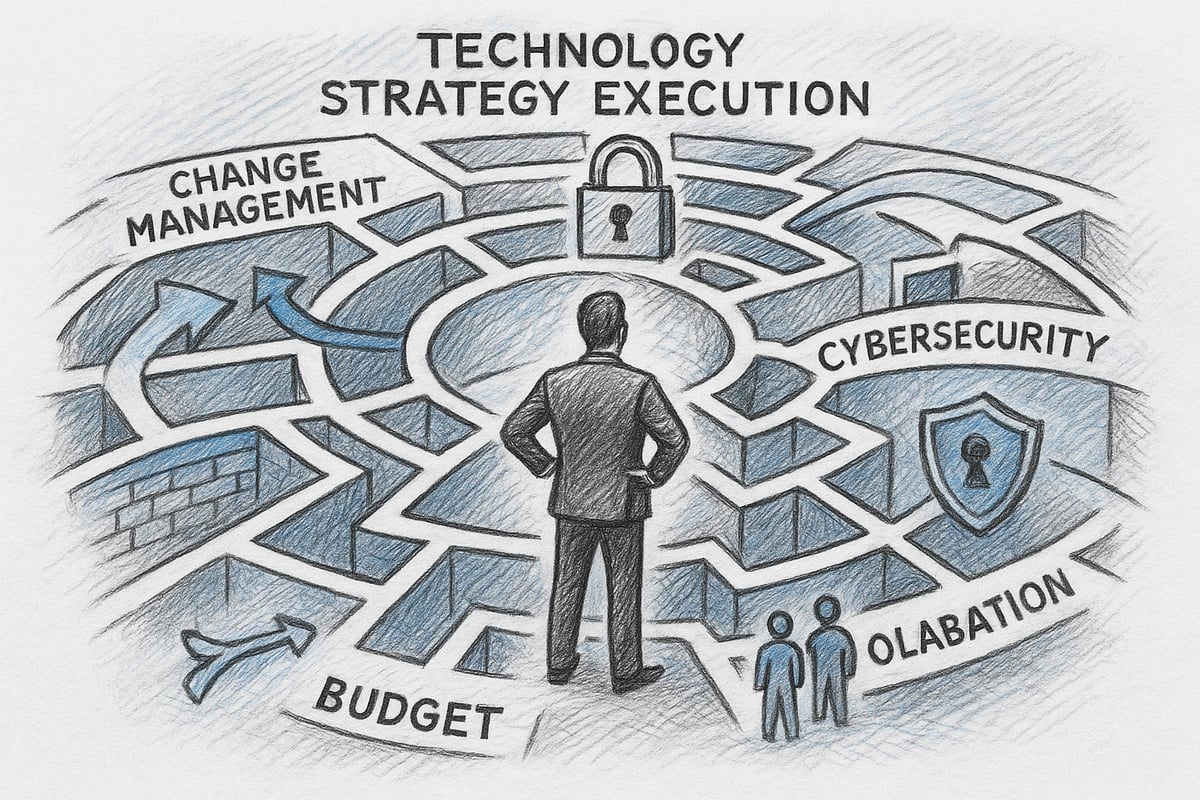
Successfully executing a technology strategy for ceos requires more than vision and planning. CEOs encounter a unique set of obstacles as they move from strategy to action. Overcoming these common challenges is essential for delivering real business value and ensuring sustainable transformation.
Managing Change and Overcoming Resistance
Change management is often the most underestimated aspect of a technology strategy for ceos. Resistance can emerge from any level, including leadership, middle management, or frontline teams. To address this, CEOs should:
- Clearly articulate the vision and rationale for change.
- Build a coalition of influential change champions.
- Develop a transparent communication plan that addresses concerns and highlights benefits.
Consistent messaging and early wins help build trust and reduce anxiety. For a technology strategy for ceos to succeed, fostering engagement and feedback loops is crucial.
Navigating Budget Constraints and ROI Pressures
Economic uncertainty and competing priorities make budget management a top concern in any technology strategy for ceos. CEOs must focus on investments that deliver measurable impact. Consider these approaches:
- Prioritize critical initiatives with clear ROI.
- Leverage flexible cloud and as-a-service models to optimize costs.
- Monitor spending and outcomes with real-time dashboards.
According to KPMG, 54% of CEOs still plan to increase tech budgets despite financial pressures. Strategic allocation of resources ensures that a technology strategy for ceos remains resilient and adaptable.
Addressing Cybersecurity and Compliance Risks
Security remains a major risk factor in every technology strategy for ceos. With evolving threats and tightening regulations, proactive measures are essential. CEOs should:
- Integrate cybersecurity into all stages of the technology lifecycle.
- Conduct regular risk assessments and scenario planning.
- Establish clear incident response protocols.
High-profile ransomware attacks have shown that the cost of inadequate security can be devastating. Embedding security and compliance into the technology strategy for ceos protects both reputation and operations.
Bridging the Talent Gap
The shortage of skilled tech professionals is a persistent challenge for any technology strategy for ceos. Attracting and retaining top talent requires a multi-faceted approach:
- Invest in upskilling and reskilling initiatives.
- Foster a culture that values digital expertise.
- Partner with external experts or advisors for specialized needs.
Upskilling programs not only close gaps but also boost morale and innovation. CEOs who prioritize talent as part of their technology strategy for ceos are better positioned to execute and sustain transformation.
Ensuring Cross-Functional Collaboration
Breaking down silos is essential for an effective technology strategy for ceos. Cross-functional teams enable faster decision-making and broader buy-in. To enhance collaboration:
- Establish governance structures for shared accountability.
- Use platforms that streamline communication and workflow.
- Encourage joint ownership of outcomes across IT and business units.
For insights into building resilient and scalable execution capabilities, explore secure and scalable digital transformations. Seamless collaboration is the foundation for a technology strategy for ceos that delivers lasting results.
Best Practices for CEO-Led Technology Transformation
Driving a successful technology strategy for ceos requires more than technical know-how. It demands vision, discipline, and a commitment to culture. The following best practices equip CEOs to lead with confidence and deliver lasting impact.
Leading by Example and Setting the Vision
Every effective technology strategy for ceos starts at the top. CEOs must clearly articulate a vision for digital transformation that aligns with the organization’s mission and future goals. When CEOs champion technology, it sends a powerful message across the enterprise.
Visible leadership accelerates adoption. For example, IBM’s 2025 CEO Study: 5 mindshifts to supercharge business growth reveals that CEOs who embrace innovation foster greater adaptability in their teams. Share the vision in town halls, strategy sessions, and one-on-ones. Inspire teams by connecting technology investments to customer value, growth, and resilience.
Embedding Technology into Corporate Strategy
Making technology strategy for ceos a boardroom agenda item ensures it becomes a core part of business planning. Integrate technology KPIs into business performance reviews, and establish clear accountability for digital outcomes.
Companies with tech-savvy boards consistently outperform their peers. Aligning technology priorities with business objectives brings clarity and focus to investment decisions. Regularly review progress with senior leadership, and adjust the strategy to reflect market shifts and innovation opportunities. This integration transforms technology from a support function into a driver of business value.
Fostering a Culture of Innovation and Experimentation
A forward-thinking technology strategy for ceos thrives in a culture where experimentation is encouraged. CEOs should create an environment where teams feel safe to propose bold ideas, take calculated risks, and learn from setbacks.
Promote innovation through:
- Hackathons and ideation sprints
- Recognition programs for creative solutions
- Dedicated innovation labs and intrapreneurship initiatives
Celebrate both wins and lessons learned. By fostering this mindset, CEOs ensure the organization remains agile and responsive to emerging trends and disruptions.
Partnering with Experts for Strategic Alignment
No technology strategy for ceos succeeds in isolation. Strategic partnerships with external advisors, technology leaders, and specialized consultants can accelerate transformation and fill critical capability gaps.
Leverage resources like Executive technology leadership insights to gain fresh perspectives and proven frameworks. External partners help validate strategies, bring industry best practices, and provide objective feedback. By collaborating beyond the organization, CEOs can quickly adapt to change, seize new opportunities, and drive sustainable results.
Measuring Success and Sustaining Momentum
Establishing a robust measurement framework is critical for any technology strategy for ceos. Clear metrics, ongoing learning, and organizational agility ensure that momentum is not only achieved but sustained. By focusing on the right indicators and fostering adaptability, CEOs can drive long-term impact and resilience.
Defining and Tracking Key Metrics
For a successful technology strategy for ceos, selecting and tracking the right key performance indicators (KPIs) is essential. These metrics should reflect business impact, user adoption, cost optimization, and risk reduction. Balanced scorecards and real-time dashboards offer a clear view of progress and highlight areas needing attention.
Some key metrics include:
- Digital revenue growth versus traditional channels
- User engagement or adoption rates of new platforms
- Operational efficiency improvements
- Reduction in security incidents
A recent PwC survey found 81% of CEOs have adopted AI, showing how measurement of digital transformation is now a leadership priority. By tying metrics to strategic objectives, CEOs ensure that technology investments deliver tangible results.
Ensuring Continuous Improvement and Learning
Continuous improvement is vital for any technology strategy for ceos. Feedback loops, regular reviews, and benchmarking against industry standards keep the strategy relevant and effective. CEOs must invest in leadership and team development, fostering a culture where learning and adaptability are valued.
Practical steps include:
- Conducting regular post-implementation reviews
- Gathering user feedback and iterating on solutions
- Investing in upskilling and reskilling initiatives
According to the KPMG U.S. CEO Outlook, 74% of CEOs are prioritizing AI integration and workforce upskilling. This focus helps organizations stay agile and responsive to changing market demands.
Scaling and Replicating Success Across the Organization
To maximize the value of a technology strategy for ceos, successful pilots and initiatives must be scaled across the enterprise. Sharing best practices and lessons learned accelerates transformation and minimizes risk.
Key actions include:
- Creating playbooks for repeatable implementation
- Facilitating knowledge sharing across teams
- Celebrating quick wins to build momentum
By standardizing what works, CEOs can expand digital transformation efforts more efficiently. This approach helps build organizational confidence and ensures consistency in outcomes.
Staying Ahead of Future Disruption
A forward-looking technology strategy for ceos incorporates scenario planning and horizon scanning. Building adaptive capabilities prepares the organization to respond quickly to emerging threats and opportunities.
Consider these strategies:
- Regularly assess external trends and competitor moves
- Develop contingency plans for potential disruptions
- Empower teams with tools for rapid experimentation
IBM found that 74% of CEOs believe adaptability is the top leadership trait for 2025. By embedding adaptability into the company’s DNA, CEOs can ensure the business remains resilient and future-ready.
As you reflect on the technology challenges and opportunities ahead, remember that real transformation starts with honest assessment and a clear plan. You don’t have to navigate this alone—partnering with experts can help you confidently align your systems with your strategic goals and unlock true business value. If you’re ready to turn technology into your organization’s superpower and lead with clarity in 2026, let’s take the first step together. Schedule A Strategy Call to discuss your unique needs and map out a path to sustainable growth and innovation.