
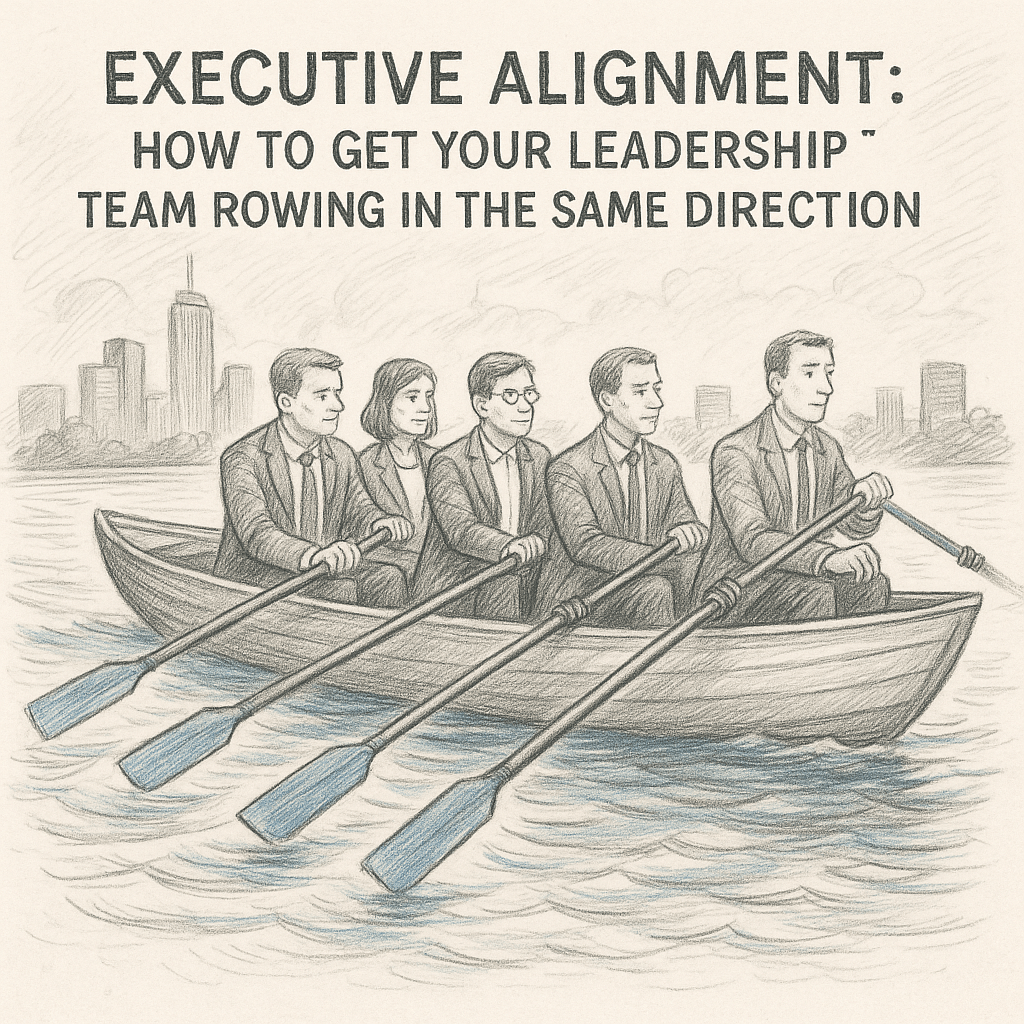
Most CEOs and founders do not wake up thinking, “I need better executive alignment.”
They wake up thinking, “Why are decisions so slow? Why are targets slipping? Why is technology so expensive and still so risky?” These frustrations often signal a lack of executive alignment.
At its core, executive alignment is simple. Senior leadership moves in the same direction on strategy, strategic priorities, and behavior. They make tradeoffs together. They send one clear message to the company, not five competing ones.
When that is missing, you feel the organizational dysfunction every day: slow decisions, missed numbers, rising operating costs, confusion around tech, and a constant worry about cybersecurity and compliance.
This article breaks down how to spot misalignment, why it is so expensive, and how to build a leadership team that rows in the same direction, especially around technology and risk. Firms like CTO Input help executive teams align around technology, cost control, and risk so growth becomes easier and far more predictable.
What Is Executive Alignment and Why Does It Matter for Growth?

Photo by Vlada Karpovich
Executive alignment means your C-suite is clear, consistent, and united on three things: where you are going, how you will behave, and how the work will actually get done.
You can think of it in three layers:
- Strategic alignment: shared goals and direction.
- Behavioral alignment: how leaders act and make decisions.
- Operational alignment: how teams, processes, and budgets work together.
Growth makes all three harder. As you scale, systems multiply, tech stacks grow, and risk rises. The gaps in alignment stop being small annoyances and start turning into real money. Executive alignment ensures these layers support each other for smoother scaling.
Picture this:
- The CEO and COO are pushing for rapid expansion into new markets.
- The CTO is slowing projects, warning that systems are fragile and security controls are not ready.
- Sales is promising features that engineering has never heard of.
If this conflict over unresolved tension on tradeoffs never gets addressed, you get late launches, brittle systems, rushed security fixes, and a nervous board. Not because anyone is bad at their job, but because the team is not aligned on tradeoffs.
Another common pattern: finance pushes hard on cost cuts, while the tech leader pushes hard for new tools and upgrades. If you do not align on what technology is meant to deliver for the business, you end up cutting in the wrong places and spending in the wrong places. Costs stay high and risk creeps up anyway.
When executive alignment is strong, decisions get faster, priorities are clearer, and outcomes become more predictable, all of which boost organizational health. That is what investors and boards trust: not perfection, but clarity and consistency.
Firms like CTO Input step into these gaps, helping leadership teams link technology decisions to strategy, cost, and risk, so growth feels guided instead of chaotic.
Simple definition of executive alignment for busy leaders
Executive alignment is when your senior team agrees on where you are going, how you will win, and how you will behave, then commits and acts on that agreement together.
A simple picture helps. Imagine a crew team on the water. If everyone rows in rhythm, the boat glides forward with less effort. If one person rows late, another rows early, and a third rows in the wrong direction, the boat still moves, but it drifts, wobbles, and burns energy for the same distance.
Alignment does not mean everyone always agrees. It means they debate hard, make a choice, then commit and move together. Even when the decision was not their first pick.
The three types of alignment every executive team needs
Strategic alignment
This is about shared strategy and direction. It shows up in which goals get funded, which KPIs matter, and which markets or products get attention. If your CEO talks about margin, your CPO talks only about features, and your CRO talks only about top-line, you do not have strategic alignment.
Behavioral alignment
This is how leaders act when pressure hits. What do they tolerate? What do they reward? If one leader praises people for moving fast even when they skip security steps, while another disciplines teams for the same thing, people get mixed signals. Behavior always beats slogans.
Operational alignment
This is how work flows across functions. It shows up in handoffs, shared processes, and budgets. If product, engineering, and security all plan in isolation, creating functional silos, you get gaps, rework, and finger pointing. When operations are aligned, teams know who owns what, when they get involved, and how success is measured.
How misalignment silently kills growth and drives up costs
Misalignment rarely explodes in one big moment. It leaks value all year.
Sales promises a new feature to close a deal. Product and engineering never agreed to it. Now you either lose the deal or scramble your roadmap, pushing out other work and piling on tech debt.
Finance cuts the security budget, thinking it is “overhead”, after the CISO flagged that funding as critical. A year later you have a breach scare, a painful audit, and a rushed spend that costs more than the original plan.
Overlapping tools get bought by different teams. No one owns the whole stack. You carry three vendors for similar jobs and still feel exposed on compliance.
Over time, leaders start to see technology as a high cost risk with little reward. The real problem is not the tech. It is the lack of alignment on what tech is supposed to do, how much risk you are willing to carry, and how you will measure success.
Clear Signs Your Executive Team Is Not Aligned

Image created with AI
If you lead a company, you already feel misalignment before anyone names it. It shows up in symptoms that seem “normal” but are actually expensive warning lights of executive misalignment.
You see conflicting priorities. One week, “security is our top concern.” The next week, “we must ship faster at any cost.” Poor communication leaves teams hearing both and not knowing what to optimize for. So they guess.
You feel meeting fatigue. The same topics return every month: which markets matter, which products are core, which systems to keep. Weak decision making means decisions that should take one or two meetings drag across quarters.
Tech projects seem to never end, often leading to program failure. New platforms, data migrations, ERP changes, security upgrades. Everything is “in progress.” No one can clearly say what “done” looks like or what business metric will change once it is done.
You live with constant fire drills. A customer asks for a security document you do not have. A regulator changes a rule that no one tracked. A key system goes down and no one is sure who owns the recovery plan. Compliance feels reactive. Cyber risk feels like a lurking threat.
While all this happens, operating costs creep up. Tech spend grows. People spend more time in reviews, status meetings, and escalations. Yet when the board asks, “What is our return on this spend?” the answers are fuzzy.
These are not random problems. They are the day-to-day face of misalignment.
CTO Input works with leadership teams in exactly these situations, helping them replace confusion with shared priorities, simple tech roadmaps, clear ownership for risk and compliance, and organizational clarity.
Confusing priorities and slow decisions at the top
One of the easiest ways to spot misalignment is to ask three executives the same question and compare their answers.
What are our top three priorities this quarter?
Which customer segment is most important right now?
What is our risk appetite on security incidents?
If you get three different lists, your company feels that confusion. Teams stall, waiting for clarity. Or they push ahead based on the last thing they heard from whoever shouted loudest.
You also see decisions get made, then reopened. A product direction is set, a security project is approved, or a vendor is chosen. A month later, the discussion starts again as if there was no decision.
This is not a “people” problem. It is an alignment and structure problem. When you put shared goals on paper, agree who owns which calls, and commit to “disagree and commit,” decisions stick because shared goals and trust allow them to. Product roadmaps, security upgrades, and compliance projects move faster and with less drama when you embrace “disagree and commit.”
Technology seen as a cost center instead of a growth engine
When executives are not aligned on technology, IT becomes a black box that seems to only ask for more money. This is especially true in the C-suite, where misalignment turns potential innovation into frustration.
You see things like:
- Buying overlapping tools because each function solves its own problems.
- Custom building systems where a standard SaaS product would work.
- Underinvesting in cybersecurity until a customer or investor panic forces a rushed fix.
Without alignment, tech leaders speak in system names and architectures, while business leaders speak in revenue, margin, and risk. No one translates.
When executives decide together what they want technology to do for the business, everything gets simpler. You cut dead projects. You standardize where it makes sense. You invest in the few platforms that actually support growth and reduce risk.
Firms like CTO Input help draw this line of sight from tech spend to business outcomes, so technology starts to look like a growth engine instead of a cost sink.
Fire drills around cybersecurity and compliance
Security and compliance should feel calm and planned. In many companies, they feel like a series of surprise attacks.
You see rushed audits, last second changes to product launches, vendor issues that stall deals, or long sales cycles because customers do not trust your controls. Security and compliance become blockers instead of quiet enablers.
Under the surface, the problem is simple. The executive team has not agreed on:
- How much risk is acceptable.
- Who owns what across security, legal, product, and operations.
- How to bake requirements into normal planning instead of last minute checks.
External partners with deep tech and risk experience, like CTO Input, help leaders reset this pattern. They bring structure to security and compliance planning so you spend more time on design and less on emergencies.
High operating costs with no clear story about ROI
When your leadership team is misaligned, cost structures bloat in slow motion.
You end up with too many systems, overlapping projects, and teams chasing different “top priorities.” Budget reviews become painful because no one can clearly tie spend to outcomes.
Leaders ask, “What are we getting for this tech budget?” and get vague answers about “stability” or “modernization.”
Once executives align around a small set of measurable goals, the picture changes. It becomes easier to cut what does not help those goals and double down on what does. You stop paying for tools no one uses and projects no one needs.
CTO Input often helps clients map every major tech initiative to a clear business metric, so budget conversations shift from guesswork to choices.
Practical Steps to Build Executive Alignment Around Strategy and Technology

Image created with AI
You do not fix executive alignment by adding more meetings; you fix executive alignment by changing how the top team sets direction, measures progress, and makes decisions.
Here is a simple roadmap that works in practice, especially when paired with a structured partner like CTO Input.
Start with a shared, written vision that links growth, cost, and risk
Most executive teams say they share a vision. Few can point to a short, written one that everyone has signed.
Create a one page view of the company two to three years from now. Include organizational goals such as:
- Growth targets and the type of growth you want.
- Target operating cost levels.
- Your desired risk posture on security and compliance.
- The role of technology in reaching that picture.
This should not be a solo CEO document. The full executive team needs to debate it, adjust it, and agree to it. In many organizations, a neutral facilitator like CTO Input makes it easier to surface hard truths and vulnerabilities, and keep the group focused on tradeoffs, not politics.
Agree on a small set of shared metrics and tradeoffs
Alignment on objectives gets real when it hits numbers.
Pick 5 to 7 core metrics that everyone cares about, such as:
- Customer retention
- Operating margin
- Security incident rate
- Time to market for key features
- Cost per customer served
Then talk through tradeoffs in plain terms to build a shared vocabulary. When will you accept higher cost for better security? When will you slow a launch to avoid a compliance risk? When will you drop a feature to hit a stability target?
Having these tradeoffs on the table early prevents painful conflict later.
Make decision rules clear so debates do not stall progress
Many executive teams know what they want but still stall because they lack clear decision rules.
You can fix that by agreeing on:
- Who has the final say on which types of decisions, establishing accountability. For example, COO on process design, CTO on architecture and security standards, CFO on large capital spend.
- What “disagree and commit” means in your culture as part of a behavioral framework. When a decision is made, how will leaders support it in front of their teams?
When everyone knows who owns what call, you debate better and still move. You avoid re-litigating the same choices in every meeting.
Align on a focused technology roadmap that supports the business plan
Once your vision and metrics are clear, you can turn them into a practical tech roadmap for execution.
This should answer four basic questions:
- Which systems do we keep and improve?
- Which systems do we retire or consolidate?
- Which new capabilities do we need and when?
- How do these choices reduce cost, reduce risk, or support growth?
CTO Input uses a structured process to map business goals to technology plans. They help leaders see which projects to stop, which to fix, and which new ones to start, so your roadmap is short, realistic, and aligned with your strategy.
Use an outside expert to break deadlocks and keep leaders aligned
Many executive teams already know they are misaligned. They are just stuck.
Old decisions, strong personalities, and fear of risk can freeze progress. In these cases, a neutral outside expert can make hard tradeoffs clearer and easier to accept.
CTO Input works with CEOs and boards to run focused alignment sessions, assess current tech and risk posture, and guide leaders to a shared plan of action. If you feel stalled, a short, structured engagement is often cheaper and faster than another year of internal debate.
If you want a dedicated partner to run this with you, you can explore formal alignment and advisory options at CTO Input services to align technology with strategy.
How CTO Input Helps Executive Teams Achieve Lasting Alignment
Executive alignment is not a one time workshop. It is a way of running the company. CTO Input helps leadership teams make that shift, especially around technology, cost, and risk, fostering executive alignment that endures.
A simple, proven process to get executives on the same page
CTO Input uses a clear, repeatable approach with executive teams:
- Discovery to understand your strategy, tech stack, risks, and current tensions.
- Assessment of your systems, projects, and controls so opinions are backed by facts.
- Alignment workshop where leaders sort priorities, agree tradeoffs, and define decision rules.
- Action plan and roadmap that ties technology and risk work to business outcomes.
If you want to see what that looks like step by step, you can review their structured executive alignment process.
Turning misaligned tech spend into a focused, value driven roadmap
Many clients come to CTO Input with scattered tech budgets and unclear returns. The first move is to map where money actually goes, ensuring alignment with corporate goals:
- Which systems overlap.
- Which projects have no clear owner or outcome.
- Where security and compliance gaps sit.
From there, the picture simplifies into a short list of high value projects with clear owners, timelines, and success metrics. That list becomes the shared roadmap that aligns executives, drives project success, and gives teams clear direction.
Real outcomes: lower risk, lower cost, and clearer decisions
When executive alignment around technology and risk is strong, it serves as a performance multiplier, with the outcomes being concrete:
- Fewer surprise outages and production incidents.
- Smoother audits and shorter security reviews in sales cycles.
- Faster decisions on which projects to fund or kill.
- Lower operating cost per customer, as redundant tools and wasteful work are cut.
These are the kinds of outcomes described on the solution overview at what executive alignment with CTO Input looks in practice. The pattern is the same across sectors: less noise, more clarity, and a direct link between decisions in the boardroom and results in the field.
When to bring in CTO Input to help your leadership team
There are a few clear trigger points where bringing in CTO Input makes sense:
- Large transformational programs are stalled or over budget and no one agrees why.
- The board is pressing hard on cyber or compliance risk and you lack clear communication for your story.
- You have had turnover in senior tech roles and need a stable plan that survives individuals.
- You are confused about which systems to keep, replace, or consolidate and every vendor claims to be “strategic.”
When these patterns show up, it is often faster and cheaper to bring in a specialist than to fight through it alone. If you are ready to talk through your situation, you can schedule a focused executive alignment conversation at https://ctoinput.com/schedule-a-call.
Conclusion: Alignment Is the Quiet Engine Behind Predictable Growth
Executive alignment is not a luxury. It is the foundation that lets you grow, control cost, and manage risk without burning out your people.
If you see confusing priorities, slow decisions, endless tech projects, rising costs, constant security fire drills, or internal conflict, you are likely dealing with misalignment at the top. The good news is that alignment is a choice, not a mystery. You can write a shared vision, agree on a few key metrics tied to your strategic priorities, set clear decision rules, and build a focused technology roadmap that the whole team owns.
You do not have to do this alone. Firms like CTO Input exist to help CEOs, COOs, founders, and boards turn executive alignment into a repeatable habit that makes every technology and risk decision easier.