

If your company had a breach tomorrow, who would feel it first?
Not just IT. Your marketing team, your sales pipeline, your customer success team, and your board would all feel the shock. In 2025, every security incident is a brand incident. It hits trust, growth, and your ability to close deals.
For decision makers such as CEOs, COOs, founders, and board members, this can feel like a trap. Growth is slow, tech keeps getting more expensive, cybersecurity, with its technical complexity, feels like a black box, and regulators raise the bar every year. You are told to spend more on tools, more on audits, more on experts, yet you still do not feel safe.
Here is the shift that changes the game: Marketing and Cybersecurity Alignment, when marketing and security work together, your company can tell a stronger trust story, win better customers, and frame tech and security investments as growth drivers that support business objectives, not just cost centers.
This article breaks down simple, practical steps to align marketing and cybersecurity without drowning in technical language. You will see clear frameworks, plain examples, and a path to expert help from partners like CTO Input, so you do not have to figure this out alone.
Why Marketing And Cybersecurity Must Align To Protect Brand Value
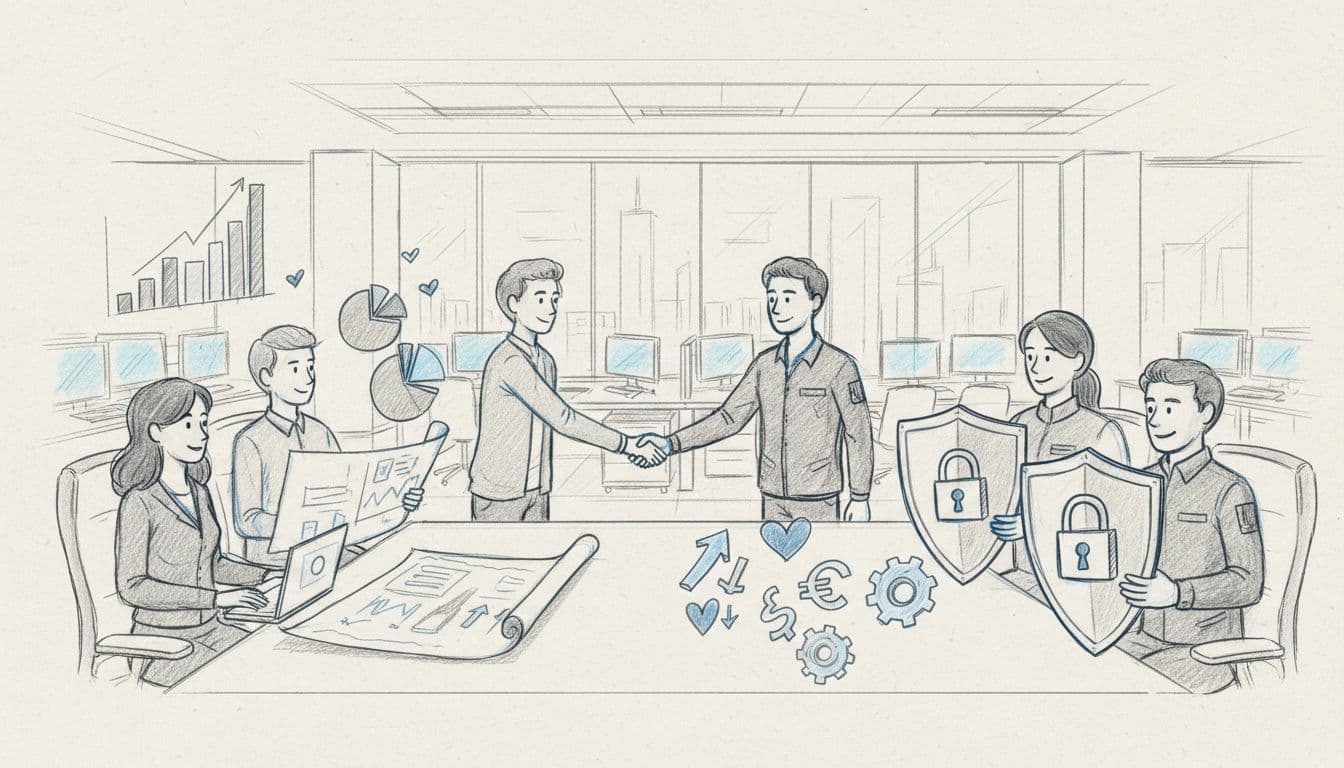 In 2025, security is no longer just a back-office problem. It is a front-of-house issue that shapes how customers see you, how investors judge you, and how regulators treat you.
Think about three simple risks:
- A phishing email tricks an employee, triggers a data breach, and within hours social media is full of angry posts.
- Your system goes down due to ransomware, and support lines fill up with frustrated customers who cannot access their accounts.
- A missed compliance control leads to a public fine, and partners start asking if you are safe to work with.
Each of these starts as a security or compliance issue but quickly becomes a marketing and PR problem. As Forbes explains about cybersecurity as a brand differentiator, security now shapes how buyers decide who to trust.
At the same time:
- Customers expect clear communication about how you protect their data.
- Regulators expect proof, not just policy documents.
- Competitors use security posture as a selling point in pitches and RFPs.
If marketing and security stay in separate silos, your go-to-market (GTM) strategy and your actual risk posture drift apart. That gap is where trust breaks.
When these teams align, your company tells one clear story about how you handle data, risk, and trust. That story supports revenue growth, protects reputation, and gives the board a way to see security as part of strategy, not just a cost line.
How Cyber Incidents Quickly Turn Into Marketing And PR Crises
Most modern incidents follow a similar pattern.
A threat actor breaks in, steals or locks data, and either:
- Demands payment and threatens to leak information, or
- Starts publishing data and tagging your brand on social channels.
The media picks up the story. Customers share screenshots. Partners call their account manager. Reporters email your press inbox. Employees worry about their own data.
If your response is slow, vague, or defensive, trust drops fast. People assume the worst. Rumors grow faster than facts.
On the other hand, when the company responds in a clear and honest way, trust can recover. In some cases, it can even improve because customers see that the company takes responsibility and communicates like an adult.
This only works if these teams already have a relationship. Marketing needs:
- Plain language from security about what happened.
- Clarity on what is known, what is unknown, and what is being done.
- Guardrails from legal so they do not create extra risk.
Without this, incident response turns into chaos and finger-pointing. With alignment, effective risk management lets the company move fast, speak clearly, and protect brand value while fixing the technical problem.
Customer Trust, Compliance, And Brand Reputation Are Now Linked
Your buyers, partners, and regulators all care about one thing: can they trust you with sensitive information?
That trust shows up in three connected areas:
- Customer trust
People want to know how their data is stored, who can see it, and what happens if something goes wrong. - Compliance
Regulatory compliance like GDPR and HIPAA, and standards like SOC 2 and ISO 27001, demand specific controls and proofs. These are not just legal checkboxes. They signal maturity. - Brand reputation
When your security and privacy posture is strong and well explained, it becomes part of your brand story.
Modern marketing teams already use this link. For example, many B2B vendors highlight SOC 2 or ISO certifications in their sales decks and on their websites to move deals forward. Articles on aligning cybersecurity compliance with marketing goals show that compliance messaging can shorten sales cycles and ease partner reviews.
When customers feel safe:
- Sales cycles in regulated industries get shorter.
- Fewer deals stall during security reviews.
- Customer lifetime value rises because churn from “security concerns” drops.
Cybersecurity posture becomes a brand asset that marketing can use. But that only works if security and marketing design the story together.
Why Separate Marketing And Security Teams Create Confusing Messages
In many companies, this is what misalignment looks like:
- Security hides details or speaks in technical jargon that no one else understands.
- Marketing overpromises with buzzwords like “bank-grade security” or “military level encryption” without clear backing.
- Legal shuts down anything that sounds specific because it might create liability.
The result is a swirl of vague claims and mixed messages:
- Website copy says “we take security seriously” but offers no proof.
- Sales teams say one thing about data locations, while support teams say another.
- Public statements during an incident sound cold or robotic.
Customers sense the gap. Trust erodes.
To fix this, the company needs shared language and shared goals. Security leaders must explain controls and risks in plain language. Marketing must stop inventing security claims that do not match reality. Legal must help define what can be said, not just what cannot.
With alignment, all external communication about security becomes:
- Accurate
- Simple
- Consistent
That is the foundation of a credible trust story.
Building A Shared Marketing And Cybersecurity Strategy That Builds Trust
To align these teams, you do not need a deep technical background. You need a simple roadmap, clear goals, and a bit of structure.
Recent trends show marketing and cybersecurity leaders working together to:
- Use AI to personalize messages without abusing data.
- Publish regular content marketing that explains real risks in simple terms.
- Run multi-channel campaigns for lead generation that highlight both product value and security posture, as seen in modern cybersecurity marketing plan guidance.
A clear, repeatable process helps. A partner with a defined approach, like the one described on CTO Input’s process page, can give leadership a structure that ties security, tech, and growth strategies together.
Here is how to build your shared strategy.
Start With Shared Goals: Growth, Risk Reduction, And Brand Trust
Alignment starts with goals that both teams care about. At the executive level, you can set a small set of shared outcomes such as:
- Reduce the number of security related customer support tickets.
- Improve win rates in deals where buyers ask hard security questions.
- Raise customer trust scores in NPS or separate trust surveys.
- Lower the number or impact of public incidents.
To make this real, place these metrics on your executive dashboard or board pack. Review them at least quarterly.
When goals are shared and visible, marketing and cybersecurity start to see themselves as one team working on brand trust, not separate departments fighting for budget.
Create Simple, Plain Language Security Messages For Customers
Most buyers do not want a 60-page security policy. They want straight answers to a short list of questions:
- What data do you collect?
- Where is it stored?
- Who can access it?
- How do you protect it?
- What happens if there is an incident?
Marketing and cyber can co-write a short set of messages that answer these in plain language. Think of it like a “security and privacy overview” written for a smart non-technical reader. This approach directly builds customer trust.
Helpful formats include:
- A short FAQ on your website.
- A one-page security overview for sales decks.
- A simple “How we protect your data” section in onboarding material.
Make sure these messages:
- Describe real controls and actions.
- Mention relevant certifications or audits if you have them.
- Use the same language across the website, decks, and campaigns.
Resources on how cybersecurity affects marketers show that this kind of clear, consistent messaging is key to building a safe environment for customers.
Turn Security Expertise Into Educational Content That Builds Brand Authority
You likely already have strong security people on your team or with your vendors. They spend their days dealing with threats, audits, and tools. That expertise is gold for marketing, if you can translate it.
Instead of only talking about your product or service, use your security know-how to create content marketing:
- Short blog posts that explain common scams or attack patterns in your industry, tailored to your target audience.
- Webinars that help customers understand how to reduce risk in their own teams.
- Simple checklists and guides for secure onboarding or remote work.
- Quarterly “security update” posts that share changes and improvements.
This matches current trends where cybersecurity brands win trust by educating, not just selling. It positions your brand as thought leadership. As Kobalt.io’s article on using cybersecurity to build brand trust in digital marketing points out, helpful security content can also raise loyalty.
Content marketing helps you:
- Calm customer fears with plain language.
- Show that you take security seriously in practice, not only in claims.
- Improve SEO and AI search visibility when people ask about security and compliance issues.
Treat this content like a long-term brand investment, not a one-off campaign.
Use AI And Data Safely In Marketing Without Breaking Trust
Your marketing team likely uses AI tools, email marketing platforms, ad networks, and CRM data to target and personalize outreach. That can drive growth, but it also increases risk if data is copied into random tools, shared with extra vendors, or stored in unsafe ways.
Marketing and cybersecurity need a shared playbook for safe data use, including data protection. Practical rules can include:
- Only use approved security solutions that have passed a basic security review.
- Limit who can export or upload customer data.
- Keep a clear list of vendors that receive personal or sensitive data.
- Get security and legal sign-off before testing new AI tools that touch real customer records.
This protects both compliance and brand promise. When customers ask how you use their data, you can answer with confidence.
External guides like 5 essential cybersecurity tips for marketers show that basic hygiene in tool selection and data handling already reduces a lot of risk. You do not need complex frameworks to start.
Practical Steps For Leaders To Align Marketing, Cybersecurity, And The Board
As decision makers such as CEOs, COOs, founders, or board members, your role is not to configure firewalls. Your role is to set strategy and direction, create structure, and make sure the right people talk to each other.
Here are simple steps you can drive in the next 30, 60, and 90 days to create real alignment.
For more structured help to turn these into a full plan, you can explore the growth and security service offerings described on CTO Input’s menu of products.
Set Up A Regular Marketing And Security Alignment Meeting
Start with one new meeting, not ten. A monthly or biweekly session can change the tone across the company.
Who should join:
- Head of marketing or growth.
- Security lead or CISO (or whoever owns security if you are earlier stage).
- IT or product lead if tech is core to the offer.
- Operations or customer success leader for voice of the customer.
Keep the agenda simple:
- Review any security incidents, near misses, or major alerts.
- Look at upcoming marketing campaigns, product launches, or PR events.
- Share any new compliance requirements or large customer security asks.
- Confirm who owns external messages about current topics.
Use simple, non-technical language. Ask security professionals to explain cyber threats and changes in plain terms, and ask marketing to share where they plan to mention security in campaigns or content.
This meeting prevents surprises, such as a big campaign that promises security features the product team has not shipped yet, or a quiet incident that later explodes on social media.
Give Clear Ownership For Security Messaging And Crisis Communication
Someone has to own the security story across your company. In many firms this is a shared role between:
- A security professional, who owns facts and controls.
- The head of marketing, who owns language and channels.
- Legal, who sets legal bounds.
Define two types of ownership:
- Normal days
Who owns the wording on your website, sales decks, security FAQs, and outbound campaigns that mention security or privacy? - Crisis days
Who writes the first statement, who approves it, and who speaks with customers, the media, and regulators?
Create a simple three step outline for any incident communication:
- Acknowledge the issue.
- Explain what you know, what you do not know yet, and what actions you are taking.
- Share how and when you will update people.
Write this down in your incident response plan. Practice it, even if only in a short tabletop drill. In a real event, this planning protects customers and your brand.
Connect Cybersecurity Investments To Brand And Revenue Outcomes
Many boards see security as pure cost until something bad happens. You can change that by tying security spending to clear business outcomes.
For example:
- Stronger security posture strengthens your unique value proposition, making it easier to win large deals that require vendor security reviews.
- Better controls reduce the chance of fines, lawsuits, or forced discounts after cyber threats.
- Clear, trusted security messaging provides sales enablement, speeding up contract signing through vertical marketing and reducing back-and-forth with legal and procurement.
Consider tracking metrics such as:
- Number of deals won or lost with “security” mentioned as a reason.
- Time spent on security reviews before and after improvements.
- Estimated cost of cyber threats avoided compared to known breach costs in your industry.
Structured offerings like those described on CTO Input’s products and services can help connect your technology and security roadmap directly to your Go-To-Market (GTM) Strategy.
When To Bring In Outside Help To Align Tech, Security, And Growth
Sometimes you need a neutral expert to cut through stuck debates and design a plan that fits your stage and budget.
You might benefit from a fractional CTO or outside advisor if:
- You keep having “fire drill” security issues that distract leadership.
- Growth is slow because the tech stack is messy and no one owns the big picture.
- Compliance demands from customers or regulators are rising and feel confusing.
- There is growing tension between marketing, IT, and security professionals about what is “safe to say.”
A partner like CTO Input can:
- Translate the technical complexity of risks into business language for the board.
- Create a shared roadmap across tech, security, and marketing.
- Define simple processes and cadences, such as the alignment meeting and incident playbooks.
- Help you prioritize spend so that each dollar supports both risk reduction and revenue growth.
If you want a clear, structured path that links marketing, cybersecurity, and brand value, you can explore the approach outlined on CTO Input’s solution overview.
Conclusion: Turn Security From A Headache Into A Brand Advantage
In 2025, Marketing and Cybersecurity Alignment ensures security and marketing can no longer live in separate worlds. It is a key lever for brand value, trust, growth, lead generation, and improved visibility through better SEO, not just a technical concern for IT.
You do not need to become a security expert. You do need to:
- Set shared goals for growth, risk reduction, and trust.
- Create clear, plain language security messages with your teams.
- Establish simple meeting rhythms and crisis roles so your response is calm and consistent.
Over the next month, you can start small. Schedule a joint marketing and security meeting, review your public security messaging, and map how your company would communicate if an incident hit tomorrow.
If you want support to tie all of this into your broader technology and growth strategy, CTO Input can help you align marketing, security, and operations into one clear plan. Visit https://www.ctoinput.com to explore how the team works, and when you are ready, you can schedule a call to talk through your specific situation and next steps.