
In 2025, IT departments face an environment where waiting to fix problems is no longer enough. The pace of digital change means that simply reacting puts organizations at risk of falling behind.
Organizations now feel constant pressure to innovate, optimize systems, and deliver measurable value through IT. Meeting these demands is not optional—it is a business imperative. Embedding continuous improvement in technology has become essential for enabling agility, building resilience, and driving sustained growth. This approach helps teams move from firefighting to forward-thinking.
In this guide, you will learn what continuous improvement means for IT, the core principles behind it, practical steps to implement it, how to overcome common challenges, the role of new technologies, and best practices to succeed in 2025.
Visit https://www.ctoinput.com to learn more and to connect with a member of the CTO Input team.
Understanding Continuous Improvement in IT
Continuous improvement in IT is a disciplined, ongoing approach that seeks to optimize technologies, processes, and teams. Unlike traditional project-based methods, which focus on one-time solutions, embedding continuous improvement in IT creates a culture of iterative progress and adaptation. This mindset empowers organizations to regularly assess their IT maturity and pinpoint opportunities for growth. For those starting this journey, a Technology Assessment for IT Improvement can help set a strong foundation.
The roots of embedding continuous improvement in technology lie in methodologies like Lean, Agile, and DevOps. These frameworks promote constant feedback, learning, and adaptation. In today’s environment, rapid technology cycles, rising customer expectations, and increased cyber risks make this approach more critical than ever. IT departments can no longer afford to be reactive; they must anticipate change and continuously enhance their capabilities.
Recent research underscores this urgency. According to Gartner, 85% of CIOs say embedding continuous improvement in IT is a top priority for digital transformation. Leading companies demonstrate what’s possible. Netflix, for example, uses chaos engineering to test resilience and improve system reliability. Amazon’s “two-pizza teams” are designed to foster autonomy and innovation, enabling quick pivots and incremental enhancements.
Embedding continuous improvement in IT fuels innovation, reduces technical debt, and elevates service delivery. It is not limited to manufacturing or large enterprises—this is a misconception. Any organization, regardless of size or industry, can benefit from this approach. By integrating improvement into daily IT operations, businesses unlock a powerful competitive advantage. Studies consistently show that companies committed to continuous improvement outperform their peers in agility, customer satisfaction, and operational efficiency.
To thrive in 2025 and beyond, organizations must make embedding continuous improvement in IT a strategic imperative. Visit https://www.ctoinput.com to learn more and to connect with a member of the CTO Input team.
Core Principles of Embedding Continuous Improvement
Embedding continuous improvement in technology requires a strong foundation built on key principles. These principles guide teams as they shift from reactive fixes to proactive, value-driven innovation. By focusing on culture, data, and iterative progress, organizations can create an environment where improvement is continuous and sustainable.
Building a Culture of Learning and Experimentation
A culture that values learning and experimentation is essential for embedding continuous improvement in technology. Teams must feel psychologically safe to share new ideas and admit mistakes without fear of blame. This openness encourages innovation and helps prevent recurring issues.
Organizations can foster this culture by:
- Encouraging cross-functional collaboration so knowledge flows freely
- Recognizing and rewarding risk-taking and creative problem-solving
- Holding blameless postmortems, like Google does after incidents, to focus on learning rather than assigning fault
When IT professionals can experiment and learn from outcomes, improvement becomes part of daily work, not just a project milestone. This principle is the bedrock for resilience and adaptability, making embedding continuous improvement in IT a reality.
Data-Driven Decision Making
Data-driven decision making is the engine powering embedding continuous improvement in technology. Reliable metrics, KPIs, and real-time feedback loops allow teams to spot trends, measure progress, and act quickly when issues arise.
Modern IT organizations use tools that monitor system health, user experience, and process efficiency. According to Forrester, 70% of high-performing IT teams leverage real-time analytics to identify opportunities for improvement. These teams rely on dashboards and automated alerts to guide their actions.
By grounding decisions in data, organizations reduce guesswork and focus on what truly drives value. This discipline ensures that embedding continuous improvement in technology leads to measurable, scalable outcomes.
Iterative and Incremental Change
The third principle for embedding continuous improvement in technology is adopting iterative and incremental change. Rather than tackling massive projects all at once, teams break them into manageable sprints or cycles. This approach enables rapid experimentation and learning, reducing the risks associated with large-scale changes.
Spotify’s model of continuous delivery is a prime example. Their teams deploy updates in small increments, gather feedback, and refine features continuously. This “test and learn” mindset means improvements are delivered faster and more reliably.
Iterative progress keeps momentum high, ensures quick wins, and allows organizations to adapt strategies based on real-world results. For more on how this principle supports resilient IT transformations, see Secure and Scalable Digital Transformations.
Embedding continuous improvement in IT through these principles gives organizations a clear path to sustained agility and innovation. Visit https://www.ctoinput.com to learn more and to connect with a member of the CTO Input team.
Step-by-Step Guide to Embedding Continuous Improvement in Technology
Embedding continuous improvement in IT requires a clear, structured approach. By following these five essential steps, organizations can create a culture that supports ongoing optimization and measurable results. Each step builds on the last, ensuring that continuous improvement becomes part of your IT DNA.
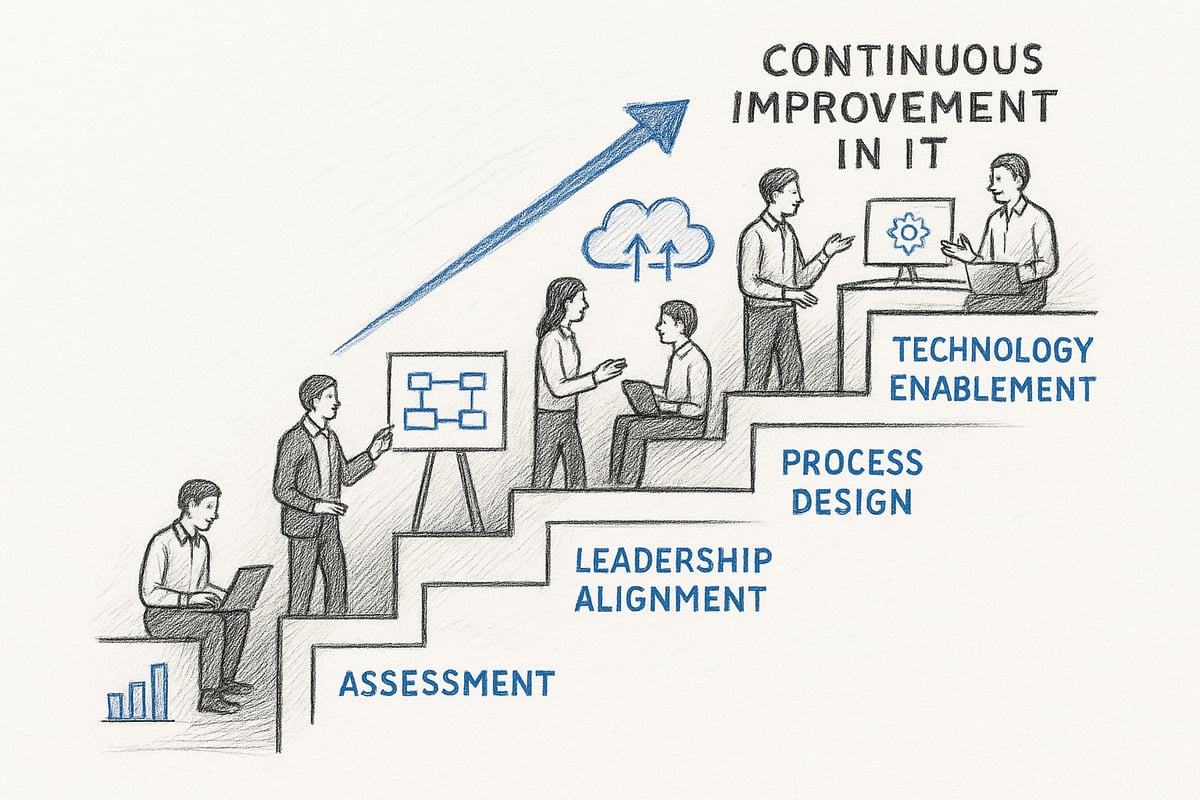
Step 1: Assess Current State and Set Objectives
Start by evaluating where your IT organization stands today. Conduct maturity assessments covering people, processes, and technology. Use surveys, audits, and stakeholder interviews to pinpoint strengths and weaknesses.
Identify pain points that hinder progress. For embedding continuous improvement in IT, it is crucial to set clear, measurable objectives. Align these goals with your broader business strategy to ensure technology investments drive real value.
Create a checklist to guide this phase:
| Assessment Area | Tools/Actions | Outcome |
|---|---|---|
| People | Skills inventory | Gap identification |
| Processes | Workflow analysis | Efficiency benchmarks |
| Technology | System audits | Upgrade opportunities |
This foundation ensures your improvement journey starts with actionable insights.
Step 2: Secure Leadership Buy-In and Alignment
Success in embedding continuous improvement in technology hinges on strong leadership support. Communicate the value and urgency of ongoing improvement to C-level executives. Show how these initiatives align with organizational priorities and key performance indicators.
Gain buy-in by sharing case studies, such as Toyota’s IT division’s Lean transformation, which started with executive sponsorship. Consider leveraging external expertise for unbiased assessments and strategic guidance. For example, Fractional Technology Leadership Benefits can accelerate alignment, offering executive-level oversight without the commitment of full-time hires.
With leadership on board, continuous improvement efforts gain credibility and access to critical resources.
Step 3: Establish Processes and Frameworks While Embedding Continuous Improvement in Technology
Choose proven methodologies like Agile, Lean IT, ITIL, or DevOps to provide structure. Define clear roles and responsibilities so everyone understands how they contribute to embedding continuous improvement in IT.
Set up governance structures to guide decision-making and ensure accountability. Standardize workflows where possible, making it easier to repeat and scale successful improvements.
Use documentation and knowledge bases to support transparent, consistent processes. This approach lays the groundwork for sustainable, long-term change.
Step 4: Implement Technology Enablers
Modern technology is a catalyst for embedding continuous improvement in IT. Leverage automation, AIOps, and cloud-native tools to streamline operations and reduce manual errors.
Integrate CI/CD pipelines for faster, safer deployments. Use monitoring platforms to track system health and user experience in real time. According to IDC, 60 percent of enterprises cite automation as a key driver of IT improvement.
Invest in solutions that are scalable and adaptable. This ensures your IT environment can evolve alongside your business needs.
Step 5: Foster Continuous Feedback and Iteration
Regular feedback is essential for embedding continuous improvement in IT. Set up retrospectives, feedback sessions, and performance reviews to identify what works and what needs attention.
Gather input from both IT staff and end users. Use this feedback to refine processes and enhance service delivery. Atlassian, for example, relies on quarterly “health checks” to keep teams aligned and motivated.
Celebrate quick wins to maintain momentum. Continuous feedback loops ensure that improvement is never a one-time event, but an ongoing journey.
Visit https://www.ctoinput.com to learn more and to connect with a member of the CTO Input team.
Overcoming Common Challenges in Embedding Continuous Improvement in Technology
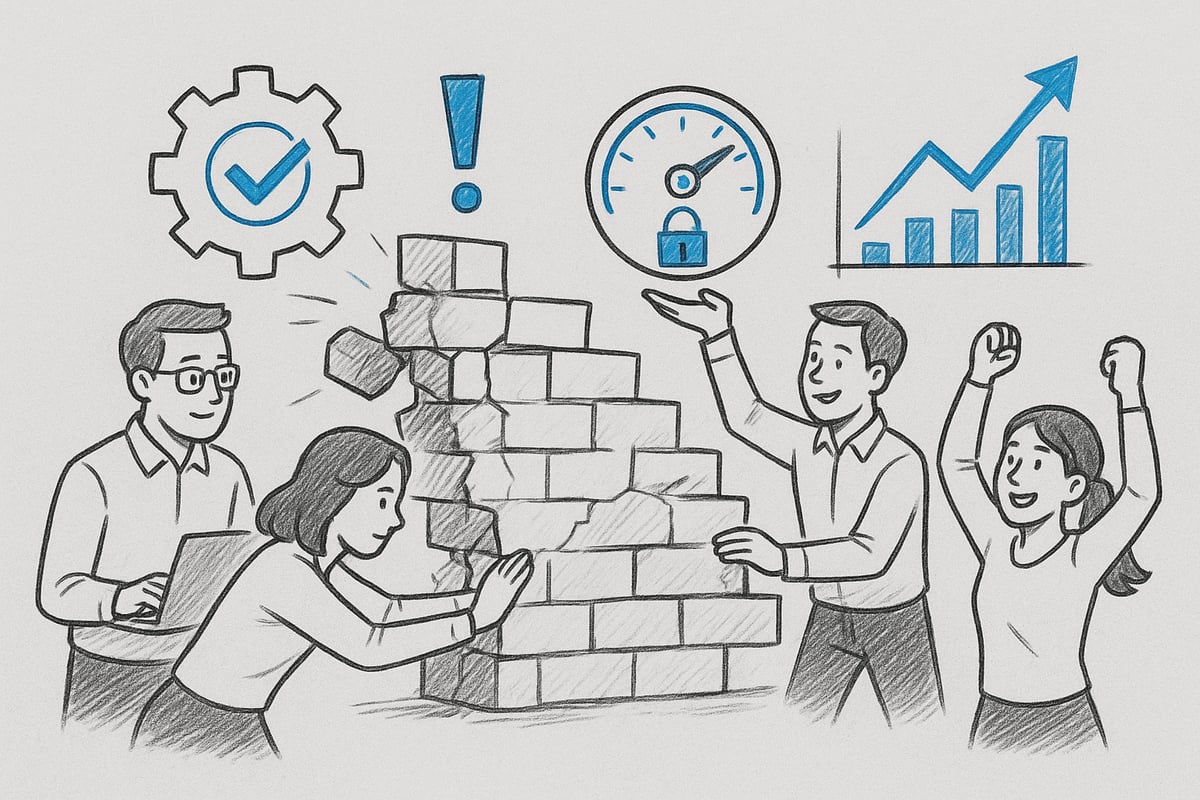
Embedding continuous improvement in IT can transform an organization, but real progress requires overcoming persistent challenges. Teams often encounter resistance, must balance competing priorities, and need to sustain momentum over time. Addressing these head-on is essential for success in 2025 and beyond.
Addressing Change Resistance and Silos
Change resistance is a common barrier when embedding continuous improvement in IT. It often stems from fear of the unknown, organizational inertia, or a lack of necessary skills. These hurdles can slow progress and create silos that hinder collaboration across departments.
To counteract resistance, organizations should identify change champions who advocate for new ways of working. Transparent communication is key—leaders must openly discuss the benefits and address concerns. Targeted training programs help upskill teams and ease transitions. GE Digital, for example, successfully broke down IT silos by empowering cross-functional teams and fostering a culture of shared ownership.
Overcoming these barriers ensures that embedding continuous improvement in IT becomes part of the organization’s DNA, enabling sustainable innovation and agility.
Balancing Speed, Quality, and Security
Striking the right balance between speed, quality, and security is crucial when embedding continuous improvement in IT. Rapid iteration and deployment can increase agility but may introduce risks if not carefully managed. IT leaders must ensure that quality and system stability are not sacrificed in the rush to innovate.
Integrating security and compliance from the outset—often through DevSecOps practices—helps organizations maintain robust defenses while moving quickly. According to the Ponemon Institute, 65% of IT leaders cite security as a primary challenge in continuous improvement efforts.
By embedding continuous improvement in IT processes, organizations can iterate confidently, knowing that both quality and security are part of every cycle.
Measuring and Sustaining Momentum
Maintaining momentum is vital to ensure that embedding continuous improvement in IT delivers ongoing value. Setting clear success metrics and tracking progress over time are foundational practices. Dashboards and regular reporting provide visibility, making it easier to identify bottlenecks and celebrate quick wins.
Recognizing achievements builds credibility and motivates teams to keep moving forward. Leveraging insights from Process Excellence Trends 2025 can help organizations stay ahead of emerging challenges and adapt their strategies.
Continuous communication and visible progress keep improvement initiatives alive, ensuring that embedding continuous improvement in technology is not just a one-time effort but a lasting organizational capability.
Visit https://www.ctoinput.com to learn more and to connect with a member of the CTO Input team.
The Role of Technology and Tools in 2025 IT Improvement
Adapting to rapid change is crucial for embedding continuous improvement in IT. In 2025, organizations must leverage advanced tools and technologies to maintain agility, deliver value, and stay competitive.
Key Technology Trends for IT Improvement in 2025
| Technology | Purpose | Impact on IT Improvement |
|---|---|---|
| AI-driven Analytics | Proactive insights, automation | Faster decision-making, innovation |
| Low-Code/No-Code | Rapid development | Accelerated delivery cycles |
| AIOps | Automated operations | Reduced downtime, quicker fixes |
| Unified Management | Centralized oversight | Better governance, efficiency |
| Cloud-Native Platforms | Scalability and flexibility | Enhanced agility |
| Security Automation | Risk reduction | Stronger compliance, less manual |
Harnessing AI-driven analytics is transforming how teams approach embedding continuous improvement in IT. Automation and low-code/no-code platforms empower IT departments to iterate rapidly, enabling faster delivery of features and services. These tools provide real-time data, making it easier to identify bottlenecks and opportunities for optimization.
AIOps platforms are at the forefront of embedding continuous improvement in IT. By utilizing machine learning, they can detect anomalies, predict incidents, and automate remediation. This proactive approach minimizes downtime and enhances system reliability. Recent research, like the Digital-GenAI-Enhanced HCI in DevOps Study, shows how advanced AI enhances human-computer interaction, driving sustainable innovation in IT operations.
Unified IT management platforms now offer consolidated views across infrastructure, applications, and security. This holistic oversight is vital for embedding continuous improvement in IT, as it streamlines governance and simplifies compliance tracking. Cloud-native architectures further support continuous improvement by enabling scalability, resilience, and rapid deployment.
Security and compliance automation are essential components in 2025. Automated tools help organizations continuously monitor, detect, and respond to threats, reducing manual effort and ensuring regulatory standards are met. According to Deloitte, 75% of organizations plan to increase their investment in IT improvement tools by 2025, reflecting the growing importance of these technologies.
A Fortune 500 company recently implemented AI-powered monitoring, reducing its incident response times by 40%. This real-world outcome demonstrates the measurable benefits of embedding continuous improvement in IT with cutting-edge tools.
To stay ahead, IT leaders should regularly assess their technology stack, embrace automation, and invest in platforms that foster collaboration and visibility. Visit https://www.ctoinput.com to learn more and to connect with a member of the CTO Input team.
Best Practices and Future Trends for Continuous Improvement in Technology
Embedding continuous improvement in IT is no longer optional for organizations aiming to thrive in 2025. As the pace of innovation accelerates, IT leaders must adopt proven strategies and stay ahead of emerging trends to drive agility and resilience.
Actionable Best Practices for Embedding Continuous Improvement in Technology
To successfully implement embedding continuous improvement in IT, organizations should focus on these core practices:
- Leadership Commitment: Executive sponsorship and visible support are crucial for sustained momentum.
- Ongoing Training: Continuous learning ensures teams adapt to new technologies and methodologies.
- Clear Metrics: Define and track KPIs to measure progress and identify areas for optimization.
- Open Communication: Foster transparency through regular updates, feedback sessions, and knowledge sharing.
According to recent process improvement statistics for 2025, businesses that prioritize these practices see measurable gains in productivity and cost efficiency.
Strengthening Business-IT Alignment
Achieving true value from embedding continuous improvement in technology requires tight alignment between business goals and IT initiatives. Cross-functional teams, shared objectives, and regular stakeholder engagement help ensure IT delivers tangible results that support the wider organizational strategy.
Future Trends Shaping Continuous Improvement
Looking ahead, several trends are set to redefine embedding continuous improvement in IT:
| Trend | Impact on IT Improvement |
|---|---|
| Hyperautomation | Streamlines repetitive tasks and workflows |
| AI/ML Decision-Making | Enables predictive insights and rapid adaptation |
| Platform Engineering | Simplifies system management and scalability |
Gartner predicts that by 2025, 90% of IT organizations will adopt some form of continuous improvement framework, reflecting the growing importance of these trends.
Embedding Continuous Improvement in Digital Transformation Roadmaps
Leading organizations are embedding continuous improvement in technology within their broader digital transformation strategies. For example, many are following structured frameworks such as those outlined in the Digital Transformation Roadmap for Mid-Market Retailers, which integrate iterative improvement cycles, stakeholder input, and agile delivery models.
Adaptive Governance and Upskilling
To support embedding continuous improvement in technology, adaptive governance frameworks are essential. These enable rapid decision-making, risk management, and compliance in dynamic environments. Simultaneously, investing in ongoing upskilling ensures IT teams remain equipped to navigate new technologies and methods.
Tips for Staying Ahead
- Invest in top talent and continuous education.
- Embrace change and foster a culture of curiosity.
- Use real-time analytics to guide decisions.
- Prioritize open communication across teams.
- Regularly review and adapt improvement frameworks.
By following these best practices and anticipating future trends, organizations can ensure they are embedding continuous improvement in IT for long-term success.
Visit https://www.ctoinput.com to learn more and to connect with a member of the CTO Input team.
As you’ve seen, embedding continuous improvement into your IT strategy is essential for staying agile, resilient, and ahead of the competition in 2025 and beyond. But knowing where to start—and how to align your technology with your business goals—can be challenging. We’re here to help you turn those challenges into opportunities. If you’re ready to see where your IT stands today and uncover practical steps for ongoing improvement, let’s take a closer look together. You can Get Your Technology Health Check and start building a smarter, stronger IT foundation for your organization.
If you want more practical, plain language guidance on aligning technology, risk, and growth, spend a few minutes exploring the rest of the articles on the CTO Input blog. You can find them here: https://blog.ctoinput.com