

You are a CEO or COO who is spending more on tech and getting less back.
Invoices keep growing, projects keep slipping, and the board keeps asking, “Are we in control of this.”
Vendor sprawl, manifesting as vendor complexity, is what it looks like on the ground. Too many tools, too many vendors, no clear owner. Marketing buys its own SaaS. Operations has three different systems to track the same work. Cyber risk sits in a gray area that nobody fully owns. Margins get thinner amid mounting complexity, trust in the numbers gets weaker, and your teams work in silos instead of as one company.
If you are trying to simplify your tech stack decisions but feel buried under contracts and acronyms, you are not alone. This is exactly where a neutral, senior guide like CTO Input sits, on your side of the table, translating chaos into a clear, business-first plan.
In this post, you will get a short, practical path. A few specific moves to simplify the technology stack, cut waste, reduce risk, and rebuild confidence in both the numbers and the roadmap.
What Vendor Sprawl Really Looks Like Inside Your Company

Vendor sprawl is not a theory. It shows up in your inbox and your operational costs.
Marketing signs up for a new tool to fix a campaign problem. Sales tries a different system for quotes. HR picks a platform for performance reviews. None of these decisions is crazy on its own. Over a few years, they pile up into a stack that creates vendor complexity nobody fully understands.
You might see:
- Three different tools that all send email to customers.
- Separate systems for billing, collections, and reporting, each with its own data.
- Shadow IT, where teams swipe a credit card for SaaS applications without talking to IT or finance.
Research on SaaS management shows that mid-market companies often run hundreds of software applications. Many of them overlap in features, pricing models, and integration capabilities. As Salesforce describes vendor sprawl, this scattered toolset leads to redundancies, lack of efficiency, and blind spots in spend.
The impact is clear. You cannot connect tech to strategy if you cannot see the full picture. You cannot simplify technology stack choices if every department is running its own playbook.
Forecasting becomes guesswork because nobody has a single view of platforms and renewals. Planning gets harder because every new project touches five to ten unknown tools. Leadership trust in tech spend erodes, not because the team is bad, but because the system is opaque.
Vendor sprawl is not only about “too many tools.” It is about losing a clear line of sight from investment to outcome.
Too Many Tools, Not Enough Clarity
When you ask your CIO or IT lead, “How many applications do we really use?”, the honest answer is often, “It depends how you count.” That is the problem.
You see:
- Spreadsheets with partial lists of vendors.
- Contracts living in inboxes and shared drives.
- No single source of truth for which systems are live, retired, or redundant.
Mid-market companies that rely heavily on SaaS often discover, during a proper review, that they pay for multiple software applications with the same core feature set. Identity, project management, messaging, reporting, file storage, customer outreach. Each platform adds its own admin console, security footprint, learning curve, and IT overhead.
This lack of clarity hits the top of the house. You cannot confidently commit to next year’s tech budget when you do not know which tools are critical and which are nice-to-have. You cannot tell the board where you will cut spend or where you will invest with conviction.
Hidden Costs, Rising Risk, Slower Work
Vendor sprawl quietly taxes your business every day.
- Cost: Extra licenses, unused seats, overlapping subscriptions, and duplicate support contracts. Reviews of software portfolios often uncover opportunities to reduce costs by double-digit percentages just by SaaS consolidation and cancelling. Firms like Zylo highlight how tech stack optimization can free up significant budget that is currently locked in waste.
- Risk: Every vendor adds security risks. More logins, more integrations, more places where data can be exposed. Multi-vendor environments also complicate compliance.
- Productivity: Staff switch between tools all day. Data sits in silos. People rekey information from one system into another. The work gets slower and more error prone.
Most leaders do not see the full scope of this waste until they run a structured inventory and vendor review. Once the numbers are in one place, the pattern is obvious: too many tools, not enough value.
Why Vendor Sprawl Feels Hard To Fix
If the waste is so clear, why does it linger?
Because the barriers are not only technical. They are emotional and political.
- Teams are attached to the tools they chose.
- Leaders worry that changing systems will break legacy infrastructure and processes that “mostly work.”
- Executives fear they lack the technical depth to pick winners and losers. Business units add to the challenge.
There is also vendor pressure. Each provider argues that their platform should be the center of your universe. The result is decision fatigue and delay.
This is where an outside, neutral guide changes the dynamic. Someone who sits on your side of the table, speaks the language of both business and technology, and is willing to challenge assumptions. The goal is simple: protect the business first, then pick the tools that support that goal.
A Simple Path To Simplify Your Technology Stack
 You do not fix vendor sprawl by buying one more platform. You fix it by making a small set of clear decisions, then sticking to them.
Here is a practical path any growth-minded CEO or COO can lead, with the right partner, to simplify tech stack choices in weeks, not years.
Start With A Plain-Spoken Software Inventory And Spend Map
First, you need to see the whole picture.
This is not a giant IT project. It is a simple, business-friendly map of:
- Every tool and vendor.
- What it is used for.
- Who owns it.
- What it costs, including hidden fees and renewals.
The goal is not a perfect configuration database. The goal is an honest, shared view that leadership and IT can use to make decisions.
A fractional CTO or CIO can usually lead this work quickly. They audit and analyze technical detail into executive-ready views: which tools are core, which are candidates for consolidation, and where the biggest risks sit.
If you want a sense of what a structured consolidation process looks like at scale, you can see how CIOs structure vendor portfolio decisions. Your version will be lighter, but the logic is similar.
Define The Few Platforms You Will Build Around
Once you can see the stack, you can choose the foundations.
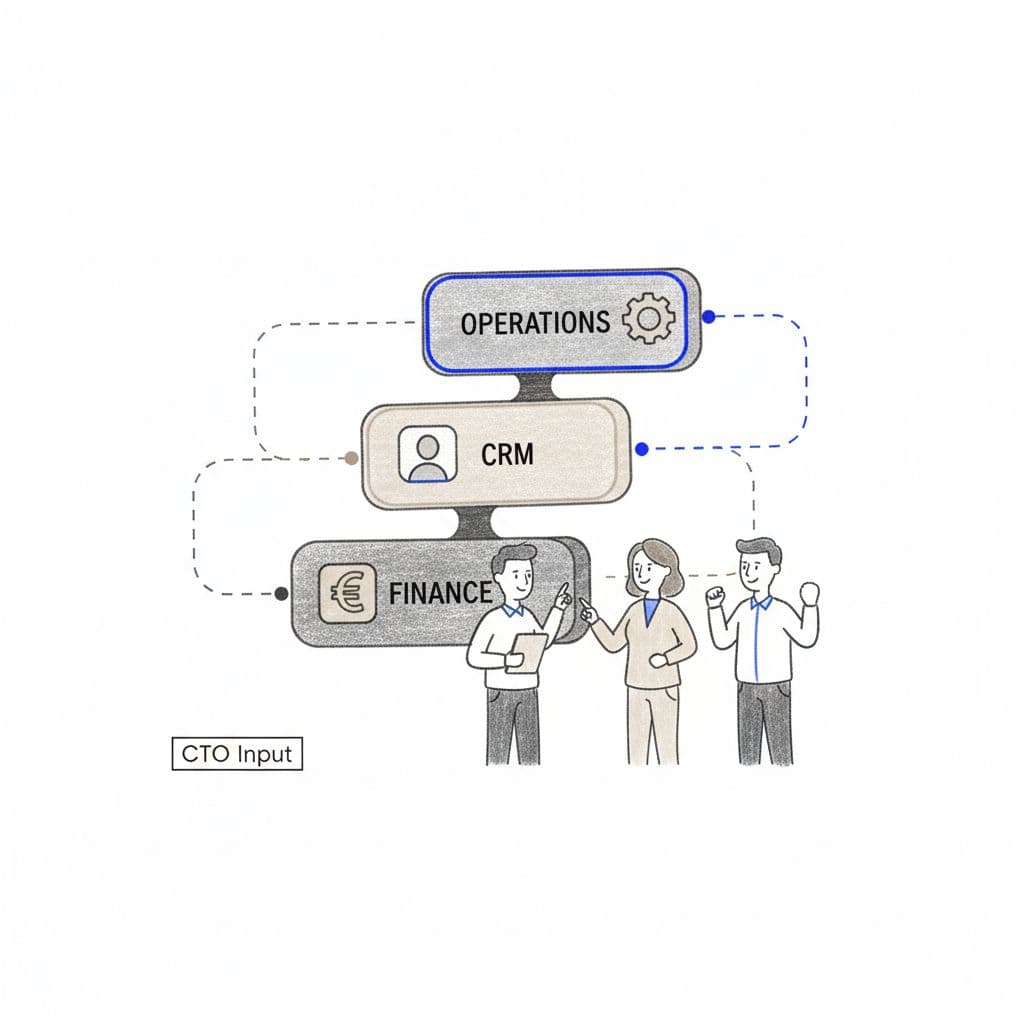
Most mid-market companies need a clear technology blueprint of core platforms:
- One primary system for customer and revenue data.
- One for finance and billing.
- One for operations and workflow management.
- One for collaboration, knowledge, and automation tools.
Instead of chasing every new app, you decide which platforms will be the backbone, then align other software applications around them.
You look for platforms that:
- Have strong integration capabilities with your other systems.
- Support your compliance needs.
- Offer scalability and flexibility to match your growth plan and likely future acquisitions.
This is where you truly simplify tech stack decisions. You say, “These are our trusted foundations,” and resist the urge to bolt on point solutions that pull you back into sprawl. As Panorama Consulting notes in their tech stack optimization guidance, unplanned expansion quickly leads to integration challenges and hidden cost.
Set Clear Rules For Buying And Keeping Tools With Centralized Governance
With platforms set, you need simple, firm rules.
Think of it as lightweight centralized governance that fits a mid-market company, not a Fortune 500 bureaucracy.
Examples that work:
- No new system without a named business owner and an IT sponsor.
- Every new tool must connect to our core data platforms, or have a clear exception.
- Vendors must meet basic security standards to mitigate security risks and support standards before we sign.
- Tools are reviewed against usage and value before renewal.
These rules protect speed and efficiency. They give teams guardrails, not handcuffs.
Vendors will still knock on your door. But instead of debating features, you check them against your rules and platform strategy. If they do not fit, you do not buy. That is how you prevent vendor sprawl from regrowing.
Sequence Quick Wins First, Then A 12–24 Month Roadmap
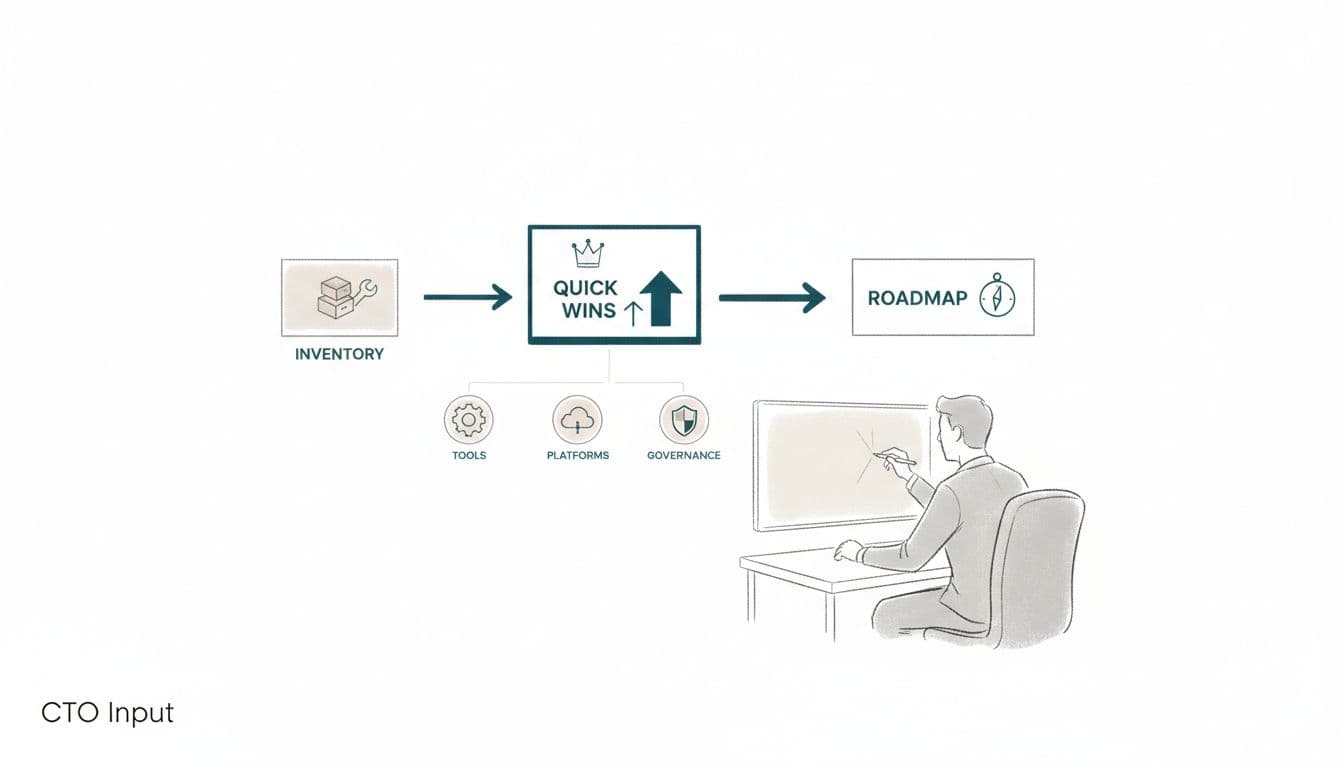 Once rules and platforms are clear, you can sequence action.
Quick wins in the first 90 days might include:
- Cutting unused licenses to lower IT overhead.
- Turning off tools that duplicate core platform features.
- Consolidating vendors in a high-spend area like communication or project tracking to reduce costs.
These moves free cash and reduce risk fast. They also signal to the board and your teams that you are serious about discipline.
From there, you shape a realistic 12 to 24 month roadmap. It lines up with business goals, planned changes, and your AI and automation tools ambitions, without adding more chaos or hindering streamlined systems. Resources like tech stack consolidation best practices from Zylo show how structured SaaS consolidation drives ongoing ROI rather than one-off savings as part of your optimization efforts.
This is exactly where a partner like CTO Input adds long-term value. You get a seasoned fractional CTO, CIO, or CISO to build and run the roadmap, while you stay focused on growth, customers, and capital.
What A Simple, Trusted Tech Stack Feels Like For Leadership
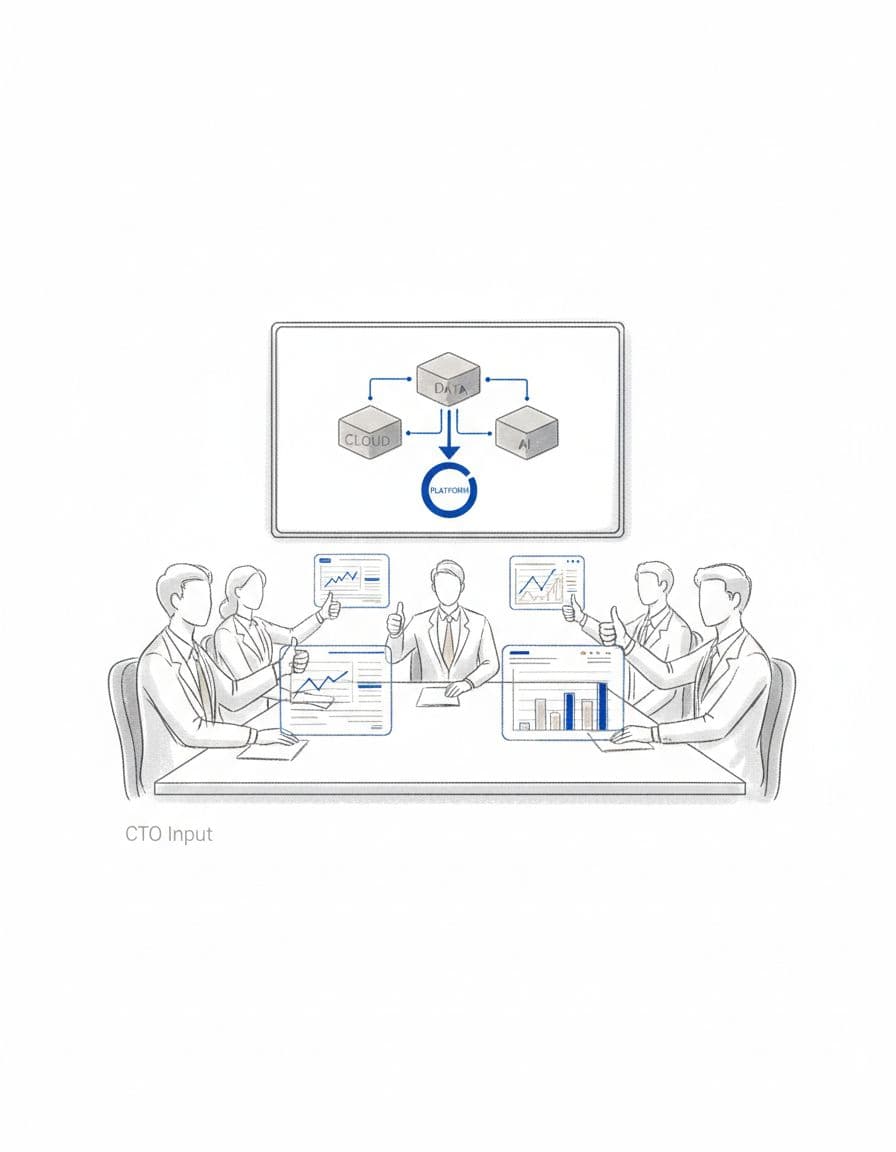 When you simplify tech stack decisions and stick to the plan, the day-to-day experience for leadership changes.
Cleaner Numbers And Fewer Surprises
You see steady, predictable tech spend free from the complexity of random invoices. Those random invoices stop. Every major platform has a clear owner and a clear link to revenue, risk reduction, or operational stability.
Board and lender reviews get easier. You can point to a concise stack, explain where the money goes, and show how it supports growth, security, and resilience through robust cloud infrastructure. You look and feel in control.
Teams Moving Faster On The Same Playbook
Your teams spend less time wrestling tools and more time serving customers, boosting productivity.
Shared streamlined systems mean shared data. Launching a new product, changing a process, or responding to an incident becomes an agile and adaptive coordinated effort that improves user experience, not a scramble across five systems.
The tone shifts between business units and technology. Instead of hearing, “We cannot do that with our systems,” you hear, “Here is how we will do that on our core platforms.”
A Trusted Guide Sitting On Your Side Of The Table
The tech stack will keep changing as your business grows. Vendors will keep selling. Threats will keep evolving.
Having a seasoned fractional CTO, CIO, or CISO as an ongoing partner means you do not face that alone. You have someone whose job is to keep the stack simple, secure, and aligned with your strategy’s scalability and flexibility, not to sell you another product.
That is the role CTO Input plays for mid-market leaders who want technology to support their growth, not dominate their calendar.
Conclusion: You Do Not Need More Tools, You Need A Smaller, Smarter Stack
Vendor sprawl, often from too many SaaS applications, is not a sign that you failed as a leader. It is a sign that growth happened faster than structure. The good news is that you can simplify tech stack decisions with a clear plan, not a giant transformation project.
Start with a plain-spoken inventory and spend map. Choose the few platforms you will build around. Set simple rules for buying and keeping tools. Sequence quick wins, then a 12 to 24 month roadmap that aligns tech, cost, and risk with your actual growth plan and long-term goals.
If you want a low-stakes first step, consider a short tech stack review or diagnostic conversation. Visit https://www.ctoinput.com to learn how fractional CTO, CIO, and CISO support can help you move from vendor sprawl to a simple, trusted stack. You can also explore more practical guidance on the CTO Input blog at https://blog.ctoinput.com to keep building a technology strategy you and your board can trust.