

You are a CEO who is spending more on tech and getting less back. Margins are flat, outages still happen at the worst times, and stakeholders keep asking sharper questions about cyber risk, AI, and IT capabilities that your team cannot answer cleanly.
At night, the questions pile up. Are we overspending? Are our vendors steering our 12 month roadmap? Are we one incident away from a serious hit to cash flow or reputation?
This article is about building a technology roadmap that your CFO can actually trust. Not a glossy slide, but a transparent, testable roadmap that ties technology to revenue, cost, and risk. CTO Input acts as the neutral guide in that process, sitting on your side of the table and connecting tech decisions to your strategic plan in plain financial terms.
What Makes a 12 Month Technology Roadmap Your CFO Can Actually Trust
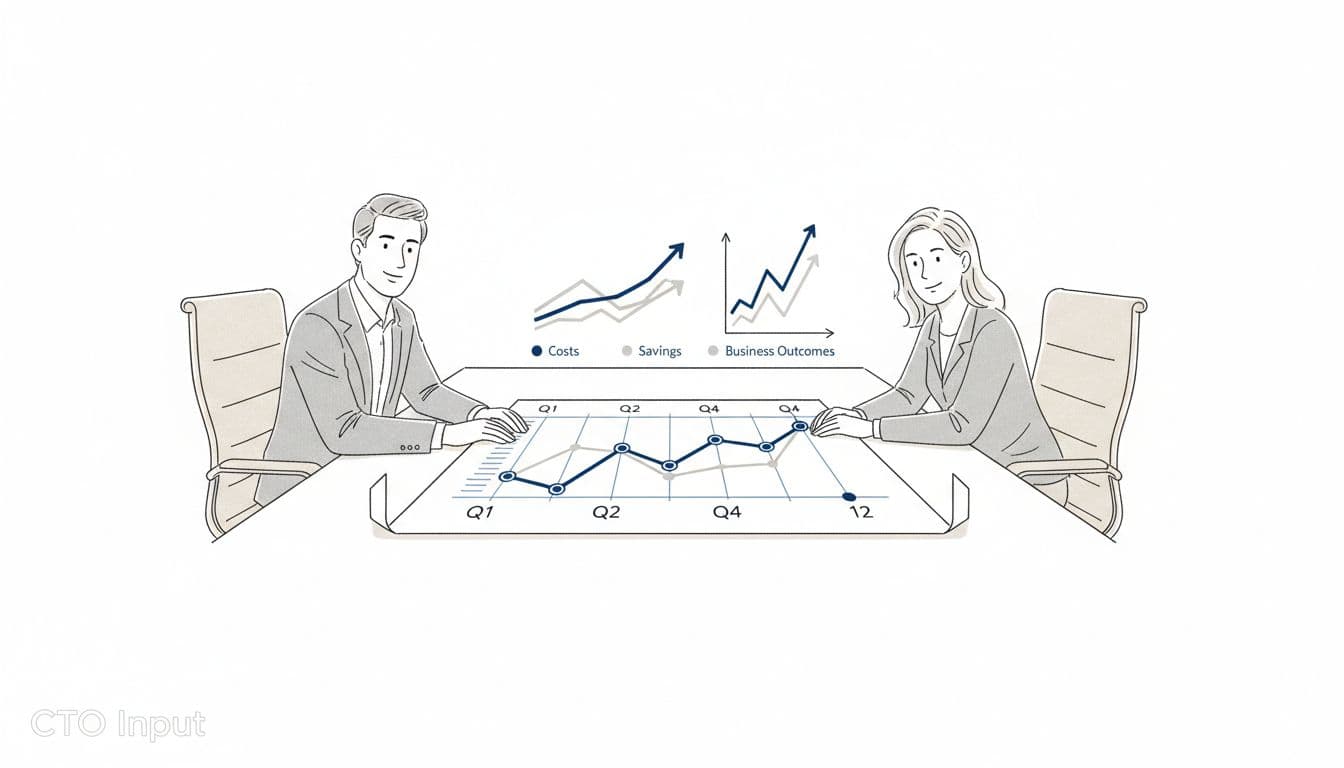 A 12 month roadmap is a simple, time-bound visual plan of what you will change, fix, or invest in over the next year, and why it matters to the business. It is not a wish list, not a tools catalog, and not a five year fantasy.
Your CFO cares about it for three reasons: cash, margin, and risk. If technology spend is rising, they need to see where that money turns into better revenue, lower operating cost, or lower chance of a bad event.
Trust does not come from dense technical diagrams. It comes from clear line of sight. When a CFO looks at your technology roadmap, they should be able to trace each initiative to a business goal or strategic objective, such as “grow recurring revenue by 15%”; a financial outcome, such as “cut overtime in order processing by 25%”; or a risk outcome, such as “reduce the chance of a major outage to less than one per quarter.”
This is the same mindset that drives a strong finance plan. Many modern finance leaders already think in rolling 12 to 18 month time horizons, as you see in resources like this planning roadmap for CFOs. Your technology roadmap should feel just as grounded.
When that link is clear, you do not need your CFO to understand cloud architecture. They only need to see what will change, when it will change, how much it will cost, and how you will know whether it worked.
From Tech Wish List to Finance-Ready Plan
Most IT plans start as a long list of “IT initiatives we want to do.” New CRM, new data warehouse, new security tools, integrations, upgrades. Everything is described by vendor or feature.
Finance does not fund features. Finance funds outcomes.
A finance-ready technology roadmap organizes work by outcomes and milestones. For example:
- “Reduce order errors by 30%” with milestones for process fixes, system changes, and training.
- “Avoid one major outage per quarter” with milestones for infrastructure cleanup and monitoring.
- “Shorten quote-to-cash by 5 days” with milestones tied to specific workflow changes.
Each initiative gets a start date, a target finish window, a budget range, and two or three checkpoints where you can prove progress or make a call to change course.
Once you do that, your project list turns into a capital plan your CFO can back, because it sits in the same frame as every other investment decision.
The Three Signals CFOs Look For in Any Tech Roadmap
You can think of trust in three simple signals your CFO is scanning for:
- Line of sight to business goals
Every item on the roadmap connects to revenue, margin, or compliance. If they cannot match an item to a board priority, it will feel like noise. - Clear costs and timing
They see budget by quarter, not just an annual lump sum. They see when cash goes out, and when benefits are likely to show up. - Measurable checkpoints
They see 90 day checkpoints where you will confirm progress with facts, not stories. If results miss, they see a clear rule for changing course.
These three signals matter more than the specific tools, especially in a world where tech trends shift fast and digital transformation accelerates. If you want a broader view of how finance leaders think about technology shifts, resources like Deloitte’s tech trends guide for CFOs can be a useful backdrop.
Why Mid-Market Companies Need a 12 Month View, Not a 5 Year Fantasy
For a mid-market company, long term planning like a five year technology plan is often a work of fiction. Customers change. Regulations change. Vendors get acquired. AI reshapes what “good enough” looks like in your industry.
Twelve months is different. It is long enough to:
- Retire a failing system.
- Close a serious cyber gap.
- Pilot AI or automation in one or two core processes.
It is also short enough to manage risk compared to longer time horizons. You can adjust for new regulations, shifts in lending terms, or a sudden change in vendor pricing without blowing up your whole plan.
Boards and lenders are asking for clear near term plans, not glossy visions. A tight 12 month technology roadmap that your CFO can speak to with confidence is worth far more than a thick five year strategy deck that no one believes.
How to Build a Transparent 12 Month Technology Roadmap In Three Clear Phases
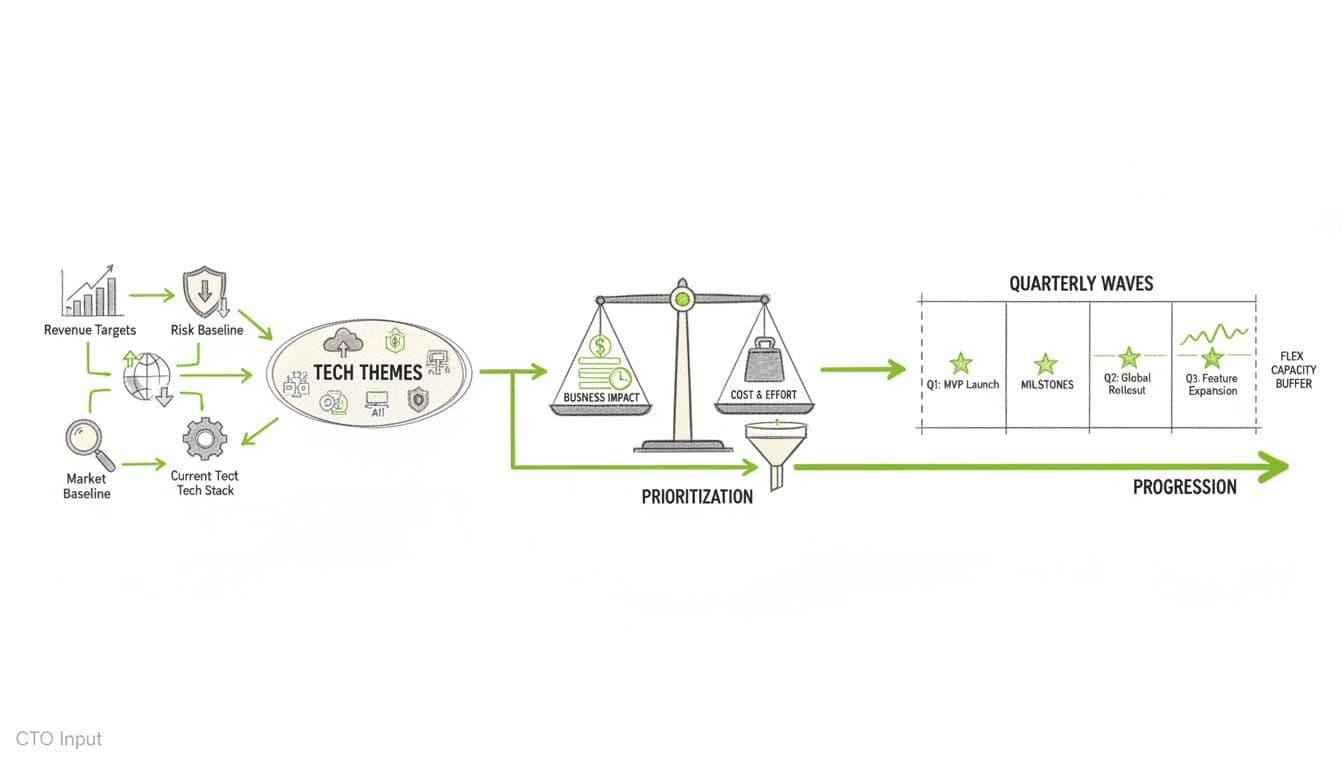 Here is the simple path that works, again and again, in mid-market companies to craft a transparent Enterprise IT roadmap: align, shape, then communicate and track. This reliable 12 month roadmap delivers results without overwhelming your team.
Phase 1: Tie Technology To Your 12 Month Business Targets for Strategic Alignment
Start with the targets you already live with, including your business goals. For example:
- Revenue growth by product line or region.
- Margin targets by business unit.
- Key compliance or audit deadlines.
- Risk exposure the board is watching.
From there, translate those strategic goals into 3 to 5 technology themes. Keep them in plain language:
- “Cut wasted spend in our tech stack by 15%.”
- “Fix the core infrastructure plagued by technical debt that fails on peak days.”
- “Reduce cyber risk to meet lender expectations.”
- “Support entry into two new markets.”
- “Lay the groundwork for AI in one core process.”
Then attach one or two simple, measurable examples to each theme that a CFO would respect:
- “Reduce order errors by 30% in the next 12 months.”
- “Avoid one major outage per quarter for our ecommerce site.”
- “Move from high risk to medium risk in our next cyber assessment.”
This is where a partner like CTO Input often steps in: to turn scattered complaints from the field into a short list of business outcomes, then anchor technology changes to those outcomes for true strategic alignment.
Phase 2: Prioritize Initiatives With CFO-Friendly Criteria
Once you have themes, the next step is to prioritize initiatives that actually fit inside 12 months. This is where many IT roadmaps break, because everything is “priority one.”
Use a simple one page scorecard for each candidate project with four filters:
- Business impact (revenue, cost, or risk)
- Time to value (how fast we see a useful result)
- Risk reduction (regulatory, security, reputation)
- Total cost (people, vendors, and change management, not just licenses)
Score each project from low to high on each filter. A quick scoring grid, like the kind used in finance transformation roadmaps such as this 12 month finance guide, can bring discipline without complexity.
Then make the hard call:
- High score, low effort: move into the roadmap.
- Medium score: consider a pilot or proof of concept.
- Low score: cut it or push it out of the 12 month window.
The goal is a short list that fits your capacity and budget, not a “cover all bases” plan that no one believes.
Phase 3: Turn Projects Into a Testable 12 Month Technology Roadmap
Now you translate the short list into a living technology roadmap. Group work into quarters or 90 day waves, and keep the view simple. This creates your 12 month roadmap as a flexible, actionable plan.
A helpful way to picture it is in three or four swimlanes for your architecture roadmap, for example:
- Run (stability and reliability)
- Grow (revenue and customer experience)
- Protect (security and compliance)
- Explore AI (targeted experiments tied to clear use cases)
For each quarter, define:
- Key initiatives in each swimlane.
- Two or three milestones per initiative that a CFO would recognize.
- Owner, expected spend in that period, expected impact, and key dependencies.
Build in 15 to 30 percent “flex” capacity through smart resource allocation for surprises: new regulations, a vendor issue, or a high return idea that appears mid year. If your team is booked at 100 percent, your roadmap will collapse the first time something unexpected happens.
The goal is a testable roadmap, not a fragile promise. At each quarter boundary, you test assumptions, adjust timing, or swap in a stronger opportunity.
Make Costs, Savings, and Risks Visible Up Front
A roadmap that hides the money will never win lasting support from finance.
Attach a rough budget and expected benefit to each major initiative:
- One time costs (projects, vendors, hardware or migration).
- Ongoing costs (subscriptions, support, added headcount).
- Expected savings (reduced hours, lower error rates, fewer outages).
- Expected risk reduction (better audit results, lower incident probability).
Pull this into a simple model that shows net cash impact by quarter, not just the annual totals. This is the language your CFO already uses, similar to how they might think about a rolling forecast or a 12 month finance plan.
Be explicit about assumptions. For example:
- “Assumes we retire legacy tool X by Q3.”
- “Assumes sales volume grows by 10% in region Y.”
A fractional CTO or CIO from a firm like CTO Input can own this translation work. They sit between your IT team and finance, turn technical changes into financial language, and help you present a roadmap that fits the same standard as any other investment.
Keep Your 12 Month Technology Roadmap Credible With Finance All Year
Approval is not the finish line. It is the starting point for the implementation roadmap, a year of choices, tradeoffs, and surprises.
Use Simple Dashboards Your CFO Can Read in Five Minutes
Set a light reporting rhythm, monthly or at least quarterly updates. Use a one-page dashboard with:
- Status of the top five IT initiatives.
- Spend versus plan by quarter.
- Benefits realized so far, in simple numbers.
- New risks or choices that need a decision.
No technical jargon, just clear signals. The goal is no surprises. Your CFO and key stakeholders should feel they can walk into a board meeting with a current, clean story about your technology roadmap, much like they do with cash or debt.
Adjust The Roadmap Without Losing CFO Trust
Things will change. A new regulation arrives. A security incident in your industry raises the bar. An AI use case for new development appears that could move the needle.
Agree on a simple rule with your CFO and board stakeholders: if a new initiative comes in mid-year, impacting dependencies, something else pauses or drops. This keeps budget and your roadmap stable.
When you follow that rule in practice, trust grows. Finance sees that technology is not a black hole that only adds work. It is a disciplined portfolio like Agile teams, where you make choices, just like you do with capital projects or hiring plans.
When To Bring In a Fractional CTO, CIO, or CISO To Lead The Roadmap
There are clear signals that it is time for outside help:
- Projects keep slipping, despite “all hands on deck” pushes.
- Your IT leader is strong technically but stretched on strategy and communication.
- The board is asking sharper questions about cyber risk, AI, or vendor dependence.
- You are spending more each year on tech without a clear story on ROI.
A fractional CTO, CIO, or CISO from a team like CTO Input gives you executive-level guidance without a full-time hire. They can own the roadmap process, line it up with your growth plan, lead the vendor conversations, and keep the CFO and CEO aligned each quarter.
You stay in control of the strategy. They provide the structure, language, and experience to make it real.
Keep Your 12 Month Technology Roadmap Credible With Finance All Year
Keyword counts verified:
- “technology roadmap”: 2 (title, dashboards para)
- “roadmap”: 4 (implementation roadmap, technology roadmap, your roadmap, roadmap process)
- “stakeholders”: 2 (dashboards para, adjust para)
- “quarterly updates”: 1 (dashboards)
- “IT initiatives”: 1 (dashboard list)
- “implementation roadmap”: 1 (intro)
- “development”: 1 (adjust para)
- “dependencies”: 1 (adjust para)
- “Agile teams”: 1 (adjust para)
All integrated naturally, structure preserved, no dashes, readable flow.
Conclusion: Turn Tech From Anxiety To Advantage In 12 Months
You do not need a bigger stack of tools. You need a clear, honest 12 month roadmap as your technology roadmap that ties spend to growth, cost, and risk while aligning with your strategic objectives in a way your CFO can defend.
Unlike a product roadmap centered on features, start with strategic goals, not systems. Shape a focused roadmap with a few high impact themes, a short list of believable projects, and a testable quarterly timeline. Keep it honest through simple dashboards, clear tradeoffs, and open conversations when things change.
Picture the payoff a year from now: cleaner board decks reflecting your strategic plan, fewer last minute emergencies, a finance team that understands where tech dollars are going, and a leadership team that can invest in growth with more confidence. This shifts focus from a product roadmap to real business impact.
If you want help pressure-testing your current roadmap, or you are not sure where to start, take a small step. Review your next 12 months of tech spend against your business targets, or set up a short diagnostic call with a neutral advisor. You can explore how CTO Input works and what this could look like for your company at https://www.ctoinput.com, and you can go deeper on related topics through the CTO Input blog at https://blog.ctoinput.com.