

You are a CEO or COO in executive leadership who keeps signing bigger tech checks and getting weaker results. Systems still fail at the wrong moment, security questions keep landing in your inbox, and every large project seems to slip a quarter. The board is polite, but you can feel their patience thinning.
You see the pattern. Siloed IT due to the absence of clear roles and responsibilities. Vendors who talk past each other. Security and data issues that no one fully owns. Your margins, customer trust, and even lender confidence are now tied to technology decisions that are not working as a whole, often stemming from a lacking robust IT organizational structure.
The good news is that this is a structure problem, not a fate problem. When you move from scattered IT to a clear technology leadership team structure built on cross-functional teams, you get one voice on cost, risk, and growth. CIO, CISO, CDO, CTO (Chief Technology Officer), and product leaders start acting as one team, not four separate tribes. That is the shift to true technology leadership that CTO Input helps mid market companies make, with a simple, business first model that fits your size and stage.
Even though this video is about siloed call center operations, the pattern is the same: fragmented ownership, slow response, and frustrated customers when teams work in isolation.
Why Siloed IT Is Costing You Money, Time, And Trust
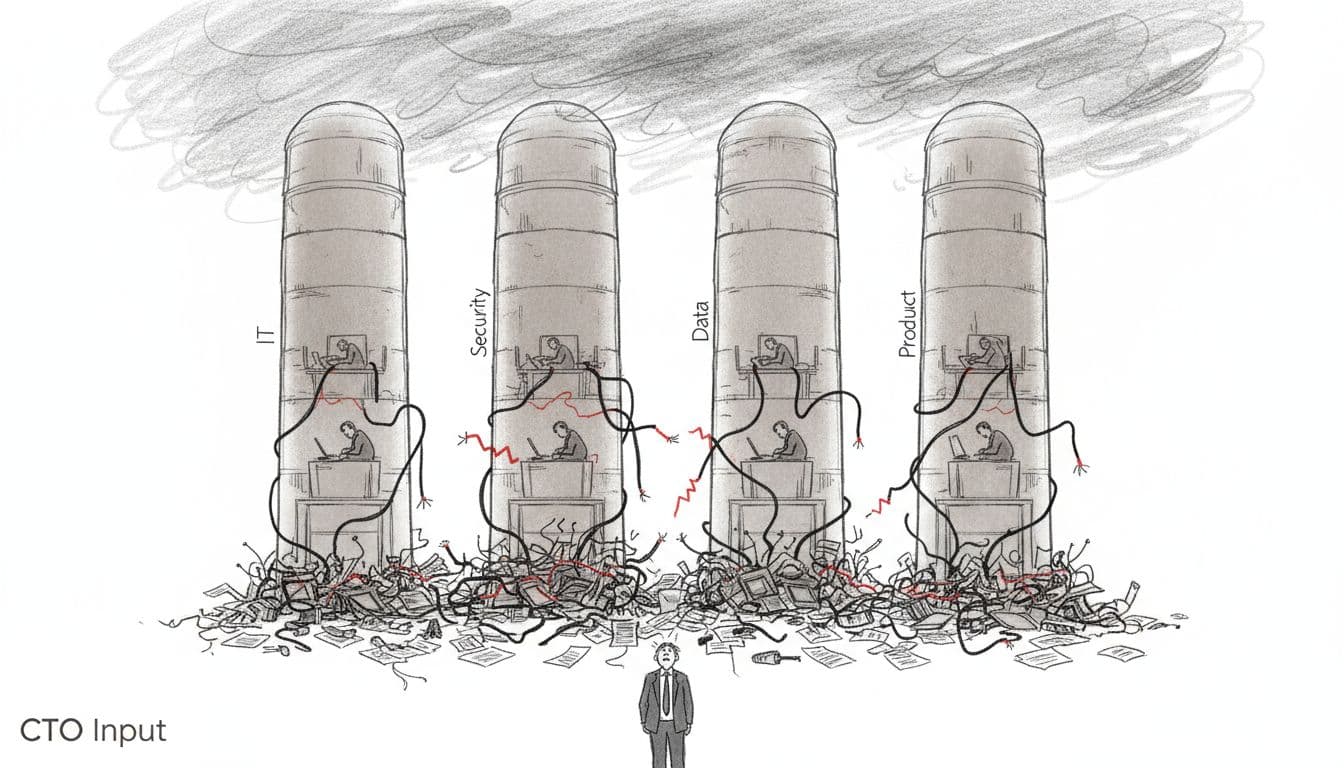
In a mid-market company, siloed IT rarely starts as a grand plan. It grows a little at a time. You add a help desk team to the IT department here, a small software development group there, a security vendor after a scare, and a data person to the IT department when reports start to lag.
At first, it works well enough. Then growth exposes the cracks, leading to a fragmented and chaotic IT organizational structure. The board starts asking tougher questions about cybersecurity risk and resilience. Customers expect faster, smoother digital experiences. Lenders want proof that systems can support the next jump in revenue.
Siloed IT, which often reflects a poorly managed decentralized structure, means nobody owns the full picture, creating a lack of accountability. Your CIO (if you have one) defends project spend. A security manager worries about controls, but may not sit in key budget talks. Data work lives inside a business unit like finance or marketing. Product or engineering leaders do what they can, but they fight for attention against day-to-day IT fires and infrastructure issues. This setup falls into a narrow functional organizational structure.
The result is confusion for vendors and employees, with poor IT governance driving different signals on cloud strategy, AI, and which platforms are “standard.” Cyber questions drift between IT and security without a clear owner. You never get one simple, confident answer to “are we safe enough for our risk profile?”
A stronger technology leadership team structure changes that dynamic. Instead of decisions bouncing between silos in this poorly managed decentralized structure, a small senior group holds the full map: systems, security, data, and product experience. That is where cost savings, better control, and faster change start.
What Siloed IT Looks Like In A Growing Company
Picture three short scenes.
First, IT support picks a new ticketing tool. Engineering has already chosen a separate one for their backlog. Vendors integrate with only one. Teams waste hours reconciling work, and you still hear, “I did not know that outage was ours.”
Second, a security consultant asks for multi-factor authentication everywhere. The operations team agrees in theory, but the system rollout drifts because no one owns the cross-team impact. Months later, you are still exposed, and your next audit flags it.
Third, marketing buys an AI-based analytics tool. Sales buys a different one. Operations experiments with a third inside a SaaS platform. None share a data model or guardrails. You pay three bills and still cannot get a simple, trusted view of customer behavior.
Each decision looked small in isolation. Together, they create a web of systems that do not talk, owners who cannot answer basic questions, and a project backlog that never really shrinks.
Hidden Costs Of Siloed IT: Overspend, Risk, And Slow Change
Silos hide costs in plain sight. Two teams might pay for overlapping tools. Old platforms stay alive “just in case” because no one owns the exit plan. Security features you already bought sit unused because they live in a different budget line.
Risk also hides in the gaps. No single leader can tell you your true cyber risk posture in business terms. You feel this when:
- An audit turns up issues that were “known” but never fixed
- A key product launch slips, extending time to market (TTM), because integration work was underestimated
- A lender or investor asks about incident response, and the room goes quiet
Customer impact is slower but just as real. Fragmented decisions make it harder to respond to new demands. While your team debates which system owns the data, a competitor ships a cleaner experience.
At the center of all this sits you, the CEO or COO, without a single technology voice you trust on cost, risk, and data. That is the real price of a siloed model.
What A True Technology Leadership Team Structure Looks Like
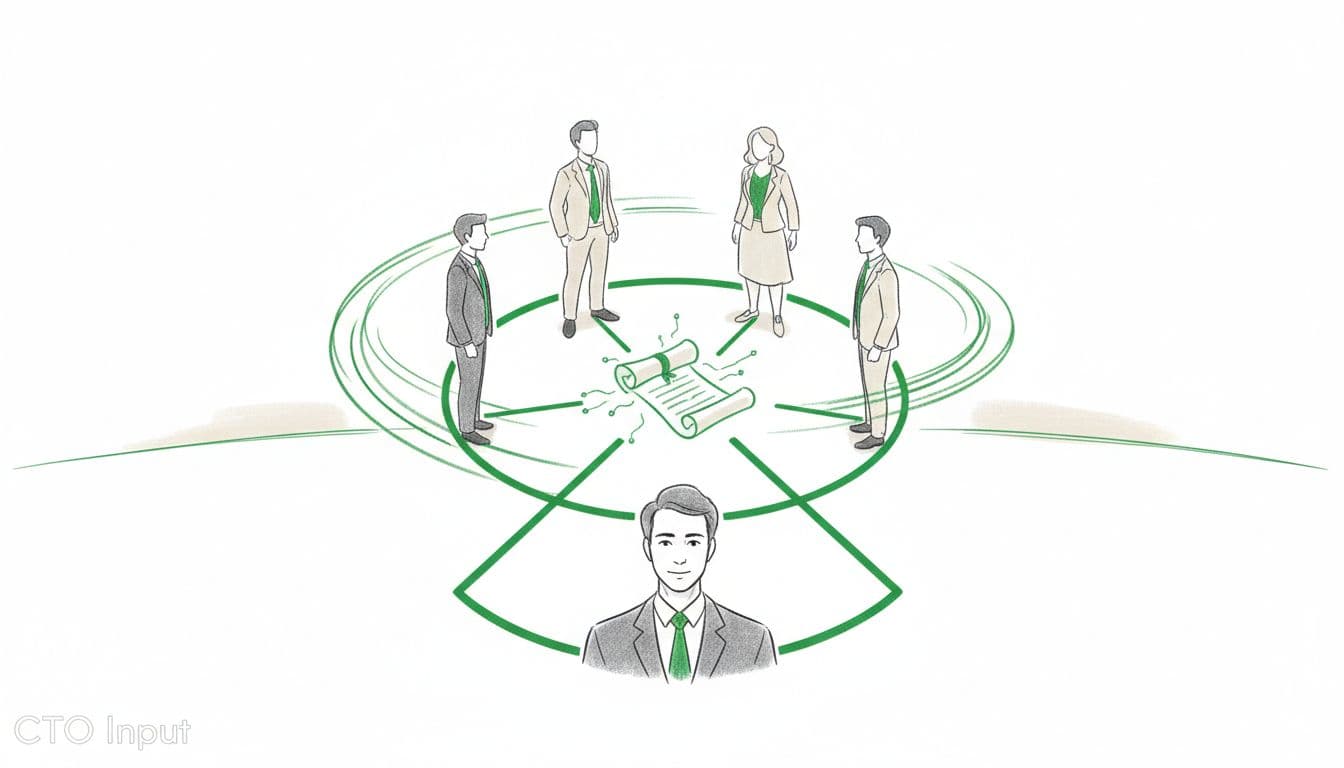
A true technology leadership team defines an effective IT organizational structure, not a big organizational chart. It is a small, senior IT team structure that shares one agenda and one story for the business.
In most mid-market companies, that group includes four core seats: CIO, CISO, CDO (or data lead), and a product or engineering leader. Some are full time. Some can be fractional. The key is how they work, not the badge on their email.
This group anchors itself to your business goals and objectives. They connect system decisions, security posture, data strategy, and product roadmap to revenue targets, margin goals, and regulatory expectations with clear business alignment. They build one shared roadmap and scorecard instead of four.
Research on new tech leadership models, like the work from Spencer Stuart on defining the new technology leaders, shows how roles such as CIO, CISO, and product leaders are shifting toward more integrated, business-facing work that drives innovation. Mid-market firms can adopt the same thinking in a lighter, right-sized form.
You get a clear outcome: one integrated view of cost, risk, and growth from this IT organizational structure that you can take to your board with confidence.
Four Core Seats: CIO, CISO, CDO, And Product Working As One
Here is a simple way to think about the four seats.
- CIO: Owns systems, platforms, tech spend, and the IT department. This role makes the final call on what you build, what you buy, and what you shut down.
- CISO: Owns security and incident readiness. This role defines your risk tolerance, sets guardrails, and reports on where you stand. Discussions around how CIOs and CISOs should work together highlight how powerful this partnership can be when aligned.
- CDO or data lead: Owns data quality, insight, and data security alongside the CISO. This role decides how data is structured, who can use it, and which metrics are “official.”
- Product or engineering leader: In a product-based IT organization, owns the customer and employee experience across your tech stack. This role turns strategy into working features through software development that people actually use.
Each seat supports you by owning a slice of the decision space, simplifying reporting lines. The real power comes when they operate as cross-functional teams, not solo experts in a fragmented functional organizational structure. They debate tradeoffs together, then present one clear answer to you and your board. This differs from a pure matrix organizational structure but provides similar integration.
How A Unified Tech Leadership Team Makes Better Decisions Faster
In a unified model, the team operates from one shared rhythm in a centralized structure.
They keep a single technology and cyber roadmap tied to the business plan. They meet weekly or every two weeks. They review the same scorecard. When a big decision shows up, speed, cost, and risk are all on the table at once.
Think about three simple moves:
- Approving a new cloud system: CIO leads on fit and cost, CISO checks controls, CDO checks data flows, product leader checks impact on users. One meeting, one answer.
- Setting AI guardrails: CISO sets risk bounds, CDO defines data rules, product leader frames use cases, CIO checks vendor fit. You get clear rules instead of scattered side projects.
- Sunsetting old tools: CIO targets savings, CISO checks security gaps, CDO manages data migration, product leader protects user experience. No surprise outages.
Leaders who grow from CISO into broader roles, as seen in the Educause piece on the CISO to CIO pipeline, show how this integrated mindset scales. Your company does not need a giant enterprise budget to benefit from the same pattern.
A Simple Path To Move From Siloed IT To A Unified Leadership Team
You do not fix silos with another tool. You fix them with a better decision model.
Here is a simple path mid market CEOs use with CTO Input. It is practical, light, and built around conversations you can start this quarter.
Step 1: Map Your Current Technology Decisions And Owners
Start with a fast mapping exercise. In one sitting, list the major technology decisions that shape your business for the next 2 to 3 years:
- Systems to build or buy, including software development
- Cyber risk tolerance and incident response
- Data access and reporting
- AI use across business units
- Vendor contracts and renewals
Next, write down who really owns each decision today, mapping current roles and responsibilities. Not the person with the title, the person everyone looks at when something breaks.
You will see patterns fast. Gaps where no one owns key issues, revealing a lack of clear accountability. Overlaps where two leaders both think they own the same choice. Places where vendors, including Managed Service Providers (MSPs), are quietly running the show.
Step 2: Design A Right Sized Technology Leadership Team For Your Stage
Take that messy map and sketch the IT organizational structure you need for the next 12 to 24 months, using a simple organizational chart.
You might land on a fractional CIO plus a part time CISO. Or a combined data and product lead for now, with a plan to split later. Some companies create a small “technology council” of cross-functional teams that includes finance and operations, allowing for a lightweight matrix organizational structure so money and risk stay in the room. This IT organizational structure defines the optimal IT team structure for your stage.
The goal is not a perfect structure. The goal is a simple model that fits your size, risk, and growth plans, provides agility and flexibility, and gives you one clear voice. A partner like CTO Input can model and test this structure with you, without forcing long term hires before you are ready.
Step 3: Align Roadmap, Metrics, And Board Story Around One Voice
Once the structure is in place, focus on alignment outcomes.
You want one technology and cyber roadmap, a short set of shared KPIs, and a clear story for your board and investors. This is where surprises drop, and decision quality jumps, especially for product engineering teams.
Hard calls become easier. You can cut or re sequence projects while still showing how you will hit growth and risk goals. Most CEOs feel the shift in their own calendar first. Fewer emergency meetings, more time on forward looking choices.
From Scattered IT To Confident Leadership
The journey starts with a simple but painful picture: rising tech spend across your IT department, scattered systems in the IT department, growing risk, and a board that is losing patience. It ends with technology leadership through a clear IT organizational structure that gives you one story on cost, risk, and growth.
Imagine six months from now. Systems are more stable, moving towards a centralized structure for decision-making and risk management. AI and data projects follow one plan. Cyber questions have a clear owner and a clear answer. Board updates on technology are shorter, calmer, and backed by numbers you trust, signaling confident executive leadership.
You do not have to figure this out alone. Visit https://www.ctoinput.com to see how fractional CIO, CISO, and CTO (Chief Technology Officer) leadership can give you senior guidance without full time headcount. If you are ready for a simple next step, book a short diagnostic at https://ctoinput.com/schedule-a-call.
To see how other mid market leaders are reshaping their IT organizational structure, explore the articles and case style stories on the CTO Input blog.