

You probably know this leader. Smart, driven, cares deeply about the company. They can tell you how many trouble tickets are open, which ones are blocked, and who is late on estimates. They feel proud because they are “on top of the work.”
On the surface, that control feels safe. Technology is expensive, outages are scary, and every board meeting brings fresh questions about cyber risk and AI. Watching every ticket seems like the only way to keep things from going off the rails.
Here is the problem: CEOs Focused on Trouble Tickets Miss Growth and the Bigger Picture. While they stare at tasks, they lose sight of value, risk, and growth. Trouble ticketing systems are just a tool that teams use to track tech and project work, like a digital to-do list. It is not a steering wheel for the company.
This pattern shows up again and again. Tech feels too costly, too risky, and too distant from strategy. So the CEO dives into the trouble ticketing system. The intent is good. The impact is not.
Why Some CEOs Feel They Must Know Every Trouble Ticket
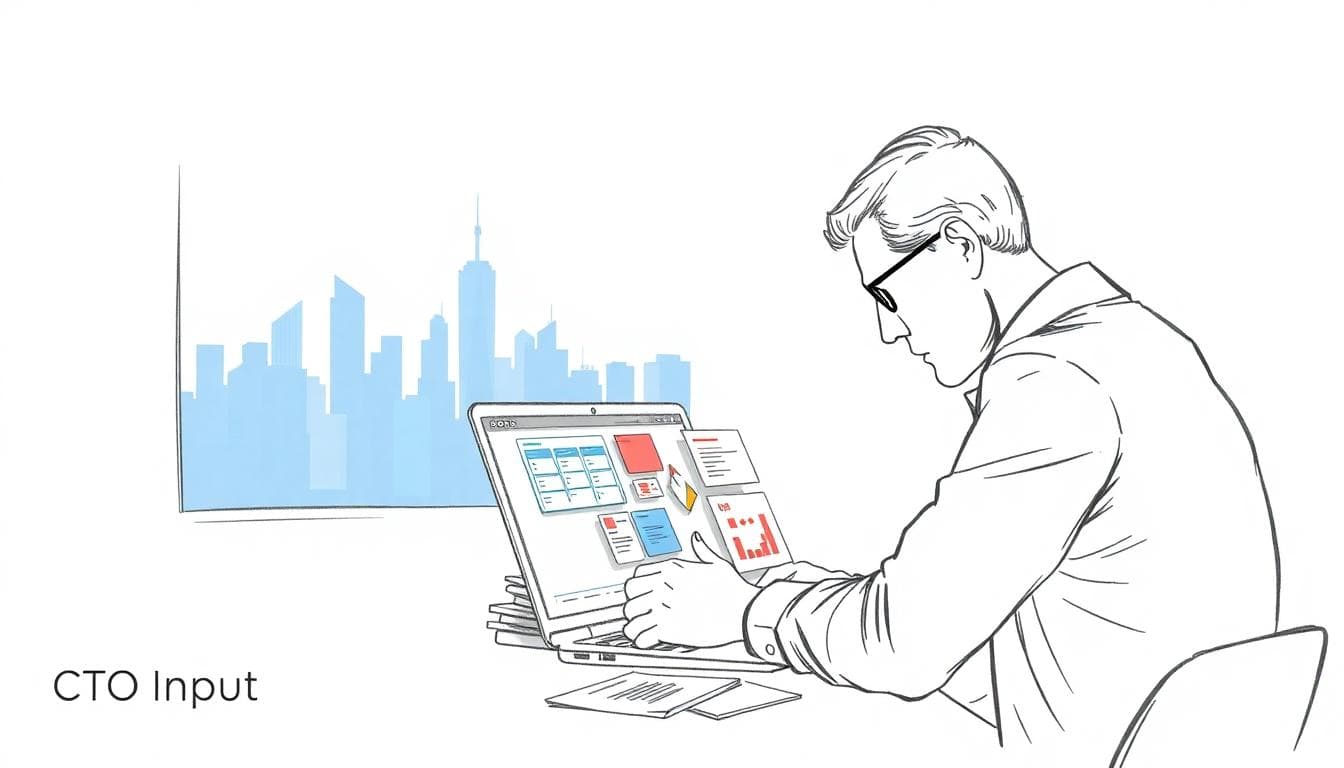
A CEO fixated on trouble tickets while real market opportunities sit outside the window. Image created with AI.
This is not about “bad” CEOs. Most who live inside trouble ticketing systems care a lot about their people and their customers. They are reacting to real pressure.
Fear of losing control over technology and risk
Cyber attacks, outages, AI misuse, privacy complaints, new regulations. The list keeps getting longer.
Boards, lenders, and investors now ask questions like:
- “How exposed are we to ransomware?”
- “Are we using AI safely?”
- “What is our recovery time if the main system fails?”
If you do not trust your tech reports, it is tempting to watch tickets instead. You look at every incident. You read every cyber task. You chase every production bug.
That fear is human. But it pulls you into the weeds. You end up checking work instead of building leadership, process, and clear risk limits. As one leadership coach on LinkedIn points out, micromanagement is usually a sign of deeper anxiety, not team failure, and it rarely fixes the root issue of trust and clarity (source).
Old habits from founder mode and early-stage success
Many mid‑market CEOs started as hands‑on founders. In the early days, knowing every detail worked. You reviewed every spec, joined every stand‑up, and approved every release. Speed came from your direct involvement.
Then the company grew.
You now have dozens or hundreds of people, multiple products, and real regulatory exposure. The same habit that once gave you speed now creates drag. You feel, “This is how I keep us safe and fast.” In reality, your presence in every ticket now slows the team and blurs accountability.
The company outgrew founder mode. The habit stayed.
Misreading metrics: thinking more detail means better management
Trouble ticketing platforms feels like a dashboard. Ticket counts, story points, burndown charts, hour estimates. The charts look precise. They give a sense of control.
For many executives, that precision is addictive. They ask for:
- Daily reports on ticket status
- Exact estimates on every bug
- Explanations for any slip on a small task
This feels like strong management. Often it is just busy data. As one discussion of “Why the Technology Ticketing System Sucks” put it, tooling like trouble ticketing systems can actually encourage more process and micro‑management while doing nothing to improve real delivery metrics (source).
The focus shifts from outcomes to activity. You end up managing the factory clock, not the market results.
How Micromanaging Trouble Ticketing Kills Strategy, Speed, and Trust

A missing puzzle piece that represents the strategic picture CEOs lose when they fixate on trouble tasks. Photo by Ann H
The real cost of trouble ticket micromanagement is not the time you spend in the tool. It is what that time replaces.
From strategic leader to super-senior project manager
When you watch every ticket, you become the highest‑paid project manager in the company.
Instead of:
- Meeting customers to understand where revenue can grow
- Testing new pricing or packaging
- Building partnerships or M&A options
- Shaping the 12 to 24 month product story
you are commenting on subtasks and debating whether a label should be “bug” or “story.”
Your team starts waiting for your comment before they move. Decisions pile up in your inbox. Releases slow. From the outside, it looks like “the tech team is always behind,” when the real bottleneck is executive attention in the wrong place.
Teams feel watched, not trusted, so quality and creativity drop
Developers and IT staff are used to accountability. They are less used to a CEO commenting on individual tickets.
When that happens often, daily work starts to feel like surveillance. People spend more time on perfect updates and defensive comments, and less on honest problem solving.
Stories from engineers in public forums show this pattern. In one thread, a developer wondered if constant Jira tracking and time logging was “normal” or a sign of micromanagement. Many replies described the same anxiety and loss of trust when leaders fixated on every ticket detail (source).
In that environment, teams stop raising structural problems. Technical debt grows quietly. Outages and surprises grow with it.
Busywork metrics hide real product and customer outcomes
What you watch is what your teams will optimize.
If you obsess over:
- Tickets closed per sprint
- Average story points per engineer
- Number of comments per ticket
you will get more activity. Not always more value.
The metrics that matter to the board and the market look different:
- Fewer outages and shorter recovery times
- Cleaner audits and fewer exceptions
- Faster onboarding for new customers
- New revenue from features customers actually use
When leaders track only trouble ticket activity, teams learn to “game” those measures. Work gets sliced into more tickets. Easy wins are over‑reported. Tough, high‑value changes wait at the back of the queue.
As one product leader wrote in a piece on trouble ticket as a double‑edged sword, the tool can quickly become an enabler of micromanagement and vanity metrics if leaders treat it like a telescope into every micro‑task instead of a light‑weight aid for planning (source).
Decision bottlenecks slow every project and frustrate the board
When every meaningful ticket needs your review, the entire flow of work depends on your calendar and attention span.
You see symptoms like:
- Releases that slip sprint after sprint
- Teams constantly “waiting on feedback”
- Fire drills right before board meetings
Board members and lenders see endless activity and very few completed initiatives. From their seat, this looks like weak execution, even if the real issue is a CEO buried in details instead of setting direction and boundaries.
What CEOs Should Watch Instead of Every Trouble Ticket
You do not need less insight. You need the right kind of insight.
Move from task-level detail to outcome-level dashboards
Shift from “How many tickets are in progress?” to “Are we improving the things that matter?”
Useful top‑level views include:
- Uptime for key systems and trend over time
- Number and severity of incidents, plus recovery time
- Release cadence for customer‑facing changes
- Progress against a short list of 90‑day priorities
- Milestones for major risk reduction work
These can come from your trouble ticketing platform or other tools, but they should be summarized in plain language. You should be able to review them in 15 minutes and know whether the tech engine is helping or hurting the growth plan.
Translate technology work into business language
Instead of asking, “When will this ticket be done?”, ask, “What business problem is this work solving?”
Every sizable effort should map to at least one of these:
- Revenue growth
- Cost reduction
- Risk reduction
- Better customer experience
Your technology lead should be able to explain big projects without trouble ticket screenshots. A senior CTO or CIO acts as a translator so you can stay at the right altitude and still feel in control.
Set clear guardrails, then let your team run
Your job is to define the playing field, not play every position.
Helpful guardrails include:
- Clear top 3 to 5 priorities for the next quarter
- Budget limits and investment rules for new tools
- A simple risk register for key cyber and compliance risks
- Decision rights that spell out what must reach you, and what must not
Once those are in place, your team knows when to move fast on their own and when to pull you in. That reduces surprises without turning you into the default project manager.
How to Step Out of Your Trouble Ticketing Platform Without Losing Control
You do not have to quit your ticketing platform cold turkey. Think of this as a 30 to 90 day reset.
Start with a 30-day experiment to limit your Jira involvement
For the next month, try this:
- Check your ticketing platform only once a week, at a set time
- Stop commenting on individual tickets
- Ask your tech lead for a one‑page weekly summary
Tell your team what you are doing and why. You are not “disengaging.” You are shifting to a level of control that fits your role and helps them do their best work.
At the end of 30 days, review what changed. Many CEOs find that delivery speeds up, meetings get shorter, and stress drops on all sides.
Build a simple technology and cyber risk story for the board
Your board does not want to hear about user stories and epics. They want a clear, repeatable story about:
- The health of major systems
- The top few risks and how you are reducing them
- The 3 most important technology initiatives in flight
- Recent wins that support the growth plan
This story should stand on its own, without ticket detail. Fractional CTO, CIO, or CISO support can help you build that narrative so you walk into every board or lender meeting with calm, confident answers about tech and cyber, instead of a stack of ticketing system exports.
Invest in the right leadership and processes instead of more tools
If you feel forced into your ticketing platform, that is usually a signal.
You may lack:
- A senior technology leader you truly trust
- Strong incident and change management
- Clear product ownership and prioritization
Without those, tools like ticketing systems fill the void and you get dragged down a level. Strong leadership and simple, consistent processes let you step back up to strategy, while your teams handle execution.
Conclusion: Lead the Business, Not the Backlog
CEOs Who Know Every Trouble Ticket Are Missing the Bigger Picture of growth, risk, and long‑term value. Living inside your ticketing platform feels like control, but it quietly drains your time, slows delivery, and weakens trust across the company.
Real control comes from choosing the right altitude. Step out of task detail, define clear outcomes, and let capable people run inside solid guardrails. If you want help making that shift, you do not need another tool, you need a seasoned, neutral technology leader on your side.
Start with a small experiment this month. Change what you watch. Reframe how you talk about tech and risk. Then, if you are ready to get out of the weeds and turn technology into a growth engine, visit https://www.ctoinput.com and explore more executive‑level guidance on the CTO Input blog at https://blog.ctoinput.com.