

Picture a busy morning at a court self help center: staff shuffle between paper files and spreadsheets, phones ring nonstop, and clients wait anxiously for hours. Scattered data and manual handoffs steal precious time, while last-minute reporting fire drills push teams to the brink. In one legal aid clinic, 15% of staff hours vanish each year to re-entering data, putting compliance and trust at risk. To reduce wait times in court self help center, leaders must look beyond speed. This guide offers a clear path—diagnose bottlenecks, stabilize with quick wins, and build a roadmap for justice at scale. Practical solutions and board-ready steps await.
Understanding the Causes of Long Wait Times
Every executive director or operations lead has faced the moment: a client waits weeks for help, while staff scramble to untangle spreadsheets, move paper forms, and respond to urgent data requests. The drive to reduce wait times in court self help center operations starts here, with the root causes buried beneath daily tasks.
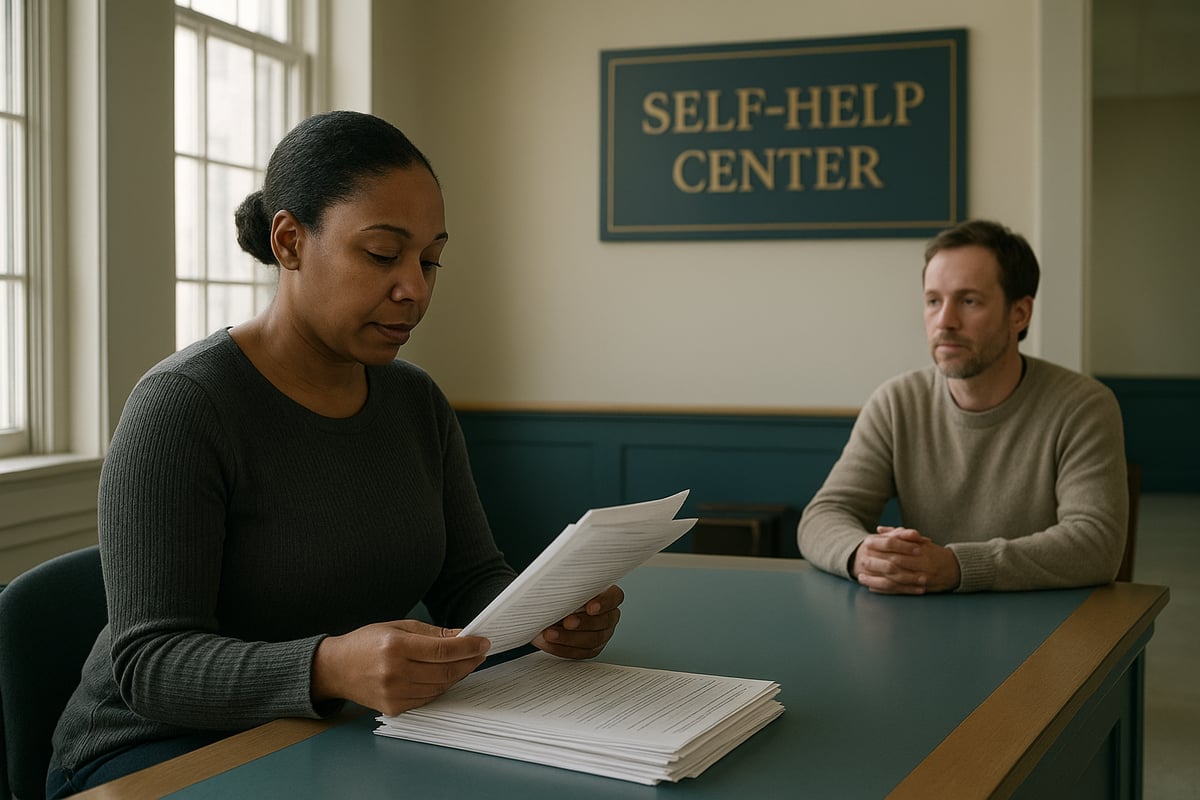
The hidden costs of scattered data and manual handoffs
Disconnected systems are the silent culprit behind delays and duplication. When case information is scattered across emails, spreadsheets, and paper files, staff spend countless hours re-entering data, increasing the risk of errors and compliance breaches.
For example, one anonymized legal aid clinic managing 1,200 cases annually lost nearly 15 percent of staff time to redundant data entry, which directly impacts efforts to reduce wait times in court self help center operations. Privacy and security risks rise as information gets copied between systems.
For a deeper dive into this challenge, see Reducing Spreadsheet Overload in Legal Aid, which explores how manual data handling can stall service.
Burnout and resource overload in frontline legal support
Burnout is not just a human resource issue, it is a leading driver of turnover and operational bottlenecks. In 2024, 62 percent of legal aid organizations reported “chronic” staff overload, according to the Legal Services Corporation.
When staff are stretched thin, wait times spike, and the effort to reduce wait times in court self help center environments becomes even more challenging. Burnout leads to mistakes, missed follow-ups, and a loss of institutional trust.
Compliance, trust, and reporting fire drills
Pressure from boards and funders for defensible, timely data often triggers “reporting fire drills.” Teams drop everything to assemble data for grants or audits, leaving daily client work on hold. This cycle creates operational shortcuts and a growing backlog.
The inability to reduce wait times in court self help center settings erodes trust with clients and oversight bodies. Without reliable data systems, compliance risks multiply, making every reporting cycle a test of resilience.
Systemic barriers: Language, digital access, and process complexity
Many clients face hurdles beyond paperwork. Complex forms, digital literacy gaps, and language barriers prevent swift access to help. For non-English speakers or those without reliable internet, the path to reduce wait times in court self help center processes is especially tough.
Each extra step or unclear instruction adds friction, leading to abandoned intakes or missed appointments. Addressing these barriers is essential for equitable service.
Diagnosing Your Center’s Wait Time Bottlenecks
Frontline staff in court self help centers often face a daily scramble—chasing scattered data, juggling manual handoffs, and scrambling for last-minute reports. The cost is real: lost hours, compliance risk, and staff burnout, especially in high-stakes areas like immigration or youth justice. To reduce wait times in court self help center operations, leaders must start by uncovering where friction hides.
Key takeaways:
- Map every step to see hidden delays.
- Quick wins can reduce wait times in court self help center processes in under 90 days.
- Data and frontline feedback reveal true bottlenecks.
- Use proven tools to guide diagnosis and reporting.

Intake-to-outcome mapping: Where are the delays?
Begin with a clear intake-to-outcome map. Document every step, handoff, and data entry point. In one anonymized coalition, mapping revealed seven separate intake forms for a single client, leading to days of delay. This is where many efforts to reduce wait times in court self help center workflows begin to show results.
Use the Intake-to-Outcome Clarity Checklist to ensure you capture each transition. Look for duplication, unclear responsibilities, and points where cases stall. Protect client privacy by anonymizing data as you go.
Quick-win diagnostics: What can be fixed in 30–90 days?
Once you see the process clearly, target high-friction points. Common quick wins to reduce wait times in court self help center settings include eliminating duplicate data entry, clarifying triage roles, and simplifying forms. For example, after mapping, a regional network reduced average intake-to-assistance time by 22 percent in just three months.
Focus first on high-volume steps. Pilot improvements in one area, then scale. Document each change and its impact for your next board report.
Metrics that matter: What to measure and why
Choose metrics that give actionable insight. Track average wait time, handoff failure rate, and staff rework hours. These benchmarks help reduce wait times in court self help center performance and make progress visible to leadership.
Set up simple dashboards for real-time tracking. Even a basic spreadsheet can surface trends, compliance risks, and opportunities for staff recognition. Metrics should inform decisions, not just reporting cycles.
Engaging staff and clients in diagnosis
Frontline staff and clients know where delays occur. Use anonymous surveys or short interviews to gather honest feedback. In one policy shop, this surfaced a hidden language barrier that was increasing wait times for non-English speakers.
Involve staff early to build buy-in and trust. Their insights are essential to reduce wait times in court self help center operations and ensure changes stick. Recognize contributions and share results widely.
Governance, Ownership, and Sustainable Change
In many justice-support organizations, operational chaos can feel relentless. Scattered data, manual case handoffs, and last-minute reporting fire drills all combine to drain staff, introduce privacy risk, and add weeks to client timelines. In immigration, incarceration, or youth legal aid, these gaps do more than slow service — they erode trust and compliance, putting funding and outcomes at risk. To reduce wait times in court self help center settings, leadership must create stable, accountable systems that drive measurable improvement.

The role of executive leadership in reducing wait times
Change begins at the top. Executive directors and boards set the tone for operational improvement, and their buy-in is essential to reduce wait times in court self help center environments. Leadership must prioritize transparent goals, clear communication, and resource allocation. When leaders sponsor a 90-day stabilization effort, staff engagement rises and backlogs shrink. For example, a regional coalition saw a 30% drop in backlog after leadership made intake metrics a standing agenda item.
Assigning ownership and clarifying accountability
Clear roles and accountability are the backbone of sustainable change. Without defined owners for intake, triage, and reporting, bottlenecks multiply and cases stall. Assigning one accountable lead per workflow step enables faster escalation and resolution. Reviewing intake drop-offs and missed handoffs using resources like Fix Intake Dropoffs can reveal hidden delays and empower teams to reduce wait times in court self help center operations. Simple escalation paths and regular check-ins help prevent bottlenecks from turning into crises.
Data governance: Privacy, compliance, and trust
Strong data governance protects client information, satisfies funders, and builds trust with the community. Justice-support organizations must regularly review data access, storage, and sharing protocols. Compliance audits should be scheduled, not reactive, so that privacy risks are managed before they become headlines. Clear documentation of who can access sensitive information, and why, is critical to reduce wait times in court self help center workflows while maintaining compliance.
Measuring, reporting, and celebrating progress
What gets measured, gets managed. Regularly tracking average wait times, handoff failure rates, and staff rework hours provides actionable insight. Quarterly reporting dashboards keep leadership and staff aligned, ensuring continuous progress. In one anonymized legal clinic, celebrating a 20% reduction in wait times after six months increased staff morale and secured future funding. To reduce wait times in court self help center settings, make improvement visible and recognize team achievements.
Stepwise Approach: Reducing Wait Times in 2026
Frontline staff at court self help centers are often buried by scattered data, last-minute reporting, and manual handoffs. This leads to burnout, privacy risk, and long lines for people who need help. To reduce wait times in court self help center operations, leaders must move beyond quick fixes and focus on a structured approach. The following stepwise process is designed for justice-support organizations ready to deliver measurable, sustainable impact. For context on what works nationally, see the Court-Based Self-Help Centers National Survey Findings.

Step 1: Diagnose and map current workflows (Weeks 1–3)
Start by assembling a cross-functional team from intake, triage, and reporting. Document each step from client arrival to case closure. Use anonymized data to protect privacy. Mapping these flows often reveals hidden bottlenecks that directly influence your ability to reduce wait times in court self help center operations.
- Identify every handoff and data entry point.
- Note where information gets duplicated or lost.
- Ask frontline staff about pain points and delays.
Metro Advocacy Network mapped its workflow and found 32% of staff time was spent re-entering data, creating unnecessary delays.
Step 2: Stabilize with quick wins (Weeks 4–12)
Target the highest-friction steps first. Focus on actions that show results within 30–90 days. To reduce wait times in court self help center teams, eliminate duplicate data entry, streamline forms, and clarify triage criteria.
- Pilot new forms in one high-volume service.
- Train staff on revised intake steps.
- Track completion times and adjust as needed.
One coalition reduced intake form completion time by 40% with a single-page redesign, freeing up hours each week.
Step 3: Build a 12–36 month modernization roadmap
Set clear, measurable goals for reducing wait times in court self help center environments. Prioritize initiatives that align with board and funder interests: governance, training, reporting, and secure data management.
- Define success metrics (e.g., 25% reduction in average wait by next year).
- Sequence projects for impact and feasibility.
- Get leadership and staff buy-in early.
A regional policy shop created a three-year plan that improved compliance and cut backlog by 28%.
Step 4: Monitor, report, and adjust
Review progress quarterly with staff and stakeholders. Use simple dashboards to track results. Regular reporting helps surface new bottlenecks and keeps everyone aligned.
- Share updates in staff meetings.
- Celebrate milestones and quick wins.
- Adjust workflows based on real data.
Consistent feedback loops prevent small issues from becoming systemic delays.
Step 5: Sustain change through governance and culture
Lasting improvements require embedding new practices into onboarding, training, and daily routines. To ensure you continue to reduce wait times in court self help center processes, recognize staff contributions and reinforce operational goals.
- Document new protocols and train every new hire.
- Create recognition programs for staff driving improvements.
- Review and refresh workflows annually.
Effective governance keeps your center resilient, trusted, and ready for future challenges.
Real-World Example: Anonymized Case Study
A regional legal clinic serving vulnerable communities faced mounting operational challenges. Scattered data, manual handoffs, and urgent reporting requests left staff overwhelmed. Intake paperwork piled up. Privacy risks grew as sensitive client information moved between disconnected systems. The team struggled to reduce wait times in court self help center operations, with over 1,500 open cases and a four-week average wait for assistance.
Key takeaways:
- Scattered data and unclear roles drain staff time and increase risk.
- Mapping intake-to-outcome reveals hidden bottlenecks.
- Leadership commitment and measurable metrics drive change.
Diagnosis: Mapping the Bottlenecks
Leadership recognized that to reduce wait times in court self help center processes, they needed visibility into every handoff. Intake-to-outcome mapping revealed seven redundant handoffs where staff re-entered the same information. Triage responsibilities were unclear, leading to missed deadlines and compliance headaches. Morale was low, and reporting fire drills became routine.
Action: Stabilize, Clarify, and Report
The clinic prioritized quick wins. Intake forms were consolidated, reducing duplication. Roles for triage and reporting were clarified, giving staff clear ownership and escalation paths. A simple dashboard tracked wait times, case progress, and reporting deadlines. This allowed leadership to monitor progress and intervene early when bottlenecks appeared.
Results: Measurable Improvements
Within six months, the clinic managed to reduce wait times in court self help center support from 28 days to 14 days. Client satisfaction improved by 20 percent, as measured by post-service surveys. The team passed a compliance audit with zero findings. These results mirror research on user satisfaction and waiting times in magistrate courts, which shows that shorter wait times build trust and improve outcomes.
Lessons Learned and Related Reading
This transformation highlights the power of leadership, role clarity, and data-driven decision making. Sustainable change is possible when organizations map their processes and measure what matters. For deeper insights, see How to Map Legal Intake for Better Outcomes and Building Effective Governance for Legal Aid.
Frequently Asked Questions (FAQs)
Facing scattered data, manual handoffs, and burnout, many leaders seek actionable answers to reduce wait times in court self help center operations. Below, we address the most common questions from justice-support executives.
What is the average wait time benchmark for court self help centers in 2026?
Recent surveys show a median wait time of 10–15 days, but leading centers now aim to reduce wait times in court self help center workflows to under 7 days through better intake and triage.
How can small organizations with limited budgets reduce wait times in court self help center operations?
Start with workflow mapping, clarify roles, and use free intake-to-outcome checklists. Explore guidance like the Technology Roadmap for Legal Nonprofits to prioritize fixes without heavy investment.
What are the top three metrics to track for continuous improvement?
Monitor average client wait time, handoff failure rates, and staff rework hours. Simple dashboards help make these metrics visible and actionable.
How do we protect client privacy while streamlining data flows?
Use anonymized data for diagnostics and limit access by role. Regularly review compliance policies to ensure trust.
Can operational improvements really yield results in less than 90 days?
Yes. Many centers see measurable progress in 30–90 days by eliminating duplicate data entry and clarifying triage steps.
Where can I find templates or checklists to start diagnosing bottlenecks?
Download checklists from trusted partners, or visit our resource hub for practical tools.
How do we get board and funder buy-in for operational changes?
Present clear metrics, success stories, and a focused roadmap. Early wins build confidence and support.
Lead Magnet & Next Steps
Scattered data, manual handoffs, and reporting fire drills can leave your team overwhelmed. If you need to reduce wait times in court self help center operations, start by diagnosing bottlenecks and stabilizing workflows.
Download the Intake-to-Outcome Clarity Checklist and Reporting Ops Canvas to kick off your improvement plan. These tools help you map delays, clarify ownership, and set measurable targets.
Ready for a custom action plan? Book a free Clarity Call with CTO Input. For deeper modernization, consider frameworks like AI-Powered Legal Intelligence System Architecture to streamline intake and triage.
Subscribe for updates, reply with your biggest operational pain point, and get tailored advice. Find more resources and templates at https://www.ctoinput.com and https://blog.ctoinput.com.
As you work to reduce wait times and bring real clarity to your court self help center operations, remember that meaningful change starts with understanding your unique challenges and building a roadmap you can stand behind. You don’t have to navigate scattered systems, reporting headaches, or privacy worries on your own. If you’re ready to talk through your top three challenges, get expert guidance, and discover practical steps for technology modernization, I invite you to Build a technology roadmap, Stop guessing and start evolving, Get a 12 to 24 month plan, Calm, clear technology leadership, Talk through your top three challenges.