

Shadow IT is not a side issue anymore. It is sitting right in the middle of your risk, cost, and innovation agenda.
Across mid-market companies, more than half of SaaS apps are now unsanctioned or unknown to IT. Shadow AI use is rising fast, with sensitive data flowing into tools that no one has vetted. For a CEO who answers to a board, lenders, and customers, that is a serious exposure.
This guide gives you a practical playbook for shadow IT governance that cuts risk without strangling the speed and creativity your teams need to grow.
Why Shadow IT Is a CEO Problem, Not Just an IT Problem
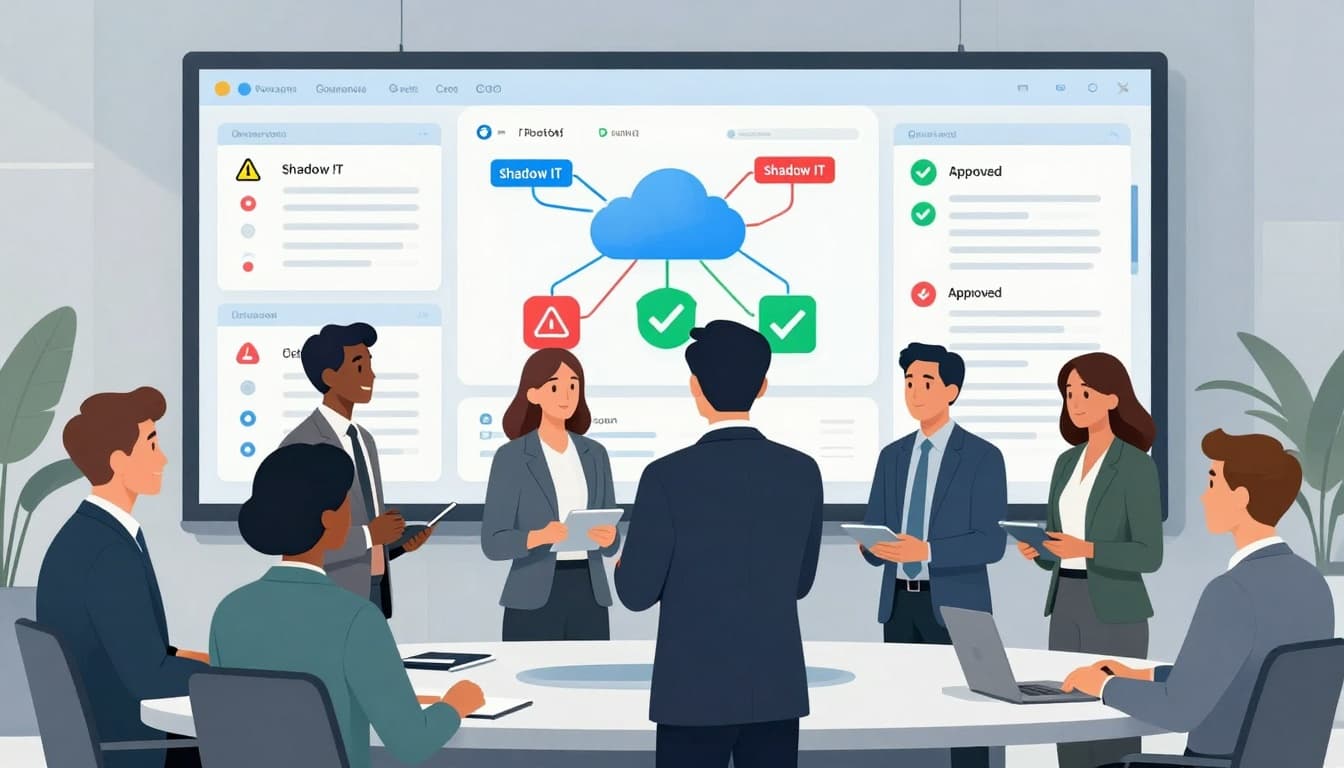
Image created with AI: executives reviewing shadow IT and approved apps on a shared dashboard.
Shadow IT is simple to define: any software, cloud app, or AI tool used in your company without formal approval. It often starts with good intent. A sales leader buys a niche tool to close deals faster. A marketing manager spins up a free AI copy tool. A finance analyst drops data into a personal cloud drive.
At scale, that good intent becomes expensive. Recent reports show that shadow tools drive a big share of cyber incidents and data leaks, with average breach costs in the millions. Separate research on shadow AI risk shows sensitive data exposure has nearly tripled in some mid-sized firms, as employees paste customer or financial information into unchecked AI tools, as covered in the State of Shadow AI Report 2025.
This is not only a security story. It is also:
- A cost story: duplicate licenses, unused apps, and higher support spend.
- A trust story: regulators and large customers now ask pointed questions about third-party tools and data handling.
- A strategy story: if you do not know which tools teams rely on, you cannot plan, integrate, or scale them.
That combination puts shadow IT firmly in the CEO’s job description.
Reframing Shadow IT Governance As A Growth Tool
Most companies respond to shadow IT with tighter locks and longer approval queues. That usually drives more of it underground.
A better mindset: treat shadow IT like an early warning system. It shows you where the business feels underserved by official systems. Used well, shadow IT governance can become a structured way to:
- Spot real business needs faster
- Test new tools with limited blast radius
- Pull winners into your official stack, and retire the rest
CIO.com calls this a “programmatic approach” to turning shadow IT into an edge, not just a risk, in its guide to turning shadow IT into a competitive advantage.
Your role is to set the rules of that game and hold leaders accountable for playing it.
Step 1: Get a Clear View of Your Shadow IT Footprint
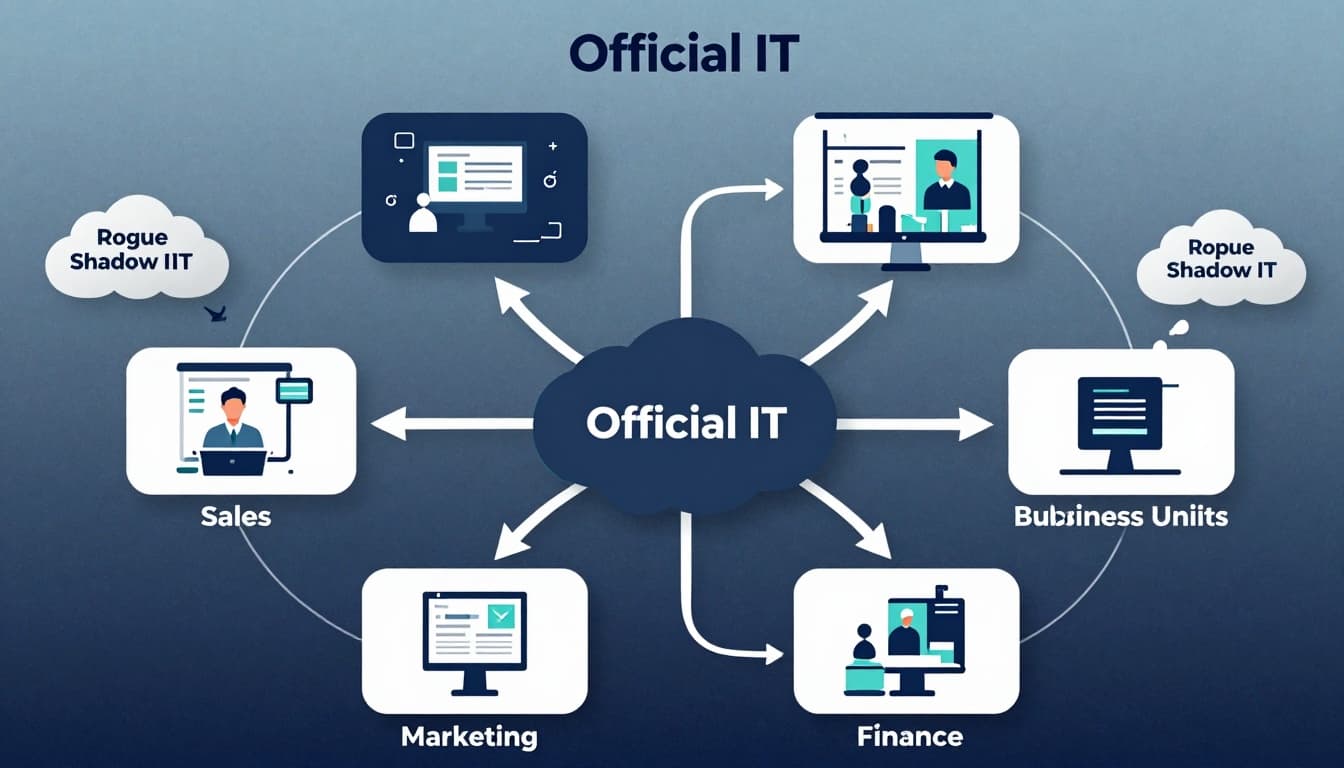
Image created with AI: flow diagram of official IT, business units, and shadow apps moving into governance.
You cannot govern what you cannot see. The first move is a fast, honest inventory.
Push for three views:
- Top-down view from IT and finance
- Use SSO logs, expense data, and card feeds to see which apps the company pays for.
- Include “small” purchases and free tools that touch sensitive data.
- Bottom-up view from the business
- Have each functional leader list tools their teams rely on, including browser-based and AI tools.
- Make it safe to admit “unofficial” use. A blame hunt will kill visibility.
- Risk-weighted view
- Classify apps by data sensitivity and reach, not by cost alone.
- A free AI chatbot that sees customer data is higher risk than a paid HR survey tool.
Modern SaaS discovery tools can help, and several security vendors publish useful playbooks for how to detect and control hidden apps, such as the Grip Security guide on how to detect and manage shadow IT in five steps.
Your outcome from Step 1 is not perfection. It is a living map of your actual tech estate, formal and informal, that can be updated every quarter.
Step 2: Design Guardrails, Not Bureaucracy
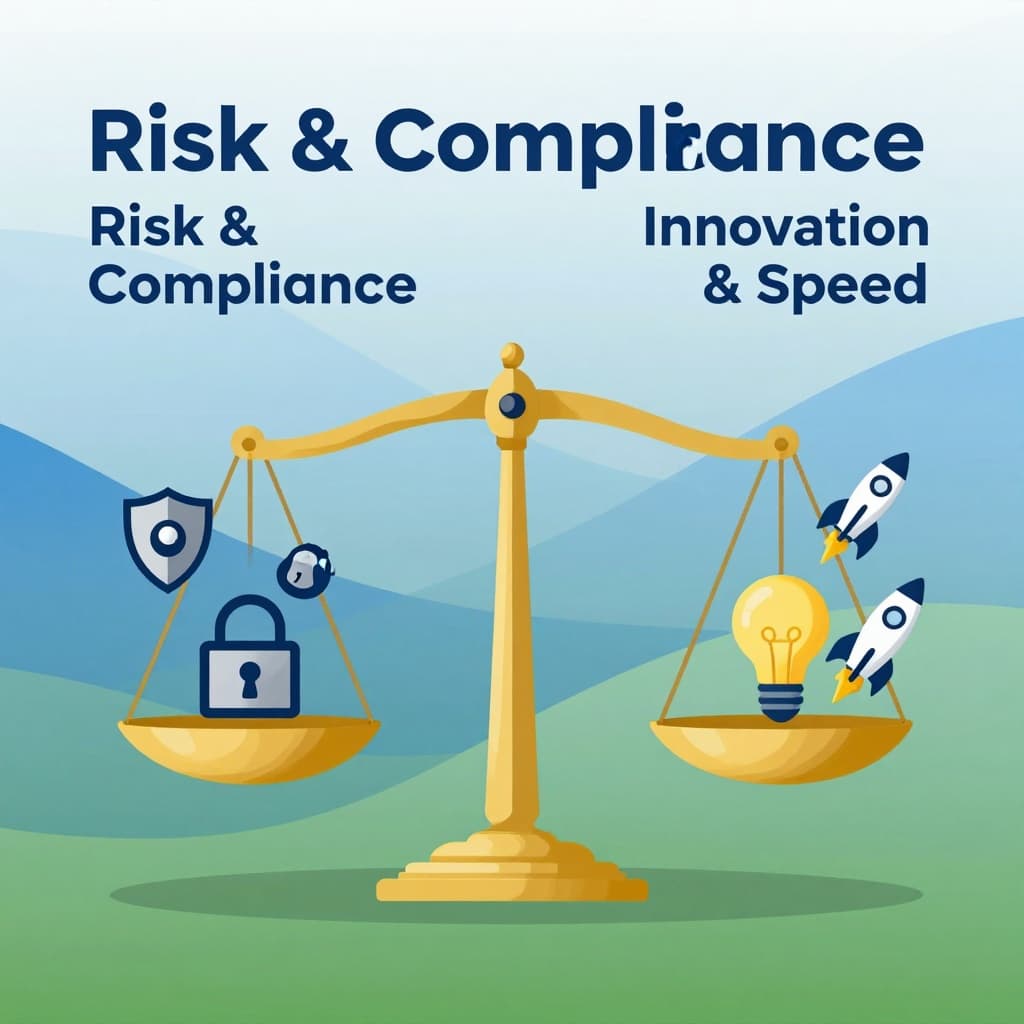
Image created with AI: balanced scale between risk and innovation to symbolize smart guardrails.
Once you can see the mess, the instinct is to shut everything down. That is how you lose your best people and slow growth.
Instead, work with your IT and security leaders to build simple, tiered guardrails:
- Red zone: hard no
Tools that handle regulated data (health, payment cards, certain personal data) or create compliance gaps sit here. They require strict review and usually must move to sanctioned platforms. - Yellow zone: controlled freedom
Tools for collaboration, analytics, or team productivity can be used in a “sandbox” model, with clear rules on what data is allowed and how access is managed. - Green zone: pre-approved stack
Your official, supported tools with negotiated contracts, known integrations, and support.
A clear, written shadow IT policy helps everyone know the rules. Bitsight provides a useful perspective on what CEOs should expect from such policies in its article on building a shadow IT policy.
Keep the policy short, plain, and tied to business risk, not technical jargon. People will follow rules they understand and see as fair.
Step 3: Turn Shadow IT Into A Safe Innovation Pipeline
Shadow IT appears because teams want speed. Your job is to channel that drive, not fight it.
Work with your technology lead to create a simple intake and upgrade path:
- Idea intake: anyone can propose a tool or AI use case, but must state the problem, data involved, and expected benefit.
- Fast triage: small, low-risk pilots get a quick yes with clear limits on data and scope.
- Promotion path: if a pilot shows value, there is a defined route for security review, integration planning, and contract negotiation.
- Retirement path: if a tool fails or duplicates another, there is a clean plan to remove accounts and data.
CIOs and security leaders are also wrestling with shadow AI, where staff use tools like ChatGPT or other models without any oversight. Research on shadow AI usage in 2025 shows executives are often the biggest users of unapproved AI tools, which amplifies risk at the top of the house, as covered in Cybersecurity Dive’s report on shadow AI and executive usage.
A good shadow IT governance model treats these tools as part of one funnel. AI use follows the same rules as SaaS: known, scored for risk, and either approved, sandboxed, or blocked.
What CEOs Should Watch And Measure
You do not need a dashboard with 50 metrics. A handful of signals, reviewed each quarter, will tell you if things are moving in the right direction.
| Metric | Why it matters | Example signal |
|---|---|---|
| Number of unsanctioned apps | Shows if shadow IT is shrinking or growing | Trending down over 2 quarters |
| Share of IT spend on unused tools | Exposes waste | Dropping year over year |
| Time to approve low-risk pilots | Tells you if process is business-friendly | Under 10 business days |
| Number of material incidents tied to shadow IT | Direct risk indicator | Flat or declining |
Industry research on mid-market cybersecurity shows that most firms still spend the majority of IT time on maintenance rather than strategic work, leaving little capacity to manage shadow IT well. Techaisle’s analysis of SMB and mid-market security adoption trends highlights this pressure and supports the case for a focused, measured program rather than ad‑hoc responses.
When You Need Outside Leadership Help
For many mid-market CEOs, the real bottleneck is not will. It is senior technology capacity.
You may have strong engineering or IT managers, but no one who can connect risk, architecture, cost, and growth strategy in one plan. That gap shows up in board meetings as vague answers and in the business as stalled projects.
Signs you need outside leadership help:
- Shadow IT incidents keep repeating
- Security, data, and integration decisions stall for months
- Your IT lead is buried in tickets, not in strategy
- You cannot get a clear, unified view of tech risk and spend
Fractional or virtual CTO, CIO, or CISO support can give you that senior lens without adding a full-time executive to payroll. The key is finding a partner who sits on your side of the table and speaks business first, technology second.
Conclusion: Treat Shadow IT As A Signal, Not Just A Symptom
Shadow IT is telling you something. It points to gaps in your systems, in your processes, and in how your teams experience technology.
If you treat it only as a security problem, you will get more rules and more workarounds. If you treat it as a structured governance and growth problem, you can cut risk, save money, and pull real innovation into the core of your business.
Start by mapping what you have, then set clear guardrails, then turn the most valuable “shadow” tools into supported capabilities. As CEO, you do not need to run the process, but you do need to own the outcome.
If you want a seasoned, neutral technology leader to help you clean up shadow IT and align your tech spend with growth, visit https://www.ctoinput.com. To go deeper on practical technology, security, and strategy topics for mid-market CEOs, explore the articles on the CTO Input blog at https://blog.ctoinput.com.