

Picture a youth legal clinic where referrals fall through the cracks, staff scramble to meet reporting deadlines, and sensitive client details get scattered across emails and paper notes. Every missed handoff costs hours, risks compliance breaches, and chips away at staff morale and trust.
This guide provides an executive-level, step-by-step roadmap for legal aid referral handoff process improvement. When data is scattered and handoffs are manual, legal organizations lose critical time, face funder scrutiny, and struggle to retain their best people.
You will discover a simple path: diagnose your referral pain points, stabilize with quick wins in 30 to 90 days, then build a sustainable long-term roadmap. Each stage focuses on operational clarity and governance decisions that protect privacy, restore trust, and deliver measurable results.
Key takeaways:
- Manual handoffs and scattered data cost legal aid organizations hundreds of hours each year.
- A governance-led approach can reduce dropped referrals by 30% within 90 days.
- Stabilizing handoff processes improves compliance, trust, and staff retention.
- Start with the Ops Canvas for a proven, low-tech first step.
Diagnosing Referral Handoff Pain Points
Legal aid organizations often struggle with scattered data, manual case handoffs, and last-minute reporting requests. These obstacles trigger staff burnout, privacy concerns, and lost trust among partners and funders. Diagnosing the root causes is the first step in any effective legal aid referral handoff process improvement initiative.

Understanding Current Referral Workflows
Begin by mapping the intake-to-outcome journey for your organization. Identify each point where referrals are handed off between staff or teams. For example, a youth legal clinic may have more than five handoff points for a single case. Manual steps, repeated data entry, and communication breakdowns are common pitfalls.
A 2023 ABA report found that 60% of legal aid organizations lack standardized referral tracking. To support your legal aid referral handoff process improvement, use tools like the Handoff Failure Map Worksheet to pinpoint where and why breakdowns occur.
Common Failure Modes and Their Impact
Frequent issues include missed deadlines, lost cases, and frustrated clients. Staff often face rework and unclear ownership when handoffs are inconsistent. Privacy and compliance concerns arise when sensitive notes or client data are scattered across emails and personal files.
Consider a missed referral in an immigration clinic that led to a client losing their chance for relief. Addressing these failure modes is essential for meaningful legal aid referral handoff process improvement.
Quantifying the Stakes: Time, Dollars, and Trust
On average, midsize legal aid clinics lose over 10 hours each week to handoff issues. Each dropped referral attracts attention from funders and regulators, increasing scrutiny and pressure to improve. Board and partner trust diminishes with every incident, putting funding and collaboration at risk.
By focusing on legal aid referral handoff process improvement, organizations can reclaim lost time and rebuild confidence with stakeholders.
Gathering Data and Staff Insights
Start by conducting interviews with staff to understand lived pain points. Walk through processes step by step, noting where errors or delays arise. Review reporting logs for recurring mistakes, and use self-assessment tools to establish a baseline for your legal aid referral handoff process improvement journey.
Quick surveys and process walkthroughs create a shared understanding of where change is most needed.
Setting the Improvement Baseline
Define your current referral cycle time, error rate, and reporting burden. Establish key performance indicators (KPIs) to track progress. For example, aim to reduce referral errors by 25% in the first quarter.
Baseline metrics provide a starting point for legal aid referral handoff process improvement, ensuring that results are measurable and meaningful.
Stabilizing Referral Handoffs: Quick Wins (30–90 Days)
For many legal aid organizations, the daily reality involves scattered client data, manual handoffs, and last-minute reporting fire drills. Staff burnout rises as privacy risks and compliance concerns multiply, especially in high-stakes areas like immigration and youth advocacy. Stabilizing the legal aid referral handoff process improvement is not just about efficiency—it is about protecting trust, meeting deadlines, and reducing operational risk. Here is how to achieve measurable, board-ready results in the next 30 to 90 days.
Clarifying Roles, Ownership, and Accountability
Clarity in roles is foundational for legal aid referral handoff process improvement. Assign a clear owner for each handoff point—who is responsible for intake, who reviews, and who follows up. Document responsibilities and set up an escalation path if issues arise.
A simple RACI matrix (Responsible, Accountable, Consulted, Informed) can quickly bring transparency. For example, in a youth legal clinic, mapping out that advocates are "Responsible" for case review and supervisors are "Accountable" for escalations reduces confusion and prevents missed steps.
Standardizing Referral Intake and Handoff Steps
Introducing standardized checklists for each stage of the referral process is a proven quick win. When every staff member follows the same steps, errors drop and handoffs become reliable. In one midsize clinic, implementing an intake-to-advocate transfer checklist reduced referral errors by 20 percent in just two months.
For detailed, actionable guidance, the Closed-Loop Referral Playbook offers step-by-step templates and best practices that support legal aid referral handoff process improvement. Peer reviews and regular updates to these checklists keep the process current and effective.
Improving Communication and Documentation
Secure, centralized notes are crucial for privacy and compliance. Even a shared template or locked spreadsheet can eliminate the risks of scattered emails and lost updates. Limit email handoffs and instead use tracked task lists or logs to make every step visible and accountable.
Clear communication expectations—such as confirming every handoff—help staff stay aligned and reduce misunderstandings. This is a critical pillar for legal aid referral handoff process improvement.
Rapid Feedback Loops and Error Reporting
Establish a “missed handoff” log to capture errors for learning, not blame. Weekly debriefs foster a culture of transparency and continuous improvement. Data from these logs should inform which fixes to prioritize, ensuring time is spent where the impact is greatest.
A real-world example: After one coalition introduced a feedback loop, they cut monthly handoff errors from 15 to 8 within 60 days. This approach supports lasting legal aid referral handoff process improvement.
Measuring and Celebrating Early Wins
Track progress by monitoring dropped referrals and reporting delays. Share results with staff and funders to build momentum and celebrate success. For instance, a midsize organization saw a 30 percent reduction in dropped referrals after just one quarter of focused quick wins.
Highlighting early achievements is a core motivator for ongoing legal aid referral handoff process improvement and sets the tone for a culture of accountability.
How CTO Input Helps Legal Aid Networks Stabilize Handoffs
CTO Input specializes in guiding justice-support organizations through every stage of legal aid referral handoff process improvement. From mapping workflows to clarifying governance and offering free self-assessment tools, CTO Input delivers operational leadership without pitching new platforms.
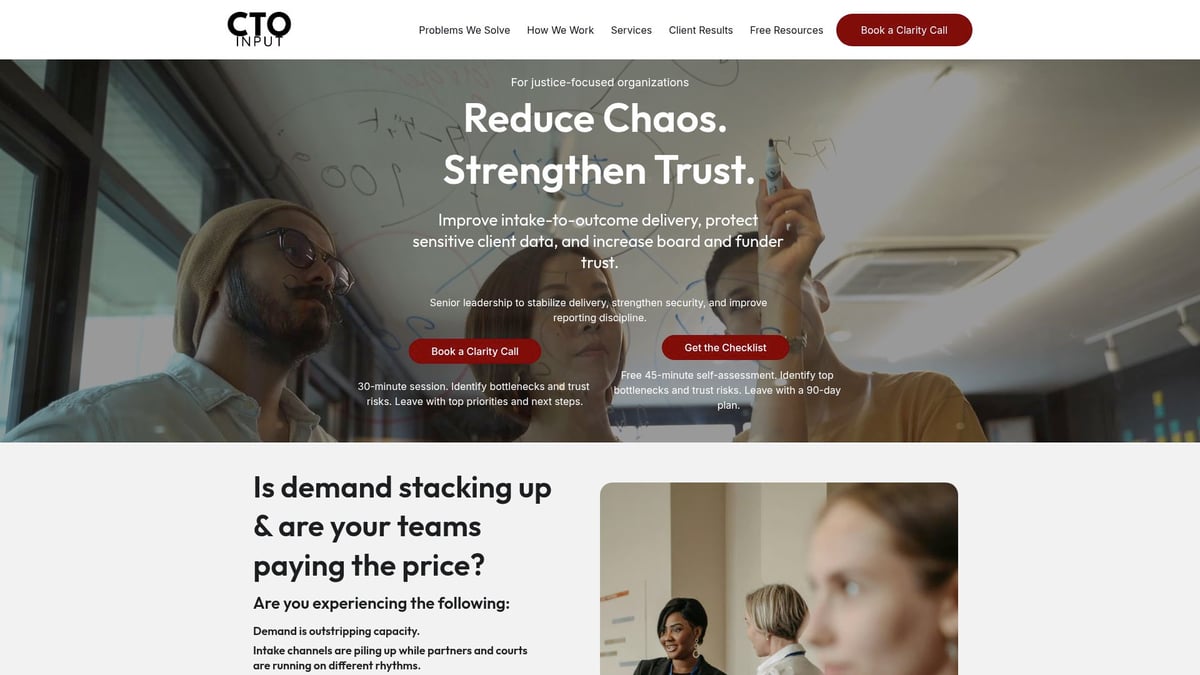
Their support reduces chaos, strengthens privacy controls, and builds the trust of funders and boards. For those seeking measurable, sustainable change, CTO Input is a reliable partner on the path to referral process excellence.
Building a Sustainable Roadmap (12–36 Months)
Building a sustainable legal aid referral handoff process improvement roadmap is essential for legal aid executives facing scattered data, reporting fire drills, and operational burnout. Over the next 12 to 36 months, a phased approach can transform your organization’s referral handoff system, ensuring compliance, reducing staff turnover, and restoring trust with boards and funders. Here’s how to move from today’s pain points to resilient, measurable outcomes.

Designing Future-State Referral Workflows
To achieve successful legal aid referral handoff process improvement, begin by collaborating with staff to co-create detailed process maps. Gather input from every operational area, including intake, advocacy, and reporting. For example, a statewide immigration coalition mapped their process, revealing six handoff points and multiple bottlenecks.
Identify opportunities for automation, but keep processes simple and staff-friendly. Use phased rollouts to test changes in low-risk settings before scaling. Document each step to ensure clarity and reduce confusion during transitions.
Governance and Policy Upgrades
A robust governance framework is vital for legal aid referral handoff process improvement. Update or create formal referral policies that clearly define data ownership, privacy responsibilities, and escalation paths. Align these policies with board expectations, regulatory requirements, and funder mandates.
Assign data stewardship roles to specific staff members. This ensures accountability and minimizes risk. Regular policy reviews keep your organization agile and prepared for evolving compliance landscapes.
Integrating Reporting and Compliance from Day One
Incorporate reporting requirements into every phase of your legal aid referral handoff process improvement journey. Build dashboards and checklists that track referral cycle time, error rates, and compliance incidents. For organizations aiming to strengthen board and funder relationships, the Board and Funder Reporting Readiness Checklist provides a practical, step-by-step framework for transparent communication.
By embedding reporting into daily operations, you reduce end-of-quarter fire drills and enable real-time course corrections.
Training, Documentation, and Change Management
Sustaining legal aid referral handoff process improvement requires ongoing training and clear documentation. Create onboarding materials, standard operating procedures, and regular refresher sessions for all staff. Address resistance by sharing the “why” behind each change and celebrating early wins.
Weekly feedback loops and process walk-throughs keep momentum high. In one midsize clinic, onboarding error rates dropped by 40 percent after implementing structured training and documentation.
Continuous Improvement and Scaling
Quarterly reviews are essential to evaluate referral KPIs, benchmark against sector standards, and support future growth. Involve staff in these reviews to foster a culture of accountability and learning. As demand for services grows, prepare scalable frameworks that can adapt to new partners or increased caseloads.
With a sustainable roadmap, legal aid organizations can confidently demonstrate progress, meet compliance deadlines, and deliver consistent outcomes for clients and stakeholders.
Measuring Outcomes and Demonstrating Impact
Scattered data, reporting fire drills, and manual handoffs are familiar headaches for legal aid leaders. These pain points not only drain staff time but also risk compliance failures and erode trust with boards and funders. Measuring the impact of your legal aid referral handoff process improvement is the surest way to demonstrate progress, secure buy-in, and build a culture of accountability.

Key Metrics for Referral Handoff Success
To show real results from legal aid referral handoff process improvement, track these essential metrics:
| Metric | Benchmark | Goal Example |
|---|---|---|
| Referral cycle time | 3 days | 1 day |
| Dropped handoff rate | 15/month | 8/month |
| Compliance incidents | 2/quarter | 0/quarter |
For more benchmarks and sector-wide outcomes, review Legal Aid Data Resources. Tracking these numbers gives leaders a clear before-and-after picture and helps prioritize further process improvement.
Reporting to Boards, Funders, and Partners
Effective legal aid referral handoff process improvement must be visible to stakeholders. Use concise, visual dashboards for monthly updates. Summarize key metrics and tie improvements to mission outcomes and grant requirements.
- Share quarterly reports with boards and funders
- Highlight time and error reductions
- Reference your “Reporting Readiness Checklist” for consistency
Clear reporting builds trust and positions your organization for future funding.
Staff and Client Feedback Loops
Staff and client voices are crucial in legal aid referral handoff process improvement. Survey staff about process clarity and burnout reduction. Invite client feedback on referral experiences.
For example, after standardizing handoffs, one youth clinic saw post-referral satisfaction rise by 15 percent. These insights spotlight what’s working and guide further adjustments.
Building a Culture of Accountability and Learning
Sustainable legal aid referral handoff process improvement depends on a learning mindset. Celebrate quick wins and share lessons learned at team meetings. Create safe spaces for surfacing problems early.
Encourage peer learning across teams and coalitions. Recognize staff who champion new processes, and foster a culture where improvement is ongoing.
Internal Resources and Further Reading
Explore more practical guides and templates to support your legal aid referral handoff process improvement journey:
- Ops Canvas
- Data Risk Map
- Downloadable process mapping and reporting templates
These resources help teams move from reactive fixes to proactive, sustainable operations.
Frequently Asked Questions (FAQs)
Legal aid organizations face recurring challenges with scattered data, manual handoffs, and compliance risks. Below, find clear answers to the most common questions about legal aid referral handoff process improvement.
What’s the first step for orgs with no formal referral process?
Start by mapping your current intake-to-outcome workflow. Identify every handoff point and document who owns each step. Use tools like the Intake-to-Outcome Clarity Checklist to create a baseline for your legal aid referral handoff process improvement. Even a simple map will reveal bottlenecks and duplication.
How do we address staff resistance to new handoff procedures?
Communicate the "why" behind changes, focusing on reducing errors and burnout. Involve staff in designing new steps and celebrate quick wins. Peer support and regular feedback help build buy-in over time.
What’s the best way to track and report referral errors?
Set up a shared log or digital tracker for missed or delayed handoffs. Review errors weekly, focusing on learning rather than blame. This structured approach supports ongoing legal aid referral handoff process improvement and builds accountability.
Are there compliance risks with digital handoff tools?
Yes, especially if tools lack encryption or clear access controls. Always check if platforms meet privacy requirements and document your data governance policies. Provide staff training to reduce risk.
How do we convince boards/funders to invest in process improvement?
Quantify the impact: hours lost, compliance risks, and client outcomes. Share benchmarks—like cutting dropped referrals by 30% in 90 days—and highlight how improvements protect trust and mission delivery.
What benchmarks should we use to measure success?
Track metrics such as referral cycle time, error rate, and reporting burden. For example, aim to reduce referral errors by 25% in the first quarter after changes.
Can these steps work for small organizations or coalitions?
Absolutely. The legal aid referral handoff process improvement strategies outlined here scale to any size. Small teams benefit even more from clear roles, checklists, and regular reviews.
Lead Magnet & Next Steps
Scattered case notes, reporting fire drills, and manual handoffs are driving burnout and privacy risks in your organization. If you are searching for a proven, low-tech legal aid referral handoff process improvement plan, this is your next step.
Unlock your free “Referral Handoff Self-Assessment” toolkit. This download gives you:
- A step-by-step checklist to map your current handoff process
- Error log templates and KPI tracking sheets
- Peer-tested questions to surface bottlenecks
- Quick wins to reduce dropped referrals
Want to dive deeper? Explore the Coordinated Intake Handbook for additional intake and referral best practices trusted by legal aid networks nationwide.
Reply with your biggest referral pain point for tailored advice. Or, book a Clarity Call or download your template at CTO Input. For more guides, visit the blog.
After seeing how scattered handoffs and fragile systems sap time and erode trust, you know real change starts with clarity and practical steps—not another tool. By mapping your current workflow, setting ownership, and tracking the right metrics, you can quickly reduce errors and restore confidence for your team, board, and funders. The right guidance can help you prioritize improvements, build defensible processes, and show measurable impact without overwhelming your staff. If you’re ready to stop guessing and want a roadmap that your board can stand behind, let’s take the next step together—Stop guessing. Get a practical roadmap with owners, sequencing, and measures your board can stand behind.