

Why does the same case get three different answers on three different days? In legal aid, that usually means your rules live in people’s heads instead of in one shared system.
A legal aid rules matrix gives you one place to define what you accept, what you refer, what you decline, and who can override the default. In early 2026, demand is still heavy across legal aid, while many eligible people still go unserved. When capacity is tight, consistency matters even more.
Key takeaways
- A legal aid rules matrix stops similar cases from getting different decisions.
- It turns tribal knowledge into visible, reviewable standards.
- It helps you separate default rules from approved exceptions.
- It improves fairness, staff training, referrals, and reporting.
- It works best when one owner keeps it current and teams use it daily.
Why case acceptance drift starts quietly
Case acceptance drift rarely starts with bad intent. It starts with pressure.
One intake worker remembers an old funding rule. Another makes space for a hard case. A supervisor says yes to one exception, then nobody writes it down. After a few months, your “policy” becomes a pile of habits.
That drift gets worse when intake comes through too many doors. Phone calls, web forms, partner emails, walk-ins, and side requests all create room for different interpretations. If that sounds familiar, these technology challenges for legal nonprofits often show up together.
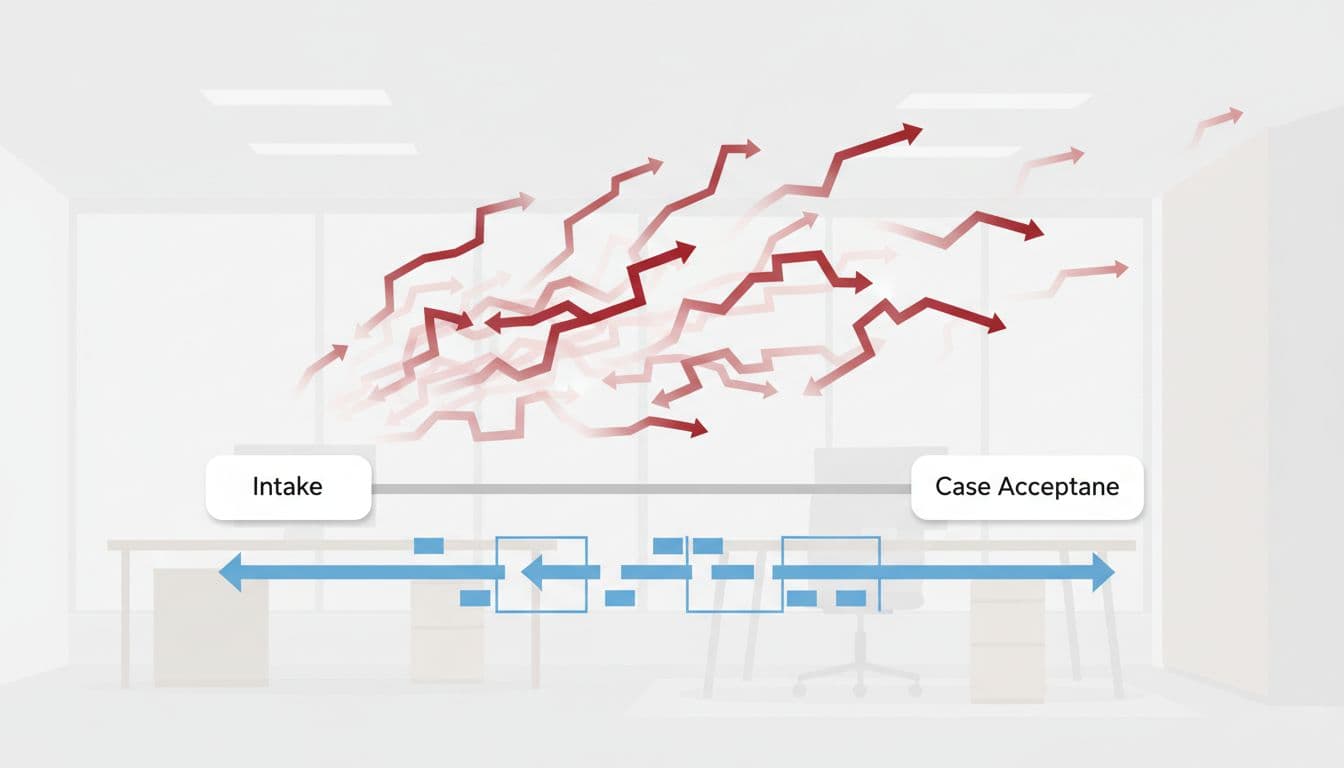
The damage is real. Clients hear mixed answers. Staff lose confidence. Referral partners get uneven packets. Leadership can’t explain why acceptance rates changed. Boards and funders start asking harder questions.
If your team can’t explain why one case was accepted and a similar one was declined, you don’t have a rule. You have drift.
You also lose data you can trust. “Not accepted” becomes a vague bucket. Intake staff create local workarounds. Then reporting turns into debate instead of management. That’s a costly place to run a mission-driven service.
What a legal aid rules matrix should include
Think of the matrix as a guardrail, not a cage. It should make routine decisions faster and hard decisions clearer.
You do not need a 40-page policy manual. You need one shared decision table that staff can use in real time. Public-facing eligibility pages, such as Maine’s legal aid eligibility criteria, show how much clearer intake gets when core standards are visible. For a more formal example, Indiana Legal Services client eligibility guidelines show how organizations document financial and case rules.
A simple matrix often starts like this:
| Rule area | Default rule | Escalate when |
|---|---|---|
| Income eligibility | Accept within stated threshold | Household facts are unclear |
| Case type | Accept listed priorities only | Matter touches two funding streams |
| Urgency | Fast-track imminent harm | Facts are incomplete but risk is high |
| Geography or venue | Accept only approved areas | Court or partner rule creates an exception |
| Referral out | Send to named partner | No partner confirmation within time limit |
The best legal aid rules matrix also names three things that teams often skip.
First, it defines who can approve an exception. Second, it gives staff a short list of disposition codes that mean the same thing across offices. Third, it records why a decision changed.

That last point matters. Discretion is part of legal aid. But discretion without logging becomes noise. A strong matrix keeps compassion and judgment in the process, while still giving you a record leadership can defend.
How to make the matrix stick in daily operations
Start with reality, not theory. Pull 30 to 60 recent matters that were accepted, referred, or declined. Look for cases that produced debate. Those edge cases are where your real rules live. If you need a starting point, the intake-to-outcome clarity checklist helps you spot bottlenecks and trust risks fast.
Next, cut down entry points. A rules matrix won’t fix intake chaos if requests still arrive everywhere. A single front door intake guide can help you set one queue, one owner, and one triage path.
Then tighten referral discipline. If your matrix says “refer,” that should not mean “send and hope.” Your team needs a known handoff standard, time target, and status code. The closed-loop referral playbook is useful when referrals disappear after intake.
You should also review the matrix on a set rhythm. Quarterly works for most teams. Update sooner if funding changes, a partner stops taking cases, or law and policy shift. For baseline process discipline, the LSC intake and case procedures manual is still a helpful reference.
One more point matters in 2026. Legal aid teams are using AI more often to handle demand. That can help. Still, if you automate triage before you standardize your rules, you only speed up inconsistency. Write the rules first. Then decide what, if anything, should be automated.
FAQs
Do you need new software to use a legal aid rules matrix?
No. Start with one shared document, one owner, and one intake path. Software can help later, but it won’t fix unclear rules.
Who should own the matrix?
You need one accountable owner. In most organizations, that’s an intake leader or operations lead, with legal sign-off from a program director or managing attorney.
How often should you update it?
Review it every quarter. Also update it after major funding changes, staffing shifts, court changes, or partner capacity issues.
Can one matrix still allow discretion?
Yes. The matrix should show where discretion is allowed, who can approve it, and how staff log the reason. That keeps judgment visible instead of random.
A legal aid rules matrix won’t remove hard choices. It will make those choices clearer, fairer, and easier to explain. If similar cases keep getting different answers, start with your last month of borderline decisions and write the rules you want people following tomorrow. That is how you replace drift with confident decisions.