

In animal shelters, broken handoffs rarely look dramatic at first. A case waits in the wrong queue. A referral gets sent but never confirmed. Someone assumes the next step belongs to someone else.
Then the cost shows up, impacting animal welfare. Clients repeat their story. Staff do rework. Leaders stop trusting status reports. If your intake to outcome flow in animal shelters depends on memory and goodwill, you don’t have a stable process.
An owner map gives you a cleaner way to run the work, especially when pressure is high.
Key takeaways
- Every step from intake to outcome (such as adoption or return to owner) for dogs and cats needs one named owner.
- A handoff of dogs and cats isn’t complete when you send it, only when it’s received and accepted.
- Time limits and escalation rules matter as much as the workflow itself.
- Clear ownership reduces delays, rework, and reporting fights.
Where broken handoffs actually begin
Most broken handoffs in animal shelters start long before the miss becomes visible. Intake comes through too many doors, as stray animals found by the public and owner relinquished animals from concerned families create different intake paths. Staff use different status terms. Referral details live in inboxes, side notes, and spreadsheets. Then work moves, but ownership does not.
You can see this pattern in many of the technology challenges facing legal nonprofits. Good people work hard, yet the system still drops things because the next step is implied instead of assigned. The same holds true in animal welfare organizations, where stray animals and owner relinquished animals risk falling through the cracks.
A handoff without an owner is like a relay race with the baton on the track. Everyone is nearby. Nobody is running.
That’s why broken handoffs in animal shelters are usually not a staffing problem first. They’re a design problem. When no one owns the waiting period, the confirmation step, or the follow-up, dogs and cats stall in silence. That silence creates risk. It can lead to tragic results like unnecessary euthanasia for dogs and cats, outcomes no one wants in animal shelters. The covid-19 pandemic added immense pressure on shelter capacity, making these gaps even more dangerous and contributing to higher rates of unnecessary euthanasia for dogs and cats.
It also makes board reporting weak because you can’t explain what happened between intake and outcome with confidence.
If referral loss is already hurting you, this legal aid referral handoff process improvement guide gives useful context on where delay and rework build up.
What an intake-to-outcome owner map needs to show
An owner map is not a fancy process chart. It’s a plain view of your work from first contact to final outcome, with ownership made visible at each step.
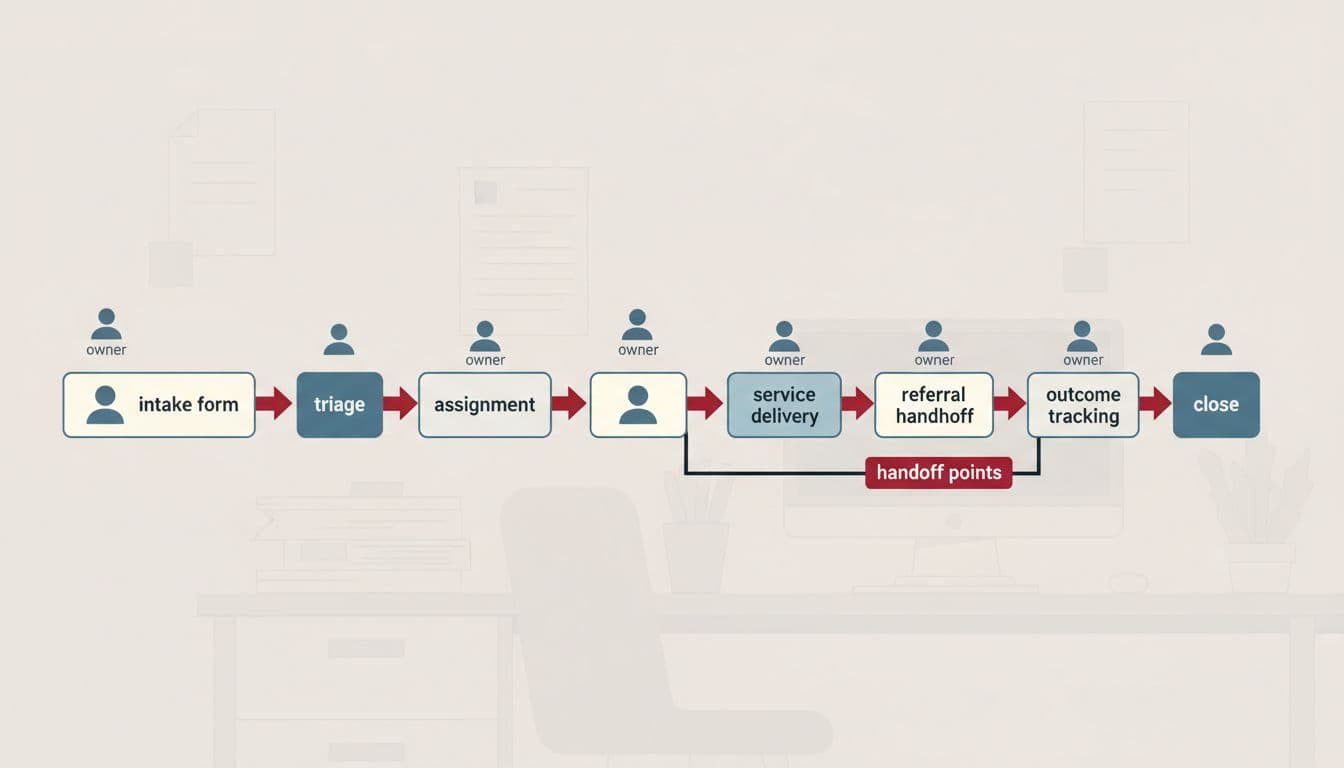
For each stage, your map should answer four simple questions. Who owns it now. What must be true before it moves. Who receives it next. What happens if it sits too long. This includes data collection requirements, such as capturing the intake subtype for every animal using standardized definitions.
That means your intake to outcome map should cover the real flow, not the one in policy slides. Include intake, triage, assignment, service delivery, referrals, follow-up, outcome capture, and close. During intake for dogs and cats, data collection must include the intake subtype for every animal to align with shelter statistics from organizations like Shelter Animals Count. If a stage exists in real life, it belongs on the map.
If a step has two owners, it usually has no owner when pressure hits.
Shared ownership sounds safe, but it often creates delay. You want one accountable owner, even if several people contribute. That doesn’t make the work rigid. It makes the work visible.
If you’re not sure where the weak points are, start with the intake-to-outcome clarity checklist. It helps you spot where handoffs fail, where status goes dark, and where your team needs one clear owner.
How to build the map without creating another project
You don’t need a six-month redesign effort like a full procurement transformation. You need one honest working session and a small set of rules that hold up under pressure. Modern tools such as agentic AI can provide autonomous execution for routine handoffs.
- Map reality, not intent: Pull a few recent animal intakes and trace what actually happened from intake to outcome. Include shelter-specific steps like spay-neuter procedures. Use what staff did, not what the handbook says.
- Mark every handoff point: Look for places where work waits, gets re-entered, or disappears between teams, vets, adoption centers, or partner agencies.
- Name one owner per step: Give each stage one accountable person or role. Then define what “done” means before the handoff can move.
- Add timing and escalation: Set a time limit for receipt, review, and next action. If that limit passes, name who steps in. Draw analogies from procurement, such as source-to-pay models for shelter inventory management.
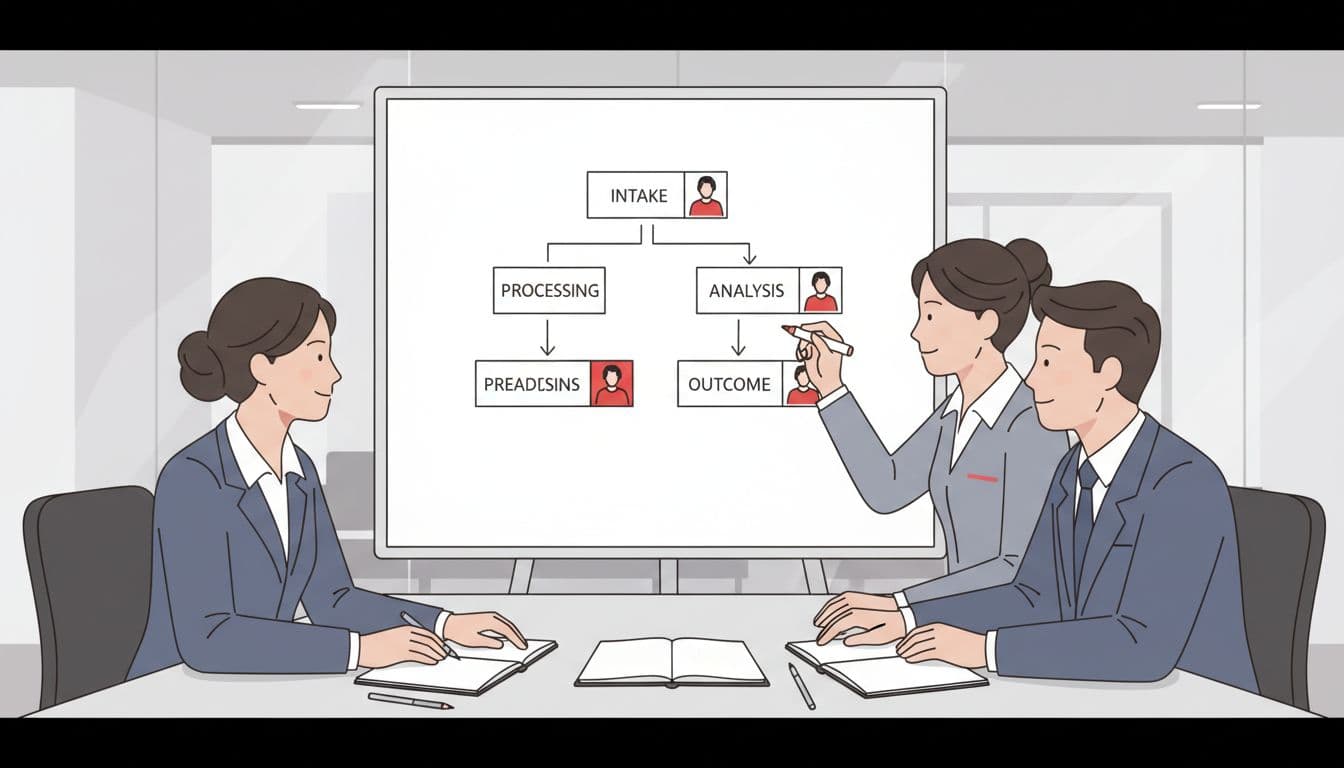
This is where many teams stop too early. They map the flow, but they don’t define handoff complete. “Sent” is activity, not success. Clear handoffs after steps like spay-neuter directly improve live release rates by streamlining adoption and return to owner processes, helping prevent euthanasia.
If referrals are part of your model, the closed-loop referral playbook shows how to make follow-up visible and time-bound. Strong handoffs also boost overall live release rates through higher adoption and return to owner success, reducing euthanasia risks.
If your intake arrives through too many channels, a coordinated intake model for legal aid organizations can also help you reduce confusion before cases even enter the main workflow.
FAQs about intake-to-outcome owner maps
Do you need new software first?
No. Most teams should fix ownership, standardized definitions for status rules, and handoff definitions before they buy anything to achieve stronger business outcomes. Tools help later, but they won’t repair unclear accountability.
Who should own the map?
You need one business owner, often in operations or program leadership, accountable for business outcomes. However, the map should reflect input from intake, service delivery, referrals, and reporting.
Is this only useful for legal nonprofits?
No. Animal shelters of all sizes benefit from this mapping, especially amid national level trends in pet overpopulation and the rise of community-supported sheltering. Any organization with multi-step service delivery can use it. Still, it’s especially useful when privacy, deadlines, and partner handoffs raise the cost of delay, helping animal shelters combat pet overpopulation through community-supported sheltering.
The work gets calmer when ownership gets clear
Broken handoffs don’t stop because people try harder. They stop because you make ownership visible from intake to outcome for dogs and cats, then back it with simple rules to boost live release rates, adoption, and return to owner rates while cutting euthanasia.
Start small. Map one high-volume path, like an intake subtype for stray dogs and cats, name one owner per step, and fix the first silent gap to improve live release rates and adoption while reducing euthanasia risks.
Clear ownership directly lifts adoption and return to owner rates, slashes euthanasia for dogs and cats, and drives higher live release rates across intake subtypes.
If your team can’t say who owns the baton right now for dogs and cats, that’s the next conversation to have, paving the way for a digital journey tracked via an enterprise control tower that ensures adoption, return to owner success, and zero unnecessary euthanasia.