

Funder reports rarely break on the day you submit them. They usually break weeks earlier, when definitions drift, spreadsheets split apart, and nobody owns the final number.
If your team dreads reporting season, the problem often isn’t effort. It’s the lack of a repeatable metrics close process, similar to the month-end close process finance teams follow for accurate financial reporting. This turns activity into numbers you can explain with confidence. Once you close metrics with discipline, reporting gets calmer.
Key takeaways
- A funder report is only as strong as the close behind it.
- You need one owner, one source, and one definition for each core metric.
- Monthly closes matter, even if your funder only asks quarterly.
- Adopting a month-end close process logic, supported by a clear close checklist, ensures data integrity across the organization.
- Stable reporting comes from calendar discipline, not more last-minute work.
Why funder reports fall apart before the deadline
Most teams treat funder reporting like a writing task. In practice, it’s a closing task. By the time you open the template, the hard part should already be done.
Trouble starts upstream. Intake statuses mean one thing in one program and something else in another. One manager counts duplicates out, another leaves them in. A spreadsheet gets refreshed on Tuesday, but the case system changes on Thursday. Then a funder asks for the number by site, age, or outcome, and the team starts arguing over whose version is right. Reconciling this messy program data feels like performing an account reconciliation on a disorganized general ledger, where manual processes create the same risks as unverified journal entries do for financial statements and broader financial reporting.
That pattern is common in metrics trust issues for nonprofits. Weak handoffs and drifting definitions don’t stay local. They show up in renewals, board packets, and tough calls with funders.
Finance teams learned this lesson long ago. A close only works when roles, dates, and review steps are clear. The same idea sits behind monthly close checklists for nonprofit finance teams. Your program metrics need the same discipline.
When you don’t have that structure, reporting becomes a monthly scramble. Staff rebuild numbers instead of improving the work. Leaders lose time defending the data. Worse, small trust gaps start to look like bigger management gaps.
A 30-day metrics close process you can repeat
You don’t need a giant system to fix this. You need a repeatable 30-day month-end close process for programs that your team can run the same way every month.
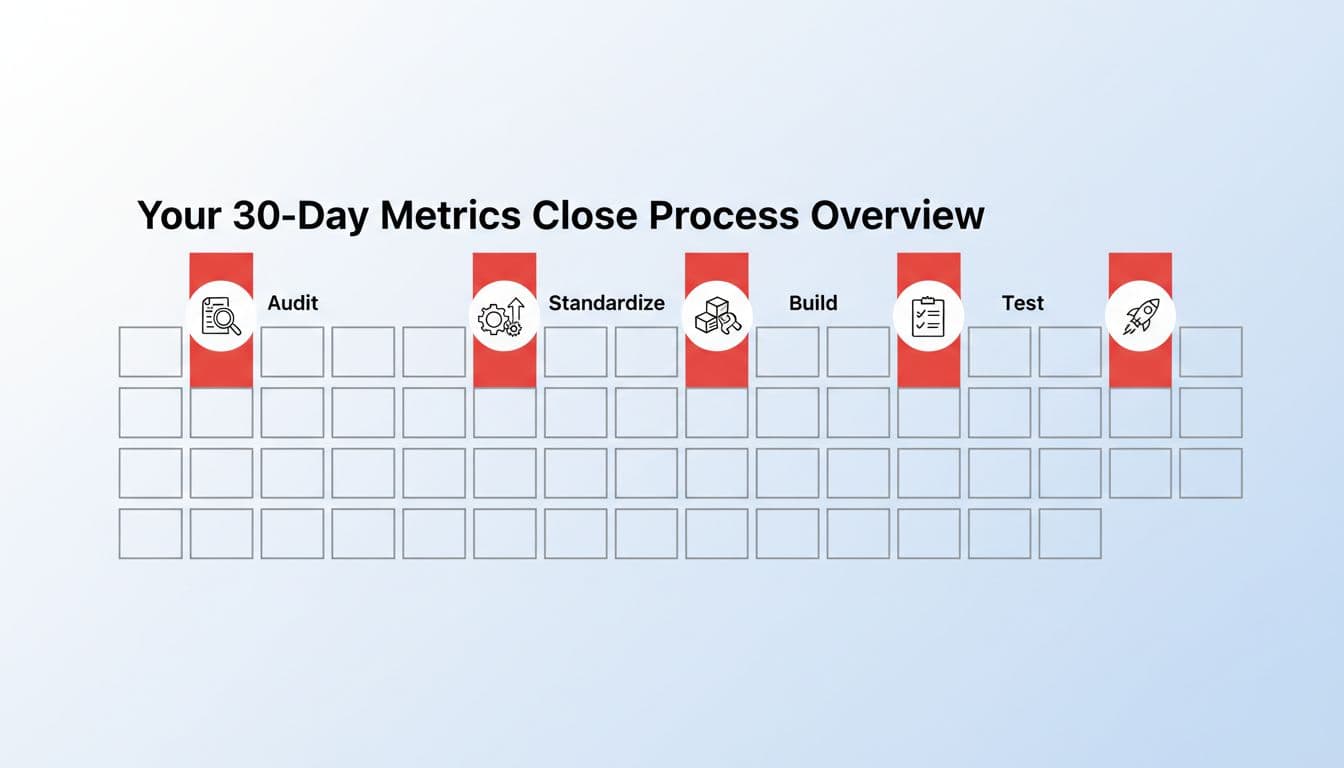
This simple structure keeps the work moving.
| Days | Focus | What you lock down |
|---|---|---|
| 1 to 7 | Audit sources | Owner, source system, definition, refresh date |
| 8 to 14 | Standardize rules | Logic, exclusions, exception handling, freeze date |
| 15 to 21 | Build report pack | Tables, notes, narrative placeholders, dashboard views |
| 22 to 30 | Test and close | Review meeting, sign-off, late-change policy |
The aim is clear. By day 30, your team knows which numbers are final and why.
Days 1 to 7, audit the source of truth
Start with your core metrics, not every metric. For each one, name a single owner and a single source. This source auditing builds audit readiness by clearly defining the accounting period. If two systems both claim to be right, pick the system of record and log the gap.
If your data begins with messy intake, referrals, or status changes, an intake-to-outcome clarity checklist can help you spot where reporting starts to drift.
Days 8 to 14, write the rules down
Now standardize the logic in plain English, much like documenting accrual estimates or revenue recognition policies. Define the numerator, denominator, date rule, and exclusions. Also set a freeze date, so everyone knows when the month stops moving.
This matters because undocumented rules create hidden risk. The number may look stable, but it changes when a different person pulls it.
Days 15 to 21, build the report before the numbers are final
Draft the tables, charts, and short narrative notes early, including dashboard views from business intelligence platforms. That exposes missing fields and weak definitions before the final review. It also keeps writing from becoming a separate fire drill.
If you brief your board from the same data, keep that view short. Board dashboard guidance makes the point well, leaders need signal, context, and risk, not every operational detail.
Days 22 to 30, test, challenge, and close
Run a dry close with program, finance, and operations in the room. Ask which numbers look off, which exceptions need explanation, and which changes are large enough to reopen.
Then lock the pack. Late items should move to the next cycle unless they are material. In time, process automation can replace these manual checks.
If you change metric definitions after the draft is built, you don’t have a close. You have a moving target.
What keeps the process from slipping back
A strong month-end close process lives on a calendar, not in good intentions. That’s the difference between one good quarter and a repeatable reporting habit that improves key financial close KPIs, like reducing days to close.
First, keep the same cadence every month, even when the funder only asks quarterly. Monthly closes catch drift early. They also make quarter-end far less painful.
Next, use a short close checklist. Confirm source refresh dates. Confirm exceptions with variance analysis or flux analysis. Confirm sign-off. Then store the final file in one place. Small controls like these cut a lot of noise from manual processes. The same pattern shows up in practical month-end close strategies for nonprofits, because clear ownership beats heroic effort. Reinforce this with a structured post-close review using the close checklist to spot drifts before they grow.
You also need a policy for late changes. Set a threshold for what reopens the report. Everything else goes in a change log for the next cycle. Without that rule, the close never ends.
Finally, keep proof. Save the logic, the source date, and the reviewer. If you want a real-world picture of how this improves trust, these funder-ready data transformation stories show what happens when teams stop rebuilding reports from scratch.
FAQs
How fast should you close program metrics?
For most teams, a closing cycle time of five to ten business days after month-end is a reasonable target. Even if the funder only asks quarterly, monthly closes keep the quarter from becoming a mess.
What if one source is late?
Don’t hold the whole report open by default. Use a late-item rule. If the change is not material, roll it into the next cycle and note it in the log.
Do you need new software to do this well?
Usually, no. While ERP integrations and automated reconciliations are helpful, most gains come from clearer ownership, tighter definitions, and a fixed calendar. Add new tools later, after the process is stable.
A calmer funder report starts before anyone touches the template. When you close metrics with discipline, you enable continuous accounting and real-time visibility in your record to report process, making metrics and financial statements equally reliable.
That shift gives you cleaner reporting, more trustworthy financial statements, less month-end drag, and better decisions in rooms where trust matters. If you’re still rebuilding the same report every cycle, start with five core metrics and one close calendar.