

When a client misses intake at a legal aid society providing legal services, you don’t only lose a slot. You lose time, trust, and often the best chance to help. Legal aid societies must minimize this waste from legal aid intake no-shows.
Legal aid intake no-shows are rarely random. The intake process is the first interaction potential clients have with the program. In most programs, they come from avoidable friction, slow follow-up, and unclear next steps. You can reduce a lot of that in 30 days, without buying new software first.
Key takeaways
- No-shows are capacity loss, not scheduling noise.
- Most missed intake appointments often stem from confusion caused by unclear instructions, delayed confirmation, or too many intake channels.
- Your first 30 days should focus on reducing no-shows through structured accountability with one owner, one reminder cadence, one recovery path, and a few measures you can trust.
Why no-shows hurt more in legal aid
Your intake pipeline already runs under pressure. The Justice Gap Report’s field reports make the broader point clear: demand for free civil legal assistance far exceeds available capacity for those facing legal problems. That means every missed intake wastes scarce staff time and leaves another person waiting longer.
No-shows also distort your data. A full calendar can hide weak follow-through. Meanwhile, staff may think demand is the problem when the real issue is what happens between first contact and first meeting.
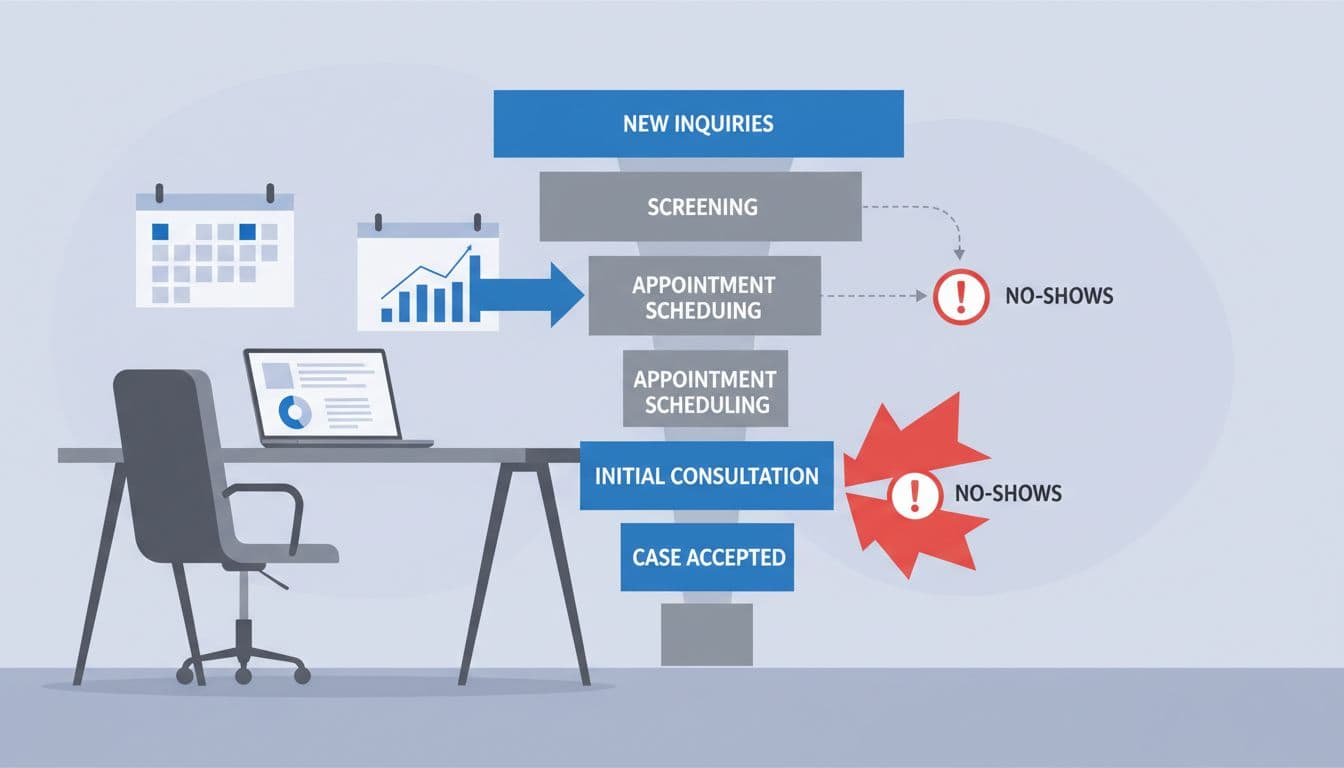
In many offices, the causes are familiar. Requests come through voicemail, email, web forms, walk-ins, and partner referrals. Confirmations go out late, or not at all. Clients get asked to repeat information. Some never learn what documents to bring, how long the meeting lasts, or whether a phone intake is allowed. If that sounds familiar, an online intake application can help prospective clients understand eligibility requirements and your conflict policy before the meeting, tightening ownership and improving the legal aid society workflow before you touch tools.
The basics still matter. LSC’s baseline for intake and telephonic advice points to monitored call volume, routing rules, and a plan for excess demand. Those aren’t technical details. They’re operating discipline. When intake feels confusing to your staff, it feels risky to clients.
Your 30-day intake no-show recovery plan
You don’t need a six-month committee project. You need a short reset with clear ownership.
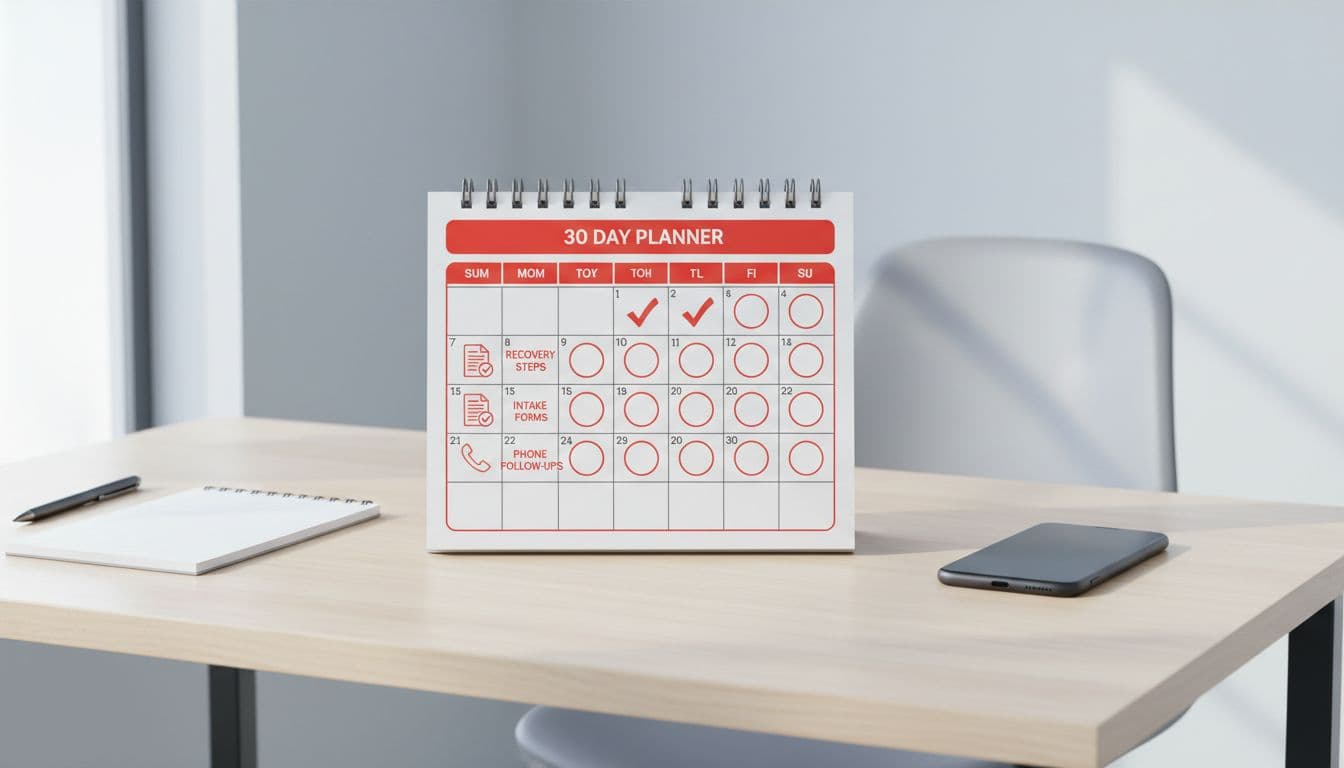
This is the 30-day structure that works in practice:
| Days | What you do | Why it matters |
|---|---|---|
| 1-7 | Review the last 30 to 60 days of missed intakes by source, language, time, staff, and case type. Name one intake specialist or intake coordinator as owner. | You need a real pattern, not guesses. |
| 8-14 | Standardize confirmation messages and appointment instructions. | Clear next steps cut confusion fast. |
| 15-21 | Build a no-show recovery path with same-day outreach and easy rescheduling. | Missed once should not mean lost. |
| 22-30 | Remove friction, train staff, and review a small daily dashboard. | Small habits make gains stick. |
In the first week, pull the record. You are looking for concentration, not perfection. If missed intakes cluster around one office, one time block, or one channel, start there. Also read a sample of texts, emails, and voicemail scripts. Most programs find that their language is vague, long, or missing one key detail.
In week two, tighten communication. Send a confirmation fast. Then send automated reminders as appointment reminders at two points, usually the day before and a few hours before the appointment. Keep each message plain. State the time, the format, what to bring, and one easy way to reschedule. Bring the discipline of efficient law firm intake practices. The behavior principles in ideas42’s guide on improving court appearances apply here too. People follow through more often when the next step is clear and the effort is low.
If a client has to guess what happens next, your no-show risk goes up.
In week three, build the recovery path. For potential clients who miss their intake appointment, use follow-up with same-day outreach if you can. Offer a narrow reschedule window, not an open-ended “call us back.” Keep their priority if they respond quickly. If you work across partners, courts, or hotlines, use an intake-to-outcome clarity checklist to spot where handoffs go dark.
In week four, remove friction. Offer phone-first intake where travel is the barrier. Cut nonessential questions before the first meeting. Add language support where reminder failure is really language mismatch. Then review the same numbers every day for ten minutes.
Track the few numbers that show real improvement
You don’t need a complex dashboard. You need numbers your team can act on this week to boost client experience during initial consultations.
Start with five: scheduled-to-attended rate, confirmed appointment rate, median time to first response, same-week reschedule rate, and the share of appointments with a valid mobile number or email. Scheduling tools can automate data collection for these numbers. Small law firms often use the same metrics to ensure profitability, which translates to greater capacity in legal aid. If one of those is weak, you know where to look next.
Don’t chase a perfect benchmark right away. First, look for movement. If confirmed appointments rise and no-shows fall within 30 days, your process is getting clearer. If attendance improves only in one channel, then the issue is elsewhere. That is still progress, because now you can see it.
FAQs about legal aid intake no-shows
Should you overbook intake slots?
Usually no. Unlike private firms that can charge a no show fee or consultation fee, legal aid cannot simply do that. Overbooking can hide process failure and punish clients who do show up. Fix confirmation, reminders, and recovery first.
How fast should you follow up after a missed intake?
The same day is best. A virtual receptionist or referral service might help manage the volume for quicker outreach. After that, the odds drop because the client has moved on, lost trust, or hit another barrier.
What if clients don’t have stable phones or email?
Build backup paths. Use safe-contact rules, partner-assisted follow-up, and phone or walk-in options where needed. Your process has to fit client reality.
A no-show problem rarely starts in the calendar. It starts in the gaps between intake, confirmation, and follow-up.
When you close those gaps, you recover capacity fast. More importantly, establishing a personal connection is the first step toward a successful attorney-client relationship and prevents missed court filings later in the case. You give people a fairer shot at getting help when they need it most.