

A board seat on a nonprofit board can change hands in one meeting. Access can linger for weeks.
If you don’t have a board member offboarding checklist, board member transitions can leave old permissions, stale contacts, and quiet exposure behind. Most of the time, the problem is not bad intent. It’s weak follow-through.
That is why access cleanup needs to happen with the same discipline as the board transition itself.
Key Takeaways
- Board turnover and leadership transitions are not only governance events, they are access control events.
- You need same-day revocation for high-risk systems, plus clear owners for every step, since rigorous offboarding is a matter of legal and compliance for the organization.
- The biggest failures usually come from shared links, email lists, approval workflows, and vendor-facing accounts.
Why board turnover creates access risks
Board members often see more than you think. They may have access to board packets, financials, HR updates, incident reports, strategy files, and sensitive information. Some of that access is formal. Some of it is a shared link, a forwarded email, or an old group list no one remembered to clean up.
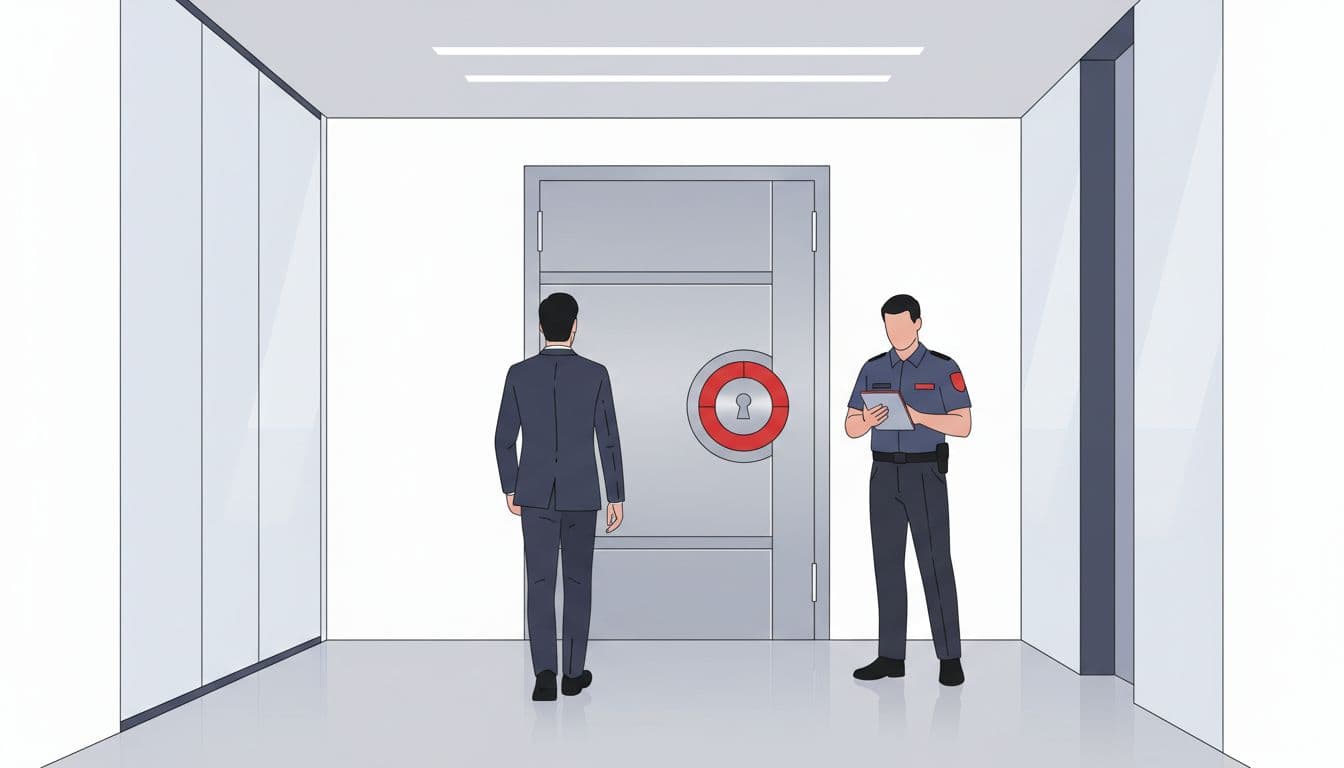
The risk is not only that a former director could still log in. The real problem is weaker control, including gaps in knowledge transfer and institutional memory from the departing board member. You lose confidence in who can see what. That makes audit questions harder, incident response slower, and board reporting less credible.
If you work in a mission-driven organization, the stakes can rise fast. Client, donor, employee, or litigation-related material may sit inside systems like the board portal for a nonprofit board with unclear access in outdated systems. When turnover happens, those weak spots stop being theoretical.
If you can’t name who revokes each type of access, you don’t have a real offboarding process yet.
This is why a clean exit matters even when the departure is friendly, planned, and appreciated. Good relationships don’t replace controls. They make good controls easier to carry out.
A practical board member offboarding checklist
Start with ownership. One person should coordinate the process, usually operations, legal, the corporate secretary, board chair, or your technology lead. Other people may complete tasks, but one owner keeps the list from falling between teams.
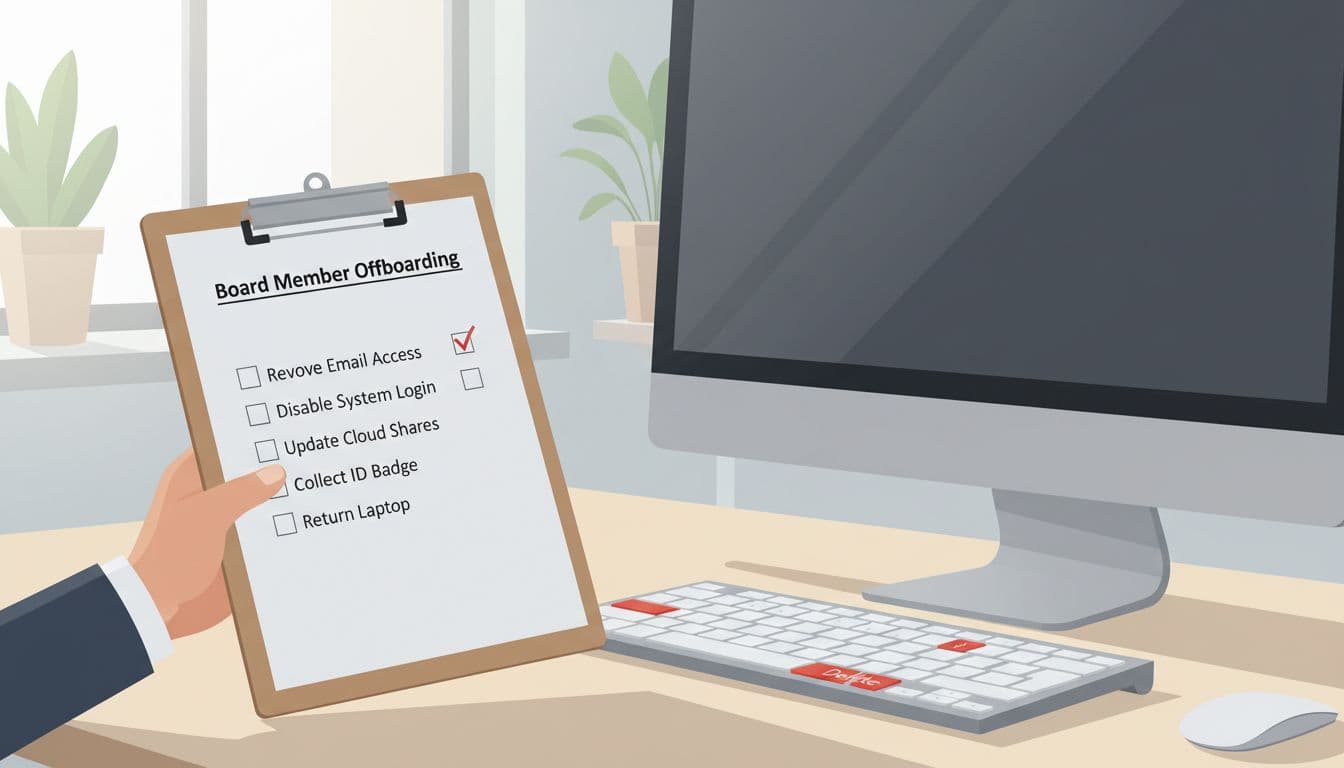
Use this sequence:
- Confirm the exit details. Record whether the change is a resignation, term expiration, or removal. Note the effective date, committee roles, and any signing or approval authority that ends with the board term.
- Conduct an exit interview. Capture feedback from the departing board member to improve processes and governance.
- Inventory every access point. Review the board portal or board management software, email groups, shared drives, file links, messaging tools, finance folders, e-signature platforms, calendaring, physical badges, returning company property such as tablets or keys, and any vendor portals tied to board work.
- Revoke or reduce access within 24 hours. For active systems, same day is better. If there is a short transition period, move the person to least-privilege access and set a hard end date.
- Update approval paths and notifications. Remove the former director from payment approvals, contract routing, incident notifications, committee communications, and recurring board packet distributions.
- Change shared credentials. If a former board member ever used a shared password, rotate it. The same goes for shared MFA devices or admin backup methods. This is part of tightening access around sensitive data.
- Document completion. Keep a dated record of what was removed, by whom, and when. Review or have the former board member sign a separation agreement or non-disclosure agreements. That record matters if questions come later.
If a departure is disputed or tied to formal removal, your bylaws and meeting records matter as much as the access steps. This overview of board member removal procedures is a useful reminder.
The offboarding steps teams miss most
Most misses are boring. That is why they stick around.
Board turnover, often sparked by tenure limits, leaves gaps like these. A former board member may still receive calendar invites. Their personal email may still get forwarded packets. An old shared link may still open. A committee folder may still sync to a laptop. None of that looks dramatic until you need a clean answer about confidentiality. These details demand the same rigor as the initial onboarding process.
Another common miss is vendor-facing access. Think insurance portals, payroll visibility, fundraising tools, or outside counsel file shares. If the board member joined any external workflow, you need to close that loop too. Do not overlook the public announcement of the transition either, as it is a key communication step.
Board turnover also affects reporting, which supports your strategic goals. Your roster, committee list, distribution rules, and sign-off paths all need to match reality. That same discipline helps when you’re preparing clear updates for boards and funders.
FAQs About Board Access Offboarding
Who should own the checklist?
You need one accountable owner. That might be your COO, corporate secretary, executive director, or technology lead. This owner ensures offboarding feeds into long-term succession planning. Shared responsibility is fine for execution, but one person has to confirm the full list is done.
Why honor board members during offboarding?
A graceful exit honors board members while supporting a positive employer brand and board culture. It also frames the transition as an opportunity for professional development for incoming members.
How fast should you remove access?
For board portals, shared drives, finance tools, email groups, and messaging platforms, remove access the same day if possible. If a planned transition requires temporary access, narrow it right away and set an expiration date.
What if the former board member used a personal email or device?
Stop forwarding confidential material. Remove shared links, rotate any shared credentials, and ask the person to delete downloaded files if your policy allows. Then document the request and the date.
Is this only a nonprofit issue?
No. Any board with access to sensitive material needs this process. Nonprofits often feel it more because board packets can include donor, client, grant, or case-related information. Diligent’s departing board director checklist is a useful reminder that transition work goes beyond passwords.
Clear ownership closes the gap
Board turnover should not leave you guessing who still has access. A short, disciplined checklist, as a critical component of a broader transition plan, gives you cleaner control, better records, and fewer ugly surprises later. Protecting intellectual capital via these controls is vital for maintaining high board performance.
If you want to test your process, look at your last board departure. Can you prove what access was removed, when it happened, and who confirmed it? If not, that is the place to fix first. That is how a board member offboarding checklist gets you to confident decisions.