
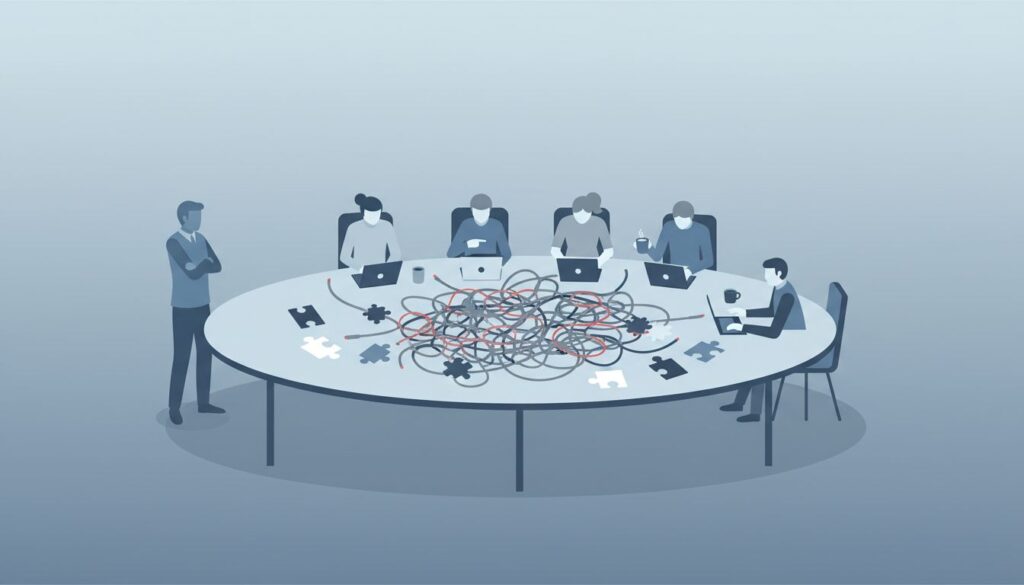
Weak technology leadership rarely blows up in one dramatic moment. It shows up as slower decisions, messy reporting, vendor drift, and a team that keeps working around the problem instead of fixing it. The hidden cost of weak leadership goes beyond just technical debt.
That is the trap. The spend line may look manageable, but the real cost lands in time, trust, and control. If you keep feeling friction and can’t get a straight answer, these frictions prevent the achievement of long-term business outcomes, and the damage is probably already spread across the business.
Here is what that cost looks like when you stop calling it a tech issue and start calling it what it is.
Key takeaways for leadership
If you only keep three things in view, keep these:
- Weak technology leadership turns capable teams into firefighters. They stay busy, but they don’t gain ground.
- The cost is not only budget waste. It shows up in slower execution, weaker reporting, slower and less effective decision-making by executives, and more risk than leaders can easily see.
- Technology leadership development is not more tools. It is clearer ownership, cleaner decisions, and a plan leadership can trust.
You feel the drag before you can name it
The first sign is usually friction, a byproduct of stalled digital transformation. Reports take longer. Meetings go in circles. People ask for the same data in different formats. Someone on your team becomes the person who “knows where everything is,” which is another way of saying the system is fragile.
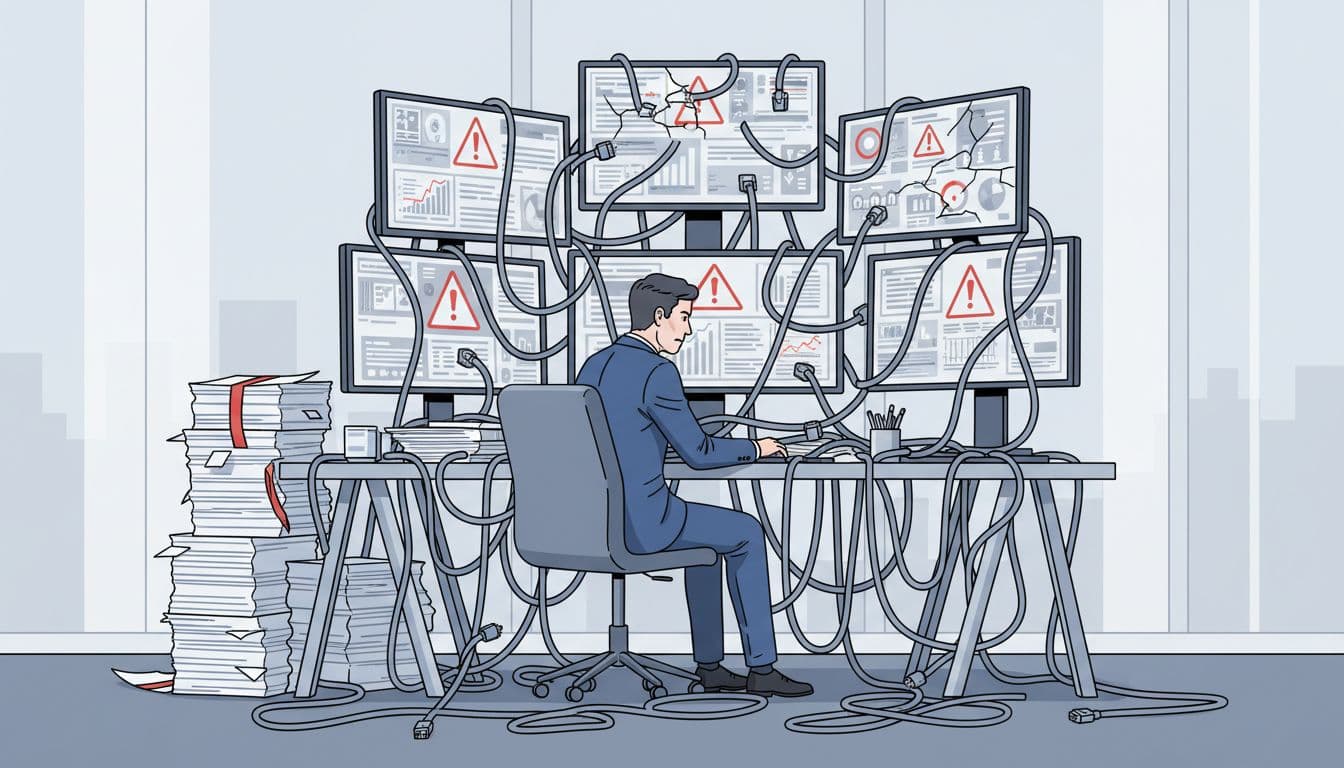
If you run a mission-driven organization, this may look familiar. As these organizations shift toward more resilient operating models, the pattern in the technology challenges facing legal nonprofits mirrors what many growing businesses face. More work gets done, but the business starts leaning on workarounds, spreadsheets, and memory. This stifles the innovation ecosystem, blocking support for new initiatives and turning the business from an innovator into a maintainer.
That is expensive. Not in a dramatic way, but in the slow leak that never gets named.
The real bill is bigger than software
A weak technology function does not stay in the technology function. It erodes enterprise value by spreading into the parts of the business that matter most.
You pay in money when duplicate tools, outside help, and rework pile up. Managing emerging technologies poorly drives much of that bill. A recent note on tech stack modernization makes the point plainly; when technology stays messy, growth gets harder and manual work keeps climbing.
You pay in time when decisions wait on more meetings, more dashboards, and more explanation. The same issue shows up when teams spend hours reconciling numbers instead of moving the work forward.
You pay in trust when board members, funders, buyers, or internal leaders cannot see the story behind the numbers, eroding stakeholder buy-in. If you want a sharper view of that problem, the board and funder reporting readiness checklist is a useful way to see where clarity breaks down.
The hidden cost is not hidden because it is small. It is hidden because it shows up in a dozen places at once.
That is why the budget complaint is often the wrong complaint. The real issue is not “IT costs too much.” It is a failure of cross-functional collaboration between the tech function and other business units, so no one owns the full picture.
Risk builds in silence
Weak technology leadership also makes risk harder to see. Access drifts. Vendors accumulate more control than they should. Old systems stay alive because no one wants to touch them, due to a lack of succession planning for institutional knowledge. Shadow tools appear because the official process is too slow.
Then the business gets surprised.
That surprise can come as a cybersecurity incident, challenges in artificial intelligence adoption, a bad audit moment, a failed project, or a board question that lands harder than it should. None of those problems starts big. They grow where ownership is fuzzy due to a deficit in strategic thinking and visibility is thin.

For boards and executive teams, this is where weak leadership gets most expensive. You are not just dealing with a technical gap. You are dealing with a credibility gap. If the roadmap is unclear, the risks are scattered, and the answers keep changing, confidence drops fast.
That is also why the right kind of planning matters, especially for global leadership in an increasingly complex market. A technology roadmap for legal nonprofits is not only a planning tool. It is a discipline tool. It helps you decide what to fix first, what to stop pretending is temporary, and where leadership needs to stay involved.
What strong technology leadership changes
Strong technology leadership does not mean more buzz, more meetings, or more software. It means the business gets a clearer operating picture, especially for capabilities like artificial intelligence and scaling AI that require strong leadership.
You get cleaner ownership. The leadership team empowers staff through influence and motivation, so someone can say who decides, who executes, and what happens next.
You get better reporting. Improved data supports decision-making, so leaders can see what is on track, what is slipping, and what risk is growing.
You get better pacing. The organization stops reacting to every issue as if it were equal.
You also get less waste. Not because someone becomes magical, but because someone finally has the authority to ask the obvious questions about cross-functional collaboration and emerging technologies. Which tools are pulling their weight? Which vendor relationships are creating drag? Which projects still matter? Which ones should stop?
This clarity on projects builds a future-ready workforce and enables human-AI collaboration.
That is the work. Not glamorous. Very useful.
FAQs
How do you know weak technology leadership is the problem?
You usually feel it as confusion that keeps coming back. If leaders can’t get consistent answers about priorities, cost, risk, or ownership, the problem is bigger than an IT issue.
Is weak technology leadership the same as weak IT support?
No. IT support can be responsive with strong technical expertise and still leave leadership in the dark. Weak technology leadership is about the absence of executive-level direction and a broader talent strategy, not just technical effort.
What should you fix first?
Start with visibility, which may require leadership coaching or mentorship as part of a formal leadership development plan to ensure the fixes stick. Then fix ownership. After that, decide what needs to stop. If you skip those steps, you usually end up buying more tools to cover the same gap.
What this really costs you
The hidden cost of weak technology leadership is not just wasted budget. It is the slow erosion of confidence, speed, and control, ultimately impacting your global competitiveness. Once that starts, every decision feels heavier than it should.
If your business is growing, under pressure, or facing outside scrutiny, you cannot afford technology leadership that stays vague. You need agile leaders who deliver clearer answers, cleaner ownership, and concrete action plans built on collaborative communication that let you move with confidence. Success in growth requires effective change management and a commitment to professional development to ensure the entire organization is aligned with the new direction of global leadership.