

Technology risk and technology noise are not the same thing.
Risk is what can hurt the business. Noise is what makes it harder to see what matters. If you are dealing with too many tools, weak reporting, vendor confusion, and constant urgency, you may have both in front of you at once.
That is why this gets messy fast. Leaders start reacting to whatever is loudest, then spend more time on motion than on decision-making. A steady executive technology leader helps you separate the real threat from the clutter, so you can act with a clear head instead of a full inbox.
If you are not sure which one you are facing, start with a Get an Executive Technology Clarity Check.
Key takeaways
- Technology risk can damage revenue, trust, compliance, delivery, or security.
- Technology noise creates activity, but not better decisions.
- The fastest way to sort them is to ask what breaks, who owns it, and whether it supports business goals.
What technology risk really looks like in your business
Risk is not the same as inconvenience. A slow laptop is annoying. A weak access control policy, a fragile vendor setup, or a broken reporting line is a different problem.
When technology risk is real, it touches the parts of the business that matter most. It can stall growth, expose customer data, delay launches, distort financial reporting, or create a board-level problem you now have to explain.
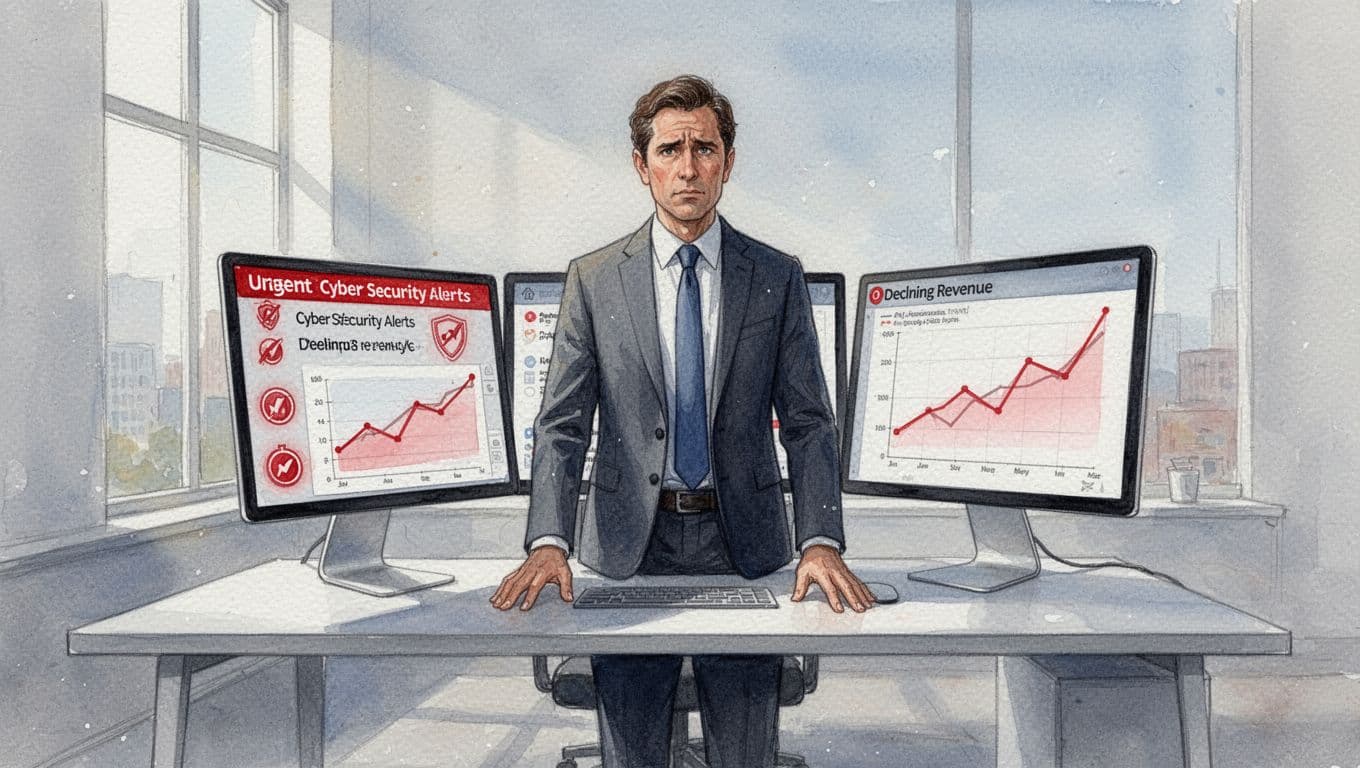
The signs you are dealing with real risk
Real risk usually shows up in plain business language before it shows up in a dashboard.
You may see cyber gaps, outages, and poor access control. You may also see heavy vendor dependence, bad data quality, unclear system ownership, or board reporting that leaves out the parts leaders actually need to know.
Those are not separate annoyances. They can hit revenue, operations, and reputation at the same time. If a key system goes down, if the wrong people can see sensitive data, or if no one can explain who owns a critical platform, the business is exposed.
A missed report to the board is not just a reporting problem either. It can mean leadership does not see the risk until it has already grown teeth.
Why leaders should treat risk as a business issue, not just an IT issue
Technology risk becomes serious when it affects decisions.
If you cannot trust the data, you cannot trust the next move. If the board cannot see the real exposure, oversight gets weak. If the business cannot move quickly because every change requires a workaround, risk starts shaping strategy whether you admit it or not.
That is why this belongs in executive conversations. It is about accountability, customer trust, and the ability to act without guessing. It is also why the right kind of executive technology leadership matters. You need someone who can connect the technical reality to the business consequences and say what needs attention first.
What technology noise looks like, and why it hides the real problem
Noise is the clutter around the work.
It is the stack of dashboards nobody uses. It is the vendor pitch that makes everything sound urgent. It is the meeting that creates motion but no decision. It is also the long project list with no clear priority and no clear owner.
Noise feels productive because people are busy. But busy is not the same as controlled.
Common forms of noise leaders mistake for progress
The easiest way to miss noise is to confuse activity with progress.
Too many dashboards can do that. So can too many meetings, too many opinions, and too many tools that all claim to solve the same problem. Tool sprawl often looks like a capability upgrade, but it can turn into a governance problem fast.
Vendor pressure adds another layer. One team wants speed, another wants control, and a third wants to avoid risk. No one is fully wrong, which is exactly why the situation gets noisy.
Competing project lists create the same effect. Everything looks important. Nothing gets the level of attention it deserves. You end up with a pile of partial wins and a larger pile of unanswered questions.
How noise wastes time, money, and trust
Noise eats time first.
People sit in meetings to explain reports that do not change anything. They rebuild decks, reformat updates, and chase status that no one can act on. That is time you do not get back.
Then it wastes money. You pay for tools that overlap. You pay for reporting that does not help you decide. You pay for workarounds because the system is too messy to trust.
The bigger loss is trust. When leaders keep hearing activity but not outcomes, they stop believing the updates. Teams feel it too. They know when the work is moving, and they know when it is just rearranging the same mess.
How to tell risk from noise before you make your next move
You do not need a giant framework here. You need a clean filter.
Start with three questions. Keep them simple. If the issue passes all three, treat it like risk. If it fails all three, it is probably noise, or at least noise with less urgency than people are giving it.
Ask what could break if you ignore it
This is the fastest test.
If ignoring the issue could hurt customers, compliance, revenue, delivery, or security, it is real risk. If it mainly creates extra work, confusion, or inconvenience, it may be noise.
That does not mean you ignore it forever. It means you rank it correctly. Leaders get into trouble when they put every annoyance into the same bucket as a threat.
Ask who owns the decision and what action changes the outcome
Risk needs ownership.
If no one can name the decision-maker, or if the reporting does not lead to a clear next step, the problem will linger. Noise often grows in the gaps between teams because everyone is talking and no one is deciding.
The fix is not more updates. It is named ownership, clear action, and reporting that helps someone move. If you want a better view of how leadership ownership affects execution, this is where fractional CTO services can help you reset the operating picture.
Ask whether it supports business goals
Every technology issue should be tied back to the business.
Does it support growth, resilience, customer trust, or readiness for transition? If yes, it probably matters. If not, you may be looking at motion without purpose.
This question cuts through a lot of static. It forces you to decide whether the work is helping the business move or just keeping the machine busy.
What to do when your technology stack is full of both
Most leadership teams are not dealing with one pure problem. You usually have both, real risk and a lot of noise around it.
That is why the first move should be small and clear.
Start with a short clarity check, not a giant project
Do not try to fix everything at once.
Start by understanding what is happening, what changed, and where the business is feeling the drag. A good clarity call is not about selling you a service. It is about sorting the situation so you do not force the wrong fix on the wrong problem.
When the issue is fuzzy, a short conversation can save months of bad decisions. It can also help you avoid buying another tool when the real issue is ownership, governance, or reporting. If you are stuck in that spot, Talk Through Your Technology Leadership Gap is often the right place to begin.
Separate quick fixes from deeper leadership gaps
Some issues need cleanup. Others point to a leadership gap.
You may need to remove duplicate tools, tighten access, or stop a weak vendor from steering the roadmap. That is the quick-fix side. But if reporting stays weak, decisions stay fuzzy, and no one owns the outcome, the business needs stronger executive technology leadership.
That is where outside help can make sense. Not because your team is failing, but because the business has outgrown informal management. When that happens, the question is less about IT and more about operating control.
Build a simpler operating rhythm around technology
The long-term fix is not more movement. It is better cadence.
You need a rhythm where the right people see the right risks early, where reporting is short enough to use, and where the board or executive team can tell what matters without sorting through noise. Fewer moving parts help. Clearer ownership helps. Honest reporting helps even more.
This is also where executive technology oversight can calm things down. Not by adding more meetings, but by giving the business a cleaner way to make decisions and track what matters.
Questions leaders ask when technology feels messy
How do you know if an issue is a real risk or just noise?
Look at impact, ownership, and consequence. If the issue can hurt customers, compliance, revenue, delivery, or security, it is risk. If it mostly creates confusion or extra activity, it is noise.
Why does technology noise keep growing in fast-moving companies?
Growth adds tools, people, vendors, and workarounds. Without executive oversight, those layers pile up fast. The business starts solving yesterday’s problems with today’s clutter.
When should you bring in outside technology leadership?
Bring in outside leadership when the company has outgrown informal management, when reporting is weak, when vendors are driving too much, or when the board needs a cleaner view of risk. If that is where you are, Prepare Technology for Diligence or Transition is the kind of conversation worth having early, not after the pressure spikes.
Conclusion
You do not need more noise. You need clearer signals, better ownership, and a sharper view of what can actually hurt the business.
That is the real difference here. Technology risk affects outcomes. Technology noise hides them. Once you see that split clearly, your next decision gets easier.
Better leadership makes technology easier to run, and easier to trust. If the picture still feels messy, start by turning the confusion into a clear plan.