
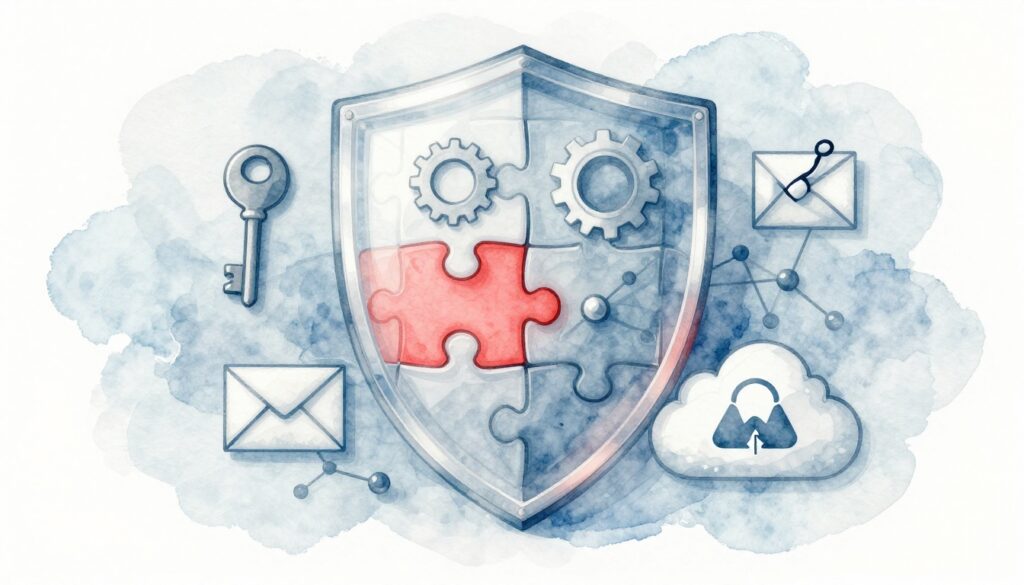
The cheapest way to protect your business from cyber attacks is not buying the biggest tool stack. It’s cutting off the easiest ways attackers get in.
That means fixing the basics first, weak passwords, missing updates, phishing, open access, and unclear ownership. Most cyber problems start there, not with some dramatic, movie-scene breach. They also turn into business problems fast, because one bad login or one fake wire request can hit revenue, reputation, and trust in the same week.
You do not need a giant security program to get meaningful protection. You need a few smart moves, in the right order, with someone actually owning the follow-through.
Key takeaways
- Turn on multifactor authentication wherever money, email, and customer data live.
- Patch systems on a regular schedule, especially browsers, VPNs, firewalls, and business apps.
- Train your team to slow down and question urgent requests.
- Limit access so people only see what they need.
- Back up data, then test the restore process before you need it.
- Review vendors and tools before you spend another dollar.
Start with the basics that stop most attacks for the least money
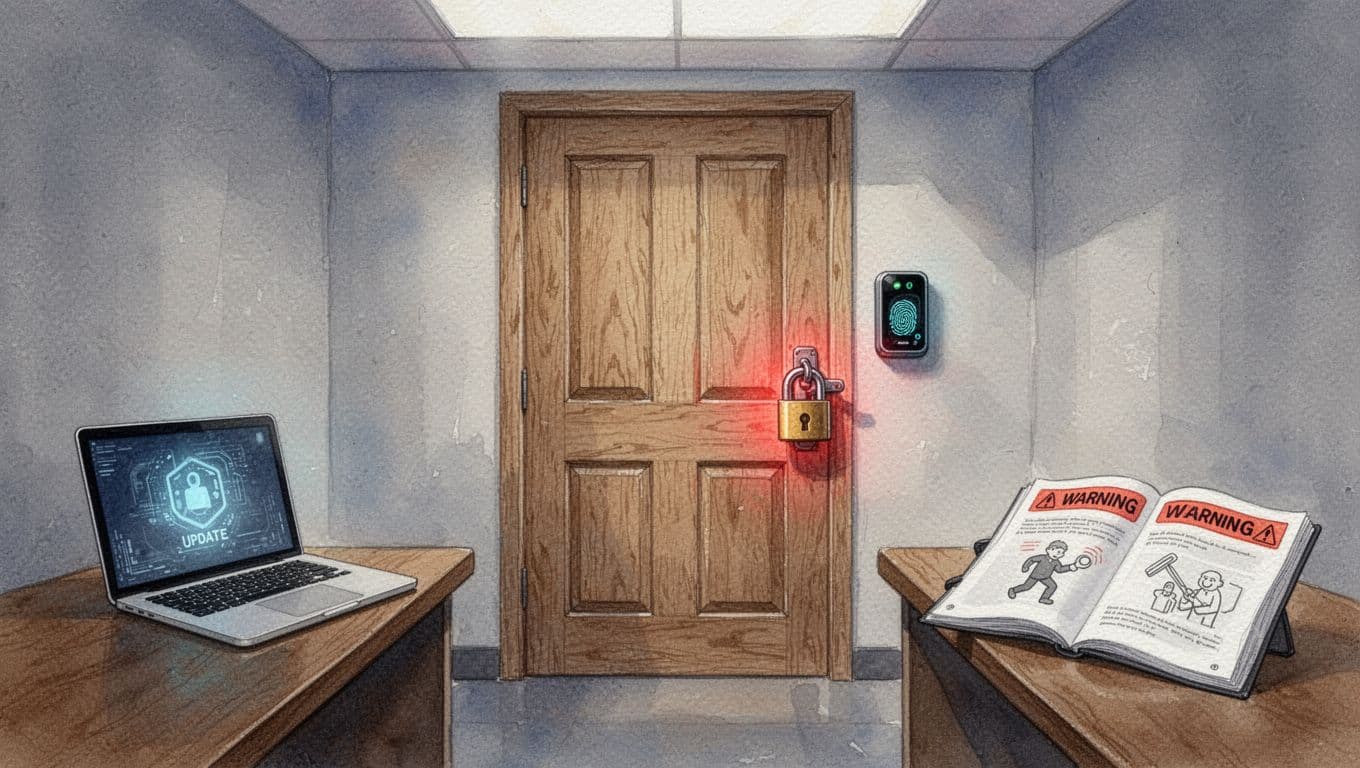
Cheap protection starts by blocking the most common attack paths first. That is where you get the best return. Many attacks succeed because basic hygiene is missing, not because the business lacks some expensive platform.
Turn on multifactor authentication everywhere it matters
If one stolen password can open the door, your security is too easy to beat.
Multifactor authentication, or MFA, is one of the lowest-cost defenses you can put in place. Start with email, payroll, banking, remote access, cloud tools, and anything that holds customer or financial data. If an attacker gets a password, they should still hit a wall.
You do not need to cover every tool on day one, but you do need to cover the ones that matter most. That alone shuts down a lot of cheap, common attacks.
Patch systems before attackers exploit old holes
Updates are boring. Breach cleanup is not.
Outdated software is one of the easiest ways for attackers to get a foothold. Keep an eye on operating systems, browsers, VPNs, firewalls, plugins, and the business apps your team uses every day. A steady update habit costs far less than a clean-up after a compromise.
The real win is consistency. Set a simple schedule. Review it. Follow it. That beats a fancy security purchase you never fully use.
Train your team to spot phishing and fake requests
The most common cyber threats businesses face still travel through email and other ordinary requests. That is why your team matters so much.
Teach people to pause when they see fake invoices, password reset links, gift card scams, or urgent wire transfer requests. Make the lesson practical. If a request creates pressure, surprise, or secrecy, slow it down.
You do not need fear-based training. You need a habit of checking before clicking, paying, or sharing. That habit is cheap, and it saves real money.
Spend less by reducing the risk inside your own systems

The cheapest protection is often about shrinking the blast radius. If someone gets in, you want the damage contained. That is smarter than trying to buy your way out of every risk.
If you cannot name the owner, the deadline, and the restore path, you do not have a security plan. You have hope.
Give people only the access they truly need
Least privilege sounds technical, but the idea is plain. People should only have the access they need to do their jobs.
Remove unnecessary admin rights. Use role-based access where you can. Review permissions regularly, especially after promotions, role changes, and departures. Old access is one of the easiest ways for mistakes and attacks to spread.
This also cuts support noise. Fewer open doors mean fewer problems to clean up later.
Back up your data and test the restore process
A backup that you cannot restore is not much of a backup.
Keep separate or offline backups where possible. Protect the backup account. Test recovery on a schedule. That matters for ransomware, accidental deletion, and plain old human error.
A lot of businesses discover too late that they had copies, but not a usable recovery path. Do not wait for an emergency to learn that lesson.
Separate important systems so one breach does not spread
Not every system should sit in the same pile.
You do not need a giant network redesign to improve this. Start with simple separation for critical systems, tighter admin control, and fewer shared credentials. Keep your most important data and money-moving systems harder to reach than the rest.
That makes attacker movement harder. It also makes your business easier to recover if something goes wrong.
Protect the business by cutting waste, not adding more tools

A lot of businesses overspend on security and still miss the basics. Tool sprawl creates confusion, duplicate cost, and blind spots. The answer is not more noise.
Review the tools you already pay for before buying another one
The cheapest security upgrade is often using what you already own better.
Check whether your email, endpoint, cloud, and identity tools are turned on and configured well. Many teams pay for controls they never fully activate. Others buy another product before they finish the setup on the last one.
Start by asking a blunt question. What are we already paying for, and what are we actually using?
Focus your budget on the biggest business risks first
Do not shop for features. Shop for risk reduction.
Your first priorities are the systems that move money, store customer data, and run daily operations. If those go down, the business feels it fast. The same is true for email, credentials, and vendor access, because those are common entry points.
This is where a little discipline saves a lot of cash. Spend where the damage would hurt most.
Use a simple risk review to decide what to fix next
You do not need a long audit to make a better decision.
Review five things, assets, access, backups, vendors, and obvious gaps. That gives you a short list of the fixes that will reduce the most risk. It also helps you stop debating pet projects that sound useful but do not move the needle.
If the business is small or midsize, this kind of review is often enough to point to the next sensible move.
Lower your chance of a costly breach by managing people and vendors better
Security problems grow when nobody owns the process. That is where leadership matters. Weak ownership leads to weak security, even when the team is working hard.
Set clear rules for payments, approvals, and sensitive data
Some of the cheapest controls are also the most effective.
Use dual approval for payments. Require call-back checks for wire requests. Set rules for sharing sensitive data, especially when the request comes in fast or feels unusual. These steps do not slow the business down much, but they can stop fraud before it starts.
You are not trying to make life harder. You are trying to make bad requests harder to fake.
Hold vendors to basic security expectations
Third-party risk is real because vendors often have access to your systems, data, or money.
Ask simple questions. What can they access? Who approved it? Do they still need it? If a vendor no longer serves a real purpose, remove the access. If they do serve a purpose, keep the expectations clear.
Outside tools and partners should help the business, not become hidden entry points.
Make one person clearly responsible for cyber follow-through
This part is cheap and powerful. It also gets skipped too often.
Someone needs to own updates, backups, access reviews, training, and incident response. Not in theory. In practice. When ownership is clear, action gets faster and surprises get smaller.
That is why executive technology leadership matters. Someone has to connect the work, the risk, and the business consequences.
When it is worth getting outside help
Sometimes the cheapest move is not doing everything yourself. It is getting clarity before you spend more.
If your security picture feels scattered, or if you are not sure whether the real problem is tools, ownership, or decision-making, a focused outside review can save you from buying the wrong fix. That is especially true when the business has weak reporting, vendor sprawl, or no one coordinating cyber follow-through.
If that sounds familiar, Get an Executive Technology Clarity Check. If the issue is more about leadership than software, you can also Talk Through Your Technology Leadership Gap. The point is not to sell you more activity. It is to find the lowest-cost next step that actually helps.
You may also want to review fractional CTO and interim CTO services if you need stronger ownership for a period of time, not a permanent hire.
Conclusion
The cheapest way to protect your business from cyber attacks is to fix the basics, limit damage, and make sure someone owns the follow-through. MFA, patching, phishing training, access control, backups, and vendor checks will do more for you than a big stack of half-used tools.
That is the real answer. Cyber protection is not about buying more software. It is about reducing business risk where it starts and making the next bad move harder to pull off.
If you need help sorting out what matters first, start with clarity before you spend another dollar.