

When nobody owns the handoff between operations, technology, and vendors, the business pays for it in delays, rework, and excuses. The work still gets done, but it gets done sideways. One team blames another, the vendor shrugs, and leadership gets status updates that sound busy but say very little.
You do not need more activity. You need accountability that holds. That means clearer ownership, sharper reporting, and a vendor accountability framework that tells everyone who decides, who executes, and who answers when something slips.
For CEOs, COOs, founders, and board members, this is not a nice-to-have. It is how you keep technology from turning into drag, fog, and wasted spend.
Key takeaways for busy leaders
- You need one owner for each critical decision, not three people sharing the problem.
- Vendors should be managed through clear outcomes, not vague follow-up calls.
- Board-ready reporting works only when operations and technology agree on the facts first.
Why accountability breaks in the first place
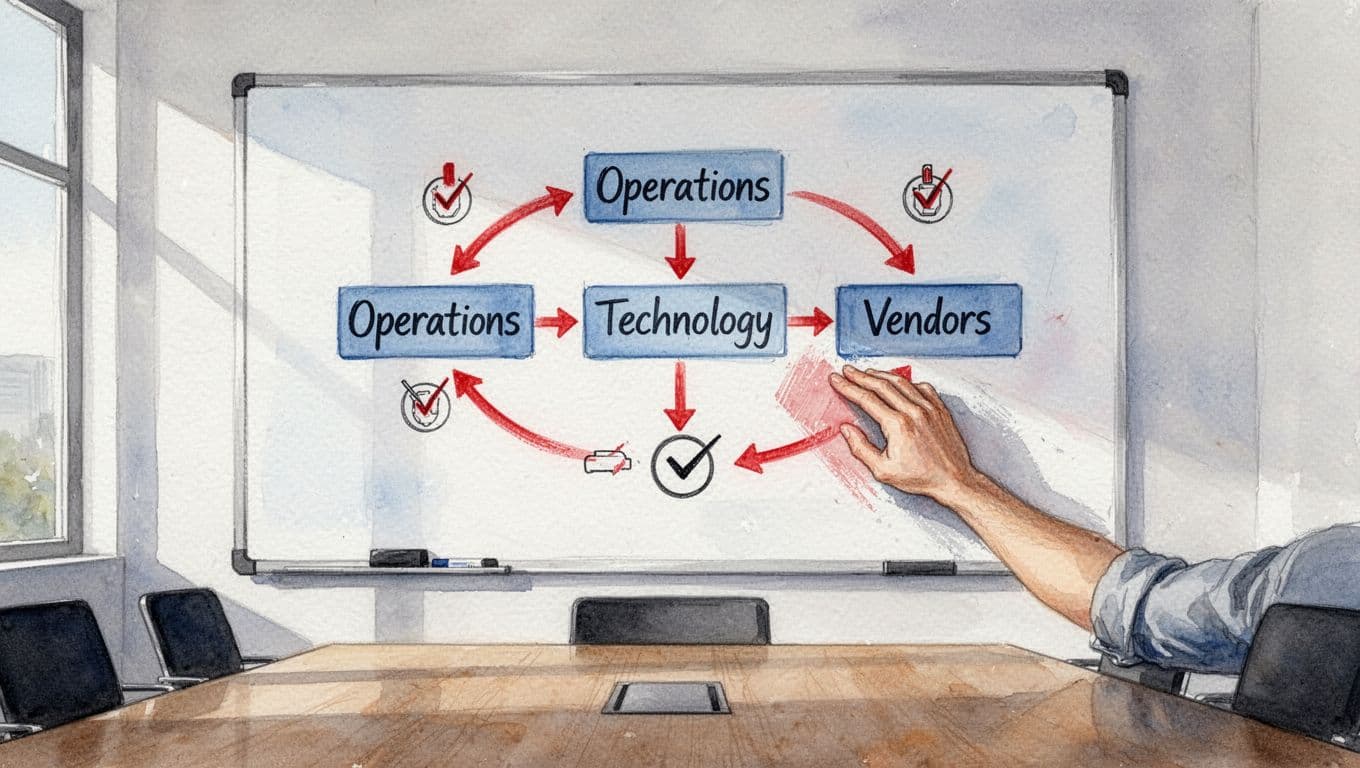
Most breakdowns start with a blur around ownership. Operations sees the service issue. Technology sees the ticket. Vendors see the scope. Nobody owns the whole chain.
That is where leaders get trapped. You end up with executive tech leadership for calm execution, but the organization is still acting like each group can run on its own. It can’t. If the business depends on the system, the vendor, or the data, then accountability has to cross those boundaries.
The fix starts with a simple truth. The problem is not effort. The problem is that effort is not organized around one clear operating model. If you are still relying on founder-led technology decisions or COO technology strategy by memory and side conversations, you already have a technology leadership gap.
If the vendor can make decisions without you, you do not have accountability. You have convenience.

Build a vendor accountability framework that fits real work
A real vendor accountability framework starts with decision rights. Who approves spend? Who signs off on risk? Who owns escalation? Who tracks delivery? If those answers are fuzzy, the vendor will fill the gap.
That is why this work belongs inside a broader fractional CTO services for vendor oversight model when the team does not have a strong executive technology leader in place. You are not buying more meetings. You are buying clearer direction, fewer surprises, and tighter follow-through.
This also means getting practical about the structure around the work. A vendor management and risk visibility solutions approach should include a systems inventory, a decision rights map, and a technology operating rhythm that people actually use. Pair that with a one-page technology strategy, a 12-month technology roadmap, and a plain business-aligned technology strategy. That is better than a long deck no one opens again.
If you want a solid baseline for vendor risk, NIST’s supply chain risk guidance is worth keeping close. It helps you think beyond contracts and into control.
Give vendors scorecards, not vague follow-up
If you want better vendor management, stop measuring activity and start measuring outcomes. Uptime matters. Response time matters. Renewal risk matters. Cost-per-outcome reporting matters. So does tech spending ROI.
This is where technical due diligence and vendor due diligence need to connect to the business, not sit in a separate file. If the vendor touches customer data, you also need cybersecurity oversight, vendor risk management, and third-party risk reporting that leaders can read without a translator.
Use the same logic for AI tools. Shadow IT, tool sprawl, and AI vendor due diligence all show up as the same problem when nobody owns the stack. If a new tool is being used, ask whether it fits your AI adoption strategy, responsible AI standards, and AI acceptable use policy. If it doesn’t, you are creating risk and calling it speed.
A practical vendor management lifecycle gives you a clean structure for onboarding, monitoring, renewal, and vendor offboarding. That matters more than another quarterly status call.

Make the board part of the operating rhythm
If the board only hears about vendors when something goes wrong, you do not have board-ready reporting. You have damage control. Good board technology reporting gives directors a clean view of spend, risk, ownership, and drift before the next problem lands.
That is where board-ready reporting, board cybersecurity reporting, and cyber risk reporting to the board need to become one conversation. The board does not need a pile of tickets. It needs a board-ready risk summary, a clear cyber risk appetite, and plain language around technology risk oversight.
If the company is preparing for acquisition, diligence, or post-merger technology integration, this gets sharper fast. You need a technology audit, a cybersecurity due diligence view, and a CTO transition plan that shows who owns what after the change. If the work is already messy, Build a Board-Ready Technology Risk View is the kind of next step that keeps the conversation honest.
This is also where technology governance for CEOs and technology governance for boards stops being theory. It becomes a practical way to manage technology risk management, business continuity planning, disaster recovery planning, incident response readiness, ransomware readiness, and cyber insurance renewal without panic.
When outside leadership closes the gap
Sometimes the issue is not the framework. It is the absence of a senior operator who can make the framework real.
That is where a fractional CTO, interim CTO, outsourced CTO, virtual CTO, or part-time CTO comes in. In some situations, the right support is a fractional CIO, fractional CISO, virtual CISO, or interim CISO. The title matters less than the job. You need executive technology leadership that connects operations, vendors, spend, and risk.
If you are still deciding whether you need when to hire a fractional CTO guide, ask a simpler question. Do you need a technology leader for growing companies who can give you a better operating picture before you hire full time? If yes, then a fractional CTO to curb vendor sprawl may be the better move.
That kind of support is also useful for technology strategy consulting, strategic technology planning, IT strategy and roadmap work, and a 90-day technology plan when the business is under pressure. It helps with technology decisions for growth, mid-market technology leadership, and growth-stage technology leadership without forcing a rushed full-time hire.
If you need a clean starting point, Get an Executive Technology Clarity Check. You will leave with sharper priorities and a better read on what is slowing the business down.
FAQ
What should operations own versus technology?
Operations should own the business result, the process, and the day-to-day workflow. Technology should own the systems, integrations, access control best practices, and the data plumbing. Vendors should own the contracted service and the service levels. When those lines are clear, accountability gets easier.
Do you need a one-page technology strategy or a full roadmap?
You need both, but not at the same level of detail. A one-page technology strategy gives leadership a clear view of priorities. A 12-month technology roadmap shows what gets done, in what order, and why. That is enough to support a business technology strategy without drowning people in detail.
What is the fastest way to reduce vendor chaos?
Start with a systems inventory, a decision rights map, and a review of contracts, renewals, and offboarding. Then tie vendor performance to board-ready reporting and cost-per-outcome reporting. If you do that, tool sprawl, shadow IT, and technical debt become visible fast.
Conclusion
Accountability between operations, technology, and vendors does not come from more meetings. It comes from clearer ownership, cleaner reporting, and fewer hidden decisions. When you set the rules early, people stop guessing and start moving.
That is the real value of a vendor accountability framework. It gives you a way to see the problem, name the owner, and keep the business from drifting into vendor-driven choices.
If you want better control, start with the facts, then build the operating rhythm around them. That is how you move from fog to confident decisions.