
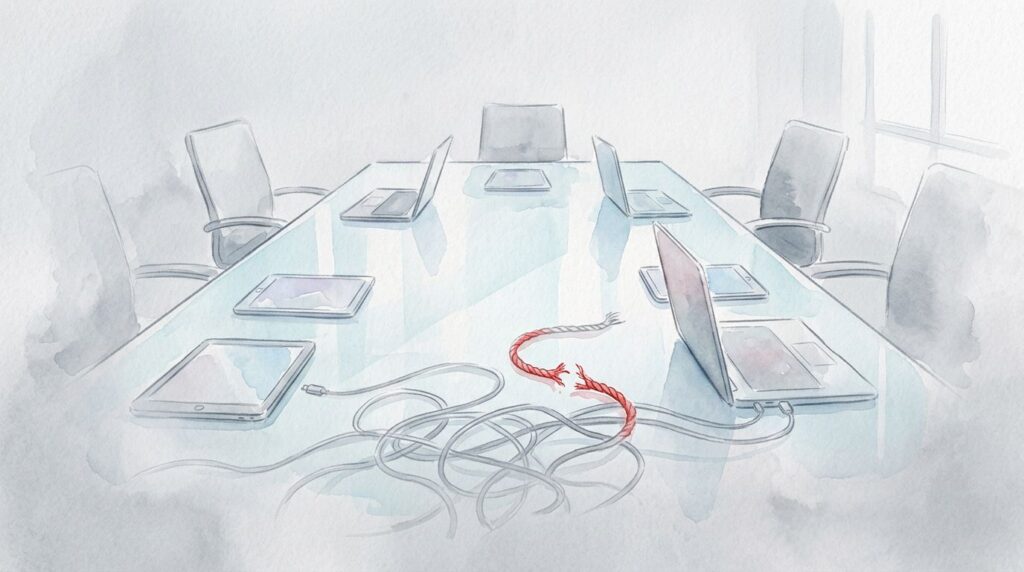
Weak technology leadership rarely looks expensive on day one. Technology leadership looks like late projects, fuzzy reporting, and meetings that end with another follow-up instead of a decision. Then it starts showing up in revenue, customer experience, and the board pack, ultimately eroding enterprise value.
If you are carrying that weight in your growing company’s digital transformation, you already know the problem is not effort. It is ownership, visibility, and follow-through.
That is where the hidden cost starts, and it usually shows up long before anyone calls it a technology issue.
Key takeaways for leaders
- Weak technology leadership falls short of global leadership standards for modern competition, becoming a business cost when decisions stay unclear and no one owns the tradeoffs.
- The budget often hides governance problems, tool sprawl, shadow IT, and vendor drift.
- The fix is clearer leadership, better reporting, and a roadmap tied to business outcomes.
- Prioritize leadership development to grow internal teams equipped for strategic technology execution.
Execution slows before the budget does
You feel it first in the work. Projects slip a week, then a month due to unclear decision-making. Teams start building around broken operating models. A manager buys a tool to move faster, another team finds its own workaround, and your best people spend more time chasing status than applying their technical expertise.
That is not just annoying. It burns capacity. In many growing companies, a meaningful slice of tech spend ends up tied to things no executive would reapprove today. The waste shows up as delay, rework, and lost momentum across departments from poor cross-functional collaboration before it shows up as a line item.

Growth exposes the problem faster because the business is asking for clearer decision rights, not more activity. Why growth exposes leadership misalignment is a good reminder that complexity and visibility rarely rise at the same pace.
Weak ownership turns into weak decisions
When ownership is fuzzy, every decision gets slower. Nobody wants to be the person who says yes, and nobody wants to be the person who says no. So the team waits. Vendors keep talking. The roadmap drifts without stakeholder buy-in.
Weak technology leadership does not stay in the technology team. It reaches your revenue, your reporting, and your board pack.
This is where technology governance for CEOs and technology governance for boards matters, requiring strategic thinking. Board technology reporting should answer three plain questions, what changed, what is at risk, and what do you need from us now? If your cybersecurity risk appetite is unclear, your board cybersecurity reporting will be fuzzy too.
If you want the shape of that work, see executive technology leadership. The point is not more process. It is clearer ownership, a decision rights map, and a technology operating rhythm built on collaborative communication your leaders can actually use.

Mid-sized firms feel this hard because they usually have enough complexity to need executive structure, but not enough bench strength to absorb bad decisions. That is why board-ready reporting has to be plain, direct, and tied to business risk, not a status parade.
The budget is hiding your real problem
A bad budget is usually a symptom, not the disease. Tool sprawl, shadow IT, technical debt, and weak vendor management all grow in the same soil. One team buys around a gap. Another buys around the first tool. Then finance is left holding a spend pattern nobody can explain.
This is where technology spend optimization has to get more honest, including strong change management. If you cannot tie a project to an outcome, your tech ROI is a guess. Cost-per-outcome reporting is cleaner than a spreadsheet full of licenses because it forces you to ask what each system actually does for growth, risk, or service.
The same logic applies to third-party risk management, vendor due diligence, vendor offboarding, and a vendor incident response plan. If a vendor fails and your team scrambles, the problem was not the outage. The problem was weak vendor management before the outage.
That is often the moment you start asking when to hire a fractional CTO. You do it when the business needs someone to cut through the noise, clear the backlog, and show which costs are buying actual value.
Artificial intelligence is already repeating the same pattern with emerging technologies. Without AI governance, an AI adoption strategy, and a simple AI acceptable use policy, people buy tools faster than they can govern them, hindering scaling AI and effective human-AI collaboration. The same is true for business continuity planning, disaster recovery planning, incident response readiness, and ransomware readiness as action plans. If it lives only in a folder, it is not ready.
What better leadership actually looks like
You do not always need a full-time hire as part of your talent strategy. Sometimes you need fractional CTO services, sometimes you need interim CTO services, and sometimes you need a virtual CTO or part-time CTO who can steady the environment while you decide what comes next. These fractional leaders also bring mentorship and professional development to your existing team. In some organizations, the better fit is a fractional CIO, a fractional CISO, a virtual CISO, or an interim CISO because the real gap is structure, not headcount.
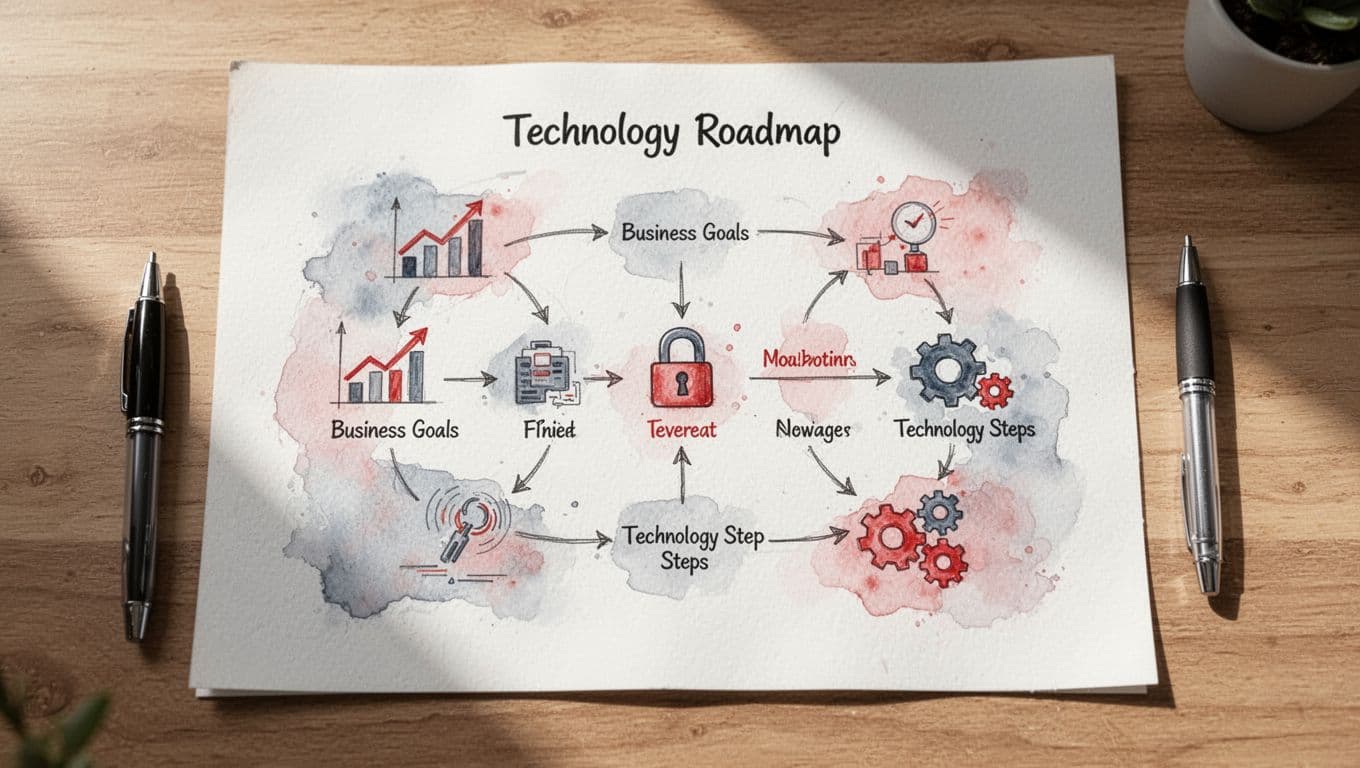
A technology leader for growing companies has to do more than keep systems alive. You need business-aligned technology strategy, IT strategy and roadmap work, and a technology roadmap that holds up in real meetings. A strong leader gives you a one-page technology strategy or a 12-month technology roadmap that ties business priorities to owners, risks, and spend.
If you are still weighing how to hire a CTO, compare a fractional CTO vs full-time CTO and a fractional CTO vs IT consultant against the problem in front of you. If you need judgment, ownership, and cadence from agile leaders through leadership coaching, not a task list, you need executive technology leadership before you need more headcount.
For acquisition readiness, technical due diligence, or post-merger technology integration, the same rule applies. You need a CTO transition plan with succession planning, cybersecurity due diligence, and a clear view of systems, vendors, and risk before outside pressure exposes the gaps for you.
Frequently Asked Questions
What are the first signs of weak technology leadership?
Projects slip due to unclear decisions, teams build workarounds like shadow IT, and meetings end without ownership. These issues burn capacity before they hit the budget, showing up as delays, rework, and fuzzy reporting. Growth exposes it faster as complexity rises without matching visibility.
How does weak technology leadership impact business outcomes?
It slows revenue through poor cross-functional collaboration, erodes board confidence with vague risk reporting, and hides waste in tool sprawl and vendor drift. The real cost is lost momentum, making tech a drag on enterprise value rather than a driver. Stronger ownership ties tech to outcomes, reversing the drain.
When should growing companies consider a fractional CTO?
Hire one when decisions stall, backlogs grow, and no one owns tradeoffs—before the board notices. A fractional CTO cuts noise, builds roadmaps, and mentors teams without full-time overhead, ideal for mid-sized firms needing structure over headcount. Compare it to full-time hires when steadying the ship comes first.
What does effective technology leadership deliver?
Clear ownership, business-aligned roadmaps, and plain reporting on risks, changes, and needs—answering what changed, what is at risk, and what is next. It curbs sprawl with cost-per-outcome tracking and governance for AI, vendors, and cyber risks. The result is faster execution, lower waste, and tech that supports growth.
Conclusion
The hidden cost of weak technology leadership is not one dramatic failure. It is the steady drain of slower decisions, fuzzy ownership, wasted spend, and rising risk. Once that pattern settles in, it touches growth, margin, board confidence, and your own time.
You do not fix it by adding more meetings or another dashboard. You fix it by making ownership visible to build an innovation ecosystem, tightening reporting, and putting the right level of executive leadership with skills in influence and motivation in the room. This approach cultivates a future-ready workforce.
If that gap is already costing you momentum, start with Find What Technology Is Costing Your Growth to enhance your global competitiveness.