

Informal tech leadership works until the business starts asking for better answers than the current setup can give. Then you get more meetings, more vendor opinions, more status updates, and less confidence.
You can still have capable managers and a hard-working IT team. What you don’t have is enough executive technology leadership around decisions, risk, and priorities.
That is when the noise stops looking normal. It starts looking expensive. Here are the signs that the business has outgrown the old way of running tech.
Key takeaways
- If decisions keep landing on you, technology is not being led at the right level.
- Weak reporting, vendor control, and hidden risk usually point to a technology leadership gap.
- When two or more signs show up, the question is no longer “Is IT busy?” It is “Do we have the right leadership model?”
If you want a simple guide for the next question to ask, when to hire a fractional CTO is the right place to start.
1. Decisions keep landing on your desk
You keep getting pulled into choices that should not need your attention. A vendor wants an answer. A project slips. A tool purchase needs approval. The team wants you to settle a tie they should have already narrowed down.
That is not a calendar problem. It is a leadership problem.
When founder-led or manager-led habits still run the show, the business depends on your instincts more than it should. You can feel it in the delays. You can feel it in the back-and-forth. You can feel it when nobody wants to own the call.
A business that has outgrown informal tech leadership needs someone who can make decisions before they become emergencies. That is where executive technology leadership changes the room.

2. Your reporting tells activity, not control
You have reports, but they do not help you act. The deck shows tickets closed, systems up, and meetings held. It does not show where risk is building, what changed, what it costs, or what leadership should do next.
That gap gets expensive fast.
Boards do not need more activity. They need board-ready technology reporting, board-ready reporting, and a plain view of business impact. If your board-ready technology reporting still needs a narrator, that is not reporting. That is a meeting.
If the board needs you to translate every month, the reporting is not doing its job.
This is also where data quality, data privacy, and information governance stop being side topics. If those pieces are fuzzy, the reporting will be fuzzy too. A real operating picture needs a data strategy, a data governance framework, and a clear decision rights map.
3. Vendors are starting to steer the roadmap
When vendors start shaping your direction, you are no longer choosing freely. You are reacting.
That usually shows up as too many product opinions, too much dependency on one provider, or too many decisions made in the name of speed. It also shows up when no one owns vendor management, vendor due diligence, or vendor offboarding. Add a missing vendor incident response plan, and the risk gets louder.
This is where third-party risk management matters. It is not just a procurement problem. It is a leadership problem.
If your team keeps saying yes because a vendor is pushing hard, your roadmap is no longer yours. The business needs stronger ownership, clearer boundaries, and better technology governance for boards and CEOs alike.

4. Risk shows up late, or only after something breaks
If cyber risk only appears after an outage, you do not have oversight. You have surprise.
That is a bad place to run a business from.
You should be able to talk about technology risk oversight, technology risk management, and cyber risk reporting to the board before something goes wrong. You should also know your cyber risk appetite. If nobody can name it, every incident becomes a debate.
This is where business continuity planning, disaster recovery planning, incident response readiness, and ransomware readiness stop being shelfware. They need owners. They need a cadence. They need to live in the operating rhythm, not in a folder no one opens.
A real technology risk management framework turns vague concern into decisions leaders can defend.

5. Tool sprawl and technical debt keep growing
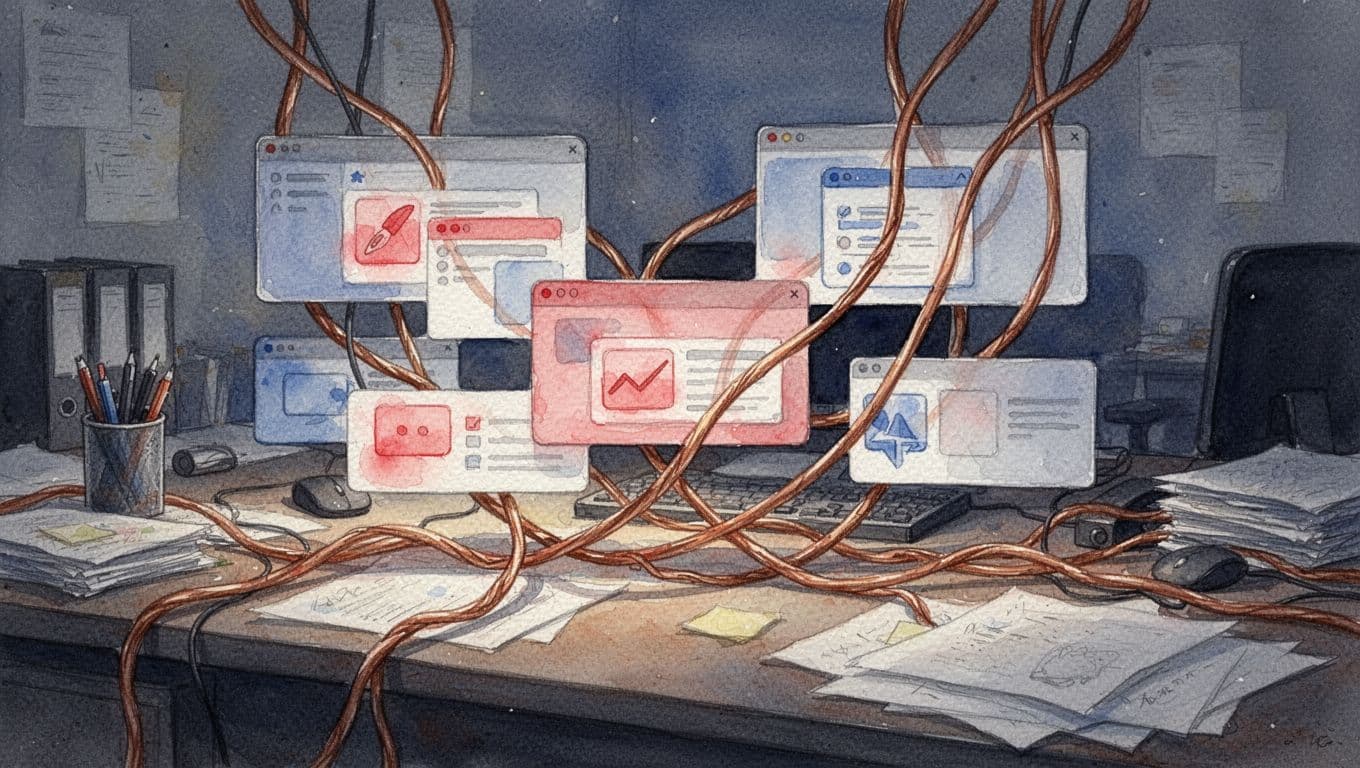
This is where the cracks get expensive. Teams buy around the process. Systems pile up. Shadow IT creeps in. Technical debt gets waved off until it slows everything down.
You can see the damage in the budget first. Then you see it in the friction.
If you cannot explain tech spending ROI, you are not doing technology spend optimization. You are just absorbing waste. That waste also shows up in IT cost optimization, application portfolio rationalization, software platform evaluation, and technology vendor selection. None of those problems fix themselves.
The same pattern shows up with AI. If people are rolling out tools without AI governance, an AI acceptable use policy, responsible AI standards, or AI vendor due diligence, you are adding surface area without control.
You also need a systems inventory. Without one, technical debt management turns into guesswork.
6. Your roadmap is a wishlist, not a plan
A real business-aligned technology strategy does not read like a parking lot of ideas. It tells you what matters, who owns it, what gets cut, and what happens next.
If your current plan is a stack of projects with no clear tradeoffs, you do not have strategic technology planning. You have hope.
This is where a one-page technology strategy can help. So can a 12-month technology roadmap built around actual priorities, not just open requests. If you need a reference point, a fractional CTO services model often starts here, with clearer priorities and better control over what gets funded.
The point is not to make the deck longer. It is to make the next decision easier. That is what a usable technology roadmap template should do, and what a board-ready tech roadmap should make obvious.
7. You are starting to think about hiring, but the role is still fuzzy
At this stage, the old setup feels thin. You may be asking whether you need a fractional CTO, interim CTO, outsourced CTO, virtual CTO, or part-time CTO. That is a fair question.
The label matters less than the job. You need someone who can own technology decisions at the executive level and not just keep the lights on.
If the gap is urgent, an interim CTO is often the right shape. If the business needs ongoing executive judgment without a full-time hire, fractional leadership is usually the better fit. If the gap sits closer to security, you may be looking at a fractional CISO, virtual CISO, or interim CISO instead. The same rule applies. Someone has to own the work, the reporting, and the risk.
This is also where a lot of CEOs start asking how to hire a CTO. The better question is whether you need one full-time yet, or whether executive technology leadership would solve the problem faster.
What to do when two or more signs are true
If more than two of these sound familiar, stop treating them as separate annoyances. They usually point to the same thing, a technology leadership gap.
Start with a clear conversation about what is happening, what has changed, and where the drag is coming from. That might lead to a technology audit, a 90-day technology plan, a cleaner decision rights map, or a stronger operating rhythm around technology governance.
If technology decisions feel scattered, risky, or too dependent on the wrong people, Get an Executive Technology Clarity Check. You will leave with sharper priorities, clearer ownership, and a practical next step.
For growing companies, this is the moment to move from founder-led or vendor-led decisions to a business-aligned technology strategy that leadership can actually govern.
Conclusion
Businesses do not usually outgrow informal tech leadership in one dramatic moment. It happens in a string of decisions that get slower, less clear, and harder to defend.
Once that pattern shows up, more effort is not the answer. Clearer ownership is. Better reporting is. Executive technology leadership is.
If your business feels heavier than it should, that is not a small annoyance. It is a signal.
FAQ
How do you know it is time to stop relying on informal tech leadership?
When decisions, reporting, and risk all depend on a few people improvising, the company has outgrown the old model. At that point, you need structure, not more heroics.
Do you need a full-time CTO yet?
Not always. Many businesses need fractional CTO services or interim CTO services before they are ready for a full-time hire. The test is whether you need ongoing executive ownership or a short-term fix.
What if the issue is mostly security?
Then the gap may sit closer to a fractional CISO, virtual CISO, or interim CISO. The title changes, but the need stays the same. Someone at the executive level has to own decisions, reporting, and cyber risk appetite.