

Technology governance consulting matters when your company keeps spending on systems, vendors, and projects, but leadership still can't get a straight answer to three basic questions. Who owns this. What is the plan. When will it be done.
If you're a CEO or COO in a scaling business, you already feel the problem. Budgets creep up. The team says everything is urgent. The board asks for clearer risk reporting. Vendors keep showing up with "strategic" recommendations that somehow require more spend. Meanwhile, work stalls in the handoffs.
That isn't just an IT problem. It's an execution problem.
Most companies don't need more dashboards first. They need clearer ownership, cleaner decisions, and a way to run technology without relying on heroics. That's what technology governance consulting is supposed to fix when it's done well.
When Technology Becomes a Source of Friction
You approve another software renewal because nobody wants to risk breaking operations. A project that was supposed to finish last quarter is now "in progress" with no believable date. Your operations lead says the CRM issue belongs to IT. IT says the underlying problem is sales process and data ownership. Finance wants cleaner reporting, but nobody trusts the numbers enough to use them in hard decisions.
That pattern has a cost. Not just in budget, but in speed, confidence, and management attention.
I see this most often in founder-led and mid-market companies that grew faster than their operating model. At a smaller size, informal coordination works. One strong operator can keep things moving. A handful of vendors can coexist without much structure. But growth raises the stakes. More systems, more approvals, more dependencies, more risk. The same informal habits that once felt agile start creating drag.
What the friction looks like in practice
The symptoms are usually obvious:
- Projects drift: Work starts with energy, then gets trapped in cross-functional ambiguity.
- Ownership stays fuzzy: Teams can explain activities, but not accountability.
- Vendor sprawl builds up: Tools stay in place because nobody owns the review.
- Reporting becomes a hunt: Leaders spend time stitching together updates instead of making decisions.
- Fire drills replace cadence: Every issue feels urgent because escalation paths were never defined.
Weak governance doesn't just create confusion. It creates a tax on every decision, every handoff, and every attempt to move faster.
Leaders often misread this as a talent problem. They think they need a stronger IT manager, a more disciplined PM, or one more system. Sometimes they do. More often, they're looking at a governance problem that keeps turning normal operational friction into organizational waste.
Why this gets worse as you grow
Scaling exposes every unclear line of ownership in the business. What used to be solved with a quick hallway conversation now requires multiple teams, multiple tools, and some version of risk signoff. If nobody has defined who decides, who advises, and who escalates, the company pays a coordination tax every week.
That tax shows up in simple ways. Leaders chase status. Teams duplicate work. Renewals slip through. Decisions get reopened. The loudest person in the room shapes the roadmap because the system doesn't.
You don't need a bigger bureaucracy to fix this. You need a business operating model for technology that people can effectively follow.
What Is Technology Governance Really
Technology governance consulting is not about adding layers of process so people can feel busy. It's about making technology decisions legible, repeatable, and tied to business outcomes.
At its best, governance acts like an operating system for execution. It tells the business who gets to decide, what standards matter, how risk gets reviewed, and what happens when something goes wrong. Without that, companies improvise. Improvisation works right up until scale, regulation, or scrutiny makes it expensive.
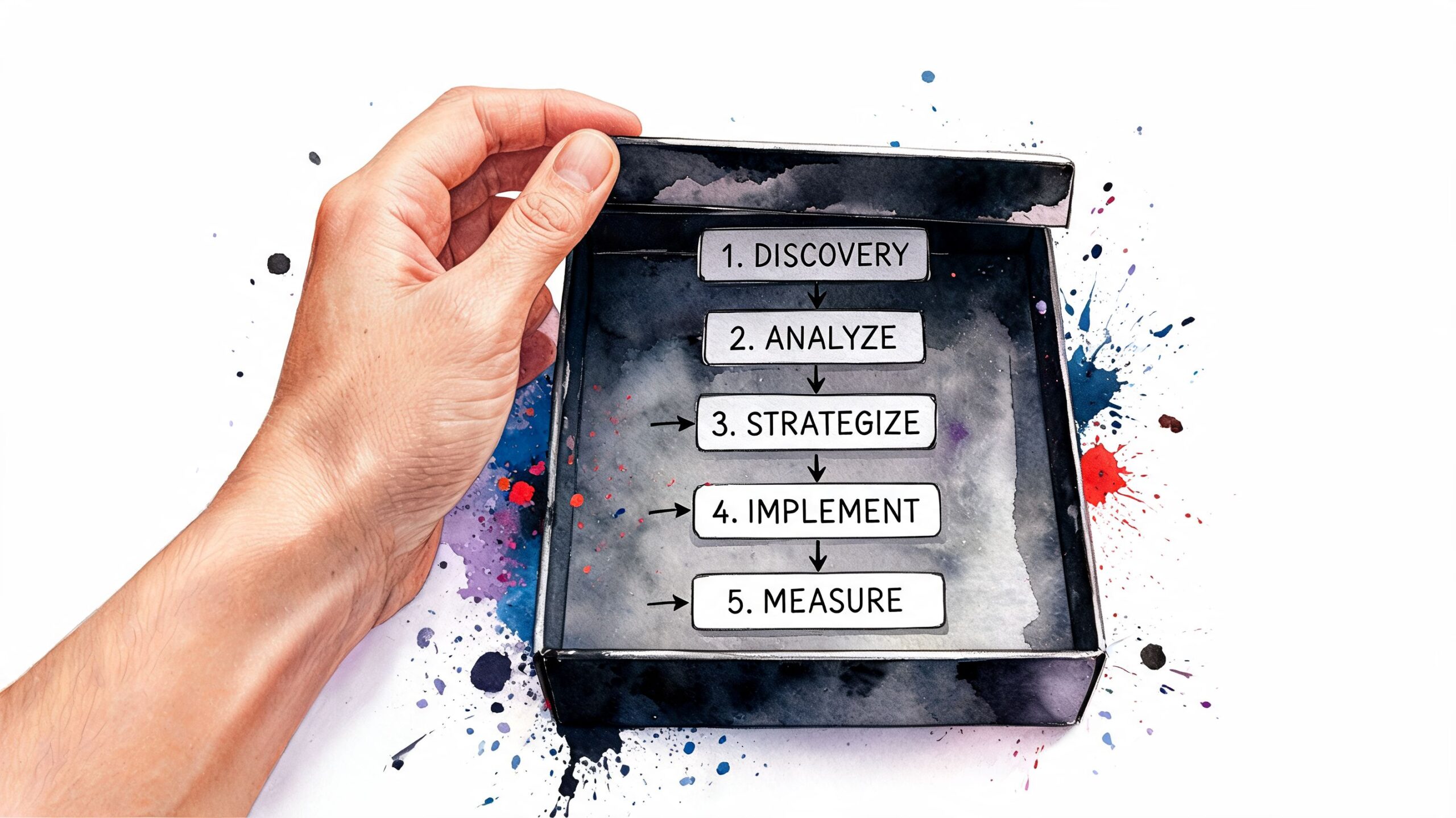
Governance is decision clarity, not bureaucracy
A practical definition is simple. Good governance answers three questions:
- Who owns this
- How do we know it's working
- What happens when it breaks
If those answers are vague, your business isn't governed. It's negotiating in real time.
The need is bigger than most leaders realize. The global IT consulting services market reached USD 759.12 billion in 2023 and is projected to grow at 11.0% CAGR, yet only 35% of digital transformation initiatives succeed, with data quality cited as the top barrier by 64% of companies, according to this IT consulting market analysis. That's a blunt reminder that spending on technology is not the same as controlling it.
What governance actually covers
In plain terms, technology governance usually includes:
- Decision rights: Who approves a vendor, a system change, a security exception, or a major implementation.
- Operating cadence: Which issues get reviewed weekly, monthly, or at board level.
- Asset visibility: A working view of systems, vendors, owners, costs, and renewal points.
- Risk handling: Clear escalation for incidents, compliance concerns, and unresolved dependencies.
- Performance accountability: Measures tied to business value, not just technical activity.
This is why smart leadership teams often step back before they choose a technology consulting partner. The question isn't just whether the firm understands systems. It's whether they can install a decision model the business will effectively use.
Why non-technical leaders should care
You do not need to become a technical operator to lead this well. You need a governance model that turns fuzzy conversations into clear commitments.
That's also where many teams benefit from practical guidance on best practices for IT governance. Not as theory. As a way to establish ownership, escalation, and review rhythms that survive normal business pressure.
Governance is the difference between "we hope the team has this covered" and "we can inspect who owns it, what changed, and where the risk sits."
If your technology environment feels hard to explain, hard to prioritize, and hard to trust, you don't have a tooling problem first. You have a governance gap.
Why Weak Governance Is a Silent Growth Killer
Weak governance rarely announces itself in dramatic language. It shows up as drag.
A company misses dates but can't explain why. Leaders approve spend that doesn't clearly map to outcomes. The same issue gets discussed in three meetings because no decision stuck. Sales wants speed. Security wants caution. Operations wants stability. Nobody has defined how those tradeoffs get resolved, so conflict turns into delay.
That delay gets expensive fast.
The money leak nobody owns
One of the ugliest forms of weak governance is shadow IT. Teams buy tools to move faster, then the business inherits the mess. A 2025 boardroom technology governance report notes that 50% of cyberattacks stem from ungoverned shadow IT. The same source says scaling companies lose an average of $135K per year in redundant SaaS subscriptions alone.
That's not a software problem. That's an ownership problem.
When nobody owns the inventory, nobody owns the cleanup. When nobody owns approval rules, tools multiply. When nobody owns renewal review, costs stay hidden in plain sight.
Slow decisions become slow growth
I've watched companies treat stalled technology decisions like a normal feature of growth. They aren't. They're a warning sign.
A vendor selection gets delayed because procurement, IT, security, and the business all think someone else is leading. A system migration drags because the team can't settle data ownership. An insurer or investor asks for evidence of control, and the company responds with screenshots, policy documents, and a lot of verbal reassurance. None of that creates confidence.
If important decisions keep getting reopened, the business is not being careful. It's paying repeatedly for the same uncertainty.
In practical terms, weak governance slows growth in four ways:
- Execution slips: Teams wait on decisions, approvals, or missing inputs.
- Margin erodes: Duplicate systems and rework pile up.
- Risk rises: Leaders can't prove what is controlled and what isn't.
- Confidence drops: Boards, insurers, and buyers lose trust in vague answers.
Due diligence gets uglier than it should
Many leadership teams often get caught flat-footed. Technology governance doesn't feel urgent until someone asks for evidence. Then it becomes painfully urgent.
A buyer wants to know which systems are critical, who owns them, how vendor risk is reviewed, and how incidents escalate. The board wants a clearer view of cyber exposure without getting dragged into operational detail. Legal wants to know whether sensitive data is sitting in unmanaged tools. If your answers depend on one long-tenured employee or a rushed spreadsheet exercise, you're exposed.
Weak governance hurts valuation and negotiating power because it makes the business look harder to trust. Even if the actual systems are decent, poor visibility and unclear controls create doubt.
Leadership feels the cost before finance does
The first signal is often managerial exhaustion. Senior people spend too much time chasing updates, mediating conflicts, and translating between teams that should already have a working decision structure. That drains leadership bandwidth that should be going into growth, customers, hiring, and capital allocation.
The deeper problem is cultural. Teams learn that ownership is flexible, deadlines are negotiable, and nobody really closes the loop. Once that becomes normal, every strategic initiative gets harder.
Technology governance consulting matters because it attacks that pattern at the root. It forces the business to name owners, define decisions, and create a rhythm for risk and execution before scrutiny or failure does it for you.
The Technology Governance Consulting Engagement Unpacked
A CEO usually calls for this work after the same week goes wrong three different ways. A vendor renewal auto-renews because nobody owned it. A cross-functional project stalls because two executives think the other one has the call. A board question about risk turns into a scramble across email, Slack, and memory. That is the coordination tax in plain view.
A good technology governance consulting engagement fixes that tax. It does not produce a prettier diagram of the mess. It gives the company a working control system for decisions, ownership, escalation, and reporting.
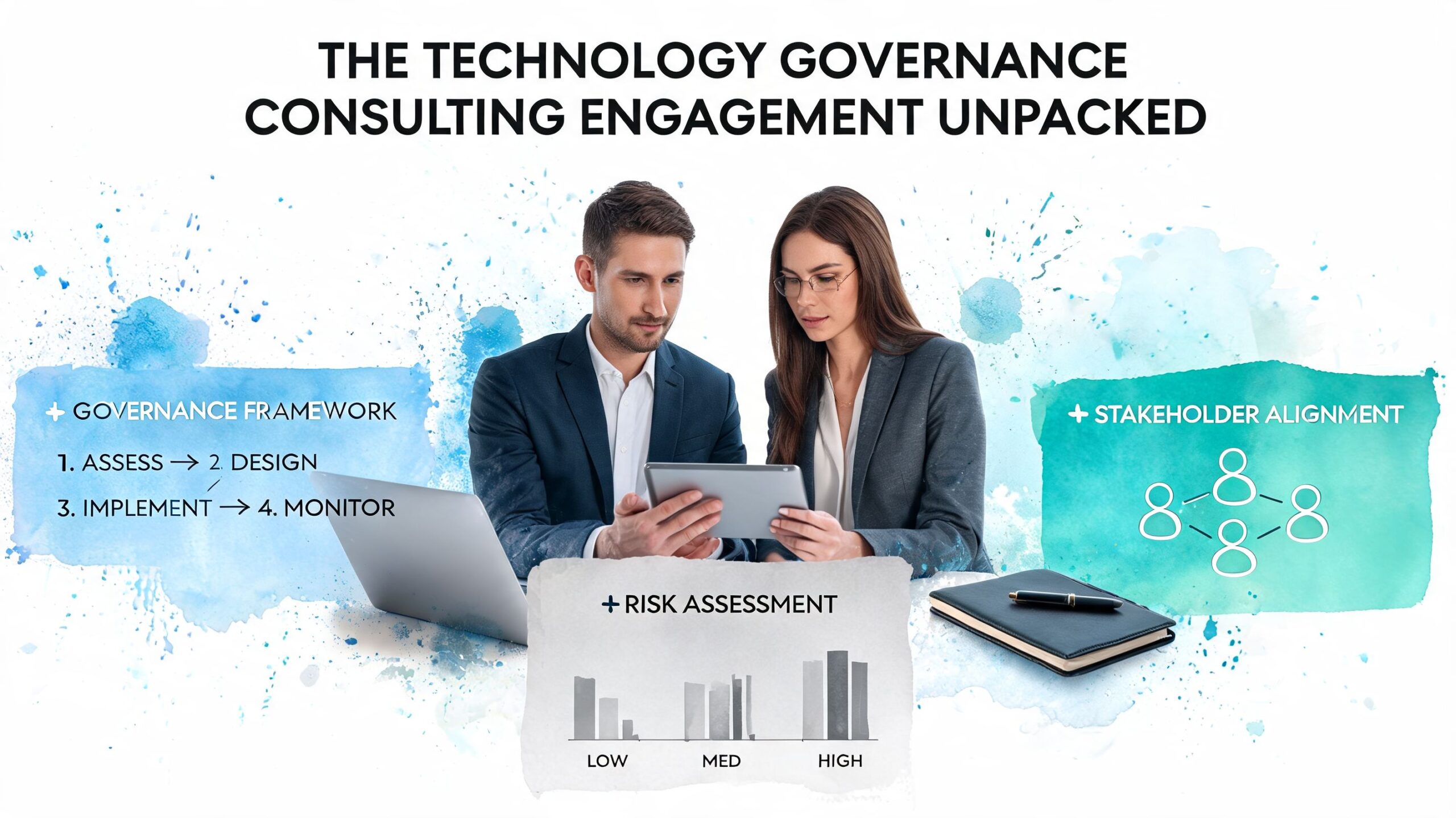
Phase one, assessment and discovery
The first phase should make the business legible fast. The point is not to document every tool or every workflow. The point is to find where execution gets stuck, where ownership disappears, and where leadership is relying on habit instead of a decision model.
A strong consultant maps the systems, vendors, approvals, and handoffs that matter most to revenue, delivery, security, and reporting. That usually means interviews with business and technology leaders, a review of contracts and renewal dates, a look at incident handling, and a trace of a few real initiatives from request to launch. If you want a clearer picture of what leaders should be able to see at this stage, this guide to technology risk visibility for executives is the standard.
Early output matters. If the engagement spends weeks "gathering inputs" without producing anything a CEO can use, it's drifting.
Deliverables you should expect early
You should see practical artifacts within the first stretch of work:
- Technology asset registry: key systems, vendors, owners, business purpose, contract timing
- Decision rights map: who decides, who gives input, who breaks ties, who escalates
- Risk register: top operational, security, and dependency risks in plain language
- Current-state friction summary: the recurring points where work stalls, loops, or dies
These are management tools. If a firm cannot produce them quickly, they are selling observation, not control.
Phase two, roadmap and prioritization
Once the current state is visible, the next job is choosing what to fix first. Many engagements lose focus at this stage, resulting in a long wish list instead of a sharp sequence tied to business exposure and execution drag.
You do not need a giant transformation plan. You need a short list of changes that cut delays, tighten accountability, and reduce avoidable risk.
A useful roadmap usually separates work into three lanes:
| Lane | What belongs here | Leadership question |
|---|---|---|
| Immediate control gaps | Missing ownership, unmanaged vendors, weak escalation | What could hurt us soon |
| Execution bottlenecks | Approval delays, project handoff failures, conflicting priorities | What keeps slowing us down |
| Structural improvements | Reporting format, policy cleanup, governance forums | What will keep this from slipping back |
The roadmap should be specific enough to assign owners and dates. "Improve governance maturity" is not a plan. "Assign ownership for top 20 systems, standardize renewal review, and create one weekly decision forum" is a plan.
Phase three, implementation and coaching
This phase decides whether the company changes. Governance fails when it stays in PowerPoint and never enters the weekly operating rhythm.
The consultant should help install a small set of habits that executives can keep running after the engagement ends. A weekly decision review. A clean escalation path. Renewal reviews with named owners. A short risk update that leaders can read in minutes. The goal is simple. Important decisions stop disappearing into side conversations.
What this often looks like on the ground
The implementation phase usually includes:
- Naming accountable owners for priority systems, vendors, and cross-functional workflows.
- Launching a weekly governance cadence to review decisions, blockers, and risks.
- Cleaning up approvals so requests stop wandering between departments.
- Coaching leaders to use the framework without turning normal management into process theater.
Done well, the engagement feels lighter than expected. Meetings get shorter. Reporting gets cleaner. Fewer issues depend on the one person who "just knows how it works." Execution becomes more predictable because the company is no longer paying a coordination tax on every serious decision.
If that shift does not happen, the engagement was not governance work. It was commentary.
What Success Looks Like Measurable Outcomes and ROI
The best outcome of technology governance consulting is not a thicker policy binder. It's a calmer company.
You can feel it in the weekly rhythm. Fewer surprises. Fewer duplicate conversations. Less dependence on memory and heroics. Leaders stop asking five people for the same update because ownership and status are already visible.
That calmer rhythm usually shows up in measurable ways.
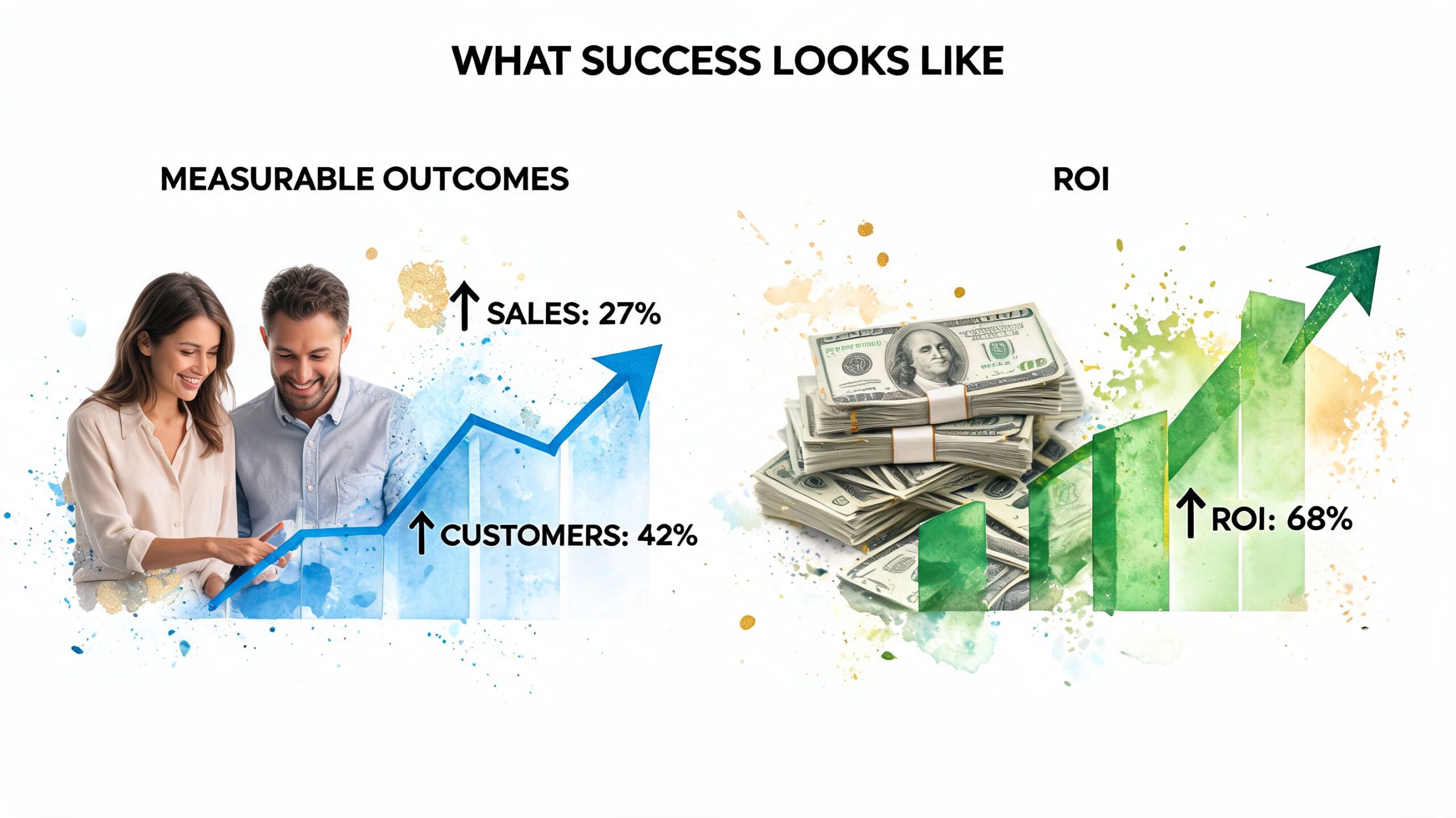
The first wins are usually operational
One of the clearest examples is vendor and software cleanup. Organizations that implement formal decision governance report a 55-65% reduction in "zombie" technology spend and reduce technology procurement cycle time by 35-45%, according to this data governance consulting analysis. That's what happens when renewals have owners and approval criteria stop changing midstream.
The point isn't just lower spend. It's better control over spend.
When leadership knows which tools are active, who owns them, and why they still exist, it becomes easier to make tradeoffs. You can cut waste without accidentally cutting capability. That's a much better position than reacting to budget pressure with blunt reductions.
Better governance improves decision quality
Strong governance also sharpens management attention. Instead of reviewing a giant pile of updates, leaders review a smaller set of decisions, exceptions, and risks. That changes the quality of executive discussion.
A practical way to think about the payoff:
- Clearer ownership: Fewer stalled projects and less managerial chasing
- Cleaner vendor oversight: Less duplicate software and fewer renewal surprises
- Defined escalation: Faster response when something goes wrong
- Board-defensible reporting: Better confidence in risk conversations
If you're trying to strengthen this visibility at the leadership level, technology risk visibility is the discipline that turns scattered operational details into something executives and boards can use.
Success looks boring in the best way. The business stops treating every issue like a special case.
ROI is broader than cost savings
Leaders often ask whether governance pays for itself. That's the wrong lens if you only mean direct savings.
Yes, reducing waste matters. Yes, faster procurement matters. But the bigger return is that the business can move with more confidence. Priorities hold. Decisions stick. Teams spend less time renegotiating the basics. That creates better throughput across the company, even where the benefits won't land neatly on one line item.
The before-and-after difference is easy to recognize.
Before governance, technology feels like a pile of requests, vendors, exceptions, and unresolved debates. After governance, it feels like an inspectable system with owners, cadence, and consequences.
That's the actual return. Not perfection. Predictability.
How to Choose the Right Partner and Avoid Red Flags
Most firms can talk about governance. Far fewer can help a non-technical leadership team install it in a way that changes behavior.
Buyers often get burned. They hire a firm that is strong at architecture diagrams, policy language, or software implementation, but weak at executive operating discipline. Then they end up with recommendations nobody owns and a report nobody uses.
What to look for in a technology governance consulting partner
Pick a partner who can work at the business level first and the technical level second.
A good fit usually looks like this:
- Executive fluency: They can speak to CEOs, boards, and operators without hiding behind jargon.
- Operating focus: They care about cadence, ownership, escalation, and business outcomes, not just frameworks.
- Implementation discipline: They help install routines and decision models, not just diagnose problems.
- Tool neutrality: They don't need to sell a software platform to justify the engagement.
- Capability transfer: Your internal team should be stronger and clearer by the end, not more dependent.
Mature governance practices yield 40% higher ROI on analytics initiatives through better data quality and trust, according to this governance and analytics review. That should shape your buying decision. You want a consultant who builds mature, business-aligned governance, not someone who treats governance as a compliance side quest.
Red flags that should make you pause
The warning signs are usually visible in the sales process.
Watch for these:
- Heavy jargon early: If they can't explain the problem in plain English, they probably can't help your executives run it.
- Software-first framing: If the answer to every governance problem is a platform purchase, be careful.
- Report-and-run behavior: If their value peaks at presentation day, you've bought documentation, not control.
- No opinion on ownership: Governance without named accountability is just polished ambiguity.
- Weak diligence thinking: If they don't understand scrutiny from boards, insurers, or acquirers, they'll miss what leadership needs.
If your business also operates in adjacent high-scrutiny domains, it can help to compare specialist approaches in areas like blockchain consulting services, where governance, traceability, and control expectations are often front and center. You don't need a blockchain project to learn from that level of rigor.
A simple buying test
Ask each prospective partner these questions:
| Question | Good answer sounds like | Bad answer sounds like |
|---|---|---|
| How will you make ownership clearer | Named owners, decision rights, review cadence | Better communication |
| What will leadership see in the first month | Registry, risk view, friction map, weekly rhythm | Findings and recommendations |
| How do you avoid process bloat | Focus on priority decisions and control points | We tailor a comprehensive framework |
| What happens after the assessment | Coaching, implementation, operating discipline | Final report and optional follow-up |
You should also pressure-test them against your vendor and diligence reality. If you need help thinking through that lens, vendor due diligence is where weak governance usually becomes visible fast.
The right partner won't make governance sound glamorous. They'll make it sound workable.
A Sample 90-Day Plan to Restore Control
If your company is paying the coordination tax right now, don't start with a grand redesign. Start with control. The first ninety days should make the environment legible, establish a working rhythm, and remove a few obvious sources of drag.
That is enough to change the feel of the business.
What the first ninety days should accomplish
You want three outcomes by the end of this period:
- Visibility: Leadership can see core systems, vendors, owners, and risks.
- Cadence: The company has a repeatable way to review decisions, blockers, and renewals.
- Traction: A few messy issues are resolved so people trust the process.
For leaders trying to connect governance to growth initiatives, it can also help to look at adjacent strategic work such as Unlock revenue with ML consulting. The lesson is the same. Advanced technology only creates value when ownership, operating discipline, and business accountability are already in place.
Sample 90-Day Technology Governance Plan
| Phase | Focus | Key Activities | Outcome for Leadership |
|---|---|---|---|
| Day 1-30 | Triage and visibility | Map critical systems and vendors, identify top risks, clarify ownership for urgent issues, review current decision bottlenecks | Leaders get a usable picture of what exists, where the friction sits, and who is accountable |
| Day 31-60 | Establish rhythm | Launch weekly governance review, define escalation paths, create decision rights for common issues, start renewal and approval discipline | Meetings become more useful, decisions stick more often, fewer issues disappear between teams |
| Day 61-90 | Harden and optimize | Clean up unresolved ownership gaps, standardize reporting, address priority vendor or project conflicts, embed accountability into routine operations | The business starts running with more predictability and less reliance on heroics |
What leadership should do during this period
The CEO or COO doesn't need to run the machinery day to day. But leadership does need to sponsor it clearly.
That means:
- Name this as an execution priority. If governance is framed as administrative cleanup, it will lose.
- Back the owners publicly. Cross-functional accountability only works when leaders reinforce it.
- Refuse vague updates. Ask for owner, plan, date, and blocker.
- Keep the scope tight. Fix the highest-friction decisions first.
- Review the rhythm, not just the issues. A weak meeting cadence will subtly undermine strong intentions.
The first ninety days should not feel like a transformation program. They should feel like the business is getting its footing back.
What relief looks like by the end
By this point, you should be seeing shorter status hunts, clearer escalation, cleaner renewal decisions, and less debate about who owns what. Not every structural issue will be solved. That's fine. The point is to restore control before complexity gets another quarter ahead of you.
Most companies wait too long because the pain arrives gradually. Then one board request, one diligence process, one security scare, or one stalled initiative exposes how little of the system is governed.
You don't need to wait for that moment. If the signs are already there, the work is ready.
If technology keeps creating drag, vague answers, or board-level discomfort, a conversation with CTO Input can help you sort signal from noise. A clarity call is a practical way to surface the main bottlenecks, identify the trust risks, and outline the first steps to restore control.