

You can have a full calendar, a busy IT team, and a steady stream of project updates, and still not have real technology leadership. That is the trap. The work is happening, but the business still feels drag, confusion, and rising risk.
If that sounds familiar, you are not short on motion. You are short on leadership skills for clear decisions, clear ownership, and a clear line from technology spend to enterprise value. That gap shows up fast when you are scaling, under board pressure, or trying to make sense of a growing technology leadership gap.
Key takeaways for busy leaders
- Activity is output. Leadership is direction and sparks innovation.
- More tools, meetings, and dashboards do not fix weak ownership or boost team performance.
- The right technology leader for growing companies invests in leadership development, tying daily decisions to business-aligned technology strategy.
- When vendors, internal teams, and the board all tell different stories, the problem is governance, not effort.
When busy work hides the real problem
If your week is full of updates and nothing feels settled, you are probably dealing with activity, not leadership from tech leaders. The team may be moving, but nobody is steering with enough authority to keep priorities straight.
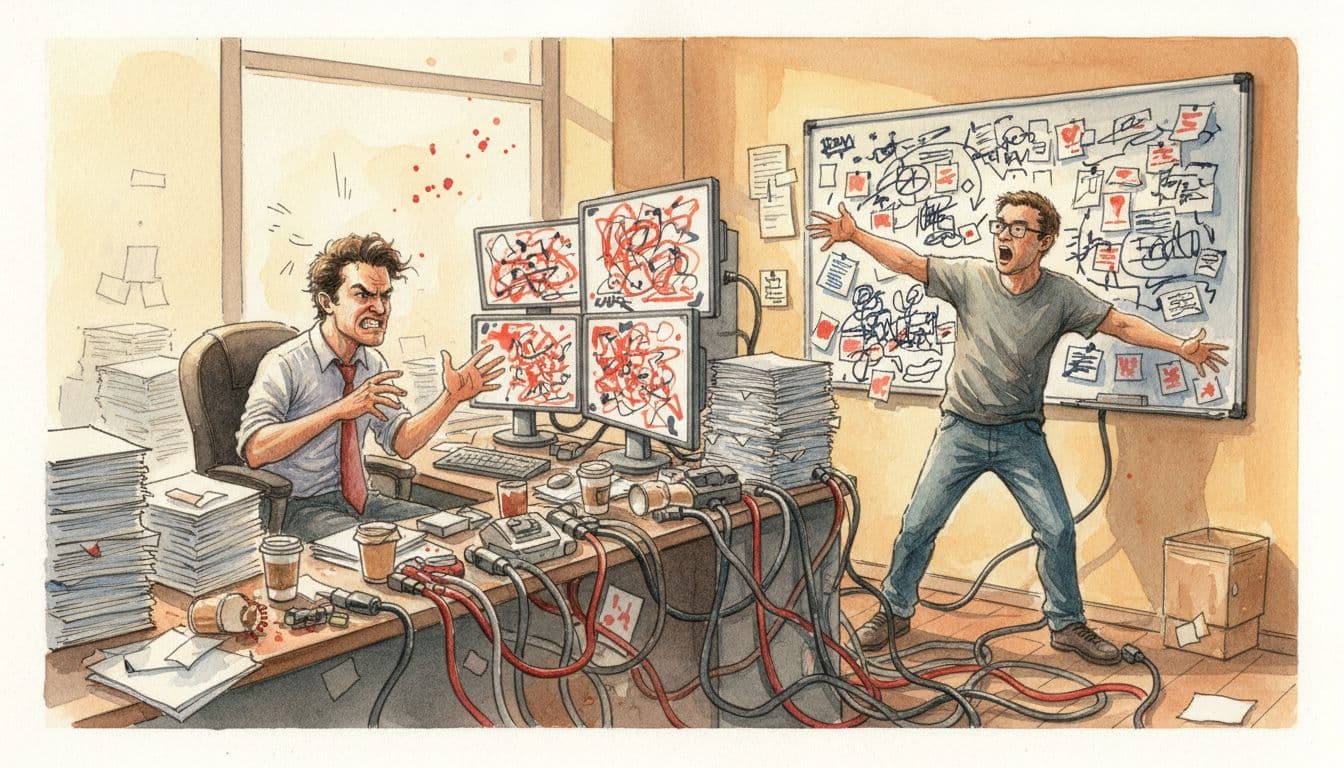
A lot of organizations mistake motion for progress. You add tools, you add meetings, you add reports, and the pressure still sits there. Without effective decision making, that is how tool sprawl, shadow IT, and technical debt grow while everyone tells themselves the situation is under control.
Here is the simplest way to see the difference.
| Technology activity | Technology leadership |
|---|---|
| Focuses on tasks and status | Focuses on outcomes and decisions |
| Produces updates and tickets | Produces direction and ownership |
| Asks, “What happened?” | Asks, “What matters now?” |
| Keeps vendors busy | Keeps vendors accountable |
| Measures motion | Measures business impact |
| Routine maintenance | Drives innovation |
The pattern is clear. Activity keeps work moving. Leadership makes the work mean something.
That is why many teams start looking for executive technology leadership only after the symptoms pile up. By then, the board is asking harder questions, and the answers are still fuzzy.
What real technology leadership changes
Real leadership changes the shape of the conversation. You stop asking, “What is IT doing?” and start applying strategic thinking to ask, “Which business outcomes does this support?” That is the shift.
Activity asks for updates. Leadership asks for tradeoffs.
That is also where how the technology officer role is changing amid digital transformation matters. The role is no longer about keeping systems running in the background. It is about connecting business goals, execution, and risk in one operating picture.
You see that in the best technology strategy, business technology strategy, and business-aligned technology strategy work. It becomes strategic technology planning, an IT strategy and roadmap, a usable technology roadmap, a 12-month technology roadmap, or even a one-page technology strategy the team can actually use.
For growing firms, this is where fractional CTO services often fit. You get senior judgment without waiting for a full-time hire that may not be right yet.
That same logic shows up in boards need a new approach to technology. Boards do not need more technical noise. They need clearer oversight, clearer risk, and better business judgment.
The signs you have activity, not leadership
A real technology leader touches more than projects. They shape technology governance for critical and emerging technologies, technology governance for CEOs, technology governance for boards, board technology reporting, board-ready technology reporting, board-ready reporting, board-ready tech roadmap work, board cybersecurity reporting, cyber risk reporting to the board, cyber risk appetite, cybersecurity oversight, technology risk oversight, and technology risk management.
They also pay attention to third-party risk management, third-party risk reporting, vendor risk management, vendor management, vendor due diligence, vendor offboarding, and a vendor incident response plan.
Then there is spend. If you do not see technology spend optimization, technology ROI, tech spending ROI, IT cost optimization, IT cost reduction, technology dashboards, and cost-per-outcome reporting, you are probably funding activity without knowing what it returns.
The same is true when tool sprawl, shadow IT, technical debt, technology debt, technical debt management, application portfolio rationalization, software platform evaluation, and technology vendor selection are handled as separate chores instead of one leadership problem.
A solid leader for mid-market technology leadership also thinks ahead. That means acquisition readiness, technology due diligence, technical due diligence, cybersecurity due diligence, an acquisition due diligence checklist, a CTO transition plan, and post-merger technology integration with change management are not afterthoughts.
And the list keeps going. Artificial intelligence governance, AI adoption strategy, AI transformation strategy, responsible AI, AI acceptable use policy, AI vendor due diligence, AI opportunity assessment, business continuity planning, disaster recovery planning, incident response readiness, ransomware readiness, an executive incident response checklist, cyber insurance renewal, cybersecurity risk assessment, IT security assessment, access control best practices, data governance framework, data strategy, data quality, data privacy, information governance, and systems inventory all belong in the same operating picture.
If no one owns that picture with stakeholder buy-in, you do not have technology leadership. You have scattered effort.
Why the middle matters most
Most businesses do not need more noise. They need a clear operating model, technology operating rhythm, talent strategy, decision rights map, and stakeholder alignment that holds up under pressure.
That is where founder-led technology decisions, CEO technology decisions, and COO technology strategy start to break. The business has grown, but the way decisions get made did not keep up, lacking leadership development, collaborative communication, and courageous communication. That is the real technology leadership before hiring problem.
In the messy middle, technology leadership options matter. You may need a virtual CTO, an outsourced CTO, a part-time CTO, a fractional CIO, a fractional CISO, a virtual CISO, or an interim CISO, all requiring strong influence and motivation. What matters is not the title. It is whether the role creates better decisions.
If you are still sorting out whether that means a hire through professional search or a temporary fix, when to hire a fractional CTO gives you a clean way to think about it. The right choice depends on whether you need daily executive ownership or sharper leadership support for a season.
Common questions leaders ask
How do you know the difference between a tech team and technology leadership?
A tech team delivers work. Technology leadership sets direction with technical expertise, decides what matters, and keeps the work tied to the business. If you only get status reports, you probably have activity.
Is this about how to hire a CTO?
Sometimes, yes. But not always. If you need immediate stabilization, interim CTO leadership may make more sense first. If you need steady executive support without a full-time seat, fractional technology leadership can provide mentorship and be the better fit.
What should a board expect?
A board should get a board-ready risk summary, a clear technology roadmap template, and plain language on what is changing, what is at risk, and who owns the next move across cross-functional teams. A good technology health check, technology audit, or technology assessment should lead to a 90-day action plan, not another stack of slides.
Conclusion
Technology activity keeps people busy. Technology leadership, through values-based leadership, tells you where the work is going and why it matters for global competitiveness. That difference is what keeps small problems from turning into expensive ones.
If your team is active but the business still feels uncertain, the issue is probably not effort. It is leadership, ownership, and the quality of the decisions around you. Leadership coaching can help build diversity and inclusion while cultivating a future-ready workforce.
If that is the part you need to sort out, honing your leadership skills starts with Get an Executive Technology Clarity Check.