

Technology projects, from software development to broader information technology initiatives, rarely blow up all at once. They drift. A decision gets delayed, a vendor adds a “small” request, a leader assumes someone else owns the outcome, and the next thing you know, the project is heavier, slower, and harder to trust.
That is the real problem with weak IT project management. It does not usually fail loudly. It fails by losing shape.
If you lead a growing company, you do not need more noise. You need clearer ownership, cleaner reporting, and a way to stop avoidable drift before it eats time, money, and confidence.
Key takeaways
- Drift is usually a leadership and ownership problem, including poor stakeholder management, not just a delivery problem.
- Control comes back when you start with strong project planning to define outcomes, decision rights, and reporting that leaders can use.
- A real fix includes a clear roadmap, tighter governance, and someone who owns the executive view.
Drift starts when no one owns the whole outcome
Most project drift begins with good intent and fuzzy boundaries. The team starts with a useful goal, then the scope gets stretched by side requests, vendor pressure, and internal handoffs that never fully close.
That is where you get a technology leadership gap. Not because nobody is working, but because nobody is holding the whole picture.
The project manager may track tasks in tools like Jira or Gantt charts. The technical team may keep shipping work. The vendor may keep sending updates. Still, leadership often lacks the technical expertise to get a clean answer to a simple question: are we still solving the original business problem?
At that point, the issue is bigger than the project. It is a governance problem, where monitoring and control often fails.
Atlassian’s plain take on scope creep is worth remembering. If you do not make change visible and approved, the project grows without permission. That is how timelines slip while everyone still sounds productive.
You see the same pattern in technology leadership gap situations. The work exists, but the executive layer is thin without a technical project manager owning the outcome. That is when projects start drifting into a blur of updates, exceptions, and “almost done” promises.
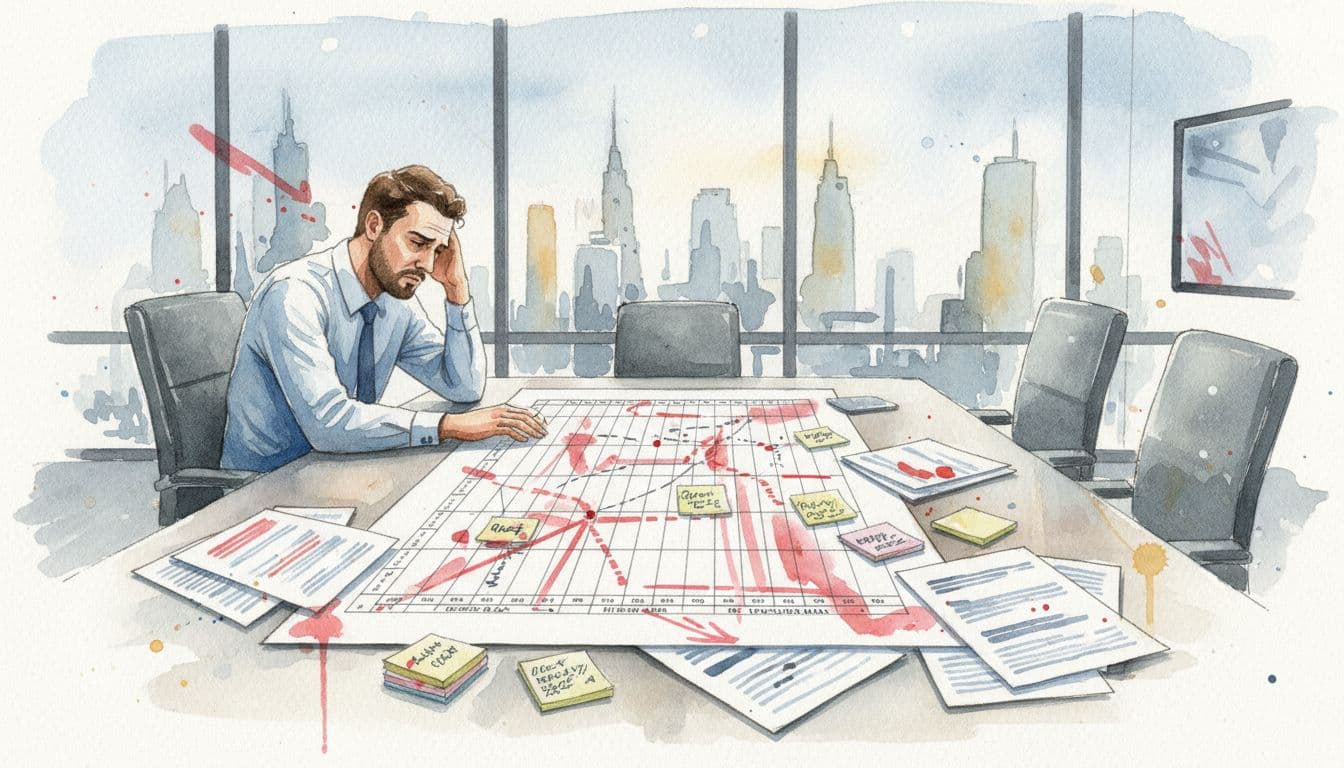
Control returns when leadership makes the pace early
You do not fix drift by adding more status meetings to your IT project management. You fix it by making fewer, clearer decisions.
Control does not come from more updates. It comes from named owners, visible tradeoffs, and a shorter list of things that matter now.
That is what executive technology leadership is supposed to do. It connects business goals, delivery reality from technical teams often using Agile methodology, vendor behavior, and risk management into one operating picture. Strong communication skills help this layer bridge the gap between business and tech. When that layer is missing, even a project manager struggles, and the work gets tactical fast.
A strong fractional CTO, interim CTO, virtual CTO, outsourced CTO, or part-time CTO gives you that executive layer without forcing a full-time hire before you need one. The same idea applies when you need a fractional CIO, fractional CISO, virtual CISO, or interim CISO. Different seat, same need, clearer control.
If you want a deeper look at the role itself, executive technology leadership is the right place to start. It is the difference between managing activity and managing outcomes.
The same goes for fractional CTO services. When the business has outgrown founder-led or vendor-led decisions, a senior guide can reset the pace without adding drama.
What to fix first, before the project drifts further
Start with the basics. Not the tools, the basics.
- Define the outcome in business terms during the initiation phase.
What problem are you solving, and what does success look like for the company, not the team? - Name the owner.
Name the business owner and the project manager. If the answer is “the vendor” or “IT,” keep going. You need a business owner and a decision owner, with the project manager as the task lead. - Write the decision rights map.
Who approves scope changes? Who handles budget management and resource allocation? Who can pause work? Who decides what gets cut? - Build the roadmap leaders can actually use.
A useful technology roadmap covers the entire project lifecycle, with the next 90 days for the execution phase and the next 12 months. It does not hide behind jargon. - Tighten reporting.
Leaders need board-ready technology reporting, board cybersecurity reporting, and a plain board-ready risk summary that says what changed, what is stuck, and what needs attention now.
This is where when to hire a fractional CTO becomes a real question, not a theoretical one. If the business keeps stalling because no one is steering the executive side beyond the project manager, you already have your answer. A fractional CTO brings project planning and leadership skills as that senior guide.
A strong one-page technology strategy helps too. So does a clear technology operating rhythm, because every important project needs a cadence that forces decisions to stick.
The hidden costs are usually bigger than the project itself
Drift does not stop at missed dates. It starts eating confidence.
You see it in tool sprawl, shadow IT, technical debt, and vendor sprawl that nobody wants to own. You see it in weak technology governance for CEOs and boards. You see it when information technology spend keeps rising, but technology ROI stays hard to explain.
That is why leaders eventually need more than project tracking. They need technology governance with strong IT project management at its core, technology risk oversight, vendor management, and a real view of third-party risk management. They also need to know where cybersecurity oversight ends and business accountability begins.
For high-stakes projects, a leader might require a technical project manager with PMP certification or other formal project management certification to ensure standards.
If the work touches an acquisition, a leadership change, or project closure, interim CTO leadership may be the cleaner move. If you are heading into diligence, technical due diligence matters just as much as the deal memo.
And if you want to understand what a clean leadership conversation looks like, Get an Executive Technology Clarity Check is the right first step.
FAQs
Why do technology projects drift so often?
Because scope changes faster than ownership. Without effective stakeholder management guarding the outcome, the project starts serving everyone except the business.
Is this a project management issue or a leadership issue?
Both, but leadership comes first. Good project management can track drift. It cannot fix unclear decision rights on its own.
When does a fractional CTO make sense?
When you have technical work, but no steady executive who brings technical expertise, problem-solving, and communication skills to connect the roadmap, risk, vendors, and business priorities. That is the moment to stop improvising.
Conclusion
Technology projects drift when leadership lets ambiguity stay in charge. The fix is not more activity. It is stronger ownership, cleaner reporting, and project planning that matches the business outcome you actually want, along with effective stakeholder management throughout the project lifecycle.
If you are seeing the same delay, the same confusion, or the same vendor-driven decisions on repeat, the problem is probably bigger than the project. It is a control problem.
Once you name it, you can fix it with sharp leadership skills. And once you fix it, technology project management and IT project management start doing their real job, empowering the project manager in a healthy environment to help you move with confidence in information technology instead of guesswork.