
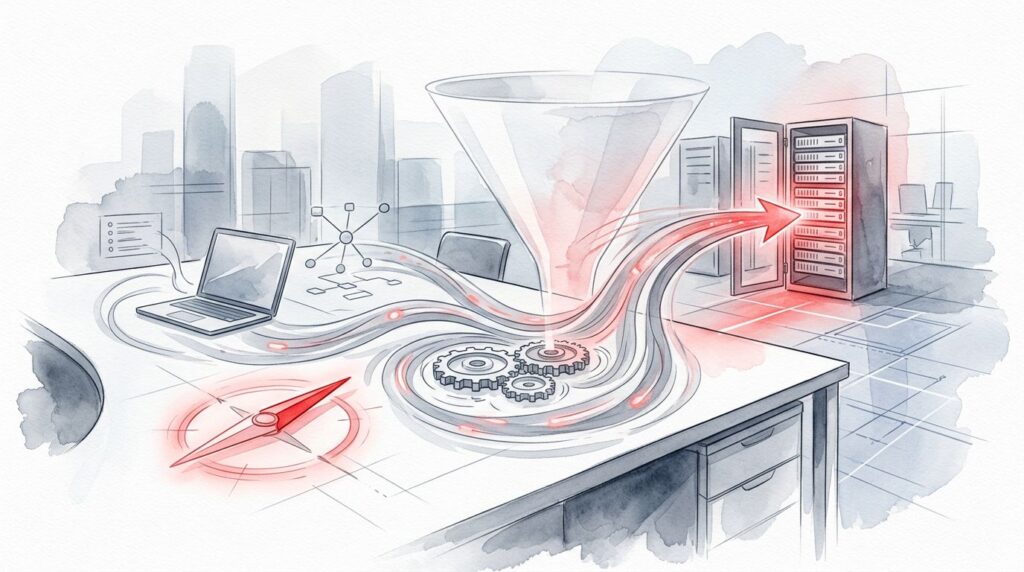
Effective legacy system modernization does not require you to overhaul every outdated platform at once. Instead, you need to identify which systems are currently creating the most friction for your business.
That is where many organizations encounter obstacles. Even with technical managers, vendors, or the support of a virtual CTO, the prioritization process often remains unclear. Teams struggle to align competing goals, such as the desire for rapid innovation versus the need for operational stability, all while trying to execute a broader digital transformation.
Modernizing your infrastructure becomes significantly more manageable when you stop viewing it as a simple technology shopping list. Instead, frame the process as an intentional application modernization strategy that balances leadership priorities, technical risk, operational drag, and long term business value.
Key takeaways
- Start your legacy system modernization efforts with the systems that most directly affect revenue, customer experience, user experience, reporting, or risk.
- Build a comprehensive systems inventory before you select a specific project.
- Put ownership, decision rights, and reporting structures in writing before you commit any budget.
- Choose the right leadership model for your needs, whether that is a fractional CTO, an interim CTO, or another form of executive technology leadership.
- Build a 12-month modernization roadmap that clearly demonstrates business impact rather than just technical work.
Start with the business problem, not the age of the system
Old software is not the real issue. The real issue is the ballooning maintenance costs and the operational drag it creates.
A system becomes a priority when it slows growth, hides risk, or makes work harder than it should be. That might show up in customer complaints, delayed reporting, manual workarounds, or an over-reliance on tribal knowledge that leaves the business vulnerable. When your legacy code makes simple changes feel like high-stakes maneuvers, it belongs near the top of the list.
IBM has a solid overview of legacy application modernization, and the basic idea is right. You are utilizing software modernization to replace or reshape outdated systems so the business can move better. The hard part is not the definition. It is the order.
If you lead with founder-led technology decisions, CEO technology decisions, or COO technology strategy, you may already know this feeling. Everything looks urgent. Not everything is important. That gap is where bad priorities grow.
If you cannot tie a system to business impact, it is not first in line.
Rank the portfolio by impact, not by noise
Before you choose a project, build a clean systems inventory. You cannot prioritize what you have not named.
That inventory should tell you which platforms support critical business processes, which ones hold customer or employee data, which ones are tied to compliance, and which ones are mostly historical baggage. From there, you can start application portfolio rationalization instead of guessing.
Here is a simple way to sort the stack:
| Prioritize now | Why it matters | First move |
|---|---|---|
| Systems tied to critical business processes | These affect growth, operational efficiency, and confidence fast | Map process owners, failure points, or assess for cloud migration |
| Systems carrying heavy technical debt | Delay keeps compounding the cost of maintenance | Score repair, replace, or retire options |
| Tools created through shadow IT or tool sprawl | Hidden systems and monolithic applications create blind spots | Confirm ownership and real usage |
| Platforms blocking vendor management or board reporting | Weak visibility slows decisions | Build a board-ready risk summary |
The systems near the top of that table are usually the ones where proactive technical debt management pays off fastest. If a system has broad use, weak support, and rising failure risk, it deserves attention before a niche tool with little business exposure.
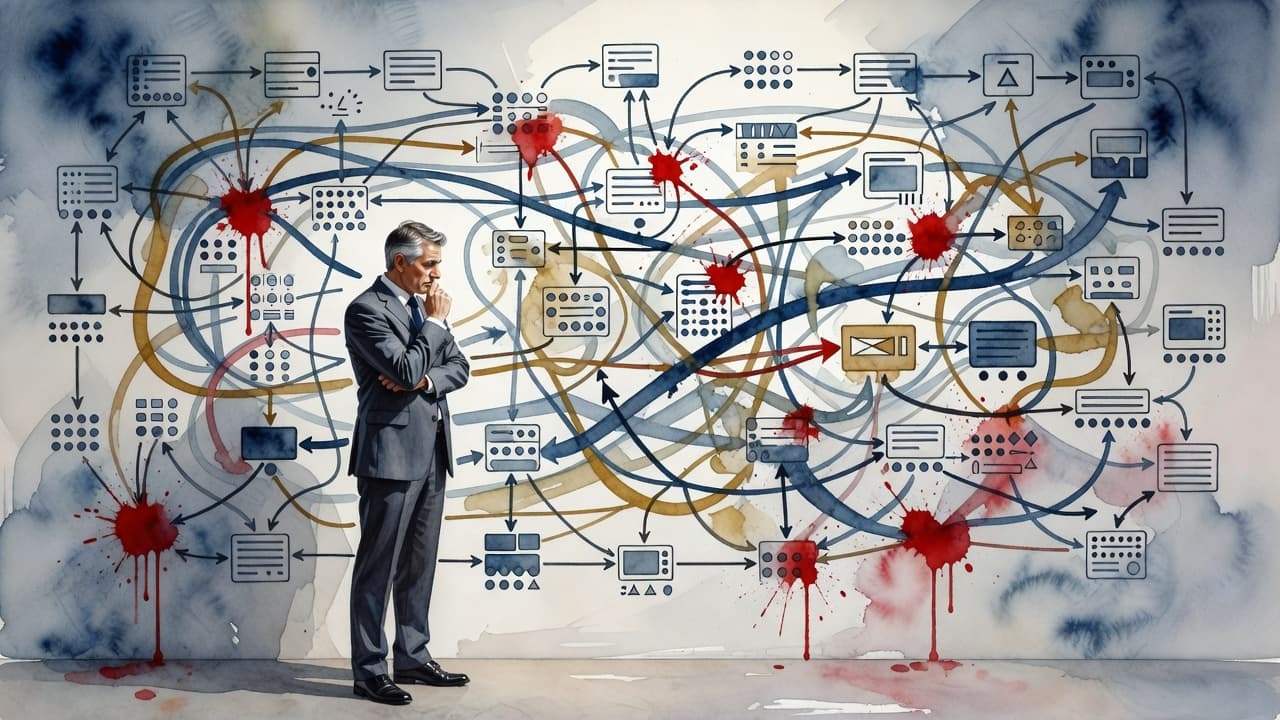
After that, ask one blunt question. If you modernize this system in the next 12 months, what changes for the business? If the answer is clearer reporting, fewer manual steps, less risk, or better customer experience, you are probably looking at the right lane.
Put ownership and governance on paper
A failed legacy system modernization project is rarely just a technology problem; it is almost always a governance problem.
Someone needs to own the decision, not just the project. That means establishing a clear decision rights map, a consistent technology operating rhythm, and improved stakeholder alignment. If nobody knows who approves scope, budget, or sequencing, the work will inevitably drift.
This is where technology governance for CEOs and technology governance for boards becomes critical. Leaders do not need more meetings; they need fewer surprises. They require board technology reporting and board-ready technology reporting that clearly highlight what is changing, what is at risk, and what still needs a final decision.
If you are missing that structure, executive technology leadership services can help you organize the process without adding unnecessary complexity. This is particularly vital when the business has plenty of technical talent, but no one is taking ownership of the full legacy system modernization picture.
A professional technology health check or technology assessment should provide three things: a comprehensive systems inventory, a board-ready risk summary, and a concise list of actionable decisions. If your current process does not provide these, it is likely too vague to be effective.
When a leadership gap is the real issue, do not hide it. Talk Through Your Technology Leadership Gap and get the problem named clearly before you invest in a technical fix.
Choose the right leadership model for the stage you are in
Not every company needs a full-time CTO. Some organizations require fractional CTO services, others need interim CTO services, and some benefit from a more focused advisory role. Whether you are navigating a complex digital transformation or managing a legacy modernization project, the right leadership model depends on your current business stage.
If your primary need is steady guidance, fractional CTO services make sense. If the challenge involves a difficult handoff, a leadership vacancy, or a high-stakes transition, interim CTO services are often a better fit. You may hear terms like part-time CTO, virtual CTO, or outsourced CTO, but the label matters less than the outcome. You need an executive who can effectively connect execution, technical risk, and business priorities.
This is where specialized technology leadership for growing companies becomes essential. Mid-market technology leadership and growth-stage technology leadership are distinct from simple project management. You require executive technology leadership that drives strategy, not just another person tasked with tracking tickets.
If you are unsure about making a permanent hire, prioritize technology leadership before committing to a full-time role. This approach gives you time to determine if you need a fractional CTO, whether you require a full-time executive, or how to weigh the differences between a fractional CTO vs full-time CTO and a fractional CTO vs IT consultant.
The same logic applies to other specialized lanes. A fractional CIO may be the better fit when your issue is broad technology management, while a fractional CISO, virtual CISO, or interim CISO may be necessary if your primary pressure is cyber security.
If you want a deeper view of how these models support your goals, fractional CTO services are built to assist with this kind of decision-making.
Turn the shortlist into a 12-month roadmap
Once you know what matters most, turn it into a clear application modernization strategy. Do not stop at a simple list of projects. You want a comprehensive IT strategy that provides a roadmap, not just a pile of tickets. A strong technology roadmap shows sequencing, dependencies, ownership, and business impact. A 12-month technology roadmap is usually enough to create focus without locking you into long-term fantasy.
A one-page technology strategy can help align your goals. So can a technology roadmap template, provided it forces clarity instead of decoration. Whether your plan includes a cloud migration or shifting toward a microservices architecture, you should be able to explain the transition to your team, your board, and your finance lead without translating jargon.
That roadmap must also include technology spend optimization. Too many leaders talk about technology ROI without ever connecting cost to outcome. You need technology dashboards and cost-per-outcome reporting to track maintenance costs and the total cost of ownership, showing what you are buying, why you are buying it, and how it impacts your bottom line.
If you are weighing replacement options, add software platform evaluation and technology vendor selection to the roadmap. If you are keeping a platform, justify why. If you are replacing it, define your target state. This might involve rehosting, refactoring, re-architecting, or replatforming your existing software. If your goal is a cloud-native future, focus your documentation on how these changes improve scalability and performance.
For a step-by-step view of the modernization process, BD Emerson’s modernization guide is a useful companion. It will not make the priority call for you, but it helps you think through the sequence of your technical transition.
Treat risk, data, and transition as part of the same work
Legacy system modernization is rarely only about code. It touches cyber, data, vendors, and change management. Because infrastructure modernization requires a holistic view, these moving parts must be treated as a single, unified workstream.
That is why effective technology risk oversight and a robust technology risk management framework must anchor your plan. If the board needs visibility, focus on board cybersecurity reporting and clear updates on your cyber risk appetite. Boards do not need technical noise or a list of granular security vulnerabilities; they need high-level reporting they can actually govern.
The same principles apply to third-party risk management and vendor due diligence. If a system depends on a supplier you barely understand, your plan should include a vendor incident response plan and a clear process for vendor offboarding.
Do not ignore the security side either. A thorough IT security assessment, review of access control best practices, and an incident response readiness check should happen before you move any critical systems. If the business is exposed, business continuity planning, disaster recovery planning, and a clear executive incident response checklist must be on the table. Cyber insurance renewal is often the perfect time to pressure-test your security posture.
Data matters just as much. When moving away from legacy code, you must avoid carrying the same operational mess into a new platform. This is the moment to establish a usable data governance framework, data strategy, and data privacy policies. If you do not prioritize data quality and information governance now, you will face the same bottlenecks in the new environment.
If AI is creeping into the mix, incorporate AI governance and a responsible AI adoption strategy. An AI opportunity assessment should be strictly tied to business value, not hype, and supported by a clear AI acceptable use policy.
For companies facing upcoming scrutiny, ensure your plan includes technology due diligence and a comprehensive CTO transition plan. Whether you are preparing for acquisition readiness or long-term post-merger technology integration, you must be prepared for rigorous external review. If you need to prepare for that kind of transition, Prepare Technology for Diligence or Transition is the right place to start.
Conclusion
Prioritizing legacy system modernization is not about chasing the oldest platform in your infrastructure. Instead, it is about choosing the systems that matter most to your growth, operational control, and team confidence.
If the business impact is clear, the ownership is well-defined, and the roadmap is honest, the work becomes significantly easier to manage. When you commit to a transparent plan that aligns your technical goals with your organizational objectives, you unlock the business agility required to thrive in a competitive market. If any of those three pillars are missing, start there first.
The cleanest modernization plan is the one your team can explain without guessing.
FAQ
Should you modernize the oldest system first?
Not always. Simply because a system is aged does not mean it requires immediate attention. A legacy system modernization project should be dictated by business value rather than chronological age, as the oldest software may be stable and low risk. Instead, start with the platform causing the most operational drag or security exposure. Depending on your needs, you might choose a simple lift and shift to move the system to a new environment, or you may opt for a more complex cloud migration to fully re-architect the application for better performance.
Do you need a fractional CTO to prioritize modernization?
Not every time, but a fractional CTO or interim CTO can help when a technology leadership gap is slowing down your decision-making process. This is especially true when your organization requires stronger ownership, clearer reporting, or a defined 90-day technology plan to get projects off the ground.
What should board-ready technology reporting include?
It should show the systems in play, the risks that matter, the decisions still open, and the business impact of each available option. Good board technology reporting is short, direct, and tied to specific outcomes the board can govern effectively.