

Most CEOs do not need more technology noise. You need someone who can look at the mess, tell you the truth, and help the business make better calls.
That is what a strategic technology leader should bring to the table. If the person in that role cannot connect systems, spend, risk, and execution to business goals, you do not have leadership. You have motion.
Key takeaways for busy CEOs
- You should get judgment, not just updates.
- You should get a business-aligned technology strategy, not a pile of projects.
- You should get clearer ownership around risk, vendors, reporting, and spend.
The right leader thinks in business terms first
A real strategic technology leader starts with the business problem, not the tool problem. They ask what growth is being held back, what decisions are unclear, and where the business is paying for confusion.
That matters because technology leadership is not just about systems. It is about whether the company can move, report, and scale without tripping over its own setup. Good leaders see the difference between founder-led technology decisions, CEO technology decisions, and the kind of COO technology strategy that keeps operations steady.
Good leaders also know how to explain tradeoffs in plain English. That lines up with the basics of strategic leadership, where self-awareness, communication, and sound judgment matter as much as technical depth.
If the person in the seat gives you more meetings but not more clarity, you have the wrong kind of help.
You should expect that person to handle strategic technology planning, business technology strategy, and technology strategy consulting in a way your team can use. If they hand you buzzwords and move on, that is a bad sign.
You should get a real roadmap, not a pile of projects
A strategic technology leader should turn pressure into a plan you can actually run. That means an IT strategy and roadmap that fits the stage of the business, the budget, and the pace of change you can support.
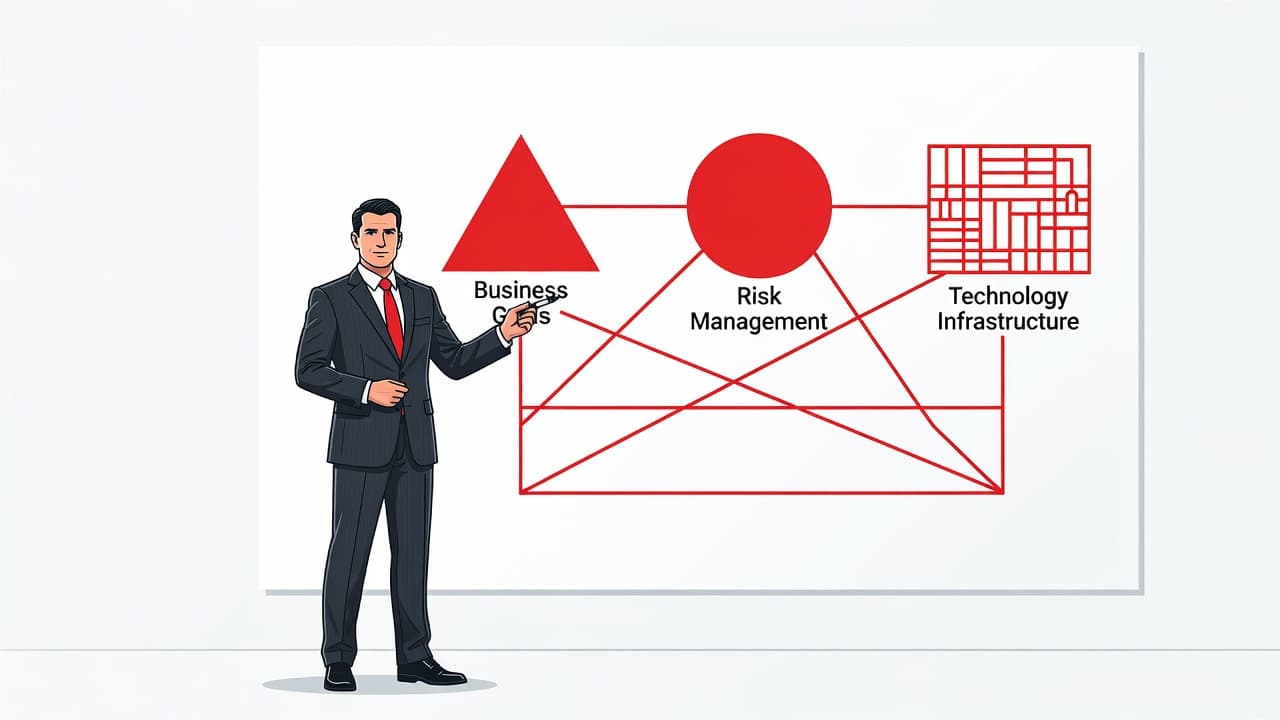
If you are working with fractional CTO services, the output should still feel executive-grade. You should leave with a technology roadmap, a 12-month technology roadmap if the situation calls for it, and often a one-page technology strategy that leadership can keep in front of them.
Here is the kind of structure you should expect.
| Area | What good looks like |
|---|---|
| Leadership model | The right support may be a fractional CTO, interim CTO, outsourced CTO, virtual CTO, or part-time CTO. In some cases, the business needs a fractional CIO, fractional CISO, virtual CISO, or interim CISO. |
| Planning | Clear business-aligned technology strategy, strategic technology planning, and a roadmap that is more useful than a technology roadmap template. |
| Governance | Technology governance for CEOs and technology governance for boards, with board-ready reporting that leaders can act on. |
| Risk | Board-ready tech roadmap, board-ready technology reporting, board cybersecurity reporting, cyber risk reporting to the board, and a clear cyber risk appetite. |
| Spend | Technology spend optimization, technology ROI, tech spending ROI, IT cost optimization, and IT cost reduction tied to outcomes. |
That is the difference between a plan and a document. One helps you lead. The other just files a meeting away.
A good leader also keeps an eye on what strategic leadership looks like in practice, which is usually less about charisma and more about making hard choices visible.
You should see risk, vendors, and AI before they become problems
Technology leaders are not just there to move projects. They should help you see risk early and in business terms. That includes cybersecurity oversight, technology risk oversight, technology risk management, and a technology risk management framework that does not bury you in jargon.
You should also expect board-ready technology reporting that is clean enough for the board and direct enough for management. If cyber risk reporting to the board is fuzzy, the board does not have a real view. If the report cannot show thresholds, ownership, and tradeoffs, it is not board-ready reporting.
The same goes for vendors. A strong leader manages third-party risk management, vendor management, vendor due diligence, vendor risk management, vendor offboarding, and a vendor incident response plan. Vendors should not be running your roadmap.
AI is now part of that same job. You should expect AI governance, responsible AI, an AI acceptable use policy, AI vendor due diligence, and an AI opportunity assessment before anyone calls it an AI transformation strategy. A leader who treats AI as a side hobby is already behind.
That same discipline should show up in business continuity planning, disaster recovery planning, incident response readiness, ransomware readiness, and cyber insurance renewal. You should also expect a real cybersecurity risk assessment, an IT security assessment, access control best practices, and a data governance framework that includes data strategy, data quality, data privacy, information governance, and a systems inventory.
If those pieces are missing, the company is not just under-governed. It is under-informed.
You should expect cleaner systems and better economics
A strong technology leader does not only talk about growth. They also clean up drag. That means looking at tool sprawl, shadow IT, technical debt, technology debt, and technical debt management with a business lens.
They should be able to support application portfolio rationalization, software platform evaluation, and technology vendor selection without turning every choice into a science project. They should also be able to show where the company is spending money for little return.
That is where technology dashboards and cost-per-outcome reporting matter. You are not buying activity. You are buying results. If the spending cannot be tied to business value, the leader should say so.
This is also where the best leaders improve stakeholder alignment. They build a technology operating rhythm, clarify a decision rights map, and keep the right people pointed at the same priorities. That is how you move from scattered effort to shared direction.
When to bring in a fractional or interim leader
If your company has a technology leadership gap, do not wait for it to sort itself out. It rarely does.
This is where fractional and interim CTO services make sense. The title may be fractional CTO, interim CTO, outsourced CTO, virtual CTO, or part-time CTO, but the real question is simpler. Do you need executive technology leadership now, before you hire full time?
That same question shows up in companies that need technology leader for growing companies support, mid-market technology leadership, growth-stage technology leadership, or scaling technology leadership. The need is usually obvious. Priorities drift. Reporting gets weak. Vendors get louder. Technical debt piles up. The business keeps moving, but not cleanly.
You should expect the first step to be a technology health check, a technology audit, or a technology assessment that leads to a 90-day technology plan. That is the point where a leader earns trust.
If you are weighing when to hire a fractional CTO, ask yourself whether the business needs leadership before a permanent hire is realistic. You may also need help with fractional CTO vs full-time CTO or fractional CTO vs IT consultant. Those are not the same jobs.
If you are still sorting out who should own the work, Talk Through Your Technology Leadership Gap can help you separate the real issue from the noise.
Conclusion
You should expect a strategic technology leader to reduce confusion, not add to it. The right person gives you clearer visibility, stronger ownership, and a business-aligned technology strategy you can defend.
If your technology work still feels reactive, the issue is probably not effort. It is leadership. The right support should make the business easier to run, not harder to explain.
Frequently Asked Questions
What is the difference between a strategic technology leader and an IT manager?
An IT manager usually keeps systems running. A strategic technology leader connects technology to growth, risk, spend, and decision-making. You need both jobs to be clear.
When should you hire a fractional CTO instead of a full-time CTO?
You should look at a fractional CTO when you need executive technology leadership now, but the business is not ready for a full-time hire. That often happens during growth, transition, or a technology leadership gap.
What should the first 90 days look like?
You should see a systems inventory, clearer decision rights, a board-ready risk summary, and a practical roadmap. If you only get meetings and vague promises, you are still waiting for leadership.
What should a CEO expect from board reporting?
You should expect board technology reporting that is short, honest, and tied to business risk. The board needs to know what matters, what is changing, and what decision is needed next.