
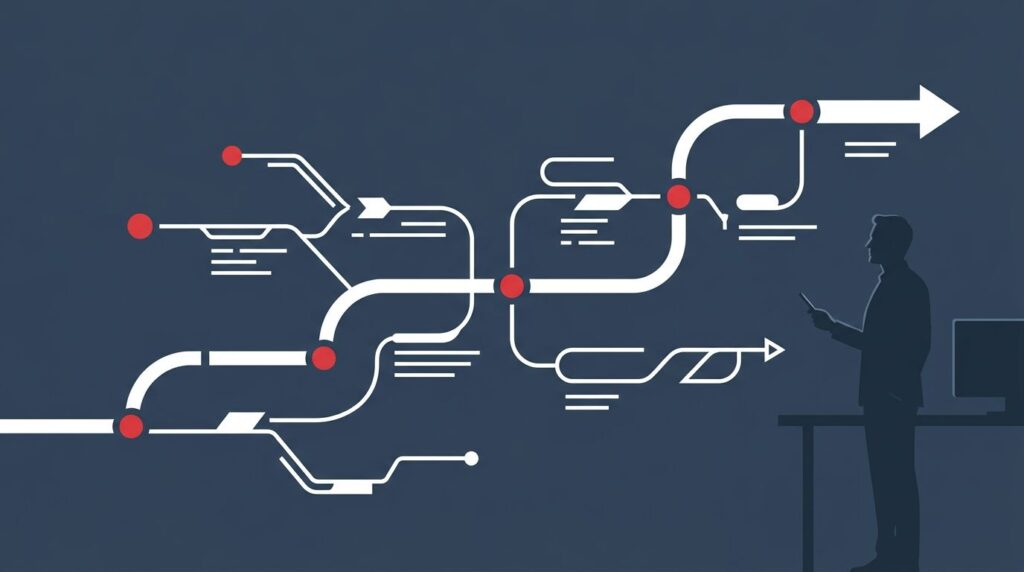
A technology roadmap can look tidy and still tell you almost nothing. If you are a CEO, COO, founder, or board member, you do not need more color on a slide. Instead, you need to understand the strategic planning behind the document to know what the company is betting on, which business goals take priority, who owns the difficult calls, and what happens if the plan slips.
That is the trap. A roadmap often looks like progress because it is full of dates, projects, and labels. Your job is to read past the surface and decide whether the plan is tied to real business outcomes, or just dressed-up activity.
Key takeaways before you read the roadmap
- A good roadmap ties every major item to clear strategic objectives. If you cannot name the intended outcome, the item is likely too vague to track.
- Ownership matters as much as the key milestones. A roadmap without a named owner is just a wish list with deadlines.
- Risk belongs on the page. If security, vendors, data, or recovery plans are missing, the roadmap is incomplete.
- A strategic blueprint, a board-ready tech roadmap, and a 12-month IT roadmap should all share a consistent timeline and tell the same story.
If those basics are missing, stop scanning the dates and start asking better questions.
Start with the business outcome, not the project list
You are not reading a list of tickets. You are reading a set of business bets. To excel at strategic planning, you must look for clear connections between technology initiatives and your primary business goals.
A business-aligned strategy should show why each move matters. Does it improve margin, customer experience, delivery speed, resilience, or reporting? If the answer is fuzzy, the roadmap is fuzzy.
Here is a simple way to sort the visualization of the work you are seeing.
| What you see | What it usually means | What you should ask |
|---|---|---|
| Business outcome first | The work is tied to growth or risk | What changes for the business if this lands? |
| Project after project | The team is focused on implementation, but not aligned | Which outcome does this support? |
| Clear dates and owners | Someone can make tradeoffs | Who owns the decision-making process if timing changes? |
| Vague platform upgrades | The why is missing | What problem goes away when this is done? |
When the document answers these questions cleanly, you are looking at strategic technology planning. When it does not, you are looking at a backlog with better formatting.
If you cannot explain the business result in plain language, you do not understand the item yet.
This is also where technology governance for CEOs and technology governance for boards matters. Good governance is not more meetings. It is clearer decisions. When you demand this level of clarity, you transform a simple list into a powerful technology roadmap that actually drives the organization forward.
Read for ownership, not activity
A roadmap with no clear owner is just a room full of stakeholders with competing opinions.
Look for a real business sponsor, a technology lead, and a decision path that does not bounce around for weeks. When the CEO owns the outcome, the COO owns the operating rhythm, and the technology leader owns the technology roadmap, the plan has a fighting chance. Through effective cross-functional collaboration, these leaders ensure the plan stays on track. If everyone touches it, nobody owns it.
This is where founder-led technology decisions often start to break down. They are fast at first, but as the company grows and software development systems multiply, the easy calls become expensive ones. That is the point where you need clearer decision rights and a better technology operating rhythm.
If the structure is missing, fractional CTO and interim CTO services can close the gap while you sort out the long-term seat.
The title on the org chart matters less than the person who can make hard calls and keep them moving. If you are still figuring out how to hire a CTO, start with the decision-making processes the role has to own. That will tell you whether you need a full-time leader, a part-time CTO, a virtual CTO, an outsourced CTO, or an interim CTO.
Look for risk, resilience, and the work behind the work
A technology roadmap that only covers delivery is insufficient. To truly evaluate the plan, you must assess how it addresses robust risk management, cyber risk reporting, third-party dependencies, and recovery protocols.
Check for these essential components:
- Cyber risk appetite, ensuring leadership understands the accepted level of exposure.
- Board cybersecurity reporting, providing clear data rather than vague updates.
- Technology risk oversight, preventing risk management from being sidelined.
- Resilience for your core technology infrastructure and internal systems, including business continuity, disaster recovery, and incident response readiness.
- Vendor management, covering due diligence, offboarding, and incident response plans for all external dependencies.
- Access control best practices, data governance, data strategy, data quality, and information governance.
If the roadmap includes initiatives involving emerging technologies like AI, look for mature AI governance, an AI acceptable use policy, and a clear AI adoption strategy. Without these, you are prioritizing speed over control.
If security is the primary pressure point, a fractional CISO, virtual CISO, or interim CISO may be the better fit for your needs. If the challenge is broader, a fractional CIO can often provide more effective guidance. If the core issue is the quality of strategy and execution, recognize that you are likely facing a technology leadership gap rather than a tool problem.
Spot the hidden cost in the plan
The expensive part of a bad roadmap is not the project budget. It is the drag on resource allocation that shows up later.
Tool sprawl is usually a governance problem, not a software problem. Shadow IT grows when people stop trusting the central plan. Technical debt and technology debt pile up when the company keeps adding instead of simplifying. Then every new project costs more than it should.
Look for signs that the roadmap is carrying hidden waste:
- Application portfolio rationalization is missing.
- Software platform evaluation is happening without clear business reasons or defined system requirements.
- Technology vendor selection is driven by features, not outcomes.
- Technology spend optimization is talked about, but nobody can show tech spending ROI.
- IT cost optimization and IT cost reduction are treated like cuts, not design work.
A solid roadmap should also show cost-per-outcome reporting. That means you can tie spend to what it is supposed to improve. If you cannot do that, the budget is probably carrying dead weight.
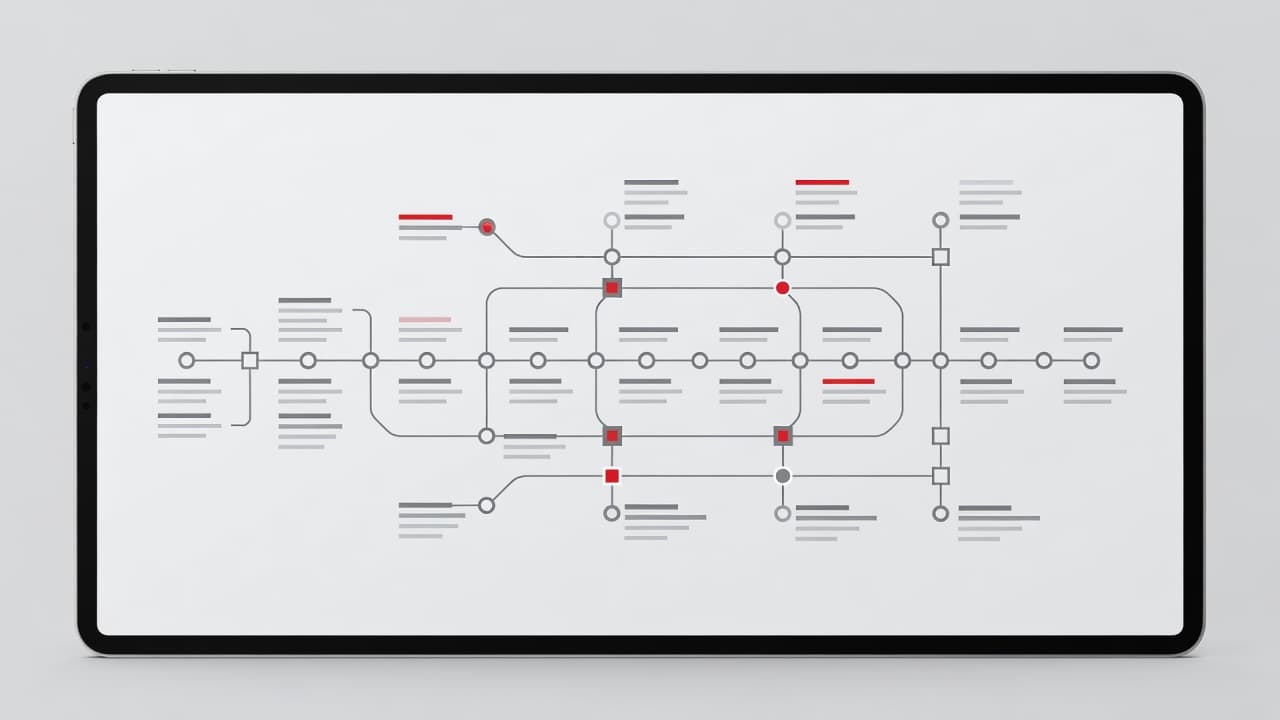
A clean roadmap is not fancy. It is specific. It tells you what starts in the next 90 days, what sits in the 12-month it roadmap, and what gets cut. A technology roadmap template can help you organize your timeline, but the template is not the answer. Whether you are looking at a short time horizon or a long-term plan, focus on the strategy behind the document.
When the roadmap exposes a leadership gap
Sometimes the technology roadmap is not the problem. The missing leadership is.
If the document is full of good intentions but weak on ownership, you are staring at a leadership gap. That is when the conversation shifts from individual projects to broader strategic objectives and executive structure. Before you decide to hire, you should start with a current state assessment to determine if you need a long term technology strategy or simply a better way to implement agile methodologies across your teams.
That is where fractional CTO services can make more sense than a rushed full-time hire. A fractional CTO, virtual CTO, or part-time CTO can provide the executive technology leadership you need without adding permanent overhead too soon. A fractional CTO versus full-time CTO decision should come down to urgency, scope, and how much ownership the business requires right now. A fractional CTO versus IT consultant decision is even simpler; one owns the outcome, while the other usually provides advice.
If the issue is broader than engineering, a fractional CIO may fit better. If cyber risk is the primary concern, a fractional CISO, virtual CISO, or interim CISO may be the cleaner move. This is the point where mid-market technology leadership stops being informal and starts being real.
Questions that cut through the slide deck
Before you approve anything, ask these questions in plain English:
- What specific innovation or business outcome does this support?
- Who among our stakeholders owns the final decision if timing, scope, or budget changes?
- What risk gets lower if this lands, and what risk gets worse if it slips?
- What current initiatives do we stop doing if we fund this?
- How will we show board-ready project management reporting on implementation progress and technical exposure?
If you do not get straight answers, the plan is not ready.
If the roadmap still feels scattered after that, Get an Executive Technology Clarity Check. You will get a sharper view of what is slowing growth, where risk is building, and how to improve your technology roadmap to ensure the most critical items are fixed first.
Conclusion
You do not get lost because the roadmap is too long. You get lost because it is missing the right layers. When you start with the business outcome, verify ownership, assess risk, and account for hidden costs, you transform your technology roadmap from a static document into a dynamic strategic blueprint.
A good plan provides clear visibility and drives better decisions, ultimately supporting your broader digital transformation goals. A weak one leads only to motion without control. Whether you are overseeing complex product development or managing infrastructure shifts, knowing how to interpret these plans allows you to distinguish between genuine progress and empty activity.
FAQ
How detailed should a technology roadmap be?
A high-quality IT roadmap should be detailed enough to highlight real tradeoffs and clear system requirements, but not so granular that it devolves into a list of individual tickets. You should be able to see the primary business goals for the next 90 days and the next 12 months, along with the logic driving each initiative.
What if no one clearly owns the technology roadmap?
That is a leadership problem, not a formatting problem. You need one accountable owner plus clear decision rights for the rest of the team. If that accountability is missing, the roadmap will keep drifting during the actual implementation phase.
What should boards look for first?
When reviewing strategic planning documents, boards should start by evaluating the expected business outcomes, major risks, and clear ownership. From there, look for signs of true innovation, vendor dependence, and proactive technology risk management. If the plan hides the necessary tradeoffs, the board is not getting a transparent view of the technology roadmap.