
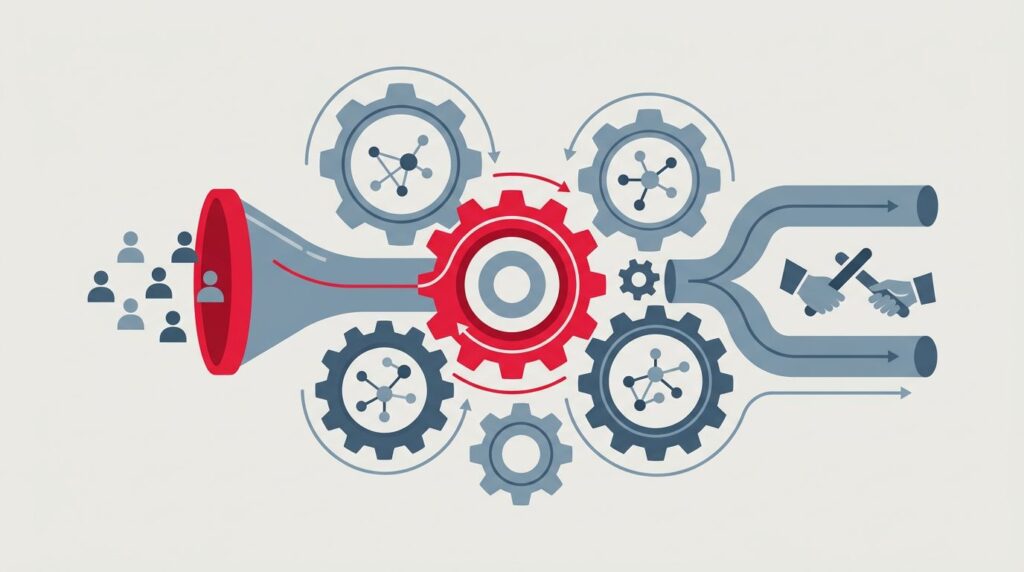
When your CRM starts frustrating your team, the quick answer is usually, “We need a new system.” However, that answer is often expensive and wrong, as these operational frustrations frequently have a negative impact on the overall customer experience.
Most CRM pain starts upstream. Lead routing is messy, stages mean different things to different departments, and poor data quality remains a persistent challenge. When no one owns the workflow from end to end, a new platform might make the mess look cleaner for a single quarter, but the same underlying problems inevitably return.
If you want to build a sound CRM replacement strategy, you must start by separating software failure from operational failure. Understanding the difference between these two issues is essential before you commit to a full CRM system replacement.
Key Takeaways
- Most CRM trouble starts with poor ownership, workflow rules, sales pipeline discipline, and data quality, rather than the platform itself.
- Replace the system when security, integration, vendor fit, reporting limits, or total cost of ownership are blocking your business growth.
- Fix the process first if reps work around the tool, managers do not trust the numbers, or team handoffs keep breaking.
- The right decision needs named owners, shared metrics, and reporting tied to revenue, margin, and risk.
- If no one clearly owns the whole picture, get executive technology leadership involved before making a large CRM investment.
- Ultimately, the goal of a new system is to improve customer satisfaction and support long-term business health.
Why CRM pain often starts outside the CRM
A CRM is like plumbing. If pressure, routing, and connections are wrong, a newer faucet will not solve the underlying issue.
You see this all the time in growing companies. Sales calls the CRM broken. Marketing says lead quality is the issue. Operations says handoffs are the problem. Finance says forecasts are fiction. Everyone is working hard, but the system is reflecting a weak operating process that ignores proper customer journey mapping and the specific needs of your buyer personas.
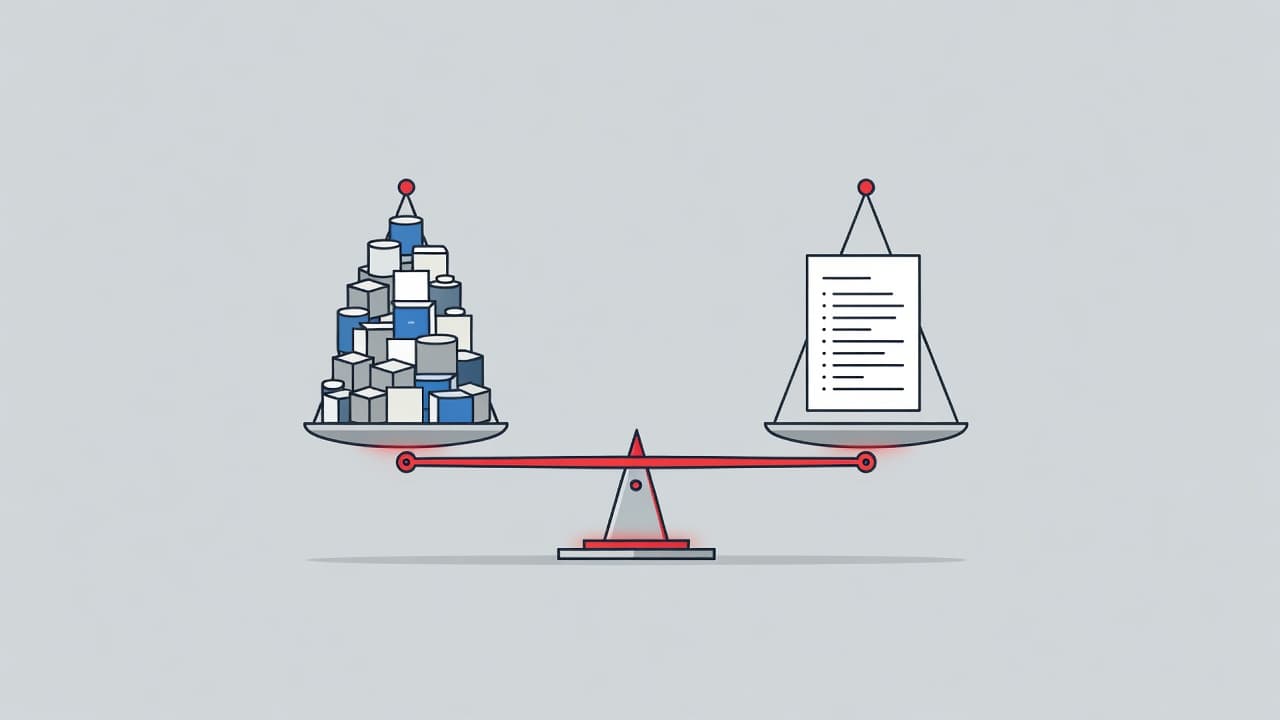
That is why a CRM decision is not only a sales ops choice. It is a technology strategy and business technology strategy question essential to building a customer-centric business. If the business has outgrown founder-led technology decisions, or a vendor is driving too many calls, the CRM becomes one more place where drag, confusion, and wasted spend show up.
Common signs point to process first. Reps keep notes in spreadsheets instead of using workflow automation, customer success tracks renewals somewhere else, and marketing automation tools, quoting software, and support systems all define the customer differently. You get tool sprawl, shadow IT, and inconsistent reporting because the operating model is fuzzy.
The fix starts with the business process, not a demo. Who owns lead qualification? Who owns pipeline stage definitions? Who owns account handoffs? Who owns data quality? Without those answers, the CRM is only a container.
This is also where technology governance matters. A healthy CRM environment needs a clear owner, simple decision rules, and a steady technology operating rhythm. Because a superior customer experience depends on this steady operating rhythm, it is the difference between software administration and executive technology leadership. If you want a useful frame for that, read about building a technology strategy around business processes.
How to tell whether the process or the platform is the real issue
Start with a plain question. If you kept the current CRM for another 12 months, what exactly would still be broken?
If the answer is that your reps do not use it consistently, that is not a software verdict. If the answer is that your stages are wrong, forecasts are padded, and no one trusts the dashboards, that is also not a software verdict. Those are operating and management problems.
If your team cannot agree on what a qualified opportunity is, a new CRM will not fix it.
Use a quick test before you talk to vendors. Start with a systems inventory. Map the revenue process from lead capture to close to renewal. Check where manual steps, duplicate entry, and approval delays sit. Review the data governance framework, data strategy, data quality, data privacy, and broader information governance around customer records. Before you commit to a platform change, perform a data migration assessment to understand the effort involved. Then look at permissions, with basic access control best practices in mind.
A few patterns usually tell the story:
| What you see | More likely process issue | More likely platform issue |
|---|---|---|
| Forecasts swing wildly | Stages, hygiene, and manager review are inconsistent | Native reporting can’t support the sales model |
| Reps avoid the CRM | Workflow is clumsy or no one trained to the process | Mobile UX, speed, or core fit is poor |
| Data is duplicated | Ownership and handoffs are unclear | Integration architecture is broken |
| Costs keep climbing | Too many adjacent tools and weak controls | Licensing costs, licensing model, and admin load no longer fit |
The reporting test matters too. If your CRM cannot produce technology dashboards and sales dashboards that leadership can trust, look closer. You need board-ready reporting, not screenshots and excuses. Your metrics should provide actionable intelligence and real-time intelligence to stakeholders. In some companies, that extends to board technology reporting and a board-ready risk summary because customer data, contracts, and pricing live in the platform. That touches technology risk oversight, technology risk management, and a basic technology risk management framework.
Do not let marketing blur this. Salesforce, HubSpot, and Microsoft Dynamics all push artificial intelligence now. Before you chase an artificial intelligence adoption strategy, artificial intelligence transformation strategy, responsible artificial intelligence, artificial intelligence governance, or an artificial intelligence acceptable use policy, ask whether the notes, fields, permissions, and workflow are disciplined enough to support it. A quick artificial intelligence opportunity assessment is useful to determine if your foundation is ready.
Before deploying artificial intelligence, ensure your customer journey mapping is complete. This helps confirm that your data is accurate enough for workflow automation and predictive analytics. A random add-on is never a substitute for a successful CRM implementation, and you should always prioritize reliable data foundations before expecting results from advanced tools.
When replacing the CRM is the right move
Sometimes the platform is the problem. You should say that plainly when it is true.
A replacement makes sense when the CRM no longer fits the business model, the integration layer is brittle, the reporting ceiling is too low, or the vendor relationship is hurting you. It also makes sense when the tool is piling up technical debt, technology debt, and admin overhead that your team has to work around every week. These legacy systems often carry a high total cost of ownership that drains resources better spent on innovation.
Security and continuity can also force the call. If the current platform creates gaps in vendor risk management, third-party risk management, third-party risk reporting, or wider cybersecurity oversight, you may need to move. To avoid vendor lock-in and support your broader digital transformation, you might transition to a more flexible environment, such as the Microsoft ecosystem. The same logic applies if you face weak vendor management, poor vendor due diligence, a missing vendor offboarding path, or no usable vendor incident response plan. If a CRM holds sensitive customer data, it belongs in your cybersecurity risk assessment, IT security assessment, business continuity planning, disaster recovery planning, incident response readiness, and ransomware readiness. It may even affect your cyber insurance renewal and your executive incident response checklist.
You should also replace when the CRM blocks growth economics. If the stack around it has become a nest of overlapping apps, it may be time for application portfolio rationalization, software platform evaluation, and tighter technology vendor selection. This is where technology spend optimization, technology ROI, tech spending ROI, IT cost optimization, and IT cost reduction stop being abstract finance talk and start becoming operating decisions. As your footprint expands, rising licensing costs often become the final signal that the current setup is no longer sustainable.
Then there is diligence. If you are preparing for acquisition readiness, leadership transition, or post-merger technology integration, a shaky CRM can get exposed fast. Buyers and investors will ask for technology due diligence, technical due diligence, cybersecurity due diligence, and an acquisition due diligence checklist. A weak CRM setup often points to broader control issues, including data ownership, reporting discipline, and a missing CTO transition plan. During these periods, effective data migration becomes a critical project milestone, and a clean, reliable system ensures that customer satisfaction remains high even when the business is undergoing significant change.
Build the decision around ownership, not demos
A strong CRM replacement strategy starts with one executive owner. Not five partial owners. Not a vendor. Not a committee that cannot say no.
In most companies, the business sponsor owns the why. Sales may own conversion and pipeline behavior. Operations may own process discipline. Finance may care about forecast reliability and margin. Technology needs to own the architecture, integration, controls, and the CRM implementation. This team must also vet any potential implementation partner to ensure they align with your long-term goals. You need a simple decision rights map and real stakeholder alignment before the buying process starts.
From there, build a short, business-first package. That usually includes a one-page technology strategy, a business-aligned technology strategy, an IT strategy and roadmap, and a practical technology roadmap. For a CRM change, you should be able to explain the case in plain terms: what business problem you are fixing, what risk you are reducing, what the expected return on investment is, and how the work fits into a 12-month CRM implementation roadmap. If you are struggling with fragmented data, consider if a customer data platform might better serve your complex needs. When planning, ensure your roadmap includes clear journey orchestration to improve the buyer experience. If you need a planning aid, use a simple technology roadmap template, then turn it into a board-ready tech roadmap and cost-per-outcome reporting leaders can follow.
This is one of those CEO technology decisions and COO technology strategy calls that expose whether you have enough technology leadership. If you don’t, the title matters less than the gap. A fractional CTO, part-time CTO, virtual CTO, or outsourced CTO can steady the work. In other situations, a fractional CIO is better because the issue is broader than sales tech. If risk and controls are the pressure point, a fractional CISO, virtual CISO, or interim CISO may fit. If the seat is open or the situation is unstable, an interim CTO can step in faster. The labels matter less than getting the right fractional technology leadership or interim CTO services for the moment you are in.
This is common in mid-market technology leadership, growth-stage technology leadership, and scaling technology leadership. Many companies need technology leadership before hiring a permanent executive. That is where fractional CTO services, technology strategy consulting, and guidance on when to hire a fractional CTO, how to hire a CTO, fractional CTO vs full-time CTO, or fractional CTO vs IT consultant become practical, not theoretical.
If your CRM debate is really exposing a wider technology leadership gap, you probably need more than software selection. You need a technology health check, technology audit, or technology assessment, followed by a focused 90-day technology plan. For many teams, that is the cleanest technology strategy for CEOs, technology strategy for COOs, and path to stronger technology priorities for growing companies. You can also look at improving lead routing and sales process execution when the CRM issue is tied to broader operating design.
Frequently Asked Questions
How do I know if my CRM issues are due to bad software or broken processes?
If your team struggles with inconsistent data, unclear stage definitions, or manual workarounds, you likely have an operational problem rather than a software one. A CRM is merely a container for your existing workflows; if those workflows are undefined or broken, even a brand-new platform will eventually replicate the same issues.
What are the clear indicators that it is time to replace a CRM?
You should consider a replacement when the platform itself becomes a barrier to business growth, such as through unmanageable licensing costs or lack of necessary integration capabilities. Additionally, if the system creates significant security risks or fails to provide the reporting accuracy required for executive and board-level decision-making, it is time for a change.
Should we implement AI features before fixing our CRM foundations?
No, you should prioritize data hygiene and process discipline before adopting AI. Advanced tools like predictive analytics and automation require clean, consistent, and well-mapped data to be effective; implementing them on top of a flawed foundation will only scale your current operational inefficiencies.
Who should be responsible for leading a CRM replacement strategy?
A single executive owner must lead the decision to ensure accountability and strategic alignment. A committee or a group of partial owners often leads to fragmented requirements and failed implementations, so it is vital to designate one leader to bridge the gap between sales, operations, finance, and technology.
Conclusion
A new CRM can improve a good operating model, but it cannot rescue a bad one. A truly customer-centric business uses technology as an accelerator rather than a crutch.
If ownership is blurry, reporting is weak, and the process changes from person to person, fix those foundations first. If the platform is creating unnecessary costs, security risks, or hard limits on your ability to scale, replace it with a clear, strategic plan.
Ultimately, your goal is to provide an exceptional customer experience. Achieving that milestone hinges on both high levels of customer satisfaction and the leadership discipline required to manage your tools effectively. The real decision is not simply asking which CRM you should buy; it is whether you have the leadership and operational consistency to make your next system worth the investment.