

You usually do not feel the need for a SOC 2 readiness assessment as a compliance issue first. Instead, you feel it when a strong deal slows down, procurement adds another review, or a buyer asks for documentation that your team cannot pull together quickly.
That is when a security project turns into a sales problem. Your pipeline, pricing power, and board confidence all start to feel the drag.
The hard part is that the missing report is rarely the whole issue. Establishing true audit readiness is the necessary foundation for overcoming these hurdles and preventing security reviews from stalling your revenue growth.
Key Takeaways
- SOC 2 becomes a revenue issue when buyer trust drops and deals stall.
- Achieving audit readiness requires robust security policies and clear internal accountability across all departments.
- Weak readiness often points to bigger problems in ownership, reporting, vendors, and data handling.
- The fix is not paperwork alone, it is stronger technology leadership and a cleaner operating model.
- If no one clearly owns the work, a leadership gap is already costing you time and money.
The deal doesn’t stall on security, it stalls on trust
Most buyers are not asking for SOC 2 because they enjoy compliance theater. They ask because they need a fast way to judge whether your company handles data, systems, and incidents with discipline.
A basic overview of SOC 2 makes that point well. The report serves as vital shorthand to verify your internal controls, ensuring your documentation and evidence collection demonstrate that your processes are real, repeatable, and transparent.
If you cannot show that discipline, the sales cycle becomes heavy. Performing a gap analysis early can help you understand why your processes fail to meet buyer expectations. Without one, security questionnaires grow, legal teams ask more questions, and procurement slows down. Your champion inside the account then loses the support they need to finalize the deal.
Here is what that often looks like:
| Buyer asks | What they want to hear | What they hear instead |
|---|---|---|
| “Do you have SOC 2?” | Clear status of your Type I report and the broader SOC 2 audit | “We’re working on it” |
| “Who owns access reviews?” | A named owner, cadence, and defined access control policy | “IT handles most of that” |
| “What happens in an incident?” | A tested plan tailored to the scope of audit | “We would pull the team together” |
That gap costs money. It can stretch pilots, delay signatures, or push you into discounts you did not need to offer.
The same issue shows up outside sales. During acquisition readiness, technology due diligence, technical due diligence, and cybersecurity due diligence, weak readiness turns into a credibility problem fast. It belongs on your acquisition due diligence checklist, your CTO transition plan, and any post-merger technology integration plan.
Why buyers ask for SOC 2 earlier now
Buyers ask earlier because your systems now sit closer to their risk. If your product touches customer data, employee data, finance, health information, or operational workflows, they want proof before the contract, not after it.
The Trust Services Criteria breakdown shows why. Buyers are not only checking security. They are evaluating the five trust principles—security, availability, confidentiality, processing integrity, and privacy—to see how your controls hold up over time. Because the AICPA sets these standards, buyers view them as the gold standard for verifying operational maturity.
That pressure reaches the board too.
If your board hears tools before tradeoffs, your readiness story is being told at the wrong level.
This is where technology governance for CEOs and technology governance for boards matter. You need board technology reporting, board-ready technology reporting, board-ready reporting, a board-ready tech roadmap, board cybersecurity reporting, and cyber risk reporting to the board that identifies risk, ownership, timing, and consequences. This reporting should incorporate a thorough risk assessment so that your cyber risk appetite is clear enough for leadership to define exactly what level of exposure is acceptable and what is not.
There is another reason buyers have moved faster. AI is now part of the control story. If your team uses copilots, third-party models, or AI features inside business tools, buyers will ask about AI governance, responsible AI, an AI acceptable use policy, and AI vendor due diligence. A real AI adoption strategy or AI transformation strategy starts with data protection, control, and judgment, not just enthusiasm. That work should sit inside your AI opportunity assessment, not outside it.
If you work in regulated markets, this cybersecurity laws guide for businesses is a useful reminder that the bar keeps rising.
What weak readiness usually exposes inside your company
Failed readiness is rarely about one missing policy. It usually exposes a bigger operating problem.
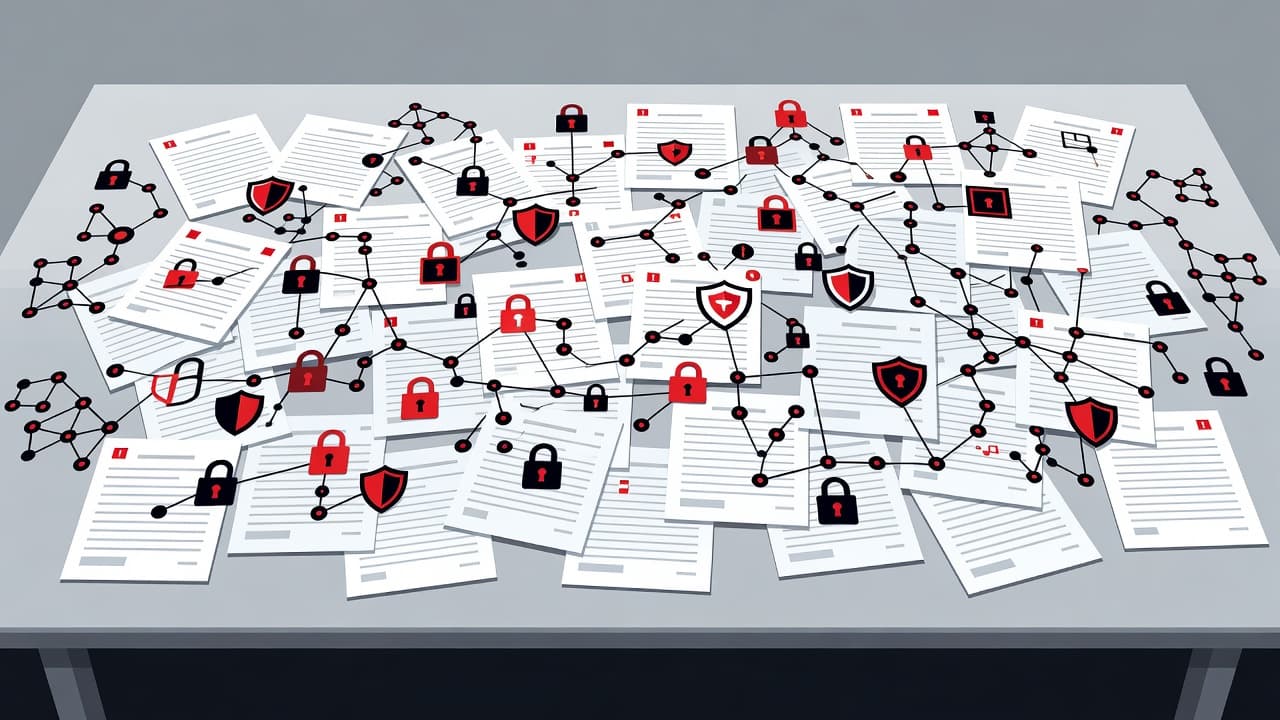
When you begin a gap analysis, the resulting remediation plan often reveals significant gaps in internal controls and security policies. You may find that your access control measures are inconsistent, leaving sensitive systems exposed. Beyond these technical hurdles, a lack of consistent employee training often becomes the primary driver of non-compliance.
Operating problems often surface when assessing your disaster recovery and business continuity planning. Without a formal risk assessment and a tested incident response plan, your team cannot reliably protect business operations during a security event. These weaknesses often extend into your third-party risk management as well. Effective vendor management requires meticulous documentation, yet many companies struggle with thin vendor due diligence, nonexistent offboarding procedures, and a lack of reporting that leadership can trust.
Data management issues frequently follow. Many firms lack a working data governance framework, leading to unreliable data quality and unclear data privacy controls. When you combine these issues with broader challenges like tool sprawl, shadow IT, and technical debt, it becomes clear that your infrastructure needs a reset. Neglecting application portfolio rationalization or failing to conduct a proper software platform evaluation only adds to your growing technology debt.
This is why SOC 2 compliance often turns into a finance conversation. Without reliable technology dashboards, cost per outcome reporting, and a clear focus on technology ROI, your team ends up paying for confusion rather than performance. IT cost optimization and strategic technology spend optimization are impossible when you lack visibility. The business value of a SOC 2 report is not only customer trust; it is the catalyst for cleaner operations, better documentation, and more informed strategic decisions.
Treat SOC 2 readiness like an operating decision
You do not fix this with a document chase. You fix it with executive technology leadership.
Start with plain questions. What is slowing revenue? Where is margin leaking? Which commitments are at risk? How much technical debt can you afford to carry this quarter? That is not an engineering side note. It is business judgment.
A successful SOC 2 readiness assessment is not just a one-time project; it is a strategic operating decision that should influence your entire technology strategy. This requires a business-aligned technology strategy, effective strategic technology planning, and a clear IT strategy and roadmap. By utilizing a practical technology roadmap or even a simple one-page technology strategy, leaders can maintain visibility into their security posture without getting buried in technical minutiae.
The control work should sit inside your normal management cadence. Rather than treating it as an afterthought, integrate your internal controls and security framework directly into your daily operations. You need technology governance, a working technology risk management framework, and stronger technology risk management oversight. Connecting cybersecurity oversight to delivery, spend, and risk ensures that your board receives a clear, board-ready risk summary rather than a pile of technical notes.
To keep pace with enterprise requirements, adopt compliance automation to integrate these tasks into your existing workflow. This minimizes friction and ensures that your path toward a SOC 2 audit remains consistent and repeatable.
This approach also requires a technology operating rhythm, a clear decision rights map, and real stakeholder alignment. Too many firms still run this work through informal founder-led technology decisions, scattered CEO technology decisions, or an overloaded operator trying to cover COO technology strategy on the side.
That is not stable enough for enterprise sales. It is not stable enough for diligence either.
If no one owns it, the real issue is a technology leadership gap
Many companies hit this point before they are ready for a full-time executive. That is common in mid-market technology leadership, growth-stage technology leadership, and scaling technology leadership. The problem is not ambition. The problem is ownership.
You need a technology leader for growing companies who can connect controls, vendors, product decisions, and reporting to actual business outcomes. This is where a fractional executive bridges the gap. They can oversee your SOC 2 readiness assessment, helping you navigate the requirements before you engage a CPA firm or a service auditor for the final SOC 2 audit. Performing a thorough self-assessment as part of your initial audit readiness phase is often the smartest move to close a technology leadership gap before compliance becomes an expensive roadblock.
Depending on the pressure, that owner may be a fractional CTO, part-time CTO, virtual CTO, outsourced CTO, or an interim CTO. Some teams need broader fractional CTO services or interim CTO services. Others need a fractional CIO because the issue runs beyond engineering, or a fractional CISO, virtual CISO, or interim CISO because the pressure is security-heavy.
This is also why technology leadership before hiring matters. A short technology health check, technology audit, or technology assessment can give you a sharper 90-day technology plan. It can also clarify when to hire a fractional CTO, how to think about how to hire a CTO, and whether the real comparison is fractional CTO vs full-time CTO or fractional CTO vs IT consultant.
For many leadership teams, the first useful move is a blunt technology clarity call or decision clarity call. Not for theater. For ownership.
Conclusion
When a SOC 2 requirement slips into the sales process, it is telling you something bigger than the need to finish an audit. It is signaling that your internal trust, ownership, and reporting processes are not yet mature enough to meet modern buyer expectations.
The companies that handle this well do not treat compliance as a side project. Instead, they integrate a proactive SOC 2 readiness assessment into their broader business-aligned technology strategy. By prioritizing this early, you protect your revenue, shorten the duration of security scrutiny, and ensure a successful SOC 2 audit that gives leadership calmer control under pressure.
FAQ
Do you need a final SOC 2 report to close deals?
Not always. Many buyers are willing to move forward if your preparation is credible, scoped, and owned by the right stakeholders. Showing a clear roadmap from a SOC 2 Type I report to a SOC 2 Type II report demonstrates credible progress to prospects, proving that you have tied your compliance journey to real dates and verifiable evidence.
Who should own SOC 2 readiness?
It should not rest with IT alone. Effective readiness requires shared ownership across security, operations, product, legal, and leadership, with one accountable executive overseeing the effort. This team must take collective responsibility for managing security policies and developing a robust incident response framework to ensure all operational bases are covered.
Is SOC 2 readiness only about compliance?
No. It directly impacts your sales velocity, diligence processes, vendor trust, and cyber insurance renewals. Furthermore, a formal SOC 2 audit acts as a powerful validator, proving to stakeholders that your organization adheres to the core trust principles. This rigor also helps your board judge technology risk with much greater confidence.