
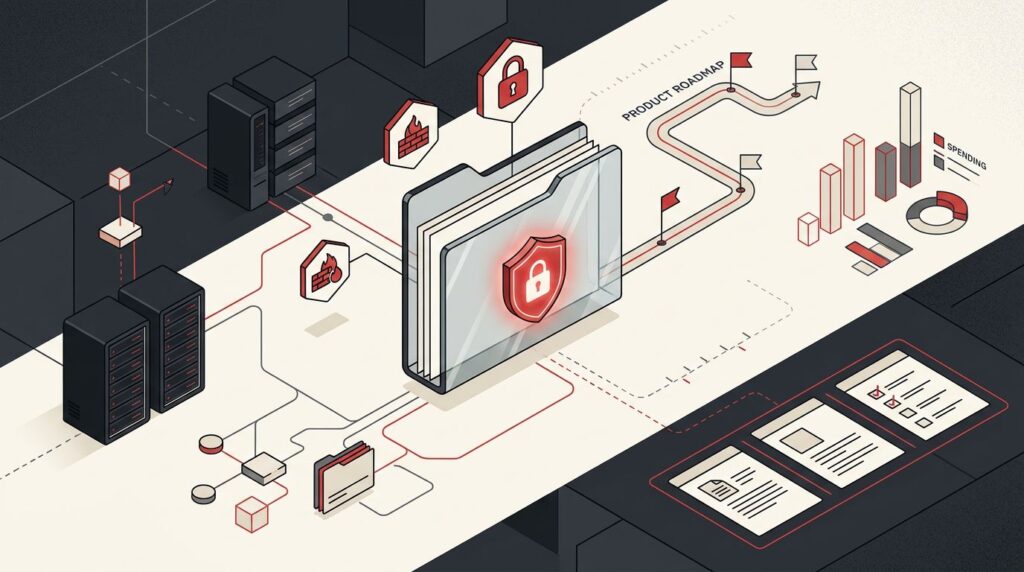
Buyers don’t lose confidence because your technology is imperfect. They lose confidence when no one can explain what is imperfect, who owns it, and what it will take to fix.
That is why operating evidence is not a document exercise. It is your business under pressure, tested by people who have no reason to take vague answers on faith.
During mergers and acquisitions, refinancing, or a leadership transition, the room has to show that management sees the business, its risks, and its priorities clearly. For a capital raise, an investor data room should substantiate the claims in your pitch deck.
Key takeaways
- A data room should connect systems, vendors, cyber risk, spend, ownership, and the technology roadmap into one credible story.
- A virtual data room provides tighter permissions and a stronger audit trail than a shared drive.
- Buyers can accept technical debt, open risks, and unfinished work. They struggle with surprises, contradictions, and missing owners.
- The room needs current evidence, not polished documents from last year’s planning cycle.
- Build an investor data room before fundraising starts. Last-minute assembly often exposes the technology leadership gap buyers are trying to assess.
What a tech data room tells a buyer
A buyer is not only checking whether you have the right documents. During due diligence, they’re trying to understand how the business runs under pressure. That includes system failures, disappointing vendors, unreliable data, and major decisions.
A physical room is not a review system
A physical data room once meant a controlled location, paper files, and tightly scheduled access. It created scarcity, but it also slowed review and made activity hard to track.
An investor data room gives buyers, counsel, lenders, and advisers controlled access during a financing round, without handing over the keys. You can grant time-limited permissions, tailor access permissions, restrict downloads, and see what was reviewed. That matters when confidential information is moving beyond your leadership team.
A serious platform should support encryption, granular permissions, activity logging, document watermarking, and multi-factor authentication. Datasite’s guidance for M&A data rooms outlines the document security controls buyers now expect as normal practice.
Cloud storage is not the same thing
SharePoint, Google Drive, Dropbox, and OneDrive are useful operating tools. They are built for everyday collaboration and informal file sharing. The diligence workspace is built for controlled external review and secure collaboration.
This difference matters when a buyer asks who viewed a security assessment, downloaded a vendor contract, or accessed forecast materials. These tools can show some activity, but ordinary file sharing may not provide document-level control or a clear audit trail. A virtual data room should support controlled external file sharing, stronger document tracking, and a more useful audit trail.
The platform does not create trust on its own. It only gives your evidence a controlled place to stand.
What buyers expect from a tech data room
Buyers want enough detail to test the technology story without drowning in a file dump. The right room supports secure collaboration among management, finance, and advisers, organized around business questions rather than IT folders.
An operating map, not a pile of files
Your technology due diligence materials should help a buyer understand what matters most now. That usually includes a current systems inventory, the critical integrations, major data flows, key vendors, and the people who own each area.
They will also expect a practical view of:
- Your technology strategy, 12-month technology roadmap, and major delivery commitments.
- Material technical debt, known system weaknesses, and the business consequence of delay.
- Cybersecurity due diligence evidence, including risk assessments, incident history, access control practices, recovery testing, and an incident response plan.
- Vendor management records, major contracts, renewal dates, vendor due diligence, and any difficult dependency.
- Data governance, privacy obligations, data quality issues, and systems that hold customer or regulated data.
- Board-ready reporting on major technology risks, spend, decisions needed, and accountable owners.
A smaller company can scope a startup data room around its key systems, risks, vendors, and owners. Relevance matters more than volume, but the evidence should still answer buyer questions.
If you are raising capital instead of selling the business, an investor data room may start with core materials. These may include the pitch deck, financial projections, and cap table, while the fundraising process differs from acquisition review. As the review deepens, the investor data room should show that the operating foundation can support the plan.
A technology story finance can trace
Technology spend needs to reconcile with the financial story. If you have capitalized development costs, reported Adjusted EBITDA, or made claims about margin improvement, buyers will trace them to audited financials. They may also compare funding history and the cap table with your growth claims.
Don’t promise savings you cannot trace to evidence. Show what you spend, what is contractually committed, what it supports, and what the business gets in return.
This is where tech spending ROI becomes more than a budget debate. It becomes part of acquisition readiness. Your CFO, technology lead, and operating leaders need to tell the same story without reconciling it in the meeting.
Security controls prove care, not certainty
A virtual data room can’t make a business risk-free. Buyers do expect management to protect confidential information and know where the real exposure sits.
Control who sees what, then prove it
Set access permissions by role and need, not convenience. Controlled file sharing should reflect those distinctions.
A buyer reviewing contracts doesn’t need the same access as a security adviser or potential lender. This is the foundation of document security.
Look for multi-factor authentication, document-level permissions, document watermarking, view-only settings, expiry dates, download restrictions, and detailed audit logs for document tracking. Ansarada’s secure-sharing overview is a useful reference point for the controls a transaction platform should offer.
Use the records these controls create. Review access weekly during an active process. Remove users who no longer need access. Keep one internal owner accountable for changes.
Strong access control does not mean locking every document down. It means you can explain who had access, why they had it, and when that access ended.
Treat certifications as questions, not badges
ISO 27001 and SOC 2 Type II reports are useful trust signals. They are not magic words.
Ask the provider what product, legal entity, hosting region, and support systems sit within scope. Request the current report or certificate. Check its dates and relevance to your regulatory compliance needs. Ask whether subcontractors and data centers are covered.
CapLinked’s overview of VDR security controls also makes the important distinction between encryption standards that protect against outside attackers and permissions that limit what authorized users can see.
The same discipline applies inside your company. Strong user management includes identity reviews, account cleanup, and vendor offboarding. A clean virtual room can’t make gaps in those controls disappear.
What sinks buyer trust during diligence
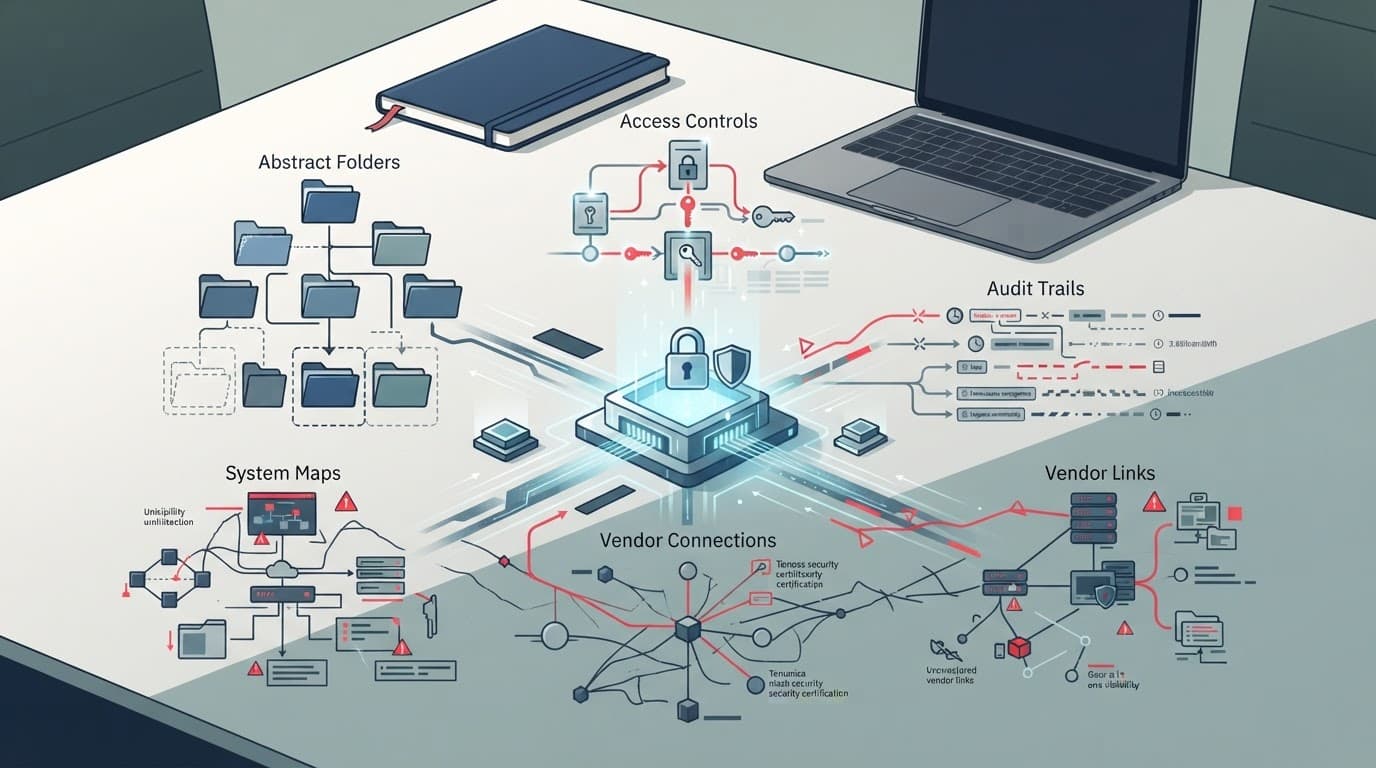
Trust rarely collapses because of one ugly document. It fades when the buyer sees a pattern of weak visibility, unclear ownership, and answers that change during due diligence.
Open issues are manageable, hidden issues are not
A documented security gap with an owner, budget, target date, and risk decision is manageable. An undisclosed incident, expired contract, untested backup, or unknown system dependency is harder to defend.
Buyers will notice if your technology roadmap says a platform is being retired, while the vendor invoice shows a renewal. They will notice if your board technology reporting describes risk as controlled, while the incident log tells a different story.
The data room should include material open issues. State the facts. Explain the response. Name the accountable owner. Don’t bury a problem in a 70-page assessment and hope nobody finds it.
No one owns the whole answer
The most damaging answer in diligence is often, “You’ll need to ask someone else.”
That answer shows up when technology governance is weak. The MSP owns infrastructure knowledge. Finance owns contracts. Operations owns workarounds. Security evidence sits with a former employee. The CEO is left trying to join the dots.
A buyer can work with technical debt. They struggle with management that cannot define it, price it, or name the person responsible for reducing it.
This is why executive technology leadership matters. Technology risk management is not a collection of IT tasks. It is a business responsibility that needs clear decision rights and a regular operating rhythm.
Build the room before buyers ask for it
The best time to create a data room is when nobody is waiting for it. You have more time to check facts, close gaps, and decide how to describe risk before due diligence starts.
Start with a 30-day clean-up
Begin with a short, disciplined review.
- Name one executive owner for the complete technology narrative, even when many leaders contribute evidence.
- Gather the current roadmap, systems inventory, vendor register, risk register, major contracts, policies, and recovery-test results. For fundraising, add the current pitch deck and cap table to the investor data room.
- Test every important document with one question: can a buyer understand the business consequence and accountable owner?
- Set up user management and access groups. Define access permissions and document expiry, then build an index for secure collaboration among management, advisers, and reviewers.
- Identify what is missing, stale, contradictory, or still dependent on one person’s memory.
If your company has capable managers and vendors but no executive owner for this work, a fractional CTO can bring structure without forcing a premature full-time hire. An interim CTO may fit when a leadership vacancy or transaction needs immediate direction. A fractional CISO can help when the bigger concern is cybersecurity oversight and evidence.
If the facts are scattered or the risks are hard to explain, Get an Executive Technology Clarity Check before a buyer sets the agenda for you.
Price the virtual data room for the review you need
Virtual data room pricing is not standard. Providers may use different pricing models, charging per user, per project, by storage tier, feature package, or enterprise contract. Older models may still price by page count.
The lowest rate is rarely the lowest transaction cost. A cheaper room can become expensive if it lacks useful access permissions or responsive support. Reviewer changes and approval steps can also slow the deal workflow.
Compare the deal length, number of external users, document volume, file sharing needs, support needed for due diligence, data residency requirements, and security controls. An investor data room may have different needs from an acquisition review, so SmartRoom’s feature guide for M&A diligence can help you frame those questions before comparing quotes from each vdr provider.
Frequently asked questions
Does a buyer expect a perfect technology environment?
No. Most operating businesses have technical debt, legacy platforms, manual workarounds, and vendor dependencies. Buyers want an honest view of what exists, what it costs, and what management plans to do about it.
What should be in a startup data room?
Start an investor data room with core materials, including the pitch deck and current cap table. Then add the technology roadmap, systems overview, security practices, intellectual property ownership evidence, key vendor commitments, and major product risks. Keep the startup data room proportional to the stage, keep the cap table current, and don’t make claims in the pitch deck you cannot support.
Is a shared drive enough for acquisition diligence?
It may work for low-risk internal collaboration. When a virtual data room is needed for controlled external review, a shared drive is a poor substitute for document-level permissions, watermarking, expiry dates, and a reliable audit trail.
Who should own the room?
One executive should own the full answer. Legal, finance, security, operations, and technical leaders should contribute. The board should oversee material risk and major decisions, not manage folders or chase missing documents.
The room should make your business easier to trust
A buyer does not need a flawless technology story. They need a truthful one, supported by current evidence and clear ownership.
Build the data room around business consequences, not technical noise. Show what you know, what remains open, who owns the response, and how the plan supports growth, control, and risk reduction.
If a transaction or leadership transition is approaching, Prepare Technology for Diligence or Transition before uncertainty turns into a buyer’s concern.