
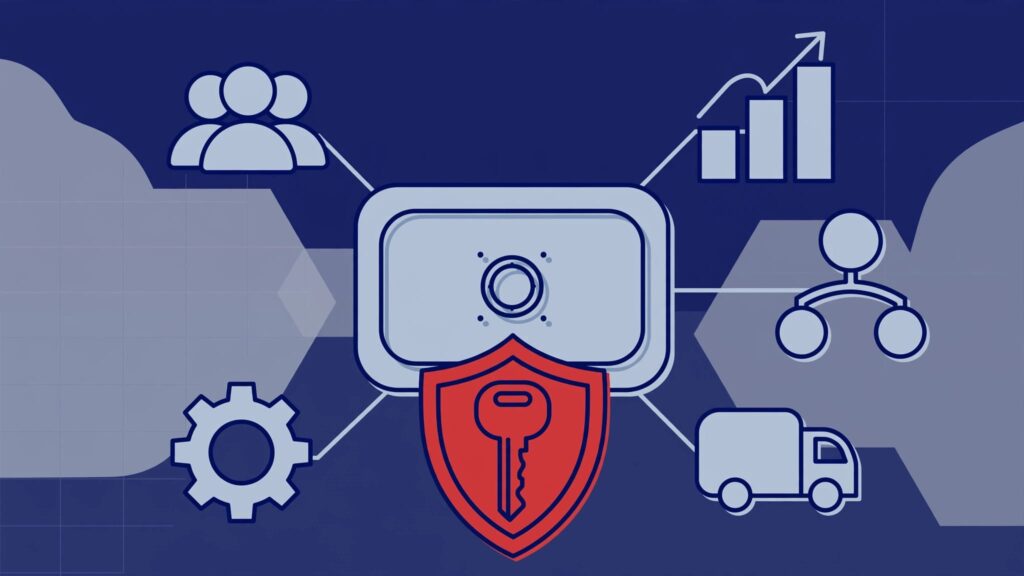
When no one owns the numbers, everyone eventually argues about them.
Data ownership assigns business decision rights and accountability for company-critical information, rather than implying personal possession. It clarifies who can define, protect, improve, and approve its use, including appropriate handling of personal information. Trusted information becomes a strategic asset. Without clear data ownership, reporting weakens, teams build workarounds, and leaders make decisions on facts they cannot fully trust.
You don’t need a large data office to fix this. You need clear decision rights, practical roles, and a rhythm that keeps ownership real.
Key Takeaways on Data Ownership
- Data ownership means assigning business accountability for company information, not treating it like a personal asset.
- Assign one responsible owner for each important area, such as customers, revenue, employees, vendors, or operations.
- Let data stewards handle day-to-day work, while final decisions stay with the owner.
- Require owners to improve data quality, manage access and retention, and protect personal information.
- Start with information that affects revenue, customer trust, compliance, cash flow, or board reporting.
- Review ownership in a regular leadership cadence, not only after a reporting failure or security incident.
Data Ownership Starts With Decision Rights
A data owner is the person who can make the hard calls when teams disagree.
Clear data ownership gives that person authority to resolve those conflicts.
They decide what a metric means, and data ownership makes that definition binding across teams. They approve the business use of sensitive information. They set the accepted level of data quality and protect data integrity when teams disagree.
That doesn’t mean one executive personally manages every field, report, or database. Business leaders own meaning, acceptable risk, use, and funding decisions. IT operates the platform and implements approved technical changes.
It means someone has clear accountability for stopping ambiguity from becoming a permanent operating habit.
Name the business decision-maker, not the system administrator
IT may operate the CRM. Finance may pull reports from it. Sales may enter the records. None of that automatically makes IT, Finance, or Sales the data owner.
The owner should sit closest to the business outcome the data supports.
For example:
- Your Chief Revenue Officer may own customer and pipeline definitions.
- Your CFO may own finance, billing, and profitability data.
- Your COO may own fulfillment, inventory, and operational performance data.
- Your HR leader may own employee information.
- Your General Counsel or privacy lead may set rules for sensitive personal information.
This model makes accountability visible:
- The business owner is Accountable for definitions, access approval, prioritization, and compliance decisions.
- Data stewards are Responsible for documentation and issue coordination.
- Custodians are Responsible for technical implementation.
- Users are Consulted or Informed about decisions that affect their work.
- Legal/privacy leaders are Consulted on regulated uses.
With clear data ownership, you should know who can make the call if a serious data issue appears tomorrow, without scheduling three meetings first.
Separate Owners, Stewards, Custodians, and Privacy Roles
The most common data ownership mistake is giving several people the same vague responsibility. That creates activity, not clear responsibility.
A simple structure is enough for most growing companies.
| Role | Primary responsibility | Typical leader |
|---|---|---|
| Data owner | Makes business decisions and retains final accountability | CFO, COO, CRO, HR leader |
| Data stewards | Maintain definitions, metadata, quality rules, and issue follow-up | Operations analyst, finance manager, business systems lead |
| Data custodians | Implement permissions, backups, retention, and security controls across systems | IT leader, systems administrator, cloud team |
| Data user | Consumes approved information for a defined business purpose, follows access rules, and reports defects without changing definitions | Department or functional team member |
| Privacy or legal lead | Advises on legal obligations and sensitive personal information without replacing the business owner | General Counsel, privacy officer, compliance lead |
Keep authority with the owner
Data stewards maintain definitions and metadata through metadata management. They also find duplicates, document definitions, and coordinate fixes. Data custodians may configure permissions and retention settings.
Neither should be left to decide what the business will accept.
That decision belongs with the data owner.
Privacy and legal specialists can advise on personal information, but they don’t replace the business owner.
This distinction protects data ownership when quality problems affect forecasts, invoices, customer communications, or regulatory reporting. Data stewards can show the problem. This is where data ownership matters most: the owner decides the priority, funding, and tradeoff.

Map the Data That Actually Runs the Business
Do not begin by trying to catalogue every spreadsheet, report, and database. That turns a sensible business exercise into a long documentation project.
Start with data that drives important decisions or could hurt the business if it is wrong, exposed, or unavailable. Treat the inventory as a practical data ownership framework. Cataloguing critical data assets is part of data management, not a technical documentation exercise.
Focus first on high-consequence data domains
For each priority domain, document six things:
- The business purpose of the data and the decisions it supports.
- The named data owner and supporting data stewards.
- The system of record, key definitions, lineage, and ownership, supported by metadata management.
- The main reports, processes, and teams that depend on it, plus approved data users and data sharing dependencies.
- The privacy, security, and retention requirements, especially for personal information.
- The known data quality issues, manual workarounds, integration gaps, and data observability measures for freshness, completeness, and cross-system mismatches.
Then record decision rights, escalation thresholds, and a RACI assignment for definition, quality remediation, access, retention, and compliance decisions. Use metadata management to keep these assignments current.
A revenue report that does not match the CRM is not a reporting annoyance. It is a data ownership problem that can affect forecasting, compensation, and confidence in the business plan.
The same applies to vendor records, customer consent, employee data, and inventory. Poor data quality in these areas can expose personal information, weaken data integrity, or disrupt data sharing.
This is also where a basic systems inventory earns its keep. It reveals data silos, duplicate records, and vendors holding critical information. It also shows where shadow IT has created unmanaged records that may expose proprietary operational information or intellectual property.
Put Privacy, Access, and Quality Into the Job
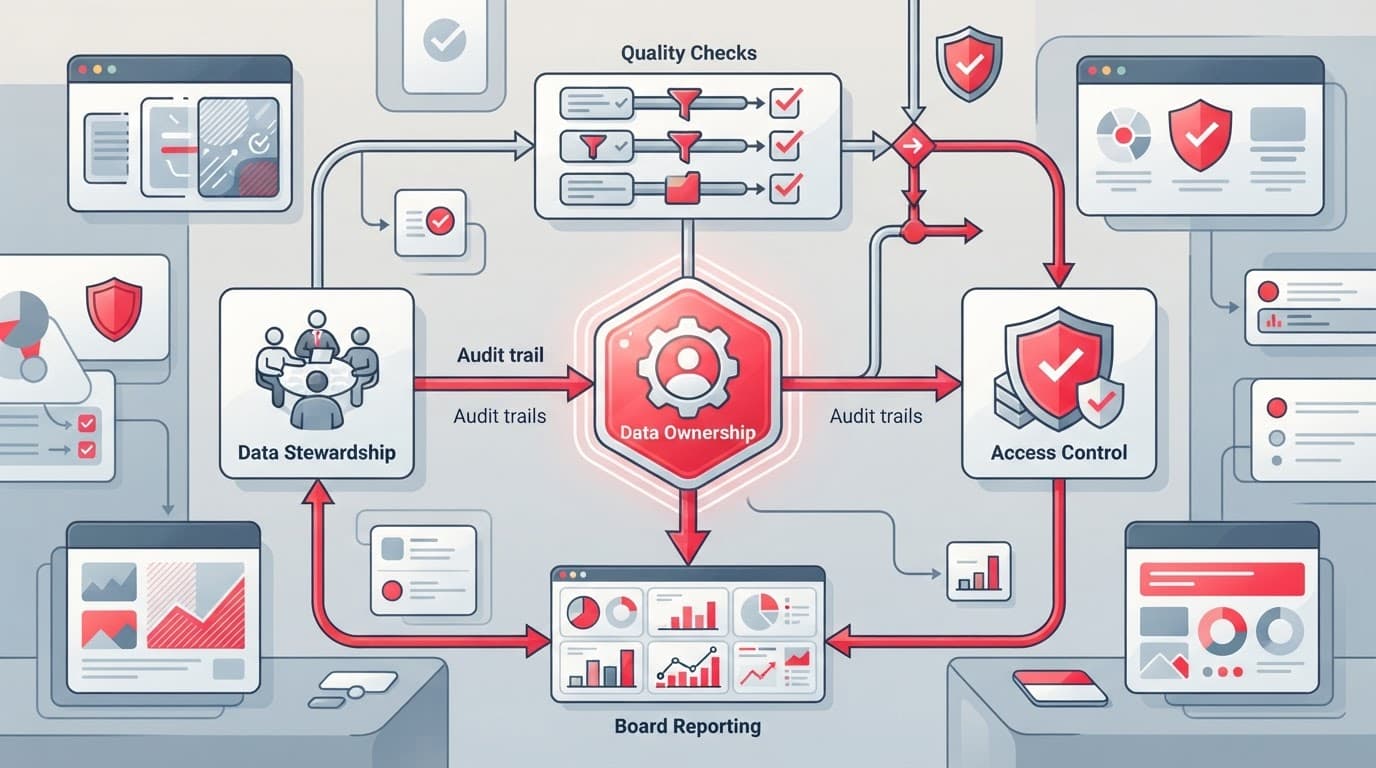
Data ownership is not complete when a leader’s name appears in a spreadsheet. The business owner is accountable for the purpose, acceptable risk, retention need, and approved use of information. That accountability guides practical controls for access and data quality. Data stewards maintain definitions, classifications, and review rules through metadata management, then monitor data quality and data integrity.
Personal information adds another layer. Data privacy and information privacy laws give people legal rights and reasonable expectations about how that information is handled. Data privacy obligations should be interpreted by privacy and legal leaders, not left to IT.
Under GDPR data protection rules, the data controller determines why and how personal information is processed. The processor handles it on the controller’s behalf. GDPR compliance depends on distinguishing those responsibilities, especially when vendors process personal information. The European Commission’s explanation of controller and processor roles is a useful reference when responsibilities cross internal teams and vendors.
If your company handles relevant EU personal information, GDPR compliance may apply even when the company is elsewhere. A plain-language GDPR overview can help leadership understand data protection obligations. HIPAA creates separate obligations for covered entities and business associates handling protected health information. Regulatory compliance requires clear role definitions and retention schedules. Those schedules should state how long personal information remains necessary and when it should be deleted.
Treat access as a business decision
Role-based access control, often called RBAC, limits permissions by job role instead of granting them one person at a time. This access control model lets the business owner approve data access and its business reason, while the custodian implements permissions. Data stewards review data access and whether permissions still fit current work.
Good permission practices include:
- Giving people the least access needed for their job.
- Removing access quickly when roles change or people leave.
- Reviewing privileged access on a set schedule.
- Logging access to sensitive data and investigating unusual activity.
- Including vendor access and data sharing in your vendor management process, with cross-functional access decisions protecting proprietary business information and intellectual property.
Data custodians configure systems, permissions, encryption, and technical controls for data security.
This approach makes data ownership visible in daily decisions. Ownership also needs data lineage. You should be able to trace a board metric back to its source, transformations, and key assumptions. The same trace should show where personal information enters a report and how it changes. Tools can help, but the business discipline comes first. For technical teams using Microsoft tools, this overview of data lineage for compliance and governance shows why traceability matters.
Together, these controls make data ownership part of daily data management.
Build a Data Governance Framework That People Will Use
A workable data governance framework should fit your company, not a textbook.
You do not need a monthly committee for every low-risk data issue. You do need a small group that can resolve cross-functional disputes, approve major standards, and make accountability visible.
Start with a simple operating model:
- Domain owners are Accountable for priorities, decisions, and data ownership.
- Data stewards are Responsible for issue coordination and shared standards.
- Technology and custodian teams are Responsible for implementation.
- Privacy and legal are Consulted when personal information is involved.
- Affected business users are Consulted or Informed.
That structure keeps data ownership tied to business decisions, rather than leaving it with technology alone. It also gives data governance a clear escalation path. Stewards resolve routine issues. Domain owners decide business tradeoffs. The cross-functional governance group resolves disputes caused by data silos or escalates material risk to executive leadership or the board.
Set a simple operating rhythm
For most mid-market businesses, a monthly review is enough to begin. Bring together the executives who own priority data domains, along with the technology and privacy leaders supporting them.
Review a short list:
- Open data quality issues that affect operations, customers, cash flow, or reporting.
- Access control exceptions, including gaps in role-based access control, and unresolved privacy concerns.
- Major vendor dependencies and data sharing changes, especially those involving personal information.
- Data definitions that teams still dispute, supported by metadata management.
- Recurring data quality failures, including freshness or completeness gaps, tracked through data observability.
- Decisions that need executive approval.
Keep the output short. Every significant issue should have an owner, a next action, and a date for resolution.
Your technology strategy should carry the same ownership model. A technology governance guide for leaders can help you connect data governance with systems, vendors, risk, and operating priorities.
Make Data Ownership Visible to Leadership and the Board
Most boards do not need a tour of databases. They need clear signals about whether leaders can trust the information used to run the company. Clear data ownership helps leaders verify those signals.
That means board-ready reporting should show the business consequence, the accountable owner, and clear accountability for the action underway.
Report the risks leaders can act on
A useful report can cover a small number of material data assets, recurring data quality exceptions, and data observability signals. Each domain lists its accountable business owner, a quality or privacy risk, decision needed, remediation owner, due date, and escalation status.
It should show where unreliable reporting could affect revenue, customer service, acquisition readiness, cybersecurity oversight, or regulatory compliance. Data governance reporting should show whether important board metrics have data lineage back to a source and its transformation.
Also report data privacy exposure involving personal information, information privacy concerns, data protection gaps, and privileged or third-party data access. Include data security risks and any exposure involving personal information.
A board-ready technology roadmap helps connect these issues to timing, investment, and decisions the board may need to make.
Do not bury directors in technical detail. If the business cannot explain a data risk in plain language, it is not ready for board discussion.
When Unclear Data Ownership Is a Leadership Problem
Sometimes the immediate issue is a broken integration or unreliable report. Often, the deeper problem is a technology leadership gap that leaves data silos unresolved.
You may have capable IT staff, an MSP, a data analyst, and several software vendors. Yet nobody owns the business technology strategy that joins data, systems, risk, spend, and operating priorities. Clear data governance defines decision rights, domain ownership, and escalation paths across business and technology teams.
A fractional CIO may fit when data and enterprise systems are the central concern. A fractional CISO, virtual CISO, or interim CISO may be better when privacy and data security need urgent attention. That need is especially pressing when personal information is involved.
A fractional CTO, part-time CTO, virtual CTO, or outsourced CTO can help coordinate data management across teams, systems, vendors, and processes. An interim CTO is often the right fit when the leadership seat is open or the business needs stabilization fast.
For ongoing support without a premature full-time hire, fractional CTO services can provide structure and reporting through a data governance framework. Data stewards and business owners retain accountability for meaning and quality, even when an external technology leader provides coordination.
If data ownership is unclear before a transaction, don’t wait for diligence to expose it. Your technology due diligence checklist should show who owns the data, what systems hold it, and what risks could affect the deal.
If the facts still feel scattered, Get an Executive Technology Clarity Check to clarify business decision rights.
Clear Ownership Produces Better Decisions
Company-wide data doesn’t need one universal technical owner. Data ownership needs accountable owners for each business domain and the information that matters most.
Reliable information is a strategic asset when owners, data stewards, and users understand their different responsibilities. Give each domain accountability for decisions, measure the model through data quality, and build accountability into sustained operating follow-through.
Start with decisions your leaders can’t afford to get wrong. Name the owner, give them authority, and support them with useful controls and reporting leaders can trust. Trust and defensibility also include responsible handling of personal information.
Clear data ownership replaces recurring debates with decisions your business can defend. Name owners, record decision rights, and review unresolved issues on a regular cadence.
Questions Leaders Ask
Does one executive need to own all company data?
No. One executive can sponsor the overall data governance framework, but individual business leaders should retain data ownership for separate domains. Your CFO should not be expected to own customer consent rules. Your COO should not have to define payroll data.
Is internal responsibility for company information the same as legal ownership?
No. Within a company, it usually means operational responsibility and decision rights. Personal information remains subject to privacy laws, contracts, individual rights, and regulatory compliance duties. Where applicable, GDPR compliance adds further obligations. Your business cannot treat it as unrestricted corporate property.
How do data owners differ from data stewards, custodians, and business users?
Data owners set definitions, approve access, and make priority decisions. Data stewards coordinate operational work, custodians manage systems and controls, and business users apply information in daily processes. The owner retains decision rights when priorities or conflicts arise.
What happens when data owners disagree?
Start with the relevant owners and document the disputed definition, access decision, or quality issue. If they cannot agree, the executive sponsor should decide and record the rationale. This creates a clear escalation path and prevents informal control from replacing assigned roles.
How quickly can you assign data owners?
You can name owners for priority data domains in a focused leadership session. The longer work is documenting definitions, fixing data quality issues, tightening access, and building a steady review rhythm. Naming an owner creates accountability, so start where bad data creates the most business risk.