
Business growth rarely slows because one team stopped trying. It slows because important decisions sit too long between incomplete data, unclear ownership, vendor pressure, and competing priorities.
Decision speed means reducing avoidable delay without lowering decision quality, while showing which calls are stuck, why, and what the delay costs.
If your leadership team keeps revisiting the same technology questions, you don’t have a meeting problem. You have a decision system that needs attention.
Key Takeaways
- Measure decision-making by tracking the time from a meaningful business signal to a documented decision, not the number of meetings held.
- Track decision quality alongside speed. Reopened decisions, missed outcomes, and unmanaged risk show when fast was too fast.
- Separate routine operating choices from higher-consequence business decisions involving strategy, material spend, cybersecurity, vendors, customer commitments, or board oversight.
- Treat fragmented data, tool sprawl, unclear decision rights, and vendor dependence as measurable sources of delay.
- Use one leadership scorecard that shows the decision, owner, blocker, due date, risk, and next action.
- Technology should convert trusted evidence into data-backed insights without replacing human judgment.
Measure technology decision speed, not meeting activity
A leadership team can be busy for weeks and still make no decision. The usual pattern is familiar. A system issue appears. Operations needs an answer. Finance wants cost detail. A vendor adds its opinion. The technical team needs direction. Nobody owns the final call.
That is decision-making latency, the elapsed time between a business signal and a clear, accountable choice. Measure it with a simple formula: decision latency = closure timestamp minus trigger timestamp. Report the median and 90th-percentile time by decision category.
Separate blocked days from active analysis time. This shows whether delay comes from evidence gathering, approval, ownership, or vendor dependency.
Slow decisions create more than frustration. A delayed software renewal can leave you exposed to price increases or contract risk. A slow response to customer complaints can damage retention. A postponed security decision can turn a manageable issue into a board conversation.
The clearest warning sign is not a long meeting. It is a growing list of decisions nobody can say are owned, dated, or closed.
Start with the decisions that affect growth, margin, customer trust, operational continuity, and technology risk management. Routine support tickets don’t belong in this measure.
Weak visibility often points to a wider technology leadership gap. The business may have capable people. It may still lack clear authority.

Define each decision before you time it
You cannot improve a measure that nobody defines the same way. Before you start a dashboard, agree on what counts as a decision and when the clock starts.
Set clear start and end points
A decision can start with a customer signal, risk alert, vendor proposal, system failure, investment request, or project escalation. Pick the trigger that matters.
The finish line should be equally clear. It might be a documented approval, a named owner with authority to act, a signed contract, or a decision to stop work. “We discussed it” is not an end point.
For example, an ERP replacement decision should not begin when the executive committee first sees a slide. It should begin when leadership first identifies that the existing process cannot support a required business outcome.
Sort decisions by consequence
Not every decision needs the same pace or people. Group them into a few useful categories:
- Operating decisions, such as workflow changes and routine system fixes.
- Investment and vendor decisions, including software platform evaluation, renewals, and technology vendor selection.
- Risk decisions, such as security exceptions, data privacy issues, and third-party risk management.
- Strategic decisions, including a technology roadmap, AI adoption strategy, acquisition readiness, or major modernization work.
This keeps your leadership team from treating every request as urgent. It also makes the decision rights map more useful. The business sponsor owns the outcome. The technology lead owns the recommendation and delivery path. Finance validates the economics. An executive approves the tradeoff.
Build a scorecard that shows the real delay
A useful scorecard does not need dozens of measures. It needs enough operational metrics to show where decisions are waiting and what leadership needs to do next.
| Measure | What it reveals |
|---|---|
| Total decision time | How long a meaningful choice takes from trigger to closure |
| Approval wait time | Where executive, finance, legal, or board review is creating delay |
| Handoffs per decision | How often ownership moves between teams |
| Time spent finding data | Whether shared information is missing |
| Decisions reopened | Whether choices were made without enough evidence or alignment |
| Blocked days | The time lost to dependencies, vendors, or missing authority |
| Signal-to-action time | How quickly customer, risk, or operational evidence leads to action |
Use the table as a practical decision support tool, not a project-management report. Add the decision owner, current blocker, target date, business consequence, and next action required.
Review median and 90th-percentile results, along with blocked-time totals. These views show whether intervention is reducing delays or only improving the average.
IBM describes data-driven decision-making as using current insights and predictions to test strategies and improve performance. That only helps when the data is trusted, timely, and connected to a real decision.
A dashboard full of stale numbers is not decision support. It is decoration.
Find the bottleneck behind slow decisions
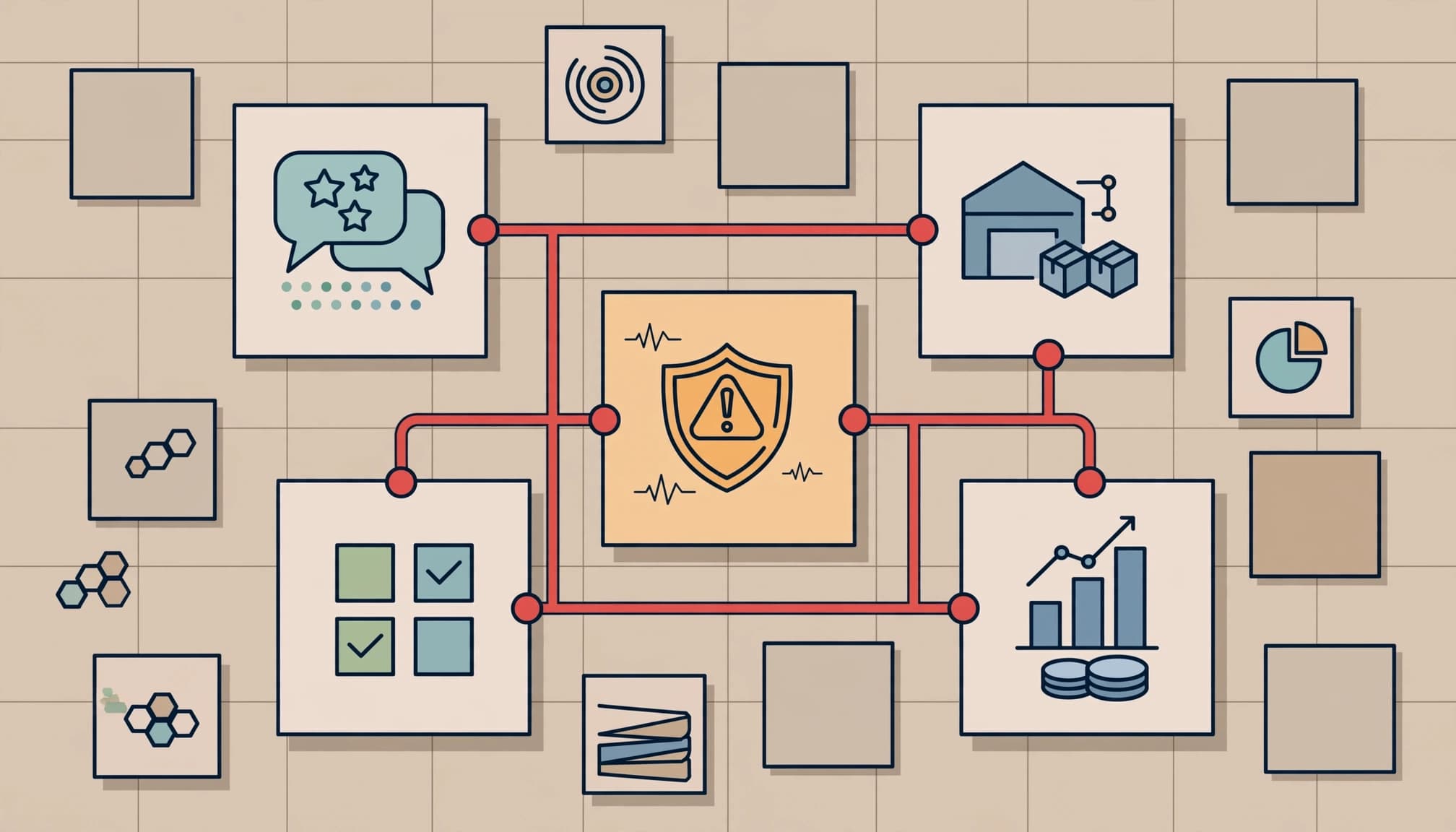
Your measurement should point to a cause, not only a number. Four problems appear often in growing companies.
Fragmented information and weak data quality
When sales lives in the CRM, operations works from spreadsheets, and finance has its own version of the numbers, every decision begins with reconciliation. That is costly and slow.
Measure how long it takes to produce a reliable KPI report. Track duplicate records, disputed metrics, missing data owners, manual data entry, and exports. If an executive report requires days of cleanup, you have a data governance framework problem before you have an analytics problem.
Centralized information doesn’t mean every data point belongs in one tool. It means information systems give leaders agreed metrics, their source, their freshness, and clear accountability.
Workflow friction and tool sprawl
Manual routing, email approvals, repeated data entry, and unclear exceptions make ordinary decisions drag. Well-designed automation processes can improve operational efficiency, but first measure those handoffs.
Track manual touches, request-routing time, exception volume, and rework. Also look at tool sprawl and shadow IT. Adding cloud-based tools may solve one department’s pain while creating longer approval paths, more vendor dependencies, and additional technology debt.
Customer data deserves the same discipline. Support themes, churn reasons, and product feedback should inform customer satisfaction measurement and reach the people who can act. Useful analytics examples tied to customer signals can help you think beyond a generic dashboard.
Use real-time data and forecasting with restraint
Real-time data is useful when it changes what you do next. It is not useful because it updates every minute.
Measure the usefulness of alerts
For each operational or cyber alert, ask four questions. Was the information accurate? Did it reach a named owner? Did it produce an action? Did that action improve the outcome?
Track alert-to-action time, false alarms, ignored alerts, and the number of reports leaders no longer trust. This gives you a more honest view than counting dashboards.
Business analytics can include statistical analysis, predictive modeling, data mining, and machine learning, as outlined in this business analytics overview. These analytical tools help test assumptions and surface patterns. Executives still set risk appetite and customer commitments.
Use forecasts to prepare, not pretend
Predictive tools can help you spot demand shifts, capacity pressure, cash exposure, or likely project delays that could affect customer expectations. Compare forecasts with actual results over time to support strategic thinking, not automatic approval.
Document the threshold that triggers a change in staffing, inventory, pricing, delivery, or risk controls. Then measure how quickly leaders respond when that threshold is reached.
Do not confuse a model with certainty. Your executive team still decides what risk to accept, what investment can wait, and which customer commitments matter most.
For AI governance, apply the same test. An AI opportunity assessment should identify the decision it improves, the data it uses, the owner accountable for it, and the control needed before adoption.
Create a leadership rhythm around decisions
Technology governance for CEOs should reduce noise, not create another committee. The point is a predictable rhythm that improves decision-making through timely, accountable choices before delay becomes expensive.
Review the decision queue every week
A short weekly review can cover decisions that are blocked, overdue, or approaching a material deadline. Ask what changed, what is at risk, who owns the next action, and what leadership must decide.
Keep a decision queue separate from project status. Projects can look green while a vendor dependency, security exception, or funding choice remains unresolved.
For stronger team collaboration, give every queue item one owner, one blocker, one next action, and one escalation path.
A practical executive technology leadership approach connects that queue to material risks, vendor dependencies, spend watchpoints, and the next decisions leaders need to make.
Give the board clear signals
Technology governance for boards should focus on exposure, tradeoffs, progress, and unresolved choices. Board-ready reporting should support strategic planning, not bury directors in ticket counts or architecture diagrams.
A 12-month roadmap should sequence initiatives by business outcome, risk reduction, dependency, funding, and the evidence required to revisit the plan.
A board-ready risk summary can show cyber risk appetite, material vendors, technology spend optimization work, major delivery risks, and decisions requiring oversight. Cyber risk reporting to the board is stronger when it names ownership and a response date.
This is also where vendor management matters. Track vendor due diligence, contract concentration, performance issues, renewal dates, and vendor offboarding plans. A supplier shouldn’t be setting your business technology strategy by default.
Close the leadership gap before hiring by title
When nobody owns technology priorities, the CEO, COO, CFO, vendors, and technical team all fill the gap. Technology decision speed slows because everyone has a view, but nobody has the mandate to close the issue.
Name one executive as accountable for technology priorities. The technology lead should own recommendations and delivery coordination, while finance and risk leaders retain defined review rights. Set escalation deadlines so unresolved business decisions cannot remain open indefinitely.
The question is not whether you need a more impressive title. It is whether you need stronger ownership, a business-aligned technology strategy, and a clear operating rhythm for decision-making now. Centralized information, operational metrics, and human judgment should support that rhythm without replacing accountability.
Build a short roadmap leaders can use
A 12-month technology roadmap should show the few decisions that shape growth, risk, cost, and execution. It should name what gets done first, what waits, and what evidence will change the plan.
A one-page technology strategy is often more useful than a long roadmap template nobody revisits. Include the business outcome, accountable owner, decision deadline, delivery owner, spend range, risk, dependency, and review date. This gives leaders the context needed for strategic planning and better risk management.
Use real-time data and data-backed insights where they clarify tradeoffs. Keep the final call with the accountable executive, especially when predictive tools or analytical tools produce conflicting signals.
Use measurable criteria before hiring permanently
A full-time technology executive may be justified when material choices remain unresolved across multiple review cycles. It may also be time to hire when the company has a sustained roadmap and budget portfolio, or when technology risk requires permanent executive ownership.
Track these conditions alongside operational efficiency, team collaboration, and business growth. A hiring decision should reflect a recurring governance need, not a single delayed project or temporary backlog.
If outside support is considered, document the gap it must address and the decision rights it will hold. Options such as fractional CTO services should not replace internal accountability, finance review, or risk ownership.
The right operating model gives leaders a clearer view of priorities and dependencies. It also helps teams respond to customer expectations without allowing automation processes or cloud-based tools to outrun sound judgment.
Use this framework before requesting Get an Executive Technology Clarity Check, so any next step addresses a defined ownership or governance gap.
Frequently Asked Questions
How fast should a technology decision be?
It depends on the consequence. A customer-impacting outage may need a decision within hours, especially when customer expectations are at risk. A core platform replacement may need weeks of evidence, options, and executive review.
Set a target for each decision category. Use real-time data, centralized information, and operational metrics to measure exceptions. A decision that takes longer than planned should have a visible reason, owner, and revised date.
Can faster decisions create more risk?
Yes. Speed without evidence can create costly reversals, weak vendor choices, and security exceptions nobody understands later. Good decision-making requires risk management, data-backed insights, and human judgment.
Measure reopened decisions, incidents, missed outcomes, and risk accepted without documented rationale. Predictive tools and automation processes can support decisions, but they shouldn’t replace accountability or careful review.
When is a full-time CTO the right answer?
A full-time CTO may be right when technology is a permanent operating function with recurring responsibility for the roadmap, budget, architecture, security oversight, team leadership, and executive accountability. The role should support strategic planning, business growth, and operational efficiency.
When that scope isn’t permanent, assign an existing executive sponsor and a named technology owner. Document their authority, review dates, and hiring triggers so ownership remains clear as business decisions become more complex.
The right model depends on the decisions that need ownership now, the governance required for future growth, and the point at which technology leadership becomes a permanent operating need.
Make the next decision easier
Technology should make your business easier to run. When decisions stall, the issue is usually not effort. It is weak visibility, unclear authority, or a backlog of tradeoffs nobody has brought into the open.
Measure technology decision speed where it matters most. Name the owner. Track the blocker. Review the tradeoff before growth, cost, or risk makes the decision for you.