

Cyber insurance gets more expensive when the carrier cannot see what is true. CEOs, COOs, founders, CFOs, and board members often ask how to lower costs without creating a coverage problem they discover too late.
The central management question is how to reduce cyber insurance premium costs without relying on promises. Insurers want evidence that controls operate as part of a managed cybersecurity program, not as isolated tools. For small and medium-sized businesses, limited internal resources make clear evidence ownership especially important.
Documented evidence makes your security posture easier for a carrier to evaluate and shows how you manage cyber risk. Pricing still varies by carrier, industry, company size, claims history, policy terms, and risk profile. Better evidence can support stronger terms, but it doesn’t guarantee a discount. To lower renewal costs, reduce underwriting uncertainty before the renewal application goes out.
Key Takeaways for Lowering Your Cyber Insurance Premium
Review last year’s application and complete a risk assessment of the current operating environment before answering a new questionnaire. Then build dated evidence that proves multi-factor authentication, endpoint detection and response (EDR), backup recovery, patching, vulnerability management, and incident response work in practice.
- Show which users, systems, and locations are covered by MFA and EDR, not just that tools were purchased.
- Test isolated data backups through recovery, and preserve the results with dates, owners, and recovery times.
- Document patches, overdue exceptions, vulnerability findings, and remediation ownership.
- Exercise the incident response plan and record what worked, what failed, and what changed afterward.
- Disclose gaps honestly, with a named owner, target date, and interim risk treatment.
Strong evidence can improve underwriting confidence and may support better pricing or more favorable insurance coverage. A missing control may affect the premium, exclusions, sublimits, retention, or insurability, but not necessarily all of them.
A control isn’t complete until it has clear scope, ownership, current records, and recent testing. Small and medium-sized businesses may need to assign one control owner clearly, even when responsibilities are shared. Your cybersecurity program doesn’t need to claim a perfect environment. It needs to show a credible plan for reducing risk.
How to Cut Your Cyber Insurance Premium With Evidence, Not Promises
A vague answer such as “we use MFA” creates more questions than it answers. Underwriter scrutiny increases when an answer doesn’t identify covered users, systems, exceptions, owners, or reporting dates.
Underwriters increasingly evaluate controls that are enforced, monitored, tested, and owned. Their risk assessment considers operational, financial, and technology exposure, including whether cyber attacks involving stolen credentials, unmanaged devices, failed backups, or delayed patches could cause business interruption across revenue, payroll, customer delivery, or financial reporting.
Two similar companies can present very different security posture profiles. One submits policy statements and tool screenshots. The other provides evidence from its cybersecurity program, including network security coverage, full MFA for email and administrators, healthy EDR agents, a recent backup restore test, and an incident-response exercise with assigned follow-up work.
The second company hasn’t eliminated its cyber risk. It has made its exposure easier to understand, including the likelihood and potential impact of a data breach.
An underwriter cannot give credit for a control that management cannot scope, prove, and explain.
Documented controls may improve pricing or insurability, but discounts aren’t automatic. Cyber liability insurance transfers financial risk subject to policy terms, but it doesn’t validate unsupported application answers. Carriers set their own thresholds. A practical cyber insurance renewal checklist helps organize evidence, but it doesn’t replace broker, counsel, or management review.
Build the Evidence Underwriters Need to See
Create one dated renewal evidence packet that makes your cybersecurity program easy to verify. Tie every questionnaire answer to a control owner, scope, known exception, evidence location, open issue, and decision date.
“Most systems” is rarely a helpful answer. Your scope should include business units, remote workers, cloud platforms, acquired systems, contractors, third-party vendors, major applications, administrators, and temporary devices. Map network segmentation across these areas so underwriters can see how exposure is limited. The Indiana Cybersecurity Hub’s underwriting guidance also makes clear that reasonable controls span many categories, not one security product.

Prove MFA Protects Your Highest-Risk Access Paths
Multi-factor authentication (MFA) should cover email, Microsoft 365 or Google Workspace, VPN and remote access, privileged accounts, cloud administration, finance systems, and backup administration. Password rules alone don’t stop an attacker using a stolen password.
For privileged and remote access, phishing-resistant methods may matter depending on the carrier and your exposure. A zero trust architecture can support least privilege and segmented access, but the label alone won’t earn underwriting credit. Preserve current exports from Microsoft Entra ID, Okta, Duo, or Google Admin that show enforcement and coverage.
Be direct about service accounts, contractors, shared accounts, legacy applications, and approved exceptions. Each exception should include a business reason, compensating control, accountable owner, and target date. Network segmentation should isolate privileged and administrative paths where practical. Unsupported “yes” answers are harder to defend than a clear, funded “not yet.”
Show EDR Coverage and Real Alert Response
Basic antivirus isn’t automatically the same as EDR. Your evidence should show endpoint protection, deployment, and agent health across laptops, desktops, servers, virtual machines, administrator devices, and remote or temporary endpoints.
Installation reports are only the start. Document who reviews alerts, how investigations are escalated, expected response times, and after-hours coverage. Your incident response plan should identify containment authority, notification triggers, and follow-up ownership. If an outsourced MDR provider monitors the environment, clarify who can contain a threat and when the provider must notify management.
Keep coverage dashboards, alert records, escalation procedures, provider contracts, and examples of closed investigations. Show how the team contains cyber attacks before they affect critical operations.
Turn Backups Into Proven Recovery Capability
A successful backup job proves data was copied. It doesn’t prove you can recover operations. Insurers want evidence that data backups are isolated, immutable, offline-capable, or otherwise protected from the same credentials and ransomware attacks.
The 3-2-1 approach is a useful baseline: keep multiple copies, on different media, with one copy offsite. Your recovery design still needs to match the business. Record restore-test dates, systems restored, outcomes, recovery times, data-loss limits, and unresolved failures.
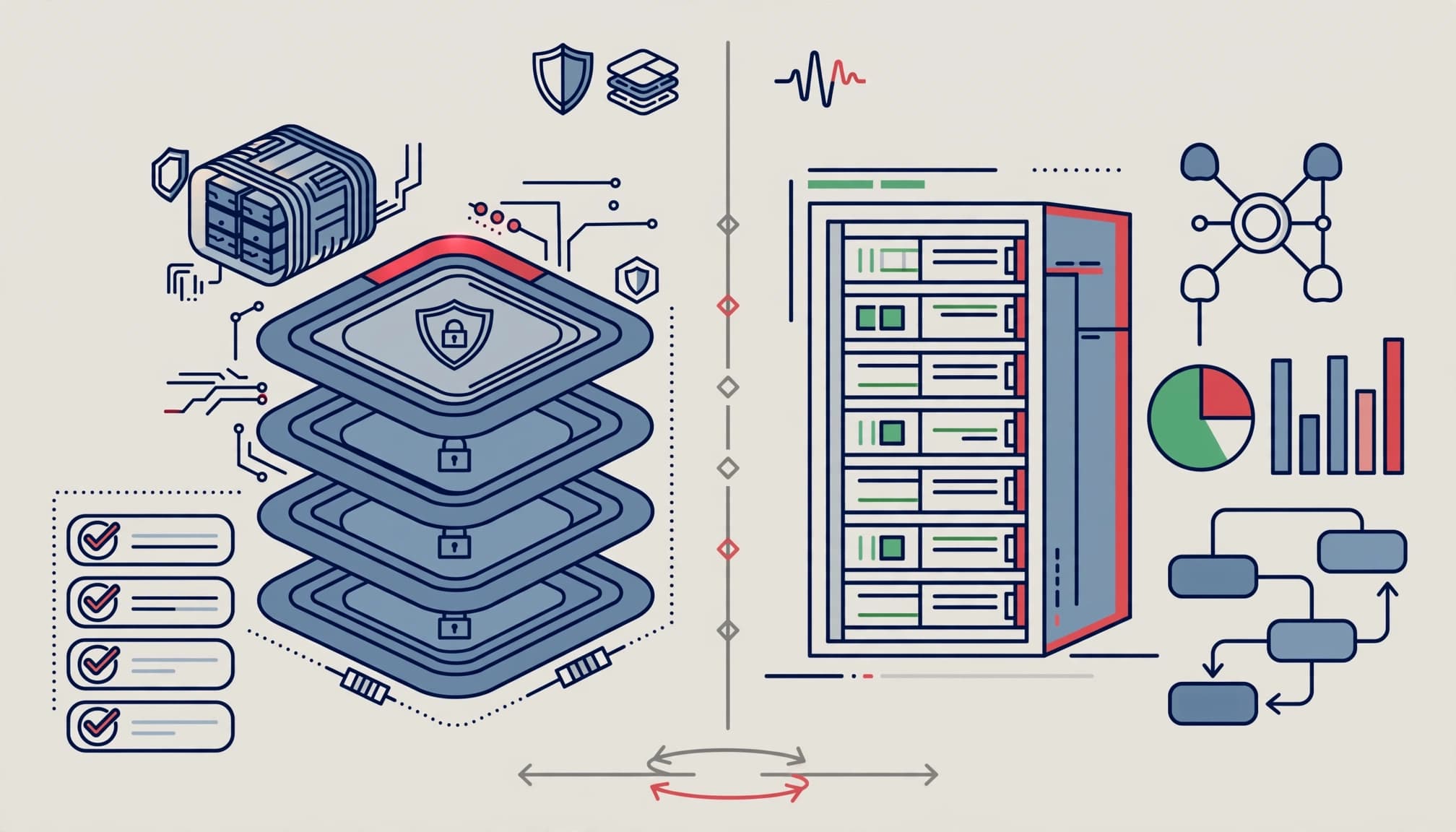
Network segmentation should protect backup-management systems from ordinary user and administrator paths. Recovery priorities should follow the systems that drive revenue, customers, payroll, and operations. Recent renewal evidence guidance also emphasizes that protected backups and recorded restore tests carry more weight than a green backup dashboard.
Document Patching, Vulnerability Management, and Email Security
Maintain a current systems inventory, including internet-facing assets, critical applications, unsupported software, patch owners, vulnerability scans, remediation tickets, and overdue exceptions. Keep dated records of software updates and retest results. Critical and exposed vulnerabilities often need faster action than ordinary findings, based on your risk and carrier requirements.
Use CISA’s Known Exploited Vulnerabilities catalog as one input when prioritizing work. Penetration testing can reveal attack paths that routine vulnerability scans miss, but neither replaces remediation and retesting. Keep exception approvals tied to a business reason, compensating control, accountable owner, and target date.
Include email security settings, controls that reduce phishing attacks, security awareness training, privileged-access controls, and network segmentation around internet-facing or vulnerable assets. These controls help show that identity, endpoint, recovery, and vulnerability protections operate as one cybersecurity program. Together, they support a broader network security model rather than disconnected projects.
Use the Cyber Insurance Renewal to Negotiate Better Terms
Start 90 to 120 days before renewal. That gives you time to test controls, close high-impact gaps, and compare insurance coverage without rushed representations.
Pull last year’s application, the current cyber liability policy, endorsements, renewal correspondence, claims history, and material change notices. Review any data breach, privacy obligation, or prior incident. Compare every answer with current operating reality. New cloud services, acquisitions, remote workers, vendors, data types, and administrators can change your exposure.
Then review the cyber liability insurance policy, not only the questionnaire. Compare limits, retentions, sublimits, exclusions, conditions, and regulatory compliance requirements. Review privacy, breach-notification, sector-specific, and contractual obligations.
Read the policy terms carefully. Review business interruption definitions, ransomware attacks and cyber extortion conditions, waiting periods, dependent-vendor coverage, approved incident-response providers, consent requirements, notification deadlines, and prior-acts language. Pay particular attention to third-party vendors and contractual risk allocation.
A lower premium isn’t a win if the limits don’t match the business. It may also be unacceptable when the business interruption definition doesn’t match its actual outage exposure.
Bring your broker in early. Ask whether each gap affects pricing, coverage, a warranty, or all three. A renewal evidence checklist can help organize the discussion, but your broker and counsel should interpret the wording that applies to your policy.
Management must approve representations about controls, incidents, recovery, and business risk. That includes statements about the company’s cybersecurity program. A vendor can provide technical input, but it shouldn’t make business representations on management’s behalf.
Buyer and M&A lens: Transaction diligence should cover technology and IT infrastructure, data privacy and security, cybersecurity controls, security incidents and data breaches, intellectual property ownership, open-source software compliance, AI use and governance, third-party vendors, regulatory compliance, and cyber insurance. Review available insurance coverage and coordinate it with any representation and warranty insurance (RWI).
Representations and warranties are factual statements made at signing or closing. Exceptions belong in disclosure schedules and remain subject to negotiated materiality qualifiers. Covenants are ongoing obligations between signing and closing, such as maintaining the cybersecurity program, reporting new incidents, preserving insurance, and completing agreed remediation.
Closing conditions are prerequisites to the buyer’s obligation to close. They may include specified diligence materials, required consents, or resolution of a defined critical cyber issue. They aren’t merely another representation. Indemnification allocates post-closing losses through negotiated caps, baskets, exclusions, and claim procedures.
Treat survival periods separately from the policy period. Escrow or RWI may affect collection and negotiation, but neither cures inadequate diligence or inaccurate disclosures. An insurance application representation isn’t automatically a transaction warranty. Counsel should review materiality qualifiers and any policy warranty or representation language.
Make Security Improvements Visible to Leadership and the Board
Executive technology leadership turns technical evidence into a board-level view of security posture and exposure. Directors govern cyber risk appetite and remediation priorities, while technical leaders produce and interpret the evidence.
Keep the dashboard short. Show MFA and EDR coverage, critical vulnerabilities, backup restore results, incident-response exercise findings, open exceptions, owners, deadlines, and decisions required. Include network segmentation exceptions and material penetration testing findings, with their remediation status. This helps the board review a cybersecurity program, not isolated tools, while summarizing network security without unnecessary implementation detail.
If a revenue-critical platform failed recovery testing, say so. Explain how a network segmentation weakness could enable lateral movement and business interruption. Identify the executive owner, interim control, and decision required. A zero trust architecture can also provide a strategic model for identity, least privilege, and access decisions, but it isn’t a mandatory label or guaranteed insurance discount.
That is the foundation of board-ready cybersecurity reporting. Directors need risks they can govern, not firewall settings or a list of tool names.
A fractional CTO, fractional CISO, virtual CISO, or interim CISO can help when nobody owns the full picture. For small and medium-sized businesses, fractional CTO services and interim CTO services can add governance capacity without replacing management accountability. They can close a technology leadership gap, improve reporting, and keep remediation tied to business priorities.
If ownership, risk, and technology strategy still feel scattered, Get an Executive Technology Clarity Check. The goal is clearer visibility, stronger accountability, and a practical next step.
Avoid the Evidence Gaps That Can Cost You Savings
Common renewal problems are predictable: claiming complete MFA while exceptions remain, showing EDR licenses without active coverage, relying on backup dashboards without restore tests, submitting an untested incident response plan, missing patch records, failing to document a data breach or phishing attacks, and weak vendor oversight. Incomplete incident history, including cyber attacks, can affect underwriting and later claim discussions.
Inaccurate or incomplete application answers can create disputes or restrictive terms. They can also affect insurance coverage and create claim issues, depending on policy language, applicable law, and the facts. Materiality qualifiers don’t make a knowingly inaccurate answer safe. Management should distinguish current facts from a remediation commitment or future covenant.
Use a simple format for every gap: current security controls, affected systems, business exposure, compensating measures, named owner, and target date. Small and medium-sized businesses still need documented ownership and escalation, even with limited staff.
An honest “not yet” with a funded remediation plan is safer than an unsupported “yes.” Preserve failed-test records, exception approvals, incident timelines, and corrective-action evidence. Together, they show active cybersecurity program governance when paired with visible follow-up work.
Questions Leaders Often Ask
Can an outsourced provider handle all the insurance evidence?
An outsourced provider can supply reports, contracts, alert records, and technical evidence. Management still owns application representations, incident history, accepted risk, vendor oversight, and remediation decisions.
Ask the provider to state what it covers, what it excludes, and who responds after hours. This keeps outsourced services from becoming a blind spot.
Does cyber insurance replace business continuity planning?
No. Insurance coverage may respond to defined losses, but it doesn’t restore systems, answer customer calls, process payroll, or decide which operations restart first.
Your business continuity planning, disaster recovery planning, and incident response readiness determine how the company operates under pressure. Recovery for business interruption also depends on the policy definition, waiting period, sublimits, proof of loss, and applicable conditions. Insurance is one part of that wider plan.
Better Evidence Creates Better Decisions
You improve renewal outcomes by reducing uncertainty, not by making unsupported promises. Scope the environment. Prove identity and endpoint controls. Protect and test recovery against the operations and revenue exposed to business interruption. Manage vulnerabilities. Exercise incident response. Review policy terms. Present open gaps with owners and dates, connecting control evidence to cyber risk and business impact.
Carriers set pricing and policy terms differently, so strong evidence improves your position but doesn’t guarantee broader insurance coverage, better terms, or a discount.
The same renewal packet supports better insurance discussions while also improving technology risk management and enabling more confident executive decisions under pressure.