
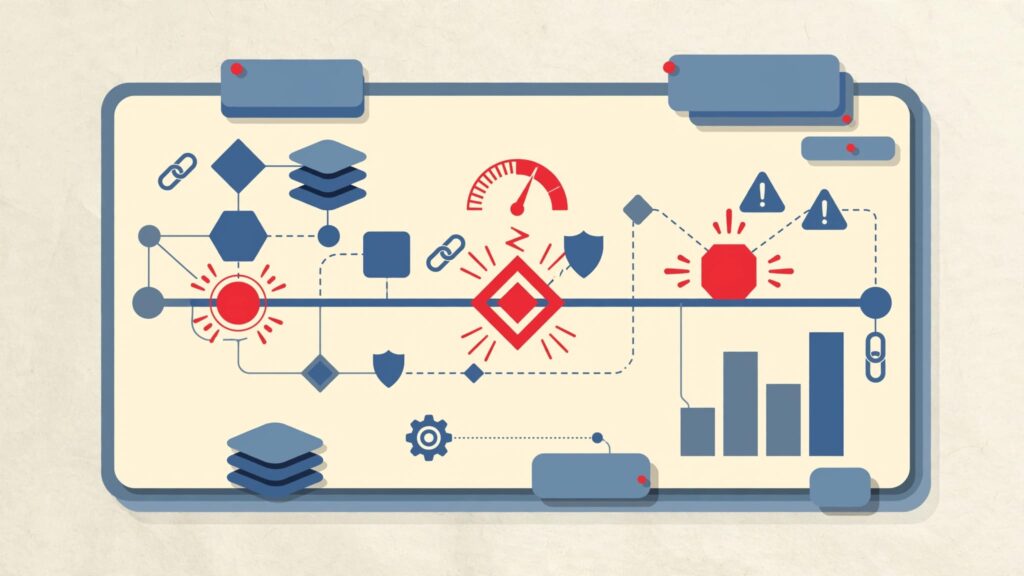
A polished timeline can hide an expensive assumption: everyone needed to deliver it is available, funded, and working toward the same goal. Approving a technology roadmap on that basis can put digital transformation at risk when the first serious disruption exposes decisions nobody made.
Your job isn’t to judge every technical detail. It’s to test whether the plan gives you clearer visibility into business value, costs, dependencies, and risk. Start with what you’re being asked to approve.
Key Takeaways
- A technology roadmap should connect business goals and strategic objectives to funded work, named owners, dependencies, and decision dates.
- Stress-test technology initiatives in the technology roadmap against budget cuts, vendor delays, limited capacity, and operational or cyber incidents.
- Approve near-term commitments only when the evidence is strong. Keep uncertain later work subject to clear decision gates.
- A roadmap stays useful when leaders review changes, make tradeoffs, and report material risk in plain business terms.
Know what kind of plan is in front of you
A technology roadmap is a time-based plan for the capabilities your business needs and the decisions required to build them. For coordinated digital transformation, it should help you choose what to fund, what to defer, and what risk to address first.
Match the roadmap to the decision
An IT systems roadmap focuses on applications, infrastructure, upgrades, and support. Product roadmaps focus on what customers will receive. An architecture roadmap addresses software architecture and how systems and data fit together. An enterprise IT roadmap connects those plans across the company.
You may need detail from each. For approval, ask for one executive view showing where they meet. Gantt charts can show sequencing, but the view should also clarify outcomes, ownership, and risk. A system replacement can affect customer service, data quality, security, and staff workload at the same time.
Separate strategy from the project queue
A one-page technology strategy should provide a strategic framework for the few strategic objectives your business needs most. Strategic planning turns those priorities into a 12-month technology roadmap showing the sequence, cost, ownership, and milestones for supporting work.
Be wary when the roadmap is mostly product names and installation dates. A vendor proposal can inform the plan, but it shouldn’t set your priorities. Technology roadmap prioritization and governance start with the decisions your business needs to make.
Tie every major initiative to a business result
“Replace the CRM” tells you what someone wants to buy. It doesn’t explain how the change supports business goals and strategic objectives, why the business should pay for it, or how you’ll know it worked.
Ask for a baseline and an outcome
Translate each major item in the technology roadmap into a measurable change. If the goal is faster quote-to-cash, document the current state, name the process owner, and set an expected improvement. If digital transformation is meant to improve reporting, identify which decision is slow because the data can’t be trusted and which system or data change in the architecture roadmap would help.
The performance metrics don’t have to be perfect on day one. They do need a credible starting point and an accountable business owner. Without those, technology ROI becomes a story told after the money is spent.
Name two kinds of ownership
Cross-functional collaboration depends on clear ownership. The technology lead may own delivery, while a sales, finance, or operations leader owns the business result. Put both names on the plan.
Then ask who can approve scope changes, accept risk, and resolve a conflict between departments. A decision rights map keeps those calls with the right executives. Without it, a delayed project becomes a series of meetings that never quite produces a decision.

Pressure-test the sequence before you fund it
The most useful stress test for a technology roadmap asks what happens when conditions change. A plan that works only at full budget, with every hire made on time, gives you little control.
Run three ordinary disruptions
During project planning, ask the team to walk through a hiring delay, a tighter spending limit, and a critical vendor missing its delivery date. Project management updates should show how dates and owners change. Which key milestones move, and which customer or operating commitments are affected? What technology initiatives can pause safely?
You should see protected priorities and explicit tradeoffs. Resource allocation should reflect those choices as funding or staffing shifts. If every initiative remains “critical” under every scenario, nobody has prioritized the work.
A milestone isn’t ready for approval when its success depends on an unapproved hire, an unsigned contract, or a system nobody has assessed.
Follow the dependencies backward
Take the most important promised outcome and trace what must happen first. Does it require clean customer data, an integration, a contract renewal, and staff training? Trace those prerequisites across systems in the architecture roadmap, then put them on the roadmap with owners and dates.
Gantt charts can make the sequence visible, but they don’t validate capacity or dependencies.
Check whether several projects rely on the same scarce people. A single data lead or operations manager can become the constraint across an otherwise credible plan. Ask to see that person’s workload, not just the dates assigned to the projects.
Test the risks that could stop delivery
Risk management belongs in the roadmap alongside delivery. Executives should identify material exposure, assign an owner, and agree how it gets escalated. A security project scheduled for later may depend on a system replacement planned now. Check that the architecture roadmap accounts for the dependency. A critical vendor may sit behind several business processes.
Find the single points of failure
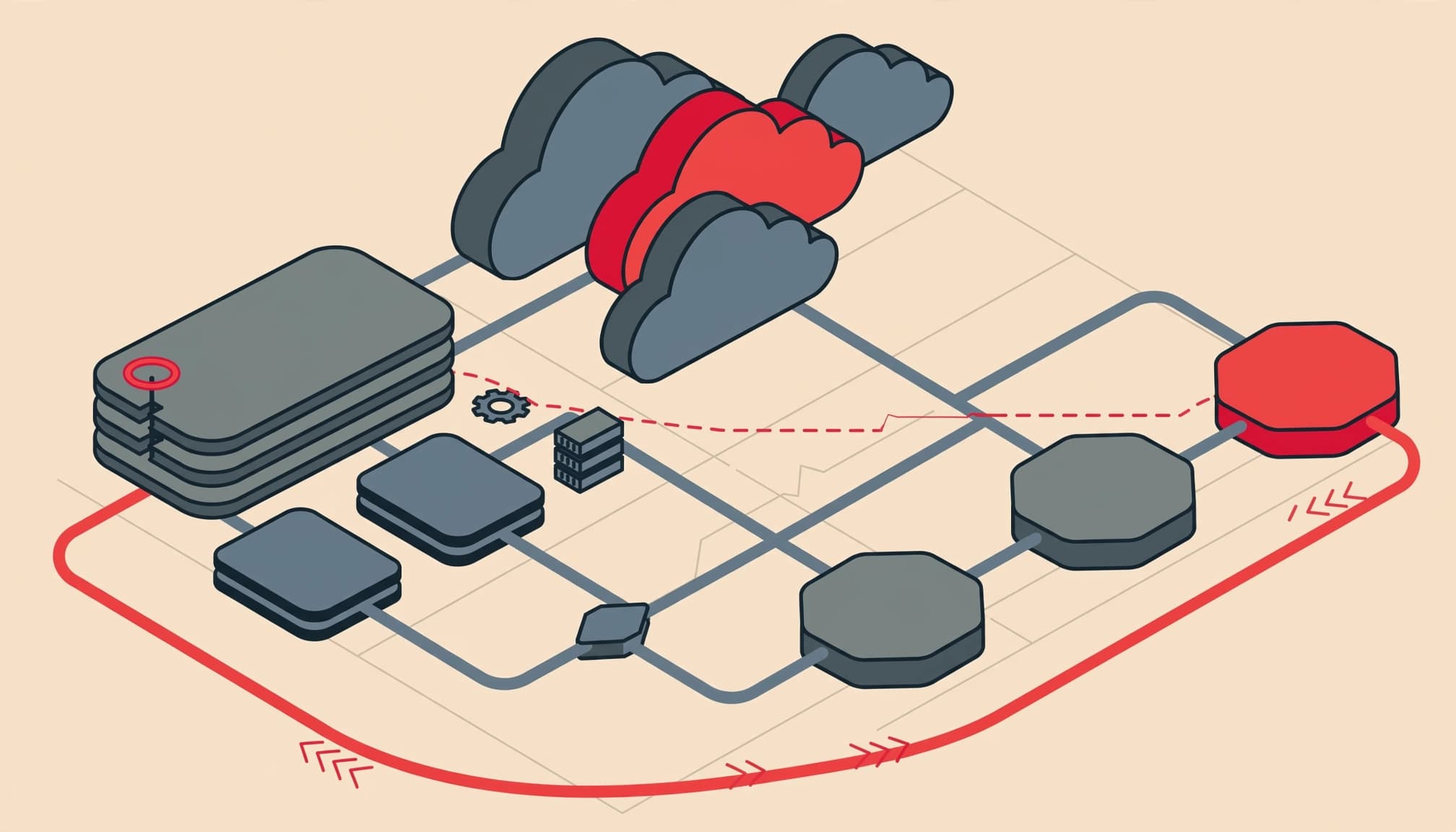
Request a current inventory of the technology infrastructure supporting revenue, payroll, customer service, and sensitive data. Follow those services to their vendors, integrations, and recovery arrangements. Review the software architecture to see how system design and integrations create dependencies.
CISA’s guidance on critical assets and dependencies calls for mapping what matters, assessing risks, exercising plans, and improving them. Apply that test to the roadmap. If a vendor goes down, who calls whom, and which business process stops? Use these findings to decide whether the technology roadmap is safe to approve.
Ask for evidence, not assurance
Review the status of privileged access, multi-factor authentication, backup recovery tests, and incident response exercises for critical systems. A written recovery plan that nobody has tested remains an assumption.
NIST’s Cybersecurity Framework 2.0 puts governance alongside identifying, protecting, detecting, responding, and recovering. That matters at approval time. Someone must own the risk, know whether it exceeds your agreed tolerance, and bring you a decision when it does.
For material vendors, ask about security terms, incident notification, access removal, and a workable exit path. Vendor due diligence is incomplete if the supplier is indispensable but nobody can explain how the business would operate without it.
Check whether the money and people are real
A technology roadmap can have sound priorities and still be undeliverable. Costs often sit in different budgets, while the same employees are expected to run daily operations and lead major change.
Fund the full cost of the outcome
Ask finance to separate implementation costs from licenses, integration, training, support, and ongoing security work. Show when existing contracts expire and new spending starts. This makes tool overlap, renewal pressure, and opportunities for cost efficiency visible.
For a major digital transformation initiative, compare expected business value with the full cost and the cost of delaying it. Where the case is uncertain, fund a limited assessment or pilot with a decision date before approving a wider rollout. Apply the same discipline to proposed AI tools, including data handling and vendor review.
Protect capacity for existing problems
Technical debt competes with new projects for resource allocation, while the same people must keep operations running. Ask which recurring failures, manual workarounds, or aging integrations will slow the plan if left alone.
A realistic roadmap reserves capacity for those issues and for operations. It may also retire duplicate applications rather than add another platform. Cost reduction is useful only when it doesn’t leave you with weaker controls or more manual work elsewhere.
Make approval part of an operating rhythm
Approving a technology roadmap won’t settle every choice for the year. Build a process for changing the plan while keeping strategic planning aligned with business goals.
Set review dates and change triggers
A practical 12-month roadmap can commit in detail to the next 90 days, outline later work, and flag decisions that need more evidence. Review delivery performance metrics and risk monthly with accountable executives, using project management to track escalations. Revisit priorities with the broader leadership team each quarter to support cross-functional collaboration.
Also name events that trigger an earlier review: a major contract change, an acquisition, an incident, a missed milestone, a material budget shift, or a change to the architecture roadmap. NIST’s guidance on cybersecurity oversight supports regular updates and checkpoints, without prescribing one cadence for every business. Agile methodologies can help teams adapt delivery between checkpoints, but they don’t replace approval gates.
Report the change, not just the status
Your board-ready view should show the outcome at stake, what changed, who owns the response, and what decision is needed. Gantt charts can show milestone changes, but focus reporting on material cyber and vendor exposure, major spending changes, and overdue work affecting operations.
NIST’s guidance on governance and risk tolerance makes risk management roles and decisions part of management oversight. Board members don’t need a technical activity log. They need to know when exposure has moved beyond the risk the business agreed to carry.
Give the roadmap a clear approval decision
You don’t have to accept or reject the whole technology roadmap as one package. Separate work ready to fund from work that needs a condition met first.
| Decision | What you should expect to see |
|---|---|
| Approve | A business outcome tied to agreed business goals and strategic objectives, accountable owners, full cost, capacity, dependencies, and evidence for near-term key milestones. |
| Approve conditionally | A clear gap, the evidence needed to close it, an owner, and a decision date. |
| Defer | Weak business value, an unresolved dependency, missing capacity, or risk nobody is authorized to accept. |
Record what will stop or move if a new priority enters the plan. That makes resource allocation explicit and protects your team from an endless queue of commitments without tradeoffs.
If ownership, spending, and risk are still hard to see, Get an Executive Technology Clarity Check before committing to another long list of projects.
Frequently asked questions
Do I need a technology roadmap if I have an IT plan?
Usually, yes. An IT plan may cover systems maintenance, upgrades, and support. Your roadmap should connect that work to business outcomes, cross-functional dependencies, investment choices, and risk. A CEO needs to see how the pieces affect one another before approving major spending.
Who should challenge the roadmap before approval?
Bring in finance, operations, the leaders accountable for business results, and the person responsible for technology delivery. Include security and legal input when data, contracts, or regulatory duties are affected. An interim or fractional CTO can help fill a technology leadership gap, but management still owns the business decisions.
What if the plan will change within months?
It should change when the evidence changes. Keep near-term commitments firm and later investments subject to review. Require each material change to show its effect on cost, capacity, outcomes, and risk. That gives you flexibility without returning to scattered decisions.
Approve the decisions, not the slide deck
A credible roadmap lets you see what you’re buying, what could stop it, and who will act when conditions change. That’s the standard to use before you sign off.
When the next delay or board question arrives, you should be able to find the owner, the tradeoff, and the next decision. That clarity is what makes the plan worth approving.