
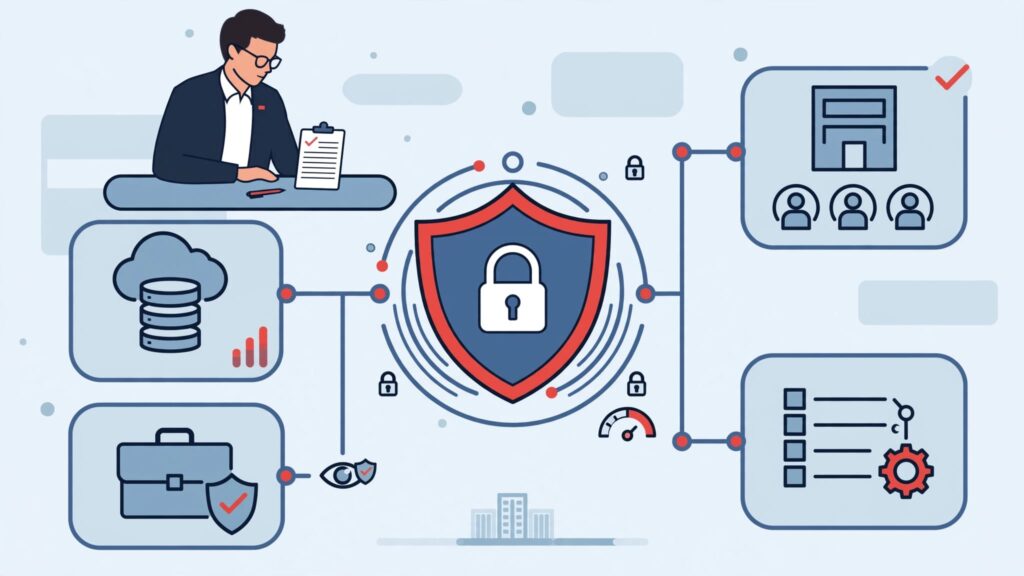
Evaluate customer identity systems against your expansion plans: enterprise access, tenant isolation, privacy obligations, peak demand, and total operating cost. Before you approve new markets or larger customers, require evidence that those controls work.
A weak identity layer can stall deals, expose customer data, and turn a launch into a support problem. Start with business outcomes, then require your team to prove the system supports them.
Key takeaways for SaaS expansion
- Evaluate customer identity against the customers, markets, and service commitments you plan to support.
- Require working evidence of tenant isolation, secure recovery, and privacy controls before approving expansion.
- Compare full operating costs, migration effort, and vendor dependence alongside registration and login features.
What customer identity systems must control
Customer identity and access management (CIAM) covers registration, authentication, customer profiles, consent, and account access. Your evaluation should also cover authorization integration, fraud response, and self-service account management.
Employee identity tools solve a related but different problem.
| Evaluation area | Customer identity | Workforce IAM |
|---|---|---|
| Population | Potentially millions of external identities | Typically thousands of known employees |
| Demand | Unpredictable traffic and signup spikes | More predictable workforce activity |
| Experience | Conversion, accessibility, and recovery | Employee productivity and policy enforcement |
| Privacy | Customer preferences and consent records | Employment-related access governance |
CIAM vs IAM comes down to who each system serves: customer identity serves external users, while workforce IAM serves employees. Customer friction can directly affect revenue.
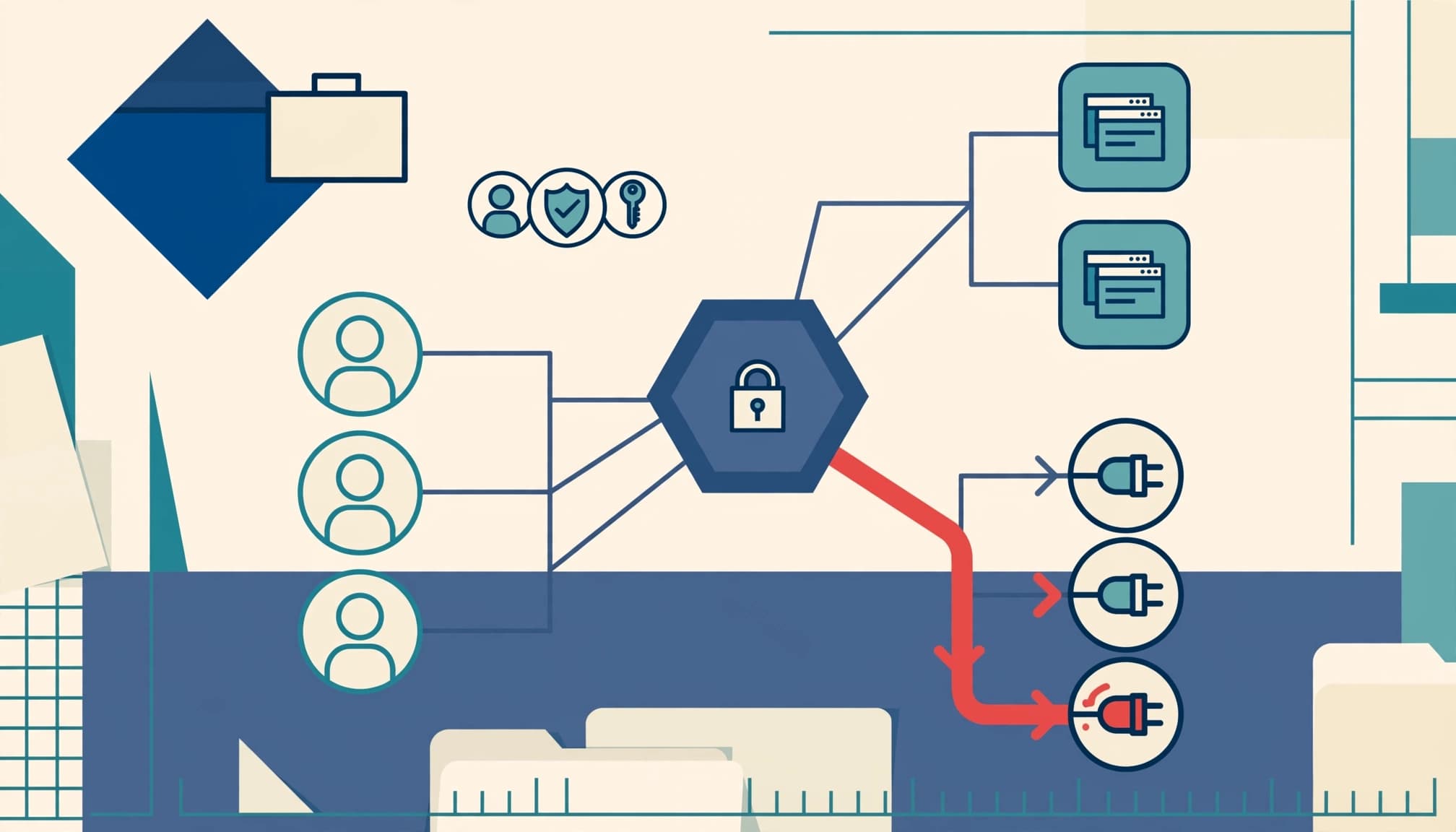
Require APIs and SDKs that fit your product architecture. OAuth 2.0 handles delegated authorization; OpenID Connect adds authentication. SAML primarily supports enterprise single sign-on integrations.
Evaluate scalability against concurrent logins and registration bursts, not just stored-account capacity. A platform that holds millions of identities can still fail during a launch.
Also map the identity boundary: which decisions belong to CIAM, which belong to your application, and who owns failures between them.
Protect conversion without weakening account security
Your evaluation should measure both successful customer access and protection against account takeover.
Reduce registration friction
Single sign-on and social login can reduce registration steps. However, you still need clear account-linking rules and recovery paths.
Baymard’s cart abandonment research identifies mandatory account creation as a reason shoppers abandon purchases. For SaaS, measure signup completion and activation by route, including social login, rather than borrowing retail conversion assumptions.
Progressive profiling collects information over several visits. In commerce, that can mean requesting an email first and a shipping address at checkout. For SaaS, defer optional profile fields until you need them.
Require stronger authentication and recovery
Curity’s overview citing Liminal’s research reports almost five million successful phishing attacks in 2023, up 6% over 2022. Liminal put the average cost per phishing event at $5,285.
SMS-based multi-factor authentication remains vulnerable to SS7 signaling exploits and SIM-swapping. FIDO2 passkeys and hardware security keys support passwordless authentication and provide phishing-resistant protection, consistent with CISA’s MFA guidance.
Adaptive authentication evaluates device fingerprints, geolocation, time of day, and behavioral patterns. It should trigger step-up verification for risky logins rather than challenge every returning customer.
Test recovery paths with account takeover attempts that exploit weak identity checks. A strong passkey flow loses value if support can bypass it.
Prove tenant isolation before approving expansion
Authentication establishes who someone is. Authorization determines what they can access. Role-based access control helps teams assign permissions by role, but the application must still enforce resource-level permissions.
OWASP ranks broken object-level authorization first in its 2023 API Security Top 10. Strong, short-lived access tokens give APIs trusted identity and scope information, but your application must enforce resource permissions.
A tenant is a technical isolation boundary. A customer organization may have several tenants, and one person may belong to multiple organizations. Don’t assume those relationships are interchangeable.
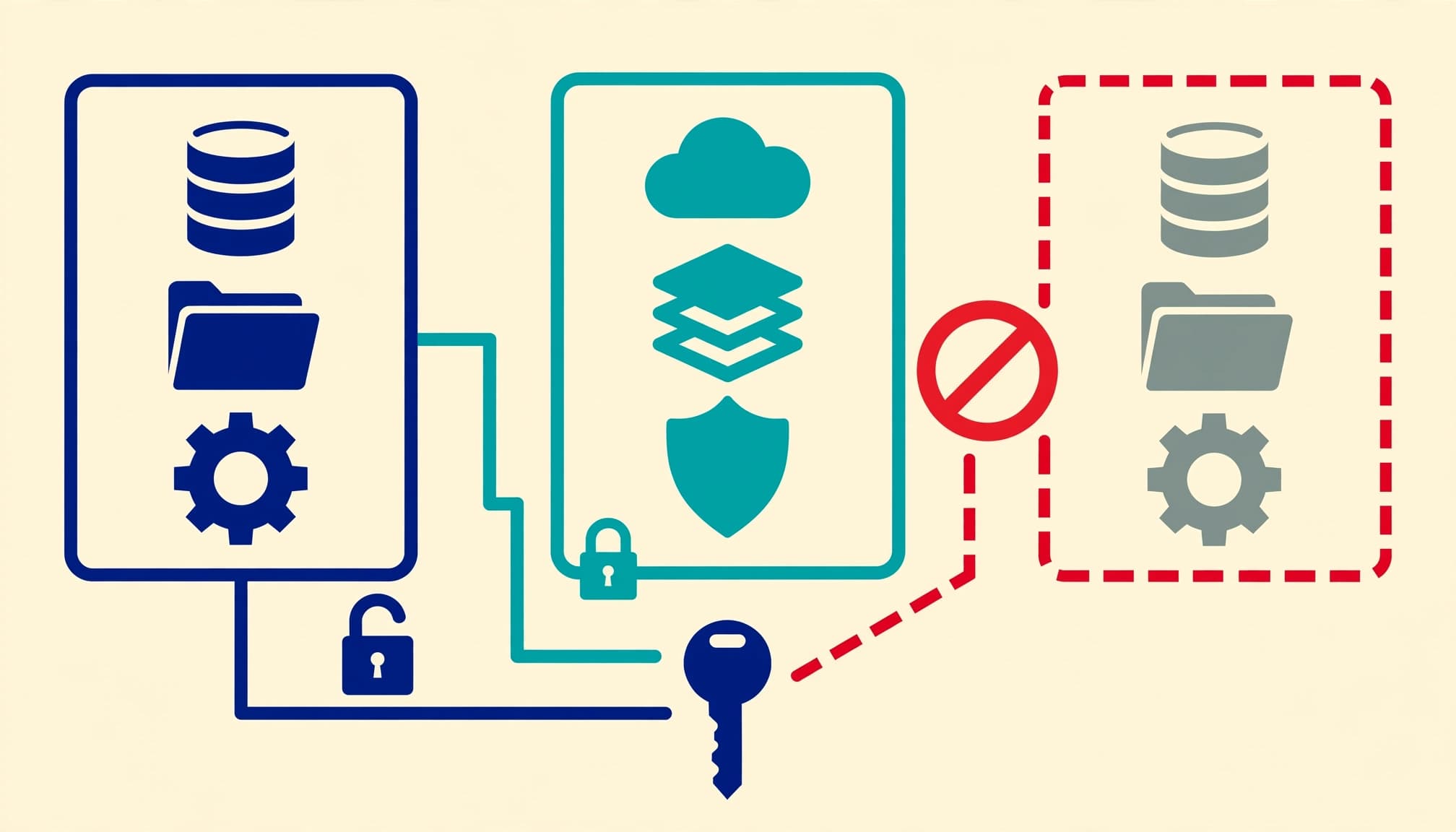
Require these proof-of-concept tests:
- Give one user different roles in two tenants, then demonstrate correct permissions after switching.
- Request another tenant’s resource by changing its ID, then demonstrate that the API denies access.
- Run list, search, and export queries, then demonstrate that every result respects tenant boundaries.
Also test invitations, role removal, and existing sessions after membership changes. Your access control practices need repeatable evidence, not screenshots of configuration screens.
A successful login proves identity. It doesn’t prove that the user can access the requested customer record.
Make privacy workflows match your markets
Before expansion, map the customer data you collect, why you need it, where it moves, and how long you retain it. Include analytics, marketing tools, support systems, and subprocessors.
Consent management should capture each opt-in’s timestamp, purpose, and the version of the terms presented. The platform should support renewed consent requests when changes require them. Consent isn’t the lawful basis for every processing activity.
The European Commission’s explanation of individual data rights includes access, correction, erasure, and portability. Test applicable GDPR requests for these rights across connected systems, not just the identity database.
Your obligations depend on jurisdiction, business role, and processing activity. GDPR, CCPA, and Canada’s PIPEDA have different scopes. Financial products also need a separate applicability review for PSD2 and the CFPB Section 1033 rule.
Keep a stable internal customer identifier for analytics integration. Use progressive profiling to collect optional profile details later, limiting early collection to information needed for the current purpose. Avoid spreading unnecessary profile data across every connected tool. Otherwise, deletion and correction requests become manual reconciliation work.
Compare platform fit and three-year cost
MarketsandMarkets projects 9.7% annual CIAM market growth through 2030. Market growth doesn’t establish your technology ROI; your operating requirements do.
Choose the operating model first
Auth0, Amazon Cognito, and Microsoft Entra External ID are managed options. Keycloak offers an open-source approach with greater operational responsibility.
For a smaller SaaS team, buying managed authentication usually avoids maintaining protocol implementation and account-security infrastructure. Building may make sense when identity itself differentiates your product and you can fund ongoing security engineering.
However, buying CIAM doesn’t transfer ownership of application authorization. For B2B SaaS, compare CIAM providers against your expansion requirements. Check whether identity federation, enterprise connections, organization support, regional deployment, and administrative controls meet target customers’ needs.
Price growth and exit
Forecast monthly active users, enterprise connections, and peak demand to assess three-year scalability. Also price machine identities, messaging, support tiers, and log retention. Include implementation, migration, and the people needed to operate the service.
Liminal’s Link Index estimates roughly $5 million in annual savings for regional financial services and healthcare providers adopting a leading customer authentication vendor. Treat that as sector-specific context, not your forecast.
Your business case should use activation, enterprise onboarding time, support demand, fraud losses, and operating cost.
Before signing, apply a SaaS contract checklist to renewal terms, service commitments, export rights, and vendor offboarding. Exit costs belong in the purchase decision.
Plan migration and recovery together
Replacing an identity system affects every customer who needs to sign in. Your technology roadmap should give migration and operational recovery equal attention.
Move customers in controlled stages
Start with a systems inventory covering identity stores, password formats, federation connections, consent records, and account identifiers.
Next, preserve stable identifiers and resolve duplicate accounts. Some password hashes can migrate; others require gradual migration during login or a customer reset.
Pilot with a limited cohort before expanding. Track login failures, account-linking errors, and recovery requests. Define rollback criteria before launch, including what happens to accounts created during the migration.
Rehearse loss of service
Business continuity planning should cover provider outages, broken federation, signing-key problems, and regional service disruption.
Test session behavior and recovery procedures. Set contract terms for incident notifications, escalation, and access to logs. Your vendor incident response plan should name the internal decision-maker.
Emergency access must remain restricted and auditable. An outage shouldn’t create an unrestricted support bypass into customer accounts.
Put one executive in charge of the decision
Your CEO technology decisions need one accountable owner across product, engineering, security, and legal. A vendor can demonstrate features, but it can’t decide your cyber risk appetite.
A fractional CTO can lead the evaluation when you have a technology leadership gap. An interim CTO can maintain ownership during a transition. A fractional CISO can assess security evidence alongside product leadership.
Regardless of title, assign decision rights. Product owns customer experience requirements; engineering owns integration and authorization implementation. Security and legal define applicable controls and obligations.
Then require concise, board-ready reporting: activation performance, login availability, account-takeover incidents, unresolved isolation defects, forecast cost, and recovery-test results.
Connect cybersecurity oversight to launch decisions. Each material gap needs an owner, a deadline, and a clear consequence for expansion approval.
The CEO’s job is to approve the tradeoffs with evidence.
Frequently asked questions
Do you need enterprise SSO before moving upmarket?
If target customers require federation, enterprise SSO becomes a sales requirement. Include connection setup, customer administration, and contract entitlements in your evaluation. Supporting SAML alone doesn’t establish enterprise customer readiness.
Does CIAM make your SaaS product compliant?
No. CIAM supports controls such as authentication, consent records, and customer data workflows. Your obligations also depend on processing practices, contracts, retention, application permissions, and operational evidence.
Which evidence should block an expansion launch?
Treat demonstrated cross-tenant access as a launch blocker. Also block launch when required authentication, recovery, or privacy workflows fail. Set those acceptance criteria before the proof of concept so commercial pressure doesn’t redefine success.
Approve expansion on evidence
Your identity system should support growth without creating hidden access risk or uncontrolled operating cost. The strongest decision rests on tested controls, a workable migration plan, and clear executive ownership.
Bring the evidence, unresolved risks, and cost model into one leadership conversation before approving expansion.
If ownership or priorities remain unclear, Get an Executive Technology Clarity Check to establish what needs attention first.