

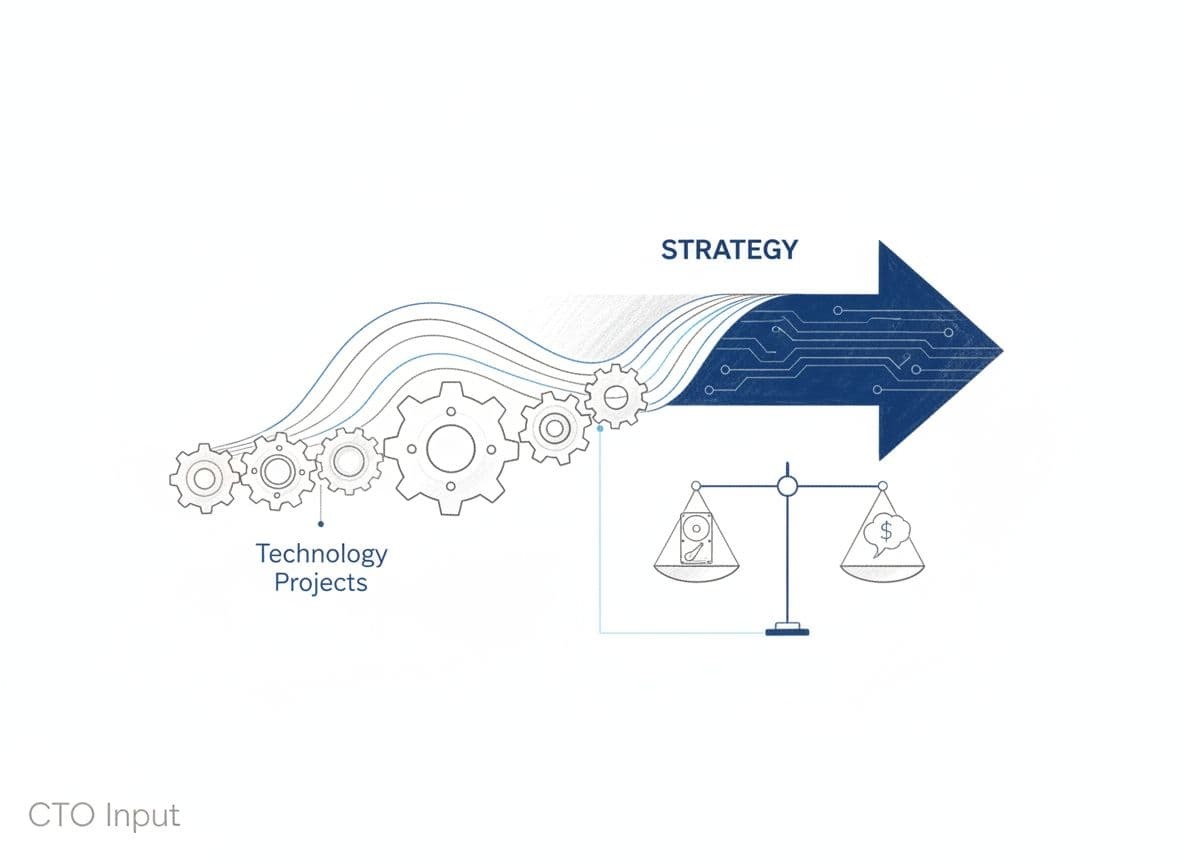
 You are a CEO, COO, or founder who is trying to leverage technology and getting less back. Projects slip. Systems do not connect. Vendors push shiny tools that do not align with your digital strategy or fix core problems. Your board keeps asking how IT spend supports the IT strategy, and you do not have a clean, simple answer.
The stakes are bigger than one bad project. This hits margins, investor trust, lender confidence, and customer experience. When technology drifts away from strategy, the business starts to feel slow, noisy, and fragile.
To achieve IT and business alignment, you do not need to become a technologist. You need a clear way to pick, shape, and govern projects to meet strategic objectives so every major dollar moves growth, risk, or efficiency. CTO Input steps in as a calm, neutral guide, sitting on your side of the table and turning scattered projects into a clear, believable roadmap.
This article gives you 11 practical best practices you can use with your team to bring order, focus, and return to your technology portfolio.
Why aligning IT projects with business strategy protects your margins and reputation
When IT projects are picked in isolation, without a tight link to strategy, you pay three times.
First, there is direct waste. You fund tools that overlap, features no one uses, and custom builds that do not survive the next leadership change. Budgets swell, but core pain points stay.
Second, without proper risk management, hidden risk grows. New apps and cloud vendors add more access points, more data copies, and more ways for things to break. Cyber risk creeps up, audits get harder, and outages spread faster because systems are fragile and tangled.
Third, people lose trust. Business leaders stop believing IT timelines. IT feels under attack. The board hears excuses instead of clear progress. That trust gap is expensive.
When you achieve IT and business alignment, the picture flips:
- You have clear priorities tied to business objectives, so low-value initiatives wait their turn.
- Surprise costs drop, because you see dependencies and risk early.
- Delivery speeds up, because teams are not pulled in ten directions.
- Board and lender conversations calm down, because tech spend maps to goals.
In 2025, this is sharper for mid market firms. You are under pressure to use AI, but hype can push you into initiatives that do not pay off. Cyber attacks are more targeted and more automated. Integration expectations are higher, as customers and partners want clean, real time data.
Recent views on aligning IT and business, like the practical guidance from Pragmatic Institute on connecting IT to business objectives, echo the same point; value comes from fit, not from tools.
Leaders who learn to achieve IT and business alignment win on two fronts at once. They get more growth from each dollar and lower their risk with every initiative they say yes or no to.
11 best practices to align IT projects with business strategy
These 11 practices are decision habits, not technical tricks. You can use them in your next planning cycle without learning a new tool.
1. Start with a short list of defining objectives, not a list of tools
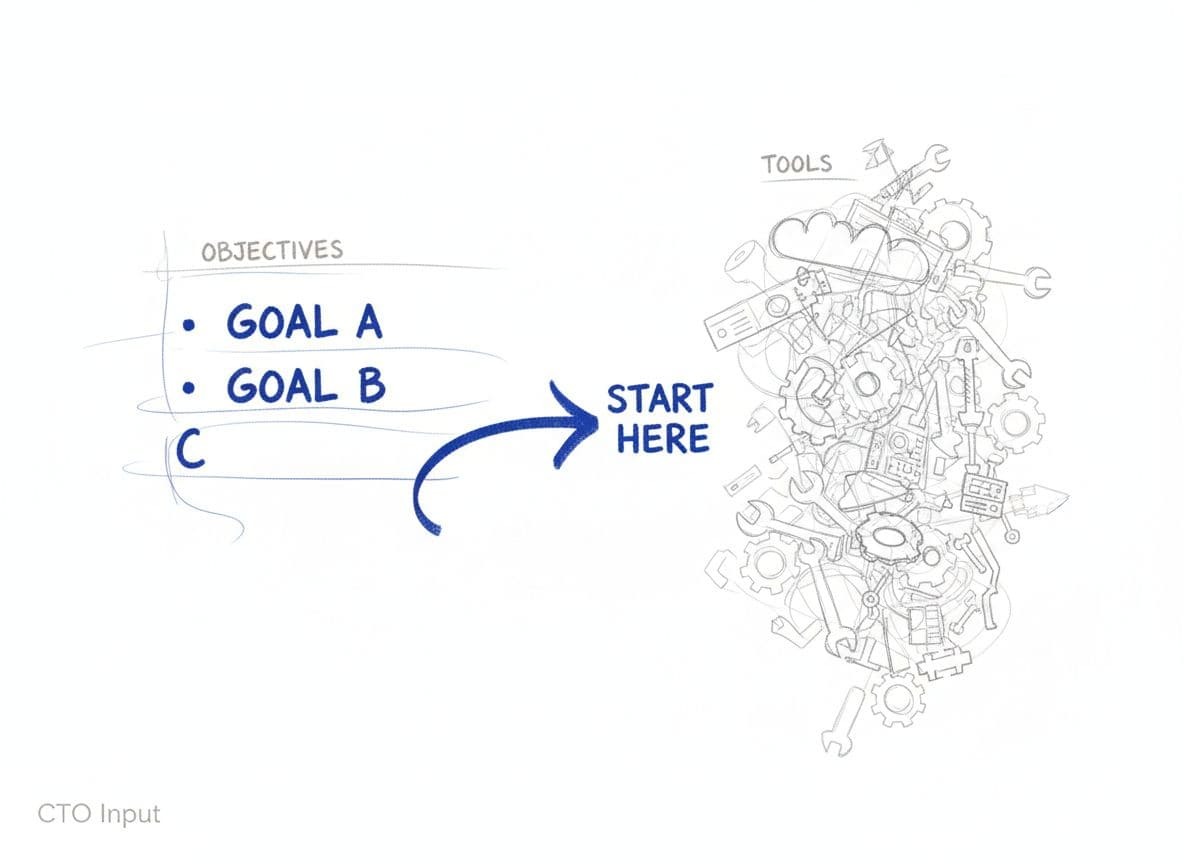 Every major tech initiative should start with 3 to 5 specific defining objectives tied to business goals. Examples:
- Shorter order cycle time
- Lower error or rework rates
- Higher customer retention in key segments
- Faster monthly close and cleaner board reporting
Those objectives become your filter. If a vendor shows you a demo, you ask one simple question: Which strategic goal does this initiative move, and how will we know?
This keeps you from approving a CRM because it looks modern, instead of because it cuts sales admin time by 30 percent. Alignment starts at the planning stage, not after budgets are set and contracts are signed.
2. Build a one-page IT roadmap that links initiatives to strategy and timing
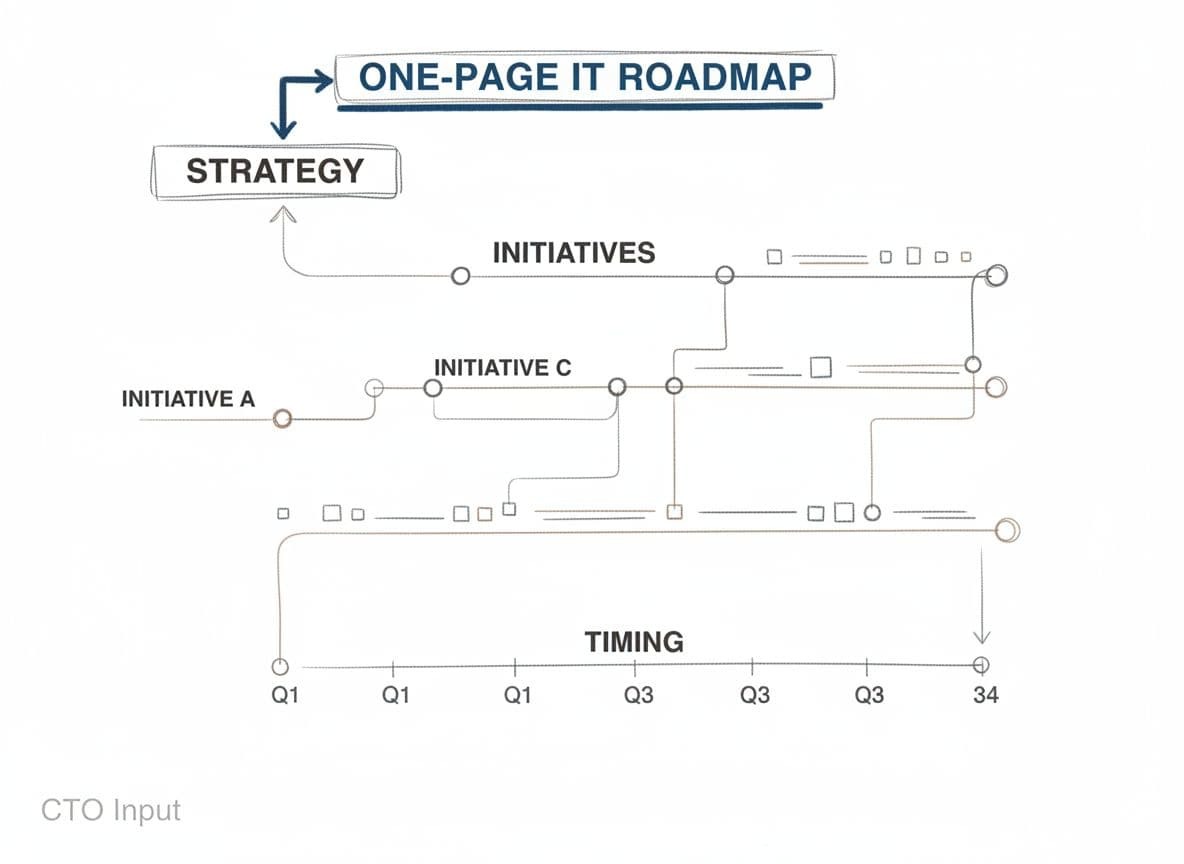 You do not need a 60-page strategy deck. You need a one-page view that shows:
- Your top 3 to 5 strategic goals
- A 12- to 24-month timeline
- Which initiatives support which goals and when
This simple IT roadmap lets you say “not now” with confidence. An initiative might be a good idea, but if it does not support a current strategic goal, it waits.
Review this one-pager in every quarterly leadership meeting. Strategy changes, markets move, and your roadmap should shift with them to support the organizational strategy, as other leaders also stress in their IT portfolio alignment work.
3. Create cross-functional teams so IT is not deciding in a vacuum
Mixed teams improve communication and collaboration, fixing the issue of IT guessing what the business needs.
For each major initiative:
- Name a business sponsor who owns outcomes and benefits.
- Name an IT lead who owns solution quality and delivery.
- Form a small working group that meets weekly or biweekly.
For a CRM initiative, sales is the sponsor and IT leads the build, with finance and operations in the room as needed. For ERP changes, operations sponsors, IT leads, finance supports.
This structure cuts rework, catches edge cases early, and keeps the business on the hook for decisions, not just complaints.
4. Rank initiatives by business value, cost, and risk instead of loudest voice
Pet initiatives thrive in silence. Project prioritization breaks that pattern.
Score each initiative on:
- Impact on revenue or margin
- Impact on risk or compliance
- Impact on customer or employee experience
- Effort or cost
Then force rank. Fund the top few. Pause or drop the rest.
You can sketch this on a whiteboard in 30 minutes. The goal is not perfect math. The goal is a visible, fair way to say yes, no, or not now, which strengthens the decision-making process and is also a key theme in many IT project value frameworks.
5. Set shared success metrics that both business and IT agree to
Every initiative needs 3 to 5 Key Performance Indicators (KPIs) tied to business goals, not just “on time, on budget”.
Good examples:
- Manual work hours reduced per month
- Customer onboarding time reduced from X days to Y days
- Tickets or complaints per 1,000 customers
- Uptime or processing time for a core system
Agree on the baseline and the target before the build starts. That way, you can see early if value is landing or not. Shared metrics make it easier to reshape or stop an initiative that is not paying off.
6. Keep initiatives small enough to show value in 90 days
Long, multi-year initiatives are dangerous for mid-market firms. Strategy shifts. Leaders change. Vendors change hands.
Breaking down large efforts into slices that show real value in 90 days optimizes resource allocation. For example:
- Pilot a new workflow in one region, then scale.
- Automate one high-volume process, then apply the pattern to others.
- Roll out analytics for one business line, then expand.
Short cycles free up cash faster, build board confidence, and give your team real wins. They also expose weak ideas before they soak years of budget.
7. Check every initiative for cyber risk, compliance, and resilience
Alignment is not only about growth. It is also about protection.
Every initiative intake should include a simple checklist:
- Does this increase or reduce our cyber risk?
- Does this make audits and compliance easier or harder?
- Does this create new single points of failure?
You do not need technical detail in the executive meeting, but you do need a clear risk rating. Many mid-market firms do not have a trusted CISO, a challenge for the IT organization, so they rely on vendors to answer these questions, which is risky.
External voices, like CIO.com in their piece on executing business-aligned IT strategies, repeat the same pattern; growth and protection must move together.
8. Make data and integration a requirement, not an afterthought
Disconnected systems are silent profit leaks. They block clean reporting and slow daily decisions.
For every new initiative, ask:
- How will this system share data with what we already have?
- How does it improve our data quality instead of making it worse?
- Can finance and operations get the reports they need without more spreadsheets?
Tie this back to your board pack. If an initiative does not help you get to faster, cleaner numbers that help achieve enterprise goals, think hard before you fund it.
9. Use AI and automation only where they tie to clear business wins
You are under pressure to “do something with AI.” That pressure is dangerous.
Only approve AI or automation initiatives that connect to a strong digital strategy through:
- Cost savings
- Faster customer service
- Better decisions
- New, testable revenue
Examples: automating routine support tickets, improving forecasts, smarter risk scoring. But every idea must face clear metrics and a small test before you commit serious money. Several 2025 summaries of IT and AI trends, such as PennComp’s view on aligning IT and business goals, stress the same thing; AI is a tool, not a strategy.
Curiosity is good. Blind bets are not.
10. Review the portfolio often and be willing to stop or reshape initiatives
Once a quarter, put your full initiative list in front of the leadership team and ask:
- What has changed in our strategy or market?
- Do our current initiatives still fit that picture?
- Which initiatives should speed up, slow down, reshape, or stop?
This portfolio review is an essential part of effective IT planning processes. Stopping an initiative is not failure. It is financial discipline. It sends a signal to your team and your board that you care more about ROI and risk than ego or sunk cost.
11. Make communication simple so the board and leaders can track progress
Alignment fails when executives cannot see, in simple terms, what is happening. Clear reporting enhances leadership understanding of the organizational strategy and requires ongoing communication and collaboration.
Ask your team for a monthly or quarterly summary that includes:
- A short list of active initiatives
- Traffic light status for each
- Key wins and key risks
- The strategic goal each initiative supports
This reduces tension in board meetings. It helps non-technical leaders ask better questions. It shows that spend is not a black box, it is a managed portfolio that is tied to the plan.
Conclusion
When you achieve IT and business alignment, you do more than clean up your project list. You protect margins, reduce risk, and speed up execution across the whole company.
The core moves are simple. Start with clear business outcomes, not tools. Use a one page roadmap to connect projects to strategic objectives and timing. Rank projects by value, risk, and cost, instead of volume or politics. Keep efforts small enough to prove value in 90 days, then scale those efforts to ensure project success.
Picture your world a year from now. Cleaner numbers every month. Fewer surprise outages. Board meetings that feel like strategy sessions, not interrogations. A technology team seen as a partner in growth instead of a cost center.
If that picture feels worth pursuing, take a safe next step in IT and business alignment. Schedule a short discovery call through https://www.ctoinput.com to review your current project list, and spend a few minutes on https://blog.ctoinput.com to sharpen your own view on technology, strategy, and risk.