

For leaders in justice-focused organizations, compliance isn’t an abstract corporate exercise. It’s a direct line to protecting vulnerable communities, securing sensitive data, and maintaining funder trust. The recurring fire drill of grant reporting and the constant anxiety around data privacy for immigration, incarceration, or youth cases are more than operational headaches; they’re a drain on your capacity to serve. Staff get buried in spreadsheets instead of supporting frontline advocates.
This article isn’t another platform pitch. It’s a practical field memo for executive directors, COOs, and operations leaders who need to move from fragile, disconnected systems to a stable, secure backbone. We will evaluate the 12 best compliance management software options through the lens of your unique challenges: safeguarding client information, satisfying complex grant obligations, and freeing up your team to focus on mission-driven impact, not manual paperwork. Each review includes screenshots and direct links to help you assess the options efficiently.
Key Takeaways for Justice-Focused Leaders
- Start with the Workflow, Not the Tool: Before evaluating software, map your most painful compliance process, like a recurring funder report. This reveals the true chokepoints and builds the case for change, moving beyond “tool talk” to focus on outcomes.
- The Right Tool Aligns with Your Mission Constraints: The “best” software is the one that fits your specific reality—your budget, your team’s capacity, and your primary compliance burden (e.g., grant reporting vs. HIPAA). A platform is a component of a strategy, not the strategy itself.
- Implementation Requires Stopping Old Habits: A new tool will fail if you don’t commit to ending the workarounds it replaces. This means stopping the habit of managing compliance through scattered spreadsheets and last-minute heroics. Capacity is your binding constraint; you must choose what to stop doing.
- Frame the Investment Around Mission Capacity: Defend this investment to your board and funders by focusing on mission-critical outcomes: less chaos for staff, safer handling of sensitive information, clearer evidence of impact, and more time for frontline work.
We’ll focus on how to choose a tool not as a magic fix, but as a component of a disciplined strategy to reduce chaos and build resilient infrastructure for the long haul. This guide is designed to help you create a credible modernization path you can defend to your board and funders. For organizations with specific data security and privacy mandates, such as those handling personally identifiable information, selecting the right platform is critical. For those looking to deepen their understanding of selecting the right solutions, consider exploring a detailed SOC 2 Compliance Software Buyer’s Guide. This resource provides a focused look at platforms designed to meet stringent security frameworks.
1. OneTrust
OneTrust positions itself as one of the best compliance management software options for organizations needing a comprehensive, all-in-one platform. Its strength lies in its modular design, allowing justice-focused networks and national nonprofits to start with a specific area like privacy management and expand into tech risk, AI governance, or third-party risk as their operational maturity and funding allow. This approach supports a phased modernization roadmap, preventing the overwhelming task of a complete system overhaul.
Key Features and Use Cases
For organizations managing sensitive data across multiple partners or jurisdictions, OneTrust provides a centralized command center. Policy lifecycle workflows ensure that internal controls are consistently reviewed, approved, and attested to by staff, reducing the manual-follow-up burden on operations leaders. The platform comes with built-in templates for over 50 standards (like ISO 27001 and SOC 2), which can be adapted to create a defensible compliance posture for funders and regulators. Its vendor screening module is particularly valuable, integrating risk intelligence to vet technology partners and sub-grantees, a critical step for protecting sensitive client information. To learn more about this crucial area, consider these best practices for vendor management.
Evaluation and Implementation
- Pros: The platform’s modular breadth is its greatest asset, scaling to cover complex, multi-program needs. Pricing is value-metered based on administrative users and inventory (e.g., assets, vendors), offering predictable scaling costs.
- Cons: Pricing is only available through the sales team, requiring a formal procurement process. The platform’s sheer depth can necessitate a careful change management plan to ensure staff adoption and avoid creating new silos.
Website: https://www.onetrust.com/pricing/
2. AuditBoard
AuditBoard offers a powerful, audit-led platform that ranks among the best compliance management software for organizations prioritizing a unified approach to risk. Its core strength is a connected data model that links internal audits, SOX compliance, risk management, and regulatory frameworks. For justice-focused networks managing compliance across numerous member organizations or funders overseeing a diverse grantee portfolio, this unified view prevents data silos and simplifies reporting on risk and control effectiveness, which is crucial for demonstrating responsible stewardship of sensitive information.

Key Features and Use Cases
AuditBoard excels at centralizing compliance efforts that are often fragmented across spreadsheets and siloed departments. For national advocacy nonprofits, its workflow automation can streamline evidence collection for grant reporting and regulatory audits, reducing the manual burden on operations teams. A standout feature is the inclusion of unlimited stakeholder licenses, which allows organizations to involve program managers and frontline staff directly in control testing and issue remediation without incurring extra costs. This collaborative approach ensures that compliance becomes an integrated part of operations rather than a top-down mandate.
Evaluation and Implementation
- Pros: The platform is highly regarded for its user-friendly interface and strong customer satisfaction, especially within large enterprises. Its pricing is structured to be predictable, aiming to avoid surprise fees as more business users are brought into the system.
- Cons: Pricing is not publicly available and requires engaging with their sales team, which can lengthen the procurement cycle. While powerful, its enterprise focus may mean the total cost of ownership is a significant investment for mid-market justice organizations with tighter budgets.
Website: https://auditboard.com/pricing
3. ServiceNow GRC
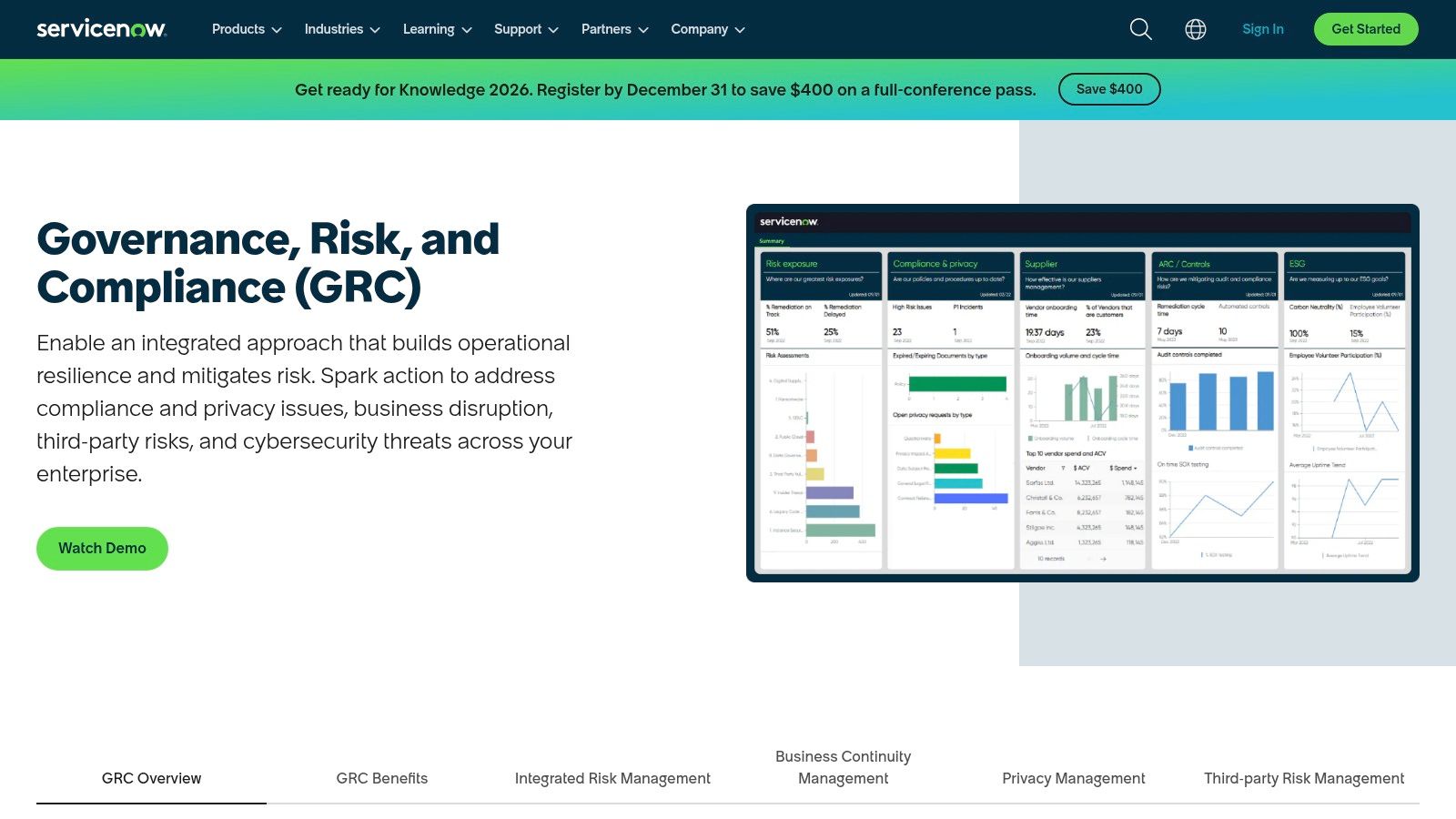
For justice-focused networks and national nonprofits already invested in the ServiceNow ecosystem for IT Service Management (ITSM) or Security Operations (SecOps), ServiceNow GRC represents a powerful extension. It leverages the core Now Platform to unify compliance, risk, and security data into a single operational view. This native integration is its key differentiator, allowing organizations to connect compliance controls directly to the IT assets, vendors, and security incidents they already manage, eliminating the data silos that often plague overburdened operations teams.
Key Features and Use Cases
ServiceNow GRC excels at automating cross-functional workflows, which is crucial for organizations coordinating compliance across legal, IT, and program departments. Its single data model ensures that a policy update or a newly identified risk automatically triggers relevant tasks and assessments across the organization. The third-party risk portal provides a centralized way to onboard and continuously monitor sub-grantees or technology partners, mapping their risk posture to your internal controls. This feature helps create a defensible audit trail for funders concerned about supply chain risk and the secure handling of sensitive client data. For a deeper understanding of this area, explore more about comprehensive IT compliance services.
Evaluation and Implementation
- Pros: The platform offers unmatched integration for existing ServiceNow customers, creating a unified system of record for IT, security, and risk. Its powerful workflow engine can automate complex, multi-stakeholder compliance processes.
- Cons: Pricing is quote-based and generally positioned for the enterprise market. Realizing the platform’s full value requires significant configuration expertise and a well-defined governance strategy, which can be a substantial undertaking.
Website: https://www.servicenow.com/products/governance-risk-and-compliance.html
4. Archer (ArcherIRM)
Archer has long been a fixture in the enterprise Governance, Risk, and Compliance (GRC) space, making it one of the best compliance management software choices for large, mature organizations with complex regulatory demands. For national networks or flagship nonprofits managing multifaceted programs across jurisdictions, Archer provides a unified solution for audit, risk, compliance, and even ESG reporting. Its strength is in its ability to centralize and quantify risk, providing a robust framework for organizations that must demonstrate an extremely high level of diligence to funders, federal agencies, and oversight boards.

Key Features and Use Cases
For justice-focused coalitions and intermediaries, Archer’s centralized risk registers offer a structured way to manage and report on portfolio-wide risks. The platform’s quantitative scoring capabilities allow leaders to move beyond qualitative assessments and present data-backed risk profiles to their boards. Its controls assurance and compliance project management modules are built for deep, auditable workflows, ensuring that policy attestations and evidence collection are not just completed but are also defensible under scrutiny. This structured approach is vital for organizations managing sensitive information related to immigration, incarceration, or other high-stakes advocacy where the cost of a compliance failure is exceptionally high.
Evaluation and Implementation
- Pros: The platform matures well with an organization, scaling to handle incredibly complex programs without strain. It is consistently recognized by independent analysts as a GRC leader, offering credibility with institutional funders and partners.
- Cons: Archer typically requires a formal implementation project and a dedicated governance structure to manage effectively. Pricing is quote-based and may involve procurement through resellers, adding complexity for organizations used to direct transactional purchases.
Website: https://www.archerirm.com/
5. LogicGate Risk Cloud
LogicGate Risk Cloud offers an application-based GRC platform that stands out as one of the best compliance management software choices for organizations seeking rapid deployment and cost-effective scaling. Its model, built on pre-configured applications for functions like regulatory compliance and enterprise risk management, allows justice-focused networks to quickly address specific pain points like grant reporting or vendor oversight without a lengthy custom build. This approach helps demonstrate immediate value to funders and internal teams.
Key Features and Use Cases
The platform’s visual workflow builder and dashboards empower operations leaders to automate critical processes, such as policy attestations and incident response, reducing the manual burden on staff. For comprehensive risk and compliance management, platforms like LogicGate Risk Cloud often include features for efficient security questionnaire automation. You can explore a detailed UK guide to security questionnaire automation to understand these capabilities better. A key differentiator is its licensing model, which charges only for “power users” or administrators, making it economically viable to involve a broad base of staff, partners, or even sub-grantees in compliance activities without incurring prohibitive per-seat costs.
Evaluation and Implementation
- Pros: The admin-only licensing provides attractive economics for organizations needing wide participation from business users. Pre-built application templates accelerate time-to-value, enabling quick wins.
- Cons: Advanced workflow design requires dedicated admin skill and training. Pricing is quote-based and tied to the specific applications and solutions chosen, which requires direct engagement with their sales team.
Website: https://www.logicgate.com/platform/pricing/
6. Hyperproof
Hyperproof presents itself as a specialized compliance management software for organizations facing the immense pressure of multiple, concurrent audits. Its design philosophy centers on streamlining audit preparation and execution, making it a strong fit for justice-focused coalitions and national nonprofits accountable to numerous funders and regulatory bodies simultaneously. The platform excels at mapping controls across different frameworks, meaning the work done for one audit can be efficiently repurposed for others, which is a significant time-saver for operations leaders managing grant requirements alongside data privacy laws.
Key Features and Use Cases
For organizations like immigration legal networks or research intermediaries juggling SOC 2, grant-specific security controls, and HIPAA, Hyperproof offers a unified system to manage the chaos. Its automated evidence collection feature connects directly to cloud systems to pull proof of compliance, drastically reducing the manual work that burns out staff. The risk register is tied directly to control health, giving leadership a clear, real-time view of which vulnerabilities pose the greatest threat to sensitive client data or program operations. This allows a shift from reactive, panic-driven audit prep to proactive, continuous compliance.
Evaluation and Implementation
- Pros: Hyperproof’s deep focus on audit orchestration and multi-framework mapping is a major advantage for teams with overlapping compliance duties. Its customer success model provides strong support during the high-stakes audit process.
- Cons: Pricing is not publicly available and varies significantly based on the number of frameworks, users, and needed services, requiring a formal sales engagement. The platform’s power can be overwhelming if not paired with a clear internal process for evidence management and control ownership.
Website: https://hyperproof.io/pricing/
7. Drata
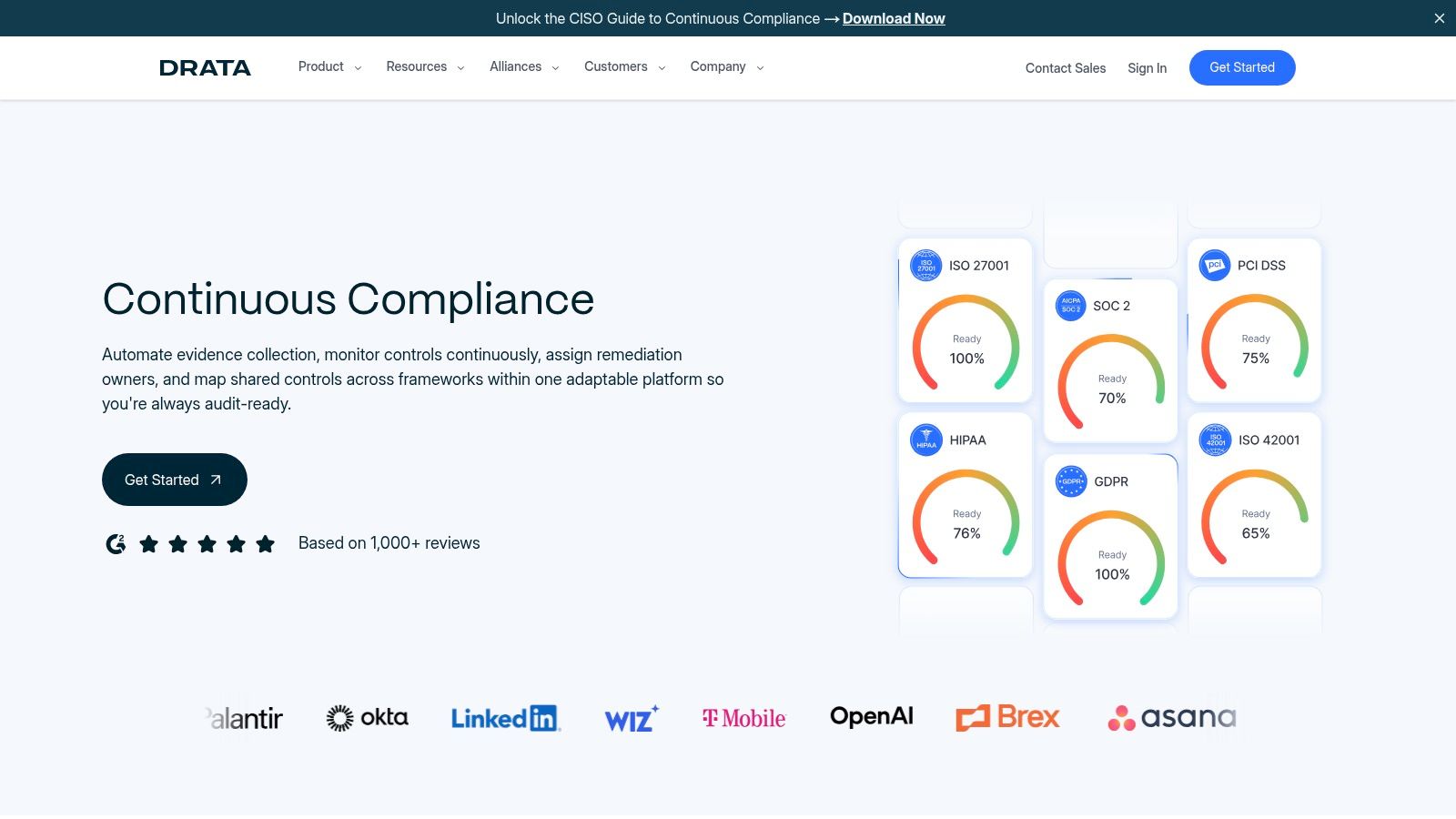
Drata offers one of the best compliance management software solutions for cloud-native organizations aiming for rapid, audit-ready certification. The platform excels at continuous monitoring and evidence automation, making it a strong choice for justice-focused nonprofits and tech providers that have built their infrastructure on modern cloud services. Its primary value is turning the stressful, manual process of preparing for audits like SOC 2 or ISO 27001 into a continuous, automated workflow, which is critical for organizations handling sensitive client data and needing to prove their security posture to funders.
Key Features and Use Cases
For national nonprofits or immigration legal networks, Drata’s automated testing provides real-time visibility into their security controls. The platform integrates with dozens of cloud services (like AWS, Google Workspace, and GitHub) to automatically collect evidence that security policies are being followed, dramatically reducing the staff time spent on manual checklists before an audit. Its centralized dashboard for policies, controls, and evidence allows operations leaders to manage compliance without deep technical expertise. The Trust Center feature is particularly useful for sharing a verified compliance status with grantmakers and institutional partners, building confidence and streamlining due diligence.
Evaluation and Implementation
- Pros: The platform’s extensive integration library is its key strength, significantly reducing manual work for organizations pursuing SOC 2 or ISO 27001 certifications. Its user-friendly interface is well-suited for teams without a dedicated compliance department.
- Cons: While excellent for technical evidence collection, the platform’s scope means that broader governance and procedural controls still require significant offline effort. Pricing is not public and requires engaging with the sales team.
Website: https://drata.com/compliance
8. Vanta
Vanta has established itself as a leader in compliance automation, making it one of the best compliance management software choices for organizations prioritizing speed and efficiency. Its platform is engineered to streamline the path to audit readiness for standards like SOC 2 and ISO 27001. For justice-focused nonprofits and their networks, this translates to a faster, more reliable way to demonstrate robust security and data governance to funders, partners, and regulators, reducing the manual burden of evidence gathering.

Key Features and Use Cases
Vanta excels at continuous controls monitoring by integrating directly with cloud services, HR systems, and infrastructure tools to automatically collect compliance evidence. This is particularly valuable for organizations managing sensitive client data across scattered systems, as it replaces manual checklists with automated, real-time verification. Its Trust Center feature allows organizations to securely share their compliance posture with key stakeholders. For national nonprofits preparing for their first formal audit, Vanta’s pre-built policy templates and network of partner auditors can significantly demystify the process. To better understand the financial commitment involved, you can learn more about the total SOC 2 certification cost.
Evaluation and Implementation
- Pros: Its primary strength is accelerating audit readiness, often reducing preparation time from months to weeks. The strong ecosystem of integrated auditors simplifies the entire certification lifecycle, from readiness to final report.
- Cons: Full pricing details are only available through their sales team, requiring a formal inquiry. While powerful, some of its advanced AI and agentic features may be gated to higher-priced tiers, potentially limiting access for organizations with tighter budgets.
Website: https://www.vanta.com/pricing
9. Secureframe
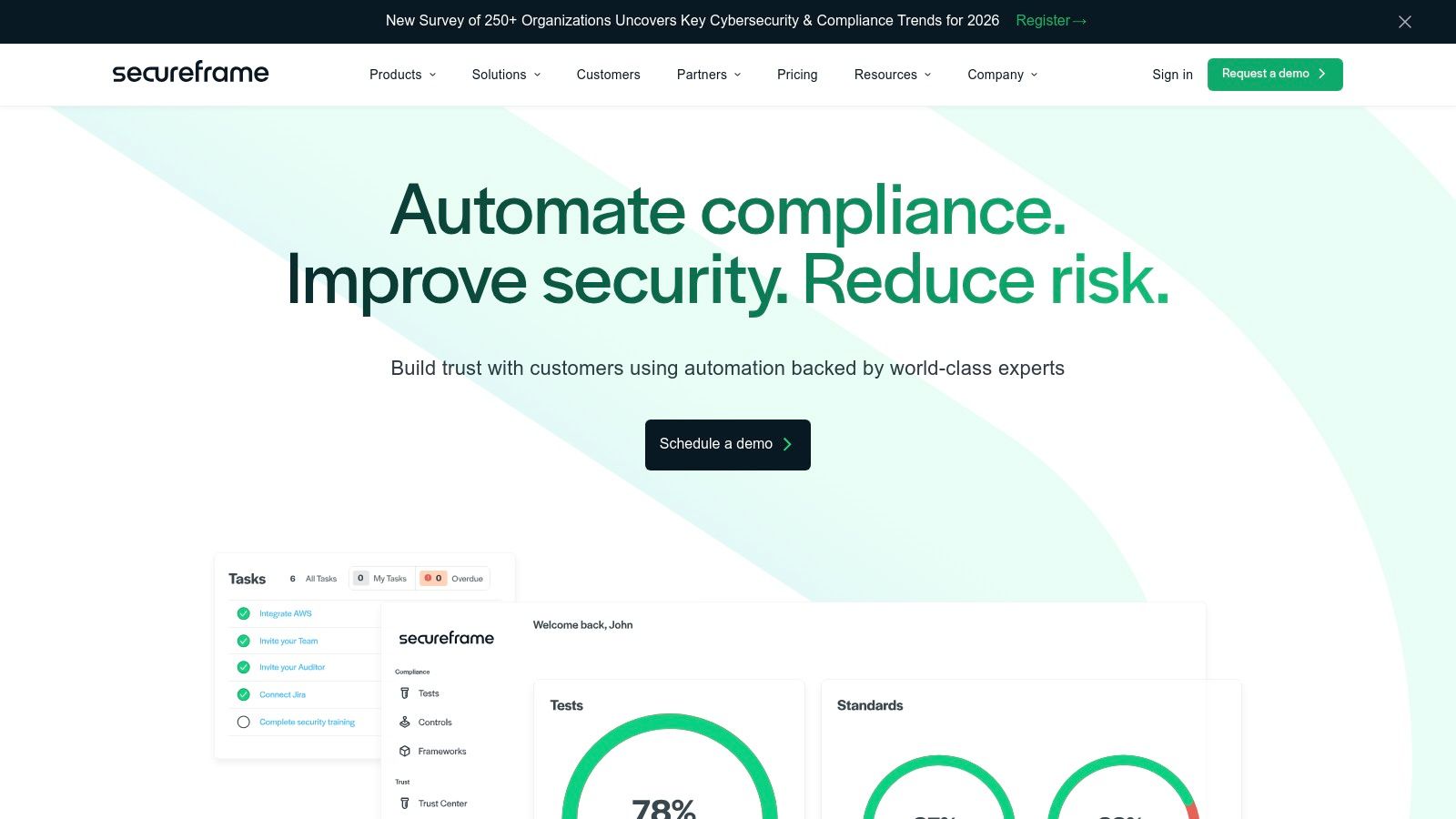
Secureframe offers a compliance automation platform ideal for organizations seeking to achieve and maintain certifications like SOC 2, ISO 27001, HIPAA, and PCI. Its core value proposition is its focus on control reuse, allowing justice-focused networks to map evidence and policies across multiple frameworks. This prevents redundant work when expanding compliance programs to meet new funder or partner requirements, saving significant staff time.
Key Features and Use Cases
For capacity-building nonprofits handling sensitive data, Secureframe’s automated evidence collection is a key feature, integrating with cloud services and HR systems to pull proof of compliance continuously. This transforms audit preparation from a frantic, manual fire drill into a managed, ongoing process. The platform provides a library of policies and control templates that can be customized, giving organizations a strong starting point for formalizing their security posture. It also helps manage third-party risk by coordinating penetration tests and providing a unified view of the organization’s security posture, a critical function for groups managing data across a network of partners.
Evaluation and Implementation
- Pros: The platform is highly effective for organizations with a multi-framework roadmap, as its control mapping dramatically reduces duplicate effort. Secureframe also provides strong enablement materials and templates to support teams that may be new to formal compliance.
- Cons: Pricing is only available through a sales consultation, and additional onboarding or professional services can increase costs if the initial scope expands. Integrating its findings into a broader IT or enterprise risk management program may require additional configuration and workflow design.
Website: https://secureframe.com/
10. RiskOptics ZenGRC
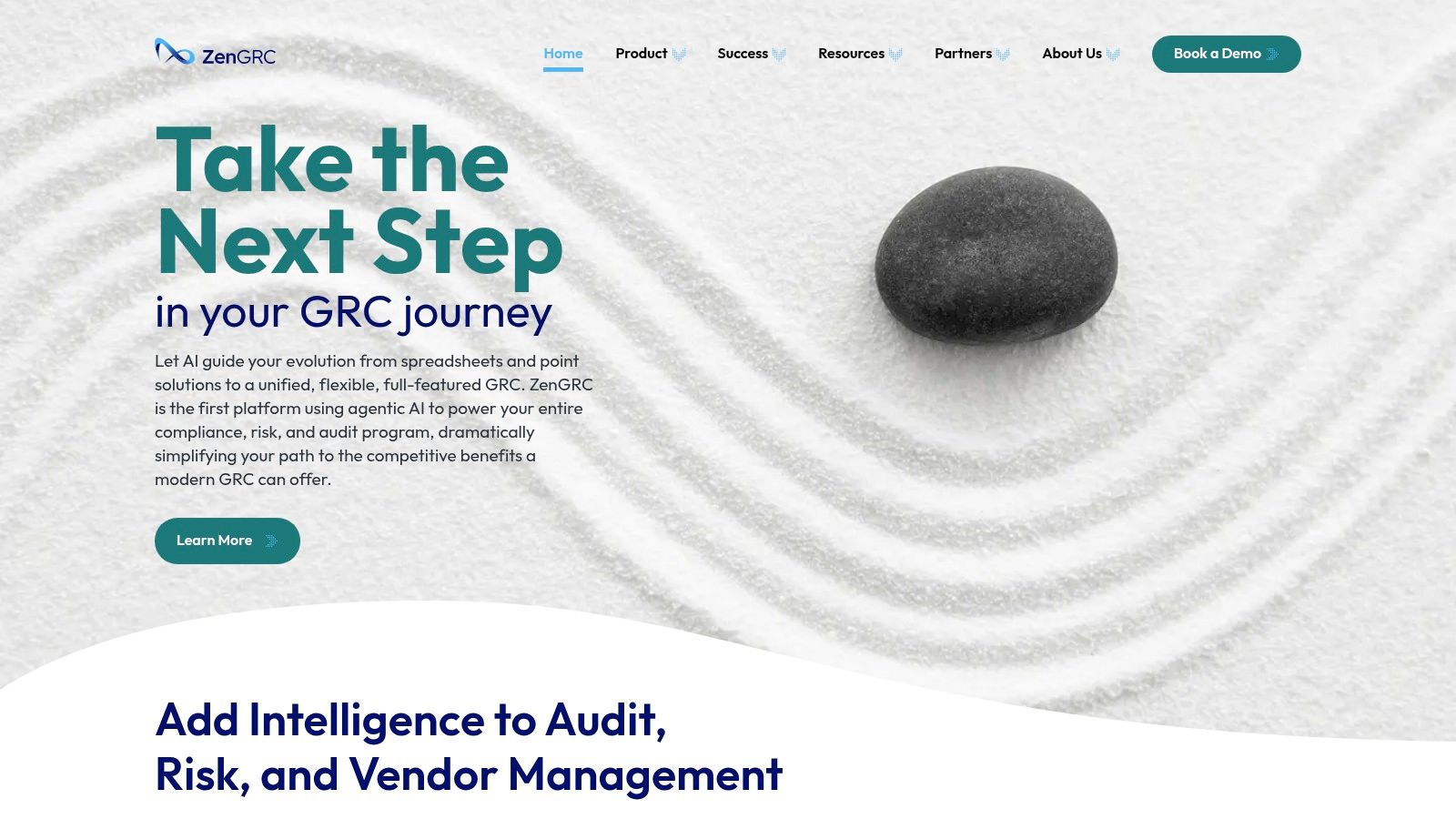
RiskOptics ZenGRC enters the market as a strong contender for the best compliance management software by emphasizing simplicity and predictable costs. Its all-features-included model is a significant advantage for justice-focused nonprofits and coalitions that need comprehensive capabilities without complex, tiered pricing structures. This approach allows organizations to access advanced features like third-party risk management and risk scoring from day one, supporting a more mature governance posture without facing unexpected budget increases.
Key Features and Use Cases
For capacity-building organizations managing compliance across multiple frameworks, ZenGRC’s cross-framework mapping is a powerful time-saver. By leveraging built-in content from the Secure Controls Framework (SCF), a team can document evidence for one control and automatically map it to requirements across HIPAA, SOC 2, and others, dramatically reducing the administrative burden of grant and regulatory reporting. The embedded AI assistant, GRACI, helps operations leaders scope new compliance initiatives and design effective controls, which is especially useful for teams without dedicated compliance staff. This tool streamlines the process of adapting to new funder requirements or expanding program services securely.
Evaluation and Implementation
- Pros: The all-inclusive pricing model offers predictable budgeting, a critical benefit for grant-funded organizations. The platform positions itself as having a faster onboarding process and a more lightweight administrative experience than larger, more complex suites.
- Cons: Pricing and detailed platform information are only available through a sales-led process, which can slow down evaluation. Its integration catalog is smaller than those of enterprise-level competitors, potentially requiring manual workarounds for connecting to niche software.
Website: https://www.zengrc.com/
11. NAVEX One
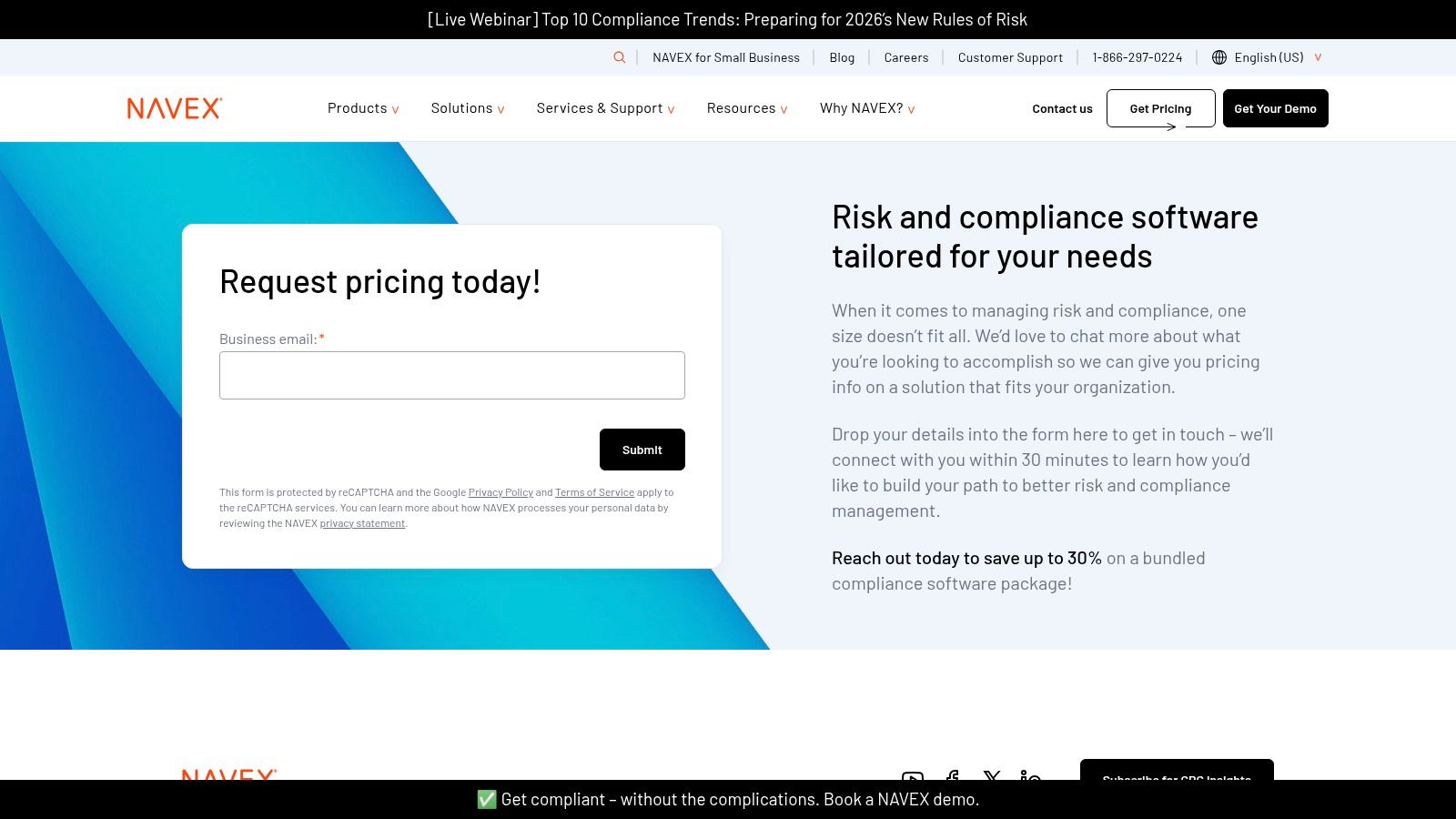
NAVEX One offers a specialized suite focused on ethics and compliance (E&C), making it one of the best compliance management software options for organizations prioritizing culture and conduct. Instead of a broad IT governance approach, NAVEX centers on the human elements of compliance, such as policy attestation, role-specific training, and secure incident reporting. This is particularly valuable for justice networks and advocacy nonprofits where maintaining trust and ethical standards is paramount to their mission and reputation.
Key Features and Use Cases
For organizations managing dispersed teams or member networks, NAVEX One provides critical tools to standardize ethical guardrails. Its policy lifecycle management ensures that key conduct policies are not just distributed but also understood and acknowledged through tracked attestations. The platform’s hotline and incident intake modules give staff, volunteers, and even clients a safe, confidential channel to report concerns, which is essential for handling sensitive information in immigration or criminal justice work. Pre-bundled packages simplify procurement, allowing organizations to acquire a comprehensive E&C toolkit without the complexity of a la carte feature selection.
Evaluation and Implementation
- Pros: The deep specialization in ethics and people-centric compliance fills a gap not always covered by IT-focused GRC tools. Bundled packages offer clearer value and potentially lower costs for both small nonprofits and large enterprise networks.
- Cons: Pricing is only available via their sales team, necessitating a direct engagement. Organizations needing deep integration with IT risk or cybersecurity platforms may find it requires additional effort to connect NAVEX One to their broader tech stack.
Website: https://www.navex.com/en-us/request-pricing/
12. Microsoft Purview
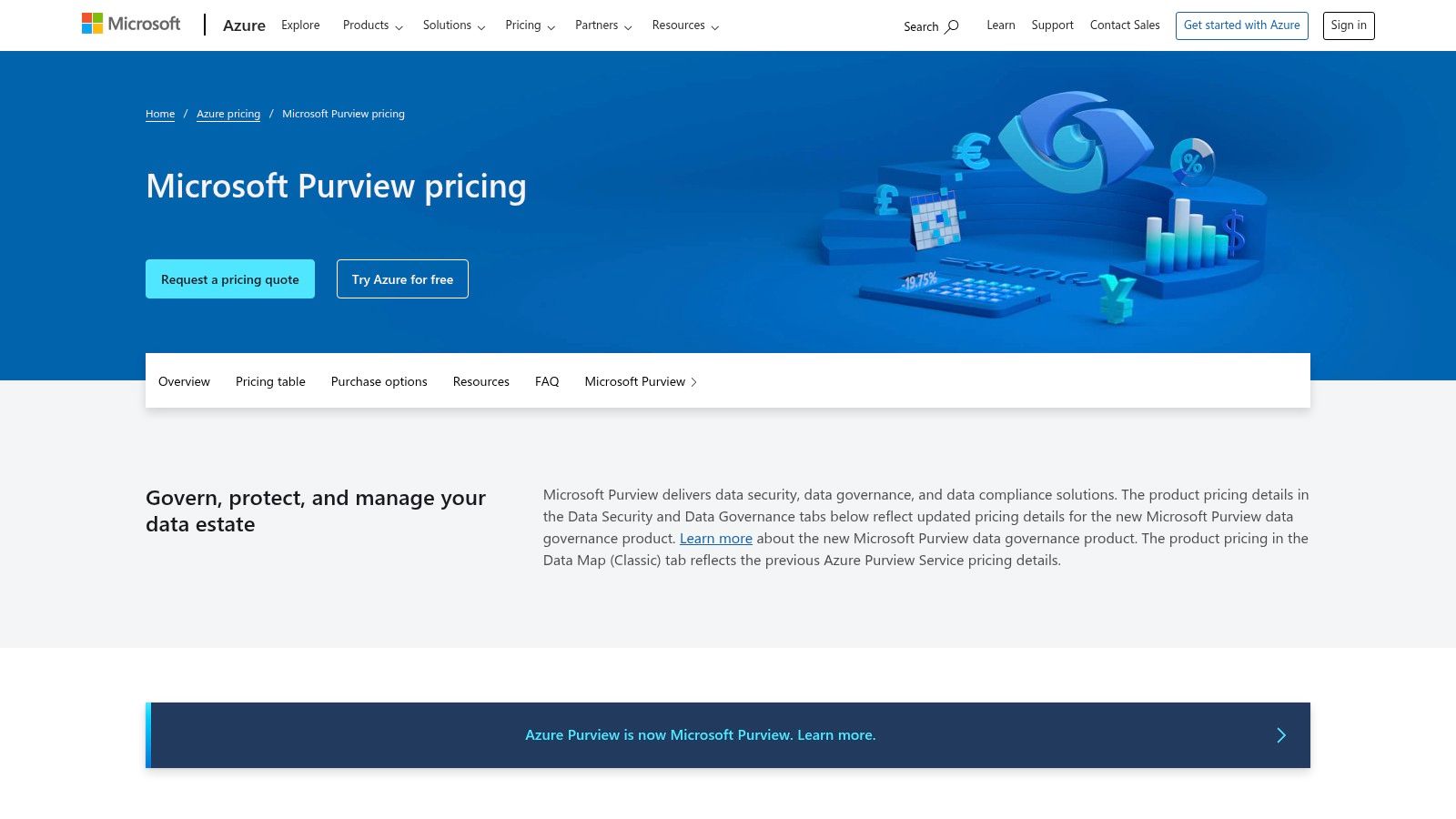
For justice-focused organizations already standardized on Microsoft 365, Microsoft Purview presents a compelling case as one of the best compliance management software options. It avoids the need for a separate platform by building data governance and compliance controls directly into the tools staff use daily, like Outlook, SharePoint, and Teams. This native integration is ideal for networks and nonprofits seeking to enforce data handling policies consistently without introducing a new, disparate system that requires separate training and management.
Key Features and Use Cases
Purview excels at managing the lifecycle of sensitive information, a critical function for organizations handling confidential client data or protected case files. Features like Data Loss Prevention (DLP) can automatically block the sharing of sensitive information via email or Teams, preventing accidental data leaks. Its Insider Risk Management tools help identify and act on potentially harmful internal activities, while eDiscovery and Records Management provide a defensible process for legal holds and data retention obligations, which is crucial for litigation-heavy advocacy groups. Communication Compliance helps monitor for inappropriate conduct on internal platforms, ensuring a safe digital workspace.
Evaluation and Implementation
- Pros: The seamless, native integration with the Microsoft 365 ecosystem is its biggest advantage, simplifying deployment and user adoption. Licensing is flexible, available through per-user plans like Microsoft 365 E5 Compliance or pay-as-you-go meters for specific scenarios.
- Cons: The mixed licensing model combining per-user and consumption-based meters can become complex to manage and forecast. Its deep integration with Microsoft’s stack means it may be a less effective choice for organizations that rely heavily on non-Microsoft tools.
Website: https://azure.microsoft.com/en-us/pricing/details/purview/
Top 12 Compliance Management Software Comparison
| Vendor | Core focus / Key features | Best for (Target audience) | Unique selling point | Pricing & adoption notes |
|---|---|---|---|---|
| OneTrust | Modular privacy, tech‑risk, TPRM, AI governance; 50+ templates | Complex, multi‑program compliance teams | Broadest module breadth + vendor risk intelligence | Sales‑led; value‑metered (admin+inventory); adoption needs change mgmt |
| AuditBoard | Audit‑led GRC: SOX, risk, workflows, dashboards | Large enterprises with audit/SOX focus | Unified data model, unlimited stakeholder licenses | Quote‑based; predictable claims but TCO can be high for mid‑market |
| ServiceNow GRC | Integrated risk, TPRM, BC, AI workflows on Now Platform | Organizations already on ServiceNow/ITSM | Tight ITSM/SecOps linkage and robust workflow engine | Quote‑based; complex implementation and governance required |
| Archer (ArcherIRM) | Centralized risk registers, controls assurance, audit, ESG | Highly regulated, large complex programs | Matures well for enterprise programs; analyst‑recognized | Quote‑based; formal implementation and governance needed |
| LogicGate Risk Cloud | App‑based GRC, prebuilt apps, visual workflow builder | Orgs needing economical broad participation | Admin‑only licensing to reduce per‑seat costs | Quote‑based, priced by apps; admin skills needed for advanced workflows |
| Hyperproof | Multi‑framework mapping, automated evidence collection, audit orchestration | Teams managing many concurrent audits/frameworks | Strong audit orchestration and customer success emphasis | Sales‑led; pricing/onboarding vary by scope and frameworks |
| Drata | Continuous monitoring, automated evidence, auditor ecosystem | Cloud‑native orgs pursuing SOC 2/ISO fast | Extensive integrations that cut manual evidence work | Sales‑led; tool reduces effort but process/governance still required |
| Vanta | Continuous controls testing, AI features, trust center | Startups & mid‑market aiming for quick audit readiness | Rapid time‑to‑readiness + partner auditor network | Sales‑led; tiered plans (Essentials/Plus), advanced AI in higher tiers |
| Secureframe | Automated evidence, control reuse, custom frameworks | Multi‑framework compliance roadmaps | Emphasis on control reuse and enablement materials | Sales‑led; onboarding/services can add scope‑driven costs |
| RiskOptics ZenGRC | Cross‑framework mapping, vendor risk, embedded AI (GRACI) | Teams wanting predictable budgeting and fast onboarding | All‑features‑included pricing + AI assistant for scoping | Sales‑led but marketed as predictable all‑inclusive pricing; smaller integration catalog |
| NAVEX One | Policy lifecycle, role‑based training, hotline & investigations | Ethics & compliance programs across SMB→enterprise | Deep E&C specialization with pre‑bundled packages | Sales‑led; pre‑bundled options simplify procurement but integrations may need work |
| Microsoft Purview | Data classification, DLP, eDiscovery, Insider Risk, records | Organizations standardized on Microsoft 365 | Native M365 integrations and flexible license models | Per‑user (E5/E5 Compliance) + consumption meters; cost model can be complex |
Frequently Asked Questions (FAQs)
What is the main purpose of compliance management software for a justice-focused organization?
For justice-focused organizations, the primary purpose is to move from chaotic, manual processes (like spreadsheets and email chains) to a centralized, defensible system for managing obligations to funders, regulators, and the communities you serve. It helps ensure sensitive client data is handled safely, proves that grant requirements are being met, and reduces the administrative burden on staff, freeing them up for mission-critical work.
How do we choose the right software when our budget is tight?
Start by identifying your single biggest compliance “chokepoint”—is it funder reporting, vendor risk, or data privacy? Focus on solving that one problem well. Look for platforms with modular or tiered pricing that let you start small. Also, consider solutions like LogicGate that have admin-only licensing or AuditBoard’s unlimited stakeholder licenses, which can lower the cost of broad staff participation. The goal is to invest where you can get the quickest, most practical win to reduce risk and free up staff time.
We don’t have a dedicated IT or compliance team. Can we still implement this software?
Yes, but it requires a disciplined approach. Choose a platform known for a user-friendly interface and strong customer support (e.g., Vanta, Drata, RiskOptics ZenGRC). Most importantly, treat implementation as an operational project, not a technical one. Define the new workflows first, get buy-in from the staff who will use the system, and plan for the change. The goal isn’t to become tech experts, but to adopt a tool that makes your existing work calmer and more reliable.
Will this software fix our messy data?
No. A compliance platform will only centralize and automate the processes that use your data; it will not clean the data itself. A common failure point is implementing a new tool on top of a broken data culture. Before you invest in software, you must commit to better data governance: clear definitions, consistent entry, and defined ownership. The software is a powerful tool, but it relies on a foundation of data discipline to be effective.
Your Next Step: A Disciplined Path, Not Another Platform Pitch
Choosing a tool is not the end of the journey; it’s the beginning. The real work lies in using that tool to build a calmer, more resilient operating model. A platform can’t fix a broken workflow or a culture of last-minute fire drills. Success depends on a disciplined plan that your board, funders, and—most importantly—your staff can believe in and execute. Here is what to do first.
- Map Your Most Painful Workflow: Before another demo, grab a whiteboard. Choose one recurring, high-stakes process, like your most complex funder report. Map every manual step, every spreadsheet, every email chase. This exercise will expose the true cost of your current state and build a powerful, data-driven case for change.
- Commit to What You Will Stop Doing: Capacity is your most binding constraint. To make room for a new, better way of working, you must explicitly name the habits you will leave behind. Will you stop accepting program data scattered across five different systems? Will you stop relying on heroic, after-hours efforts to pull reports? A new tool only succeeds when the organization commits to ending the workarounds it replaces.
- Frame the Decision for Your Board: Present this not as a tech purchase, but as an investment in mission capacity and risk reduction. The goal is less chaos for staff, safer handling of sensitive client information, clearer evidence of impact, and more energy for the frontline partners you support. This is about building a stable backbone that reliably supports those who stand with vulnerable people.
What is the one compliance-related fire drill that, if eliminated, would give your team the most capacity back for its mission? Answering that question is your true starting point.
Choosing the right platform is only the first step; making it work for your mission is the real challenge. CTO Input acts as your fractional technology and risk leader, helping you build a simple, believable modernization path that your team, board, and funders can stand behind. We help you move from scattered systems and reporting fire drills to a stable, secure backbone that frees up your team to focus on what matters most.