

Do your eyes glaze over when the “cyber update” slide hits the board deck?
You are not alone. Many CEOs and executive directors quietly dread those five minutes. Acronyms, charts, and fear-filled headlines, all wrapped in language that feels closer to an operating manual than a leadership decision.
Yet you still sign the contracts, attest to controls, and carry the weight of what happens if something goes wrong. Board cyber risk briefings should help you sleep better, not make you feel behind.
This guide walks through how to shape cyber updates that your board can understand in 15 minutes, without tech jargon, and with a clear line back to your organization’s mission.
Key takeaways: board cyber risk briefings
- Start with scenarios, not systems: talk about “locked out of our case files,” not “ransomware on the file server.”
- Use one page and simple visuals so directors see risk level, trend, and decisions at a glance.
- Tie every cyber decision to business impact, like downtime, lost trust, or regulatory exposure.
- Make cyber risk a regular governance topic, not a one-off scare session after an incident.
Why traditional cyber updates fail in the boardroom

Image created with AI.
Most boards still get cyber updates that sound like they were written for another audience. You see lists of tools, version numbers, maybe a few breach headlines thrown in for effect. It feels more like a status report to IT than a decision briefing for leadership.
What happens next is predictable. Heads nod. No one wants to look uninformed. The board moves on to the next item, often without a single question.
The problem is not that directors do not care. It is that the information is not framed as a governance issue. The US Cybersecurity and Infrastructure Security Agency talks about this shift as owning cyber risk at the board level, not outsourcing it to “the tech people.”
For justice-focused organizations, the stakes are higher. A breach is not just downtime. It might expose the immigration status of a family, the history of someone in re-entry, or sensitive youth records. Cyber risk is people risk.
A board-ready briefing names that clearly, without drama, and then gets specific about what leadership can do.
What good cyber risk briefings give CEOs in 15 minutes
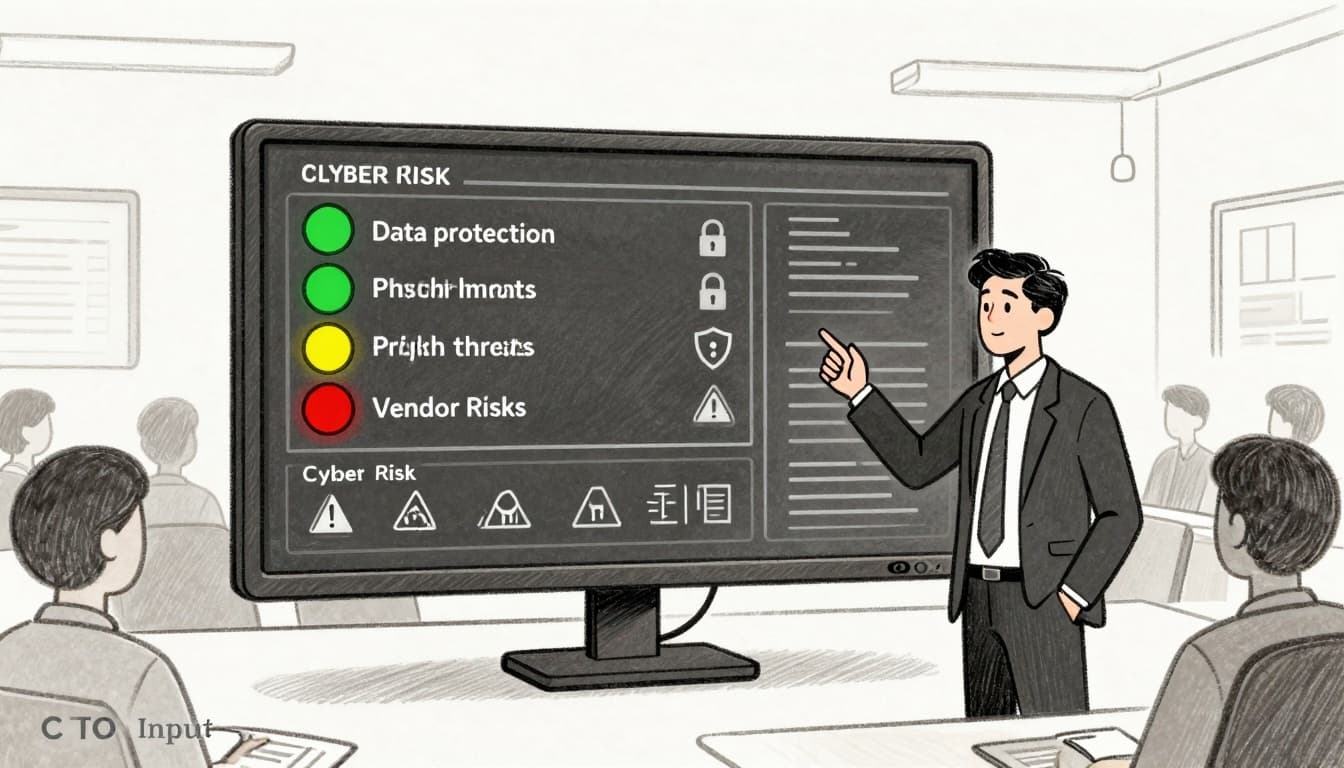
Image created with AI.
A strong briefing respects your time and your role. It should give you, in one page and a short discussion:
- The 3 to 5 cyber scenarios most likely to hurt your mission
- A simple red/yellow/green view of each risk today
- A short note on trend: getting better, holding, or getting worse
- The top decisions or investments you are being asked to make
Instead of diving into tools, start with scenarios your board recognizes. For example:
- “Ransomware locks us out of our case management system for 10 days.”
- “An attacker hijacks a staff email account and targets funders.”
- “A vendor that hosts client data is breached and notifies us late.”
From there, you connect each scenario to business impact. How long could you keep serving people? What would regulators or funders expect? Where might trust break?
Good cyber risk briefings also tell a simple story over time. A short summary like “phishing risk was high last year, we trained staff and tightened email security, now residual risk is medium” lets directors see progress.
For more ideas on shaping the story, you can look at resources on communicating cyber risk to the boardroom, then adapt them into your own plain-language style.
How to design a cyber risk briefing without the jargon
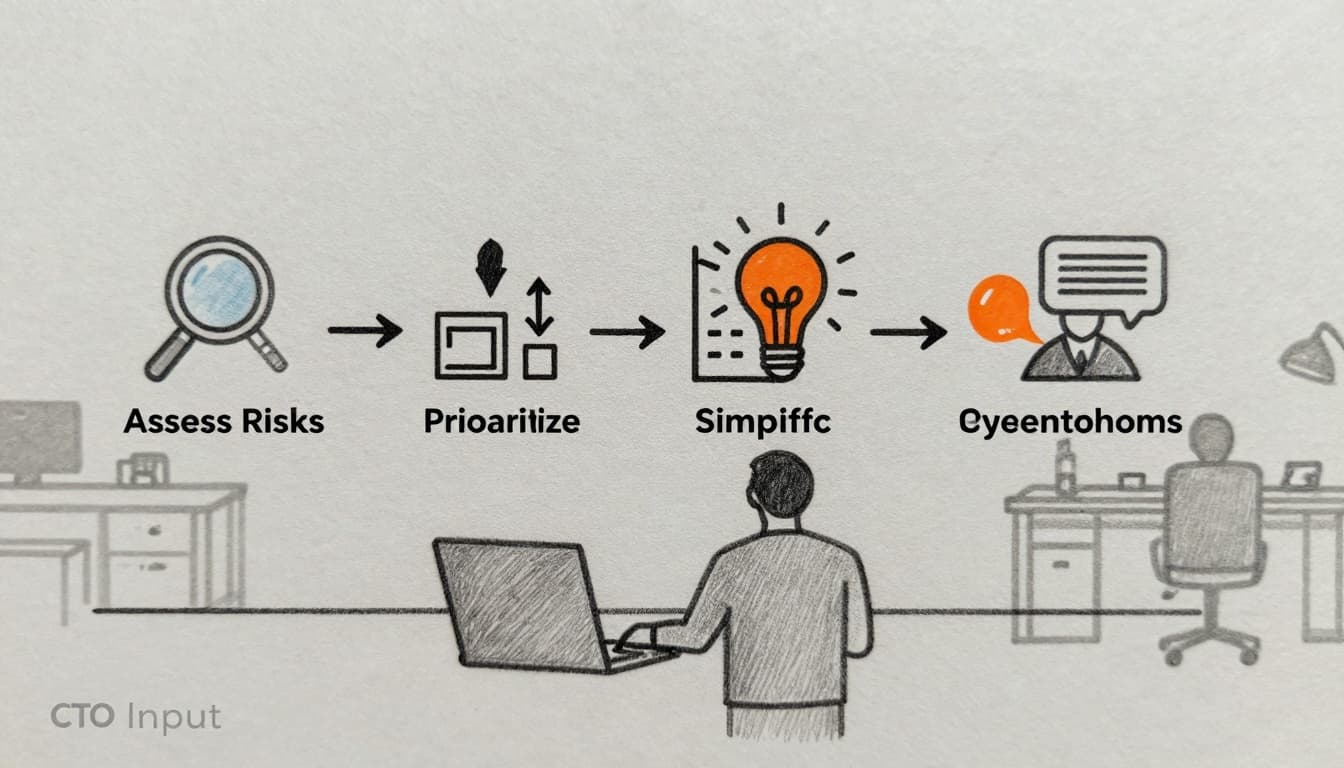
Image created with AI.
A calm, clear cyber briefing usually follows four steps:
- List your real-world scenarios. Start with how work actually happens: case intake, outreach, clinics, data sharing with partners. Ask, “What could stop this for a week?”
- Rate impact and likelihood. Use a simple scale: low, medium, high. Focus on community harm, legal exposure, and disruption to staff.
- Map controls in plain language. Instead of tool names, say “we back up data daily and test restores monthly,” or “staff use a code from their phone to log in.”
- Highlight gaps and choices. Bring 2 or 3 clear options, such as “extend multi-factor authentication to volunteers” or “move client files off shared drives into a secure system.”
Even small wording changes can flip a slide from “for IT” to “for the board.” A simple table helps:
| Typical tech slide text | Board-ready version in plain language |
|---|---|
| “MFA rollout at 20% adoption” | “4 out of 5 staff accounts are still easy to hijack with a stolen password.” |
| “EDR deployed on 60 endpoints” | “Half of staff laptops are still not monitored if stolen or infected.” |
| “Phishing click-through rate down 3% month over month” | “Staff fell for 2 of 50 test scams last month, down from 5 of 50.” |
Use visuals that match that same tone. Simple icons, a short traffic-light chart, and a one-page summary often work better than dense diagrams.
You do not have to invent this all from scratch. The National Association of Corporate Directors has written about recent trends in cybersecurity oversight, which can guide how you frame cyber as part of your broader risk picture.
Make cyber risk a standing part of board oversight
Strong cyber risk briefings are not a one-time event after a scare. They become a regular part of how your board stewards the organization.
A simple pattern many leaders use:
- A 10-minute cyber slide in every board packet, focused on trends and decisions
- A deeper cyber and data privacy discussion once or twice a year
- A tabletop exercise every 1 to 2 years that walks through a realistic incident
Some organizations add short, tailored learning sessions so directors can build comfort with core concepts. You can see an example approach in cybersecurity briefings for executives, then adapt the ideas to your sector and culture.
The goal is not to turn your board into security experts. It is to give them enough clarity to ask good questions and support reasonable investments before there is a crisis.
FAQs about cyber risk briefings for CEOs and boards
How often should we brief the board on cyber risk?
At a minimum, include a short update in every regular board meeting, even if it is just “no major changes, risk steady.” Plan a fuller discussion at least once a year, where you step back and review scenarios, controls, and investments.
What belongs on a one-page cyber risk briefing?
Focus on three sections: top scenarios (in plain language), current risk level with trend, and key actions underway or proposed. Many leaders add one small chart or icon row, a few bullets, and a short “what we need from the board” box.
Who should present the briefing if we do not have a CISO?
Often the COO, CFO, or head of operations presents, with support from your IT partner or advisor. Boards tend to engage more when the presenter understands programs, people, and funders, not only systems. You can still bring a technical expert to answer detailed questions.
How technical do cyber risk briefings need to be for regulators or funders?
Most funders and regulators care that you have clear governance, not that the board can recite security terms. Document the scenarios you track, decisions made, and follow-through. If you need formal language for a report, you can add that behind the board-facing summary.
How CTO Input can help you build board-ready cyber risk briefings
Cyber risk should feel like one more part of sound governance, not a source of quiet shame or confusion in every meeting.
CTO Input supports CEOs and leadership teams who want clear, honest cyber risk briefings without drowning in jargon. That can include reviewing your current incidents and controls, shaping a simple set of risk scenarios, building a one-page board template, and coaching whoever presents it so they feel steady in front of directors.
If you are ready to turn your next cyber slide from a checkbox into a real conversation, set a concrete goal: within 90 days, have a repeatable, one-page briefing that your board can explain back to you. Then reach out to CTO Input to partner on that work and give your board the clarity it has been missing.