

Your board technology reports can be full of charts and still leave you blind. That is the problem. If the report tells you what happened, but not what it means for growth, risk, or spend, you are paying for information you cannot use.
Boards of directors do not need more page count. They need a cleaner answer to a harder question for strategic decision-making, what should change because of this report?
That is where most reporting breaks. The data is there. The decision isn’t.
Key takeaways
- Board technology reports fail when they show activity, not consequences such as improvements in risk management.
- If your report cannot name the business impact, it is not helping you decide.
- The best reports use plain language, clear ownership, and a short list of next moves aligned with your technology strategy.
Why most board technology reports miss the point
Most board packs are built like status memos. They list projects, uptime, tickets, and budget variance. Useful? Sometimes. Decision-ready? Not enough.
The board is not sitting there to admire activity. It is trying to answer a blunt set of questions. Are we exposed to cybersecurity risk? Are we spending in the right places? Is our digital transformation helping the business move, or slowing it down?
That gap shows up in the research too. Deloitte’s board technology oversight research points to weak links between technology and strategy, while McKinsey’s view on technology governance says boards need key performance indicators and a real engagement model, not more noise.
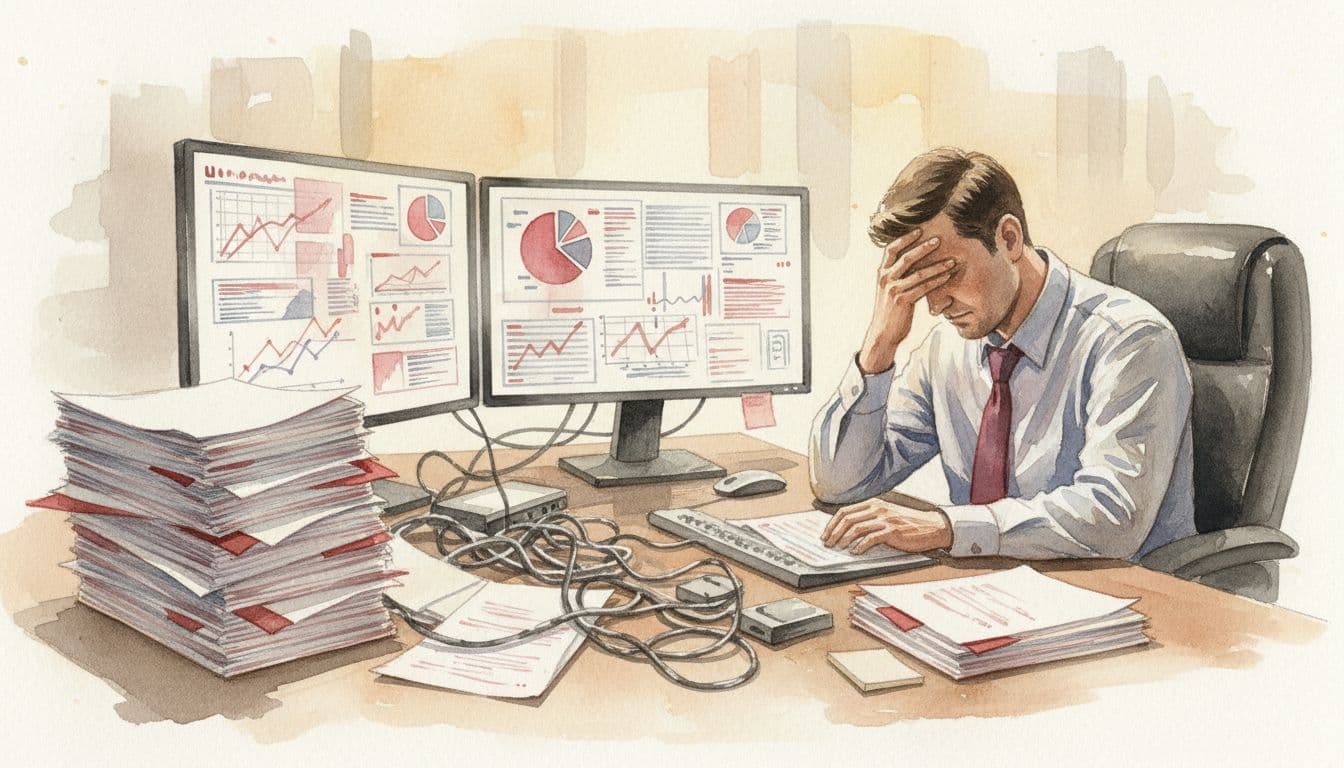
If your reporting feels like a monthly fire drill, the issue is probably not lack of data. It is weak translation. Technology teams speak in outputs. The chief information officer must translate these into business consequences.
That is why a report can say “projects are on track” and still leave everyone uneasy. On track toward what? At what cost? With what tradeoff? If the report does not answer that, it is doing administrative work, not board work.
What useful reporting looks like
A better report is not longer. It is cleaner. One executive summary page can do more than ten slides if it answers the right questions.
| Weak board report | Useful board report |
|---|---|
| Ticket counts and project lists | Business consequences if nothing changes, such as stalled cloud migration or growing technical debt |
| Uptime, spend, and staffing totals | Which risk is rising and who owns it |
| Status colors and slide decks | Clear data visualization of the decision you need this quarter |
A good report narrows the conversation. It tells you what changed, what it affects, and what needs a decision now. Modern board reporting software can help facilitate this shift from noise to action. That is the difference between being informed and being able to act.
You should also make room for ownership. If no one is named, the report is just commentary. If the same issue shows up three months in a row with no owner, you do not have a reporting problem. You have a leadership problem.
For teams that need a practical sequence, the technology roadmap for legal nonprofits is a useful example of turning messy inputs into a plan leaders can explain without hand-waving.

The easiest way to spot a weak report is to ask whether it changes the next decision. If it does not, it belongs in a management packet, not a board deck.
The questions that change the conversation
The questions you ask, when framed within a robust governance framework, determine whether the report is useful or ceremonial. Start with the ones that force clarity.
- What business decision depends on this report?
- What changed since last time, and why?
- What breaks if we wait thirty days?
- Who owns the next move?
- What would make this number more trustworthy next month?
- How is artificial intelligence shaping our board technology insights?
- What emerging technologies should we prioritize in our governance discussions?
If you work in a mission-driven or justice-focused organization, this matters even more. Weak definitions and shaky handoffs create the kind of reporting problems that undermine operational resilience, regulatory compliance, outcomes, grants, and board meetings. The legal nonprofit technology case studies page shows how cleaner data and reporting can change the conversation.
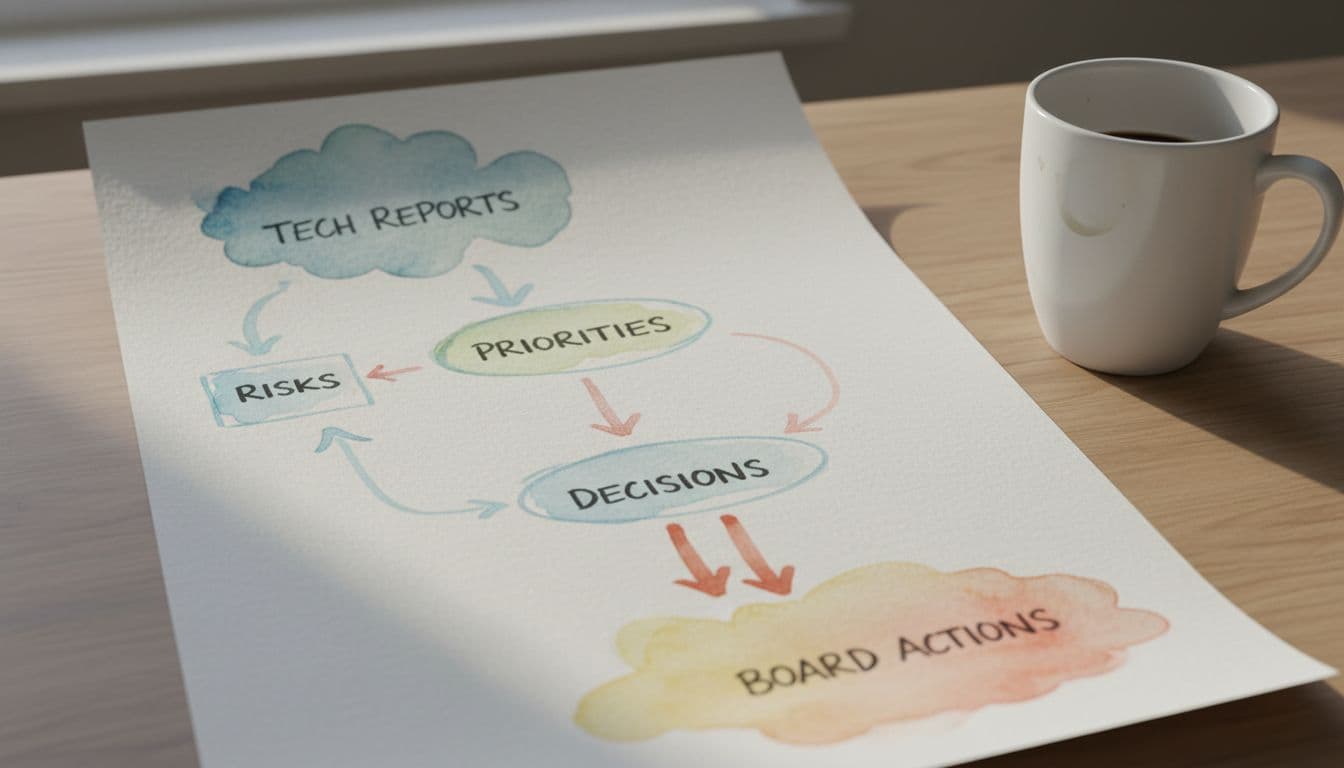
A strong board report does not try to prove that everything is fine. It helps you see where the pressure is building and what you should do about it. That is a far more useful job.
Frequently asked questions
What should a board technology report include?
It should cover spend for financial transparency, risk, ownership, delivery status, and the decision needed next. If it cannot explain business impact in plain English, it is not board-ready.
How often should boards see technology reporting?
Monthly is common for operating boards, with faster updates when risk changes, a deal is active, or a project slips. The cadence should match the speed of the business.
Who should own the report?
One executive should own the story. Others, such as the chief information security officer, can supply data, but the report needs one person accountable for the message.
How does board management software support board effectiveness?
Board management software streamlines the secure distribution of these reports, boosting board effectiveness by ensuring members have timely access to key insights and decisions.
Conclusion
Your board technology reports do not need more polish. They need more truth.
Board education programs can equip members to interpret data more effectively. If the board cannot see the consequence, the report is not helping you lead. Define these reporting expectations in board committee charters, strip out the noise, name the owner, and make sure every page answers the same question: what should you do differently because of this?
That is what turns reporting into confident decisions as part of continuous planning and financial planning and analysis, instead of another monthly update.