

Your growth is stalling, and the slowdown may not be coming from sales, market demand, or even the team itself. A lot of the time, it comes from technology decisions that take too long, change too often, or get made without a clear business lens.
That usually looks like blurry ownership, weak reporting, vendor pressure, and too many projects that feel busy but do not move the company forward. The fix is not more noise. You need clearer control.
Key takeaway: focus on visibility, ownership, and business-aligned decisions before you approve more tools or projects. If you need a fast read on where the drag is coming from, start with a Get an Executive Technology Clarity Check.
First, figure out whether the slowdown is really a technology problem
Not every delay means technology is the root cause. Sometimes the issue is capacity, a bad quarter, or a team that needs sharper priorities. But when growth slows and the same patterns keep showing up, you should look harder.
If projects keep missing deadlines, reporting keeps changing, and no one can explain why a choice was made, the problem is probably bigger than execution. You may be dealing with a leadership gap, not a delivery problem.

Look for the signs that decision-making has become too slow or too fuzzy
You do not need a technical audit to spot the smell of drag. You can usually see it in the day-to-day.
Slow approvals are a clue. So is repeated rework, where teams keep revisiting the same issue because the original decision was never clear. Weak dashboards are another sign, especially when they show activity but not impact.
Watch for these patterns:
- No one can name the business owner for a major system or project.
- Reports are full of activity, but light on risk, spend, or outcomes.
- Vendors are driving options, timelines, or priorities.
- Leaders cannot explain why a technology choice was made.
- The team is moving, but the business is not getting faster.
When those things pile up, growth takes a hit. Not because people are lazy. Because the company is paying for motion without direction.
Separate normal project friction from a real leadership gap
Every business has friction. A migration is messy. A product rollout slips. A team needs time to adjust. That part is normal.
The bigger question is whether the friction is bounded or built in.
If your reporting does not help you act with confidence, you have a structure problem. If vendors and technical managers are shaping strategy by default, you have a leadership problem. If the business keeps saying “we’ll revisit it later,” but later never comes, you are not just behind. You are operating without firm ownership.
If nobody can explain the decision in plain language, the decision is not ready.
That is the line to hold. A CEO does not need to know every technical detail. You do need to know whether the decision structure is strong enough to support growth.
Reset the decision structure before you approve anything else
A lot of CEOs try to solve technology drag by moving faster. That usually makes the mess more expensive. The better move is to slow down the wrong kind of speed.
Before you approve another system, initiative, or vendor contract, make the decision answer a business question first. Not a technical one. A business one.
Name the business outcome each technology choice is supposed to support
Every major technology choice should connect to a real result. Growth. Customer experience. Compliance. Risk reduction. Efficiency. Fewer manual steps. Cleaner handoffs.
If a project cannot be tied to one of those outcomes in plain language, it is not ready for approval. It may still be a good idea. It is just not mature enough to fund.
This matters because companies drift when technology becomes a container for every loose idea. That is how you end up with a stack full of tools, half-finished projects, and no clear story about what the company is buying.
A useful test is simple. Ask, “What gets better if we do this?” If the answer is vague, keep digging.
Assign one real owner for each decision and each result
Ownership has to live with a business leader, not only the IT lead. That does not mean IT is off the hook. It means the business has to carry the outcome.
When ownership is fuzzy, decisions slow down. People wait for someone else to speak first. Vendors fill the gap. Internal teams hedge. Then the project starts to drift before it even launches.
Clear ownership does two things. It speeds movement. It also makes conflict honest. If the company is choosing speed over control, or control over speed, that tradeoff should be visible. Hidden tradeoffs are where bad surprises start.
If you are the CEO, your job is to make sure every important decision has one name next to it. Not three. One.
Fix the reporting so you can actually lead the business
You do not need more dashboards. You need better answers.
Too many technology reports are built for people who already know the system. That does not help a CEO. You need reporting that tells you what is on track, what is at risk, what is costing too much, and what would happen if a key system failed tomorrow.
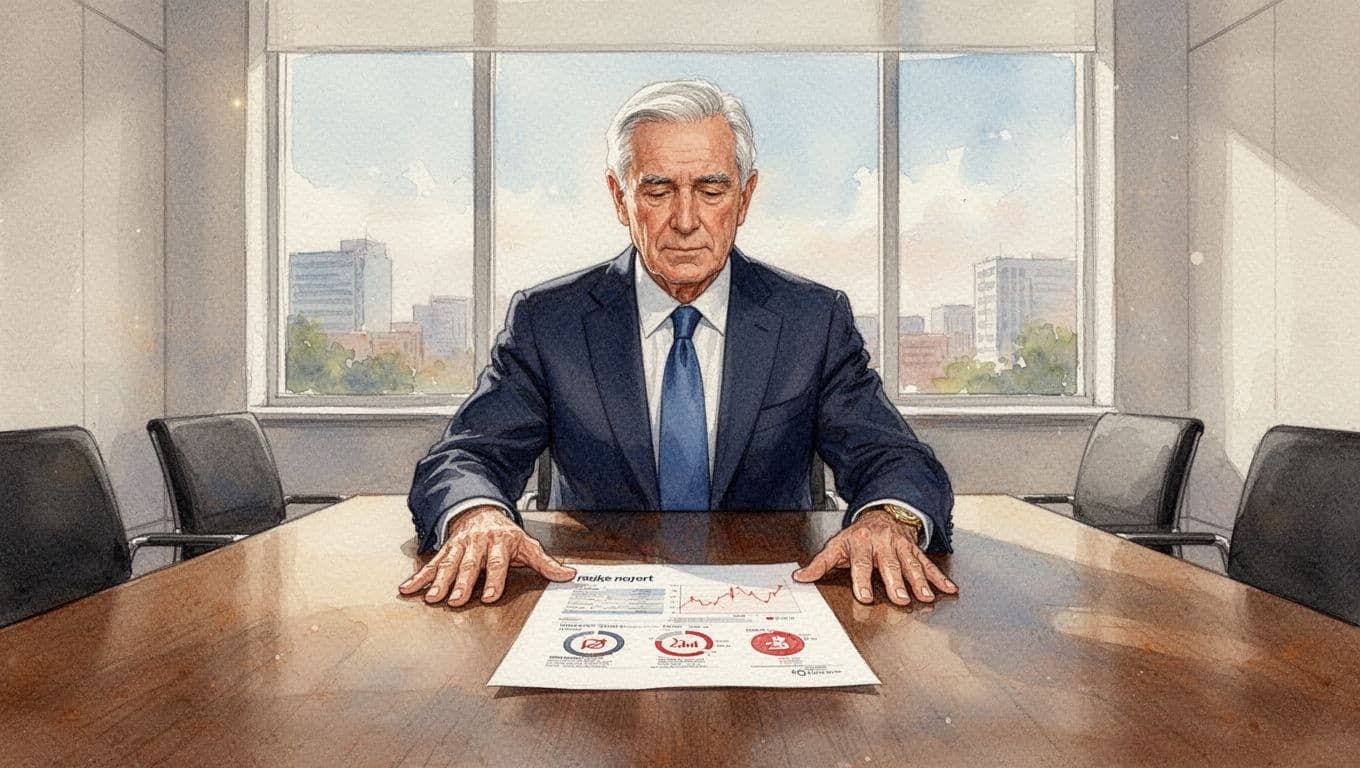
Ask for reports that show risk, spend, and progress in business terms
Good reporting does not drown you in detail. It answers the questions that matter to leadership.
You want to know:
- What is moving as planned?
- What is stuck, and why?
- Where is spend rising without a clear return?
- What is the business exposure if this system, vendor, or process fails?
- What decisions need to happen now?
That is the difference between activity reporting and executive reporting. One tells you people are busy. The other tells you whether the business is in control.
You do not need a slide on the most common cyber threats businesses face. You need to know whether the systems, vendors, and controls that matter most are owned and reported clearly. If you want a stronger board-level view, use a board-ready technology risk view as the standard, not a technical inventory.
Stop letting vendors or technical teams control the story
Outside providers should support your decisions, not shape strategy by default. When that happens, you lose leverage fast.
Vendor sprawl and tool sprawl are not only cost problems. They are governance problems. Every extra tool creates another decision point. Every extra vendor creates another source of influence. If no one inside the business is holding the line, the roadmap starts to belong to whoever speaks last.
That is when leadership gets trapped in a story that sounds like, “We need this because the vendor said so.” That is not strategy. That is drift.
If your current setup feels like that, it may be time to Talk Through Your Technology Leadership Gap. The point is not to replace your team. It is to restore internal judgment.
Take back control by setting a faster, clearer operating rhythm
Once the decision structure is clearer, you need a rhythm that keeps it that way. Not more meetings. Better ones.
The goal is simple. Surface blockers early. Make tradeoffs visible. Keep the leadership team aligned on what matters now.
Use a short executive cadence to surface blockers early
A weekly or biweekly leadership rhythm is usually enough if it is disciplined. Keep it short. Keep it focused on decisions, not status theater.
Each session should answer three questions:
- What is moving?
- What is blocked?
- What needs a decision from leadership?
That kind of cadence exposes problems before they grow teeth. It also keeps your team from hiding behind activity. If the same issue appears three times in a row, it is not a minor issue anymore. It is a leadership issue.
This is also where you catch rising risk, stalled work, and unclear priorities before they start costing growth. A good rhythm is calm, not complicated.
Bring in outside executive support when the gap is bigger than your current team
Sometimes the gap is bigger than your internal structure can handle. That happens when the company has grown faster than its technology leadership. It also happens during transition, acquisition prep, a senior leader exit, or a period of rising risk.
That is when fractional CTO services or interim leadership can help. Not because you need another layer of bureaucracy. Because you need someone who can step into the mess, sort signal from noise, and restore a defensible path forward.
If the business needs steady executive support, a fractional CTO services model can give you consistency without the delay of a full-time hire. If the situation is urgent, you may need stronger interim control.
The point is not to add another opinion. It is to get experienced leadership in place fast enough to stop the drag from spreading.
If you are dealing with transition or due diligence pressure, it may also make sense to Prepare Technology for Diligence or Transition. Weak ownership shows up fast in those moments.
Conclusion
You do not need to become the tech expert to fix this. You need to set the conditions for better decisions.
When growth slows, the usual culprits are blurry ownership, weak reporting, and a roadmap shaped more by vendors or tools than by business priorities. That is where the drag lives. Not in effort, but in structure.
Your next move is to get clear on the real bottleneck. Once you can see that, the right next step gets a lot simpler, and your business stops paying for confusion. Find What Technology Is Costing Your Growth.