

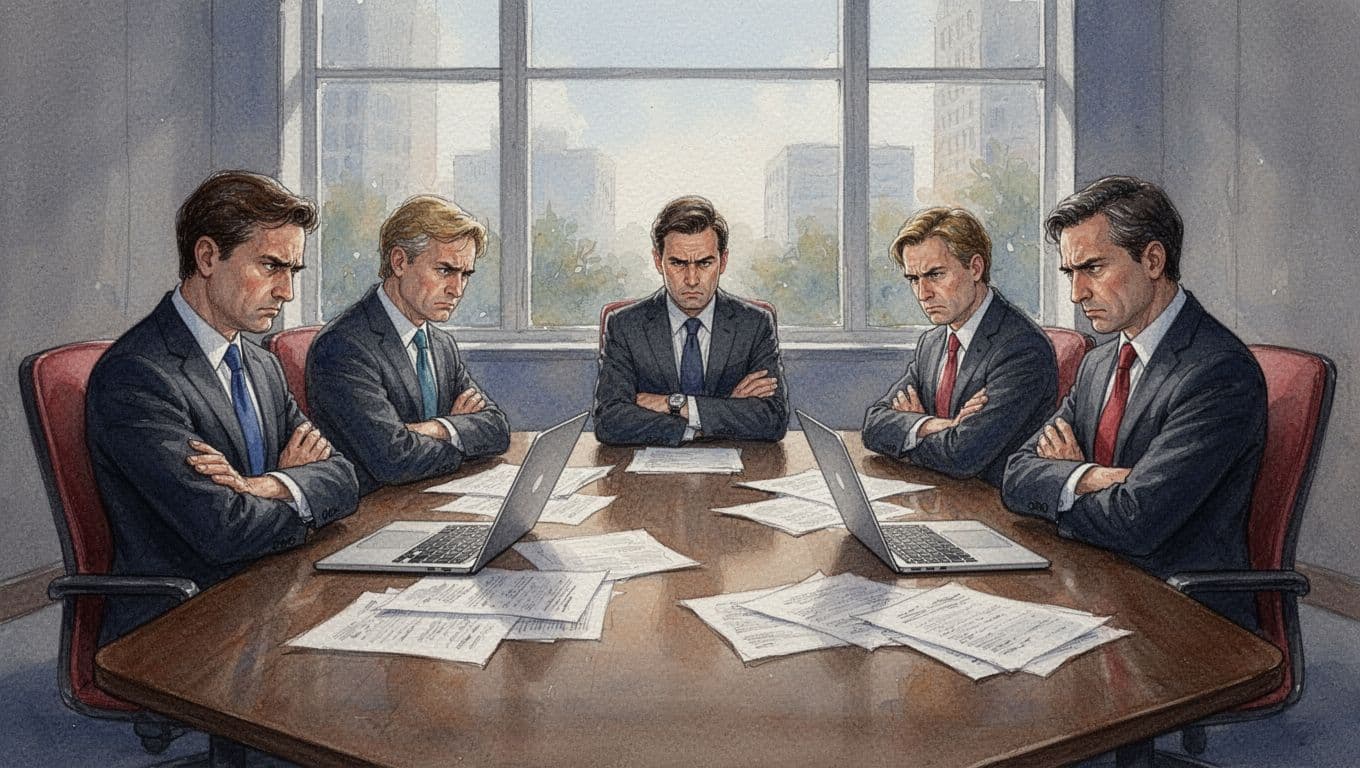
When technology feels vague, reactive, or hard to trust, executive meetings get sharp fast. You end up debating updates instead of making decisions, and the room starts carrying tension that nobody planned for.
The problem usually isn’t that your team is lazy or that the work load is too big. It’s weak ownership, thin reporting, and too many half-answers floating around the table.
Better technology leadership changes that. It cuts the noise, surfaces the real issue sooner, and gives you a meeting that feels useful instead of messy.
Key takeaways for calmer executive meetings
- Calm meetings start before the meeting starts. Good technology leadership clears up priorities, owners, and risks ahead of time.
- More updates do not equal more clarity. You need plain language, clear tradeoffs, and a direct path to a decision.
- Ownership changes the tone of the room. Once someone is accountable for the outcome, the conversation gets cleaner.
- Better reporting speeds up business decisions. You stop chasing answers and start acting on them.
What makes executive meetings feel chaotic in the first place?
A tense leadership meeting rarely starts with shouting. It starts with confusion.
Maybe a project is behind, but nobody can say why without a long backstory. Maybe a vendor keeps changing the answer. Maybe spending has gone up, but the business case still feels fuzzy. The room gets tight because people can feel that something is off, even if no one can name it cleanly.
That’s the real issue. Not effort. Not intelligence. Weak visibility and fuzzy ownership.
You keep getting answers, but not clarity
This is where meetings start to go in circles.
You ask what matters most, and you get a status update. You ask what is behind schedule, and you get a list of dependencies. You ask what decision is needed, and suddenly the room has plenty to say, but nothing to settle.
That pattern burns time. It also erodes trust. After a few rounds of the same discussion, executives stop expecting a clean answer and start expecting another tour through the weeds.
If you’ve lived through that more than once, you know how it feels. You leave with motion, not direction.
The real problem is often weak ownership
A meeting gets tense when nobody clearly owns the decision, the risk, or the outcome.
The issue may sit with technology, but the cost lands on the business. CEOs carry the pressure. COOs absorb the friction. Finance has to defend the spend. The board wants a straight line between action and result.
When ownership is vague, the room fills with excuses. When ownership is clear, the room can move.
How better technology leadership changes the tone of the room
Strong executive technology leadership does not make hard decisions disappear. It makes them easier to face.
A capable technology leader sorts signal from noise before the meeting starts. They know what is blocked, what can wait, what needs a tradeoff, and what deserves urgent attention. That means you’re not walking into the room blind.
If you want a useful model for that kind of leadership, the Executive Technology Leadership view is simple, direct, and business-first.
You get fewer surprises and better prep
Better leadership means the hard stuff shows up early.
A risk gets named before it turns into a fire drill. A project slip gets reported in plain language. A vendor problem gets translated into business impact instead of technical fog. That gives you time to think before you react.
That’s a huge shift. You stop spending the first half of the meeting finding out what happened. You start the meeting already knowing where the pressure is.
You hear options, not excuses
Weak technology leadership sounds like this: “We’re waiting on another team.” “The system is complicated.” “We need more time.”
Strong leadership sounds different. It gives you options, tradeoffs, and a recommendation.
That matters because executives do not need a status recital. You need a path. You need to know what happens if you choose option A, what you give up with option B, and what the leader in the room recommends.
That is how you move from debate to action.
You can trust the people in the room more
Calm meetings are built on trust, and trust comes from consistency.
When technology leaders give honest status, clear risk signals, and realistic next steps, you stop second-guessing every update. You don’t have to interrogate every line item to find out what’s true.
That doesn’t mean everything is perfect. It means the conversation is honest enough to work with.
The habits that make technology leadership useful at the executive level
The best technology leaders do a few things consistently. They don’t just keep systems running. They create structure.
That structure is what keeps the rest of leadership from drowning in detail. It gives the room a shape, so the meeting is about decisions, not drift.
Use a simple roadmap tied to business goals
If your technology roadmap isn’t tied to business goals, it becomes a wishlist.
A good leader connects each major effort to a real outcome, growth, customer experience, risk reduction, or operating speed. That makes the discussion cleaner because every project has a reason for existing.
You can ask better questions when the roadmap is clear. Does this support revenue? Does this reduce risk? Does this make the business easier to run? If the answer is no, the project probably doesn’t belong in the room.
Tighten reporting so leaders can act quickly
Reporting should help you decide, not impress you.
You do not need more dashboards. You need the right information, in plain language, at the right time. What changed since the last meeting? What is blocked? What risk moved up or down? What decision do you need to make now?
That is the kind of reporting that reduces friction. It also keeps executives from having to dig for basic facts during the meeting, which is usually where the tension starts.
If you’re not sure what that should look like in your own company, Talk Through Your Technology Leadership Gap can help you sort out what’s missing and what needs to happen first.
Reduce vendor noise and tool sprawl
Too many tools and too many voices make meetings harder than they need to be.
When vendors drive the agenda, the business loses the plot. When every team has its own workaround, nobody can see the full picture. Meetings then become a cleanup exercise for decisions that should have been made upstream.
Strong technology leadership narrows the field. It clarifies which tools matter, which vendors are business-critical, and who owns what. That makes executive discussion sharper because you’re dealing with a system, not a pile of disconnected purchases.

What calmer meetings look like when technology is led well
You can feel the difference in the first ten minutes.
People arrive prepared. The conversation stays on the real issue. Nobody needs to re-litigate the same blockers from last week. The room has enough trust to talk about tradeoffs without turning everything into a defense.
That’s where the business value shows up. Decisions get made faster. Follow-through gets cleaner. Fewer things slip through the cracks.
Meetings stay focused on decisions, not drama
When technology leadership is strong, the meeting has a job.
You’re not there to relive every challenge. You’re there to decide what happens next. That keeps the conversation grounded. It also stops the same issue from eating three meetings in a row.
The room gets quieter in the best possible way. Less noise. More direction.
People spend less time defending and more time solving
Blame is expensive. So is guesswork.
When ownership is clear and reporting is honest, executives stop spending energy on proving who was right. They spend it on what to do next. That shift saves time, but it also lowers the emotional drag that comes from constant cleanup.
A good leader makes the problem smaller by naming it early and putting it in business terms. That’s the difference between a tense meeting and a useful one.
The business moves faster because leaders feel safer
This part gets missed often.
People don’t move slowly because they love delay. They move slowly when they don’t trust the information in front of them. Better technology leadership changes that. It gives you enough confidence to approve, adjust, or stop something without a cloud of uncertainty hanging over the decision.
If your board needs a cleaner view of risk and execution, Build a Board-Ready Technology Risk View is the kind of conversation that gets you there faster.
When you may need interim, fractional, or oversight support
Not every situation needs the same level of help. The right support depends on the pressure you’re under.
If the conversation feels scattered, risky, or too dependent on the wrong people, a focused check can show you what kind of help fits best. Get an Executive Technology Clarity Check is a good place to start when you need sharper priorities and clearer ownership.
Choose interim leadership when the gap is urgent
Interim leadership fits when you need someone in the seat now.
That usually means a senior technology leader has left, a major initiative is slipping, or the board wants answers you can’t afford to keep pushing off. In those moments, you need stabilization first. Strategy can come right after the room is steady again.
Choose fractional leadership when you need steady executive guidance
Fractional leadership fits when the business needs ongoing senior judgment, but not a full-time hire yet.
This is a good fit when technology is already important to growth, but no one is carrying executive responsibility in a consistent way. You need someone who can help set priorities, tighten ownership, and keep the leadership rhythm clean. If that’s where you are, fractional CTO services may be the model that matches the moment.
Choose oversight when you need clearer visibility, not a new person in the seat
Sometimes the issue isn’t the org chart. It’s the operating picture.
You may already have internal tech people, managers, or vendors. What you don’t have is leadership visibility that lets you act with confidence. In that case, you need oversight, not a title change. You need clearer reporting, better decision rights, and a sharper view of risk and execution.
If you’re facing a leadership transition or a high-stakes change, interim CTO support can also help you understand what stabilization looks like before the long-term plan is set.
A few questions that help you judge your own meetings
You can spot the problem fast if you know what to look for.
Can you tell what is on track, what is at risk, and what needs a decision?
If you can’t answer that in one breath, your technology leadership may be too weak for the level of pressure you’re under.
A good executive meeting should make the state of play obvious. If it doesn’t, you’re probably carrying too much ambiguity into the room.
Do you know who owns each key issue?
This one gets to the root of most friction.
Without a named owner, a problem becomes a conversation. With a named owner, it becomes work. That’s a much better place to be.
Do your meetings end with next steps you trust?
You’re not looking for a meeting that feels nice. You’re looking for one that produces decisions you can stand behind.
If the next steps are fuzzy, or if nobody believes they’ll happen, the meeting wasn’t calm, it was unfinished.
Conclusion
Calmer executive meetings don’t come from making technology less important. They come from leading it better.
When ownership is clear, reporting is honest, and decisions are tied to business goals, the room changes. You spend less time sorting through noise and more time making moves that matter. That’s what better technology leadership gives you, less friction, fewer surprises, and a meeting you can trust.
If your meetings feel messy, repetitive, or hard to trust, your next step is clearer leadership, not more discussion.