
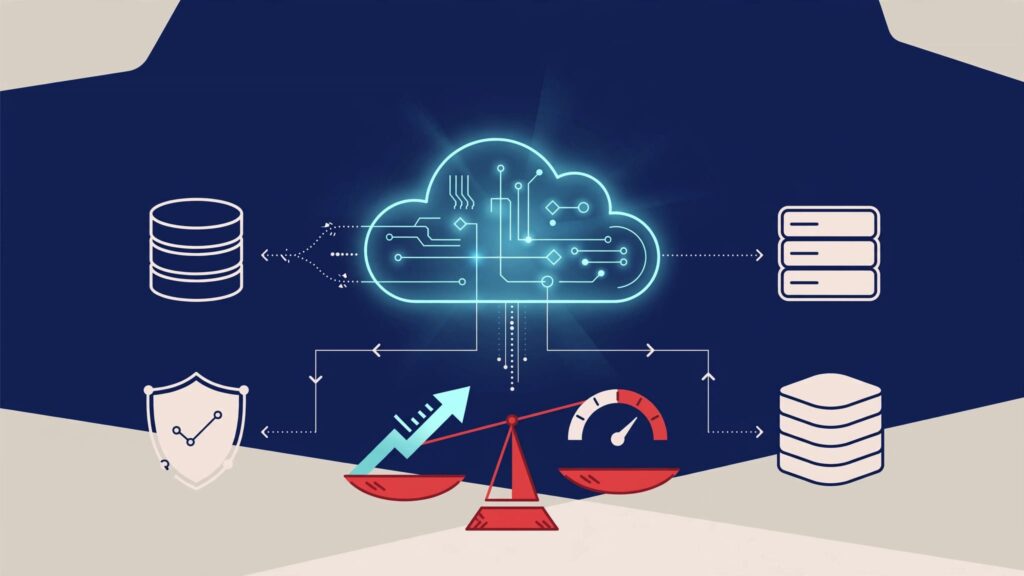
A surprise cloud bill is rarely only a finance problem. It usually points to unclear ownership, weak visibility, or product decisions nobody priced before they shipped.
Cloud cost governance provides cost control without requiring Finance to approve routine engineering work. The goal isn’t to reduce cloud spending at any cost. It is to make spend visible, intentional, and tied to business results.
You need a practical governance framework connecting cloud infrastructure decisions to growth, margin, resilience, and risk. It should let good growth investments move quickly while exposing waste, drift, and avoidable commitments early.
Key Takeaways for Cloud Cost Governance
- Treat cloud spending as an operating decision, not an invoice reviewed after month-end.
- Connect Finance, technology, and business accountability through a finops framework, rather than treating governance as a Finance-only process.
- Require clear allocation data and unit economics before launching cost-cutting exercises.
- Review budget variance through its business cause and management response, not as a financial afterthought.
- Approve long-term commitments only when demand is predictable and an accountable leader will monitor utilization.
- Give the board a concise view of spend, material variance, major commitments, and decisions requiring oversight.
Cloud Cost Governance Is About Decisions, Not Discounts
Cloud cost optimization focuses on reducing cloud waste. You might pursue database rightsizing, shut down idle test environments, or move older data into lower-cost storage. Those are useful actions.
Cloud financial management is broader. It covers reporting, forecasting, reconciliation, allocation, and budgeting.
Cloud cost governance asks a different question: who can make a spending decision, within what limits, and how will you know whether it worked?
That distinction matters when your company is growing, because cost control should protect profitable growth rather than block it. A cheaper architecture that slows product delivery or weakens security is not a win. Higher cloud spending and its resulting run rate may be entirely reasonable when they support profitable customer growth.
Put the business case ahead of the invoice
You do not need Finance to approve every infrastructure change. You do need a clear rule for decisions that materially affect run rate, customer commitments, data risk, or future flexibility.
Ask teams to state the expected business condition before they request capacity:
- Will this reduce customer wait time, support a contract, or increase transaction capacity?
- What does the change add to monthly run rate at expected usage?
- Who has ownership of the benefit and forecast, and who decides whether to continue or stop?
A product team may need to spend more during a successful launch. That is growth. A forgotten development cluster with no owner is not.
The FinOps Foundation’s allocation terminology is useful here. In practice, cost allocation provides the structure that connects cloud usage to accountable business owners. Without it, your cloud bill is a large number with no clear story.
Start With Ownership and Cost Visibility
You cannot make cloud cost governance work without cost visibility. Most bill shock comes from familiar forms of cloud waste. Common examples include unplanned data transfer, always-on non-production systems, fast-growing storage, duplicate environments, unmanaged marketplace purchases, and on-demand usage that should have been forecast. Anomaly detection provides early warning for unexpected transfer, storage, or non-production growth.
The fix is not another dashboard alone. It is a consistent ownership model, with a finops framework assigning accountability across Finance, engineering, and product.
Make allocation data a release requirement
Every material cloud asset should carry enough information to answer four questions:
- Which product, service, or business unit uses it?
- Who is accountable for the spend?
- Is it production, development, testing, or a temporary environment?
- What customer, transaction, or operational outcome does it support?
Use tags, labels, account structures, naming standards, or a documented combination that supports data governance, metadata quality, and access controls. The technical method can vary. The accountability cannot.
Set a target for tagging coverage, measured by the percentage of spend carrying valid allocation metadata, not merely tagged resources. One expensive untagged data platform can matter more than 500 small virtual machines.
Run a weekly exception report that tracks tagging coverage and identifies untagged resources. Give the accountable owner a short period to correct the record. After that, apply a default cost allocation rule and escalate repeated noncompliance to the accountable executive.
Untagged spend is not a data-cleanup issue. It is spend that lacks a business leader’s ownership.
Separate responsibility without creating silos
Finance should reconcile cloud invoices, manage the budget calendar, and challenge unsupported forecasts through cloud financial management. Technology should explain architecture, usage patterns, vendor terms, and technical tradeoffs. Product and operating leaders should own demand and business value.
Teams can use showback for awareness or chargeback for formal budget ownership, depending on the organization’s needs.
Your CFO should not be expected to choose database instance types. Your engineering lead should not be left to decide what level of margin pressure is acceptable.
A simple technology budget forecasting model for CFOs can help you establish that division of responsibility before the next budget cycle becomes an argument.
Use Guardrails Instead of Manual Approval Queues
Manual approvals feel safe until they slow delivery. Then teams work around them, create side accounts, or wait until an urgent request lands on an executive’s desk.
Guardrails are different. They set boundaries in advance and form the foundation of practical cloud cost governance.
Build guardrails into infrastructure workflows
Put policy checks into the same infrastructure-as-code workflow engineers already use to provision cloud infrastructure. These guardrails apply cost control and policy enforcement inside those workflows.
For example, your policies might:
- Block production deployments without an owner and cost center.
- Require expiration dates for test, demo, and sandbox resources.
- Restrict unusually large compute sizes unless a named exception exists.
- Flag public transfer routes or storage settings that could drive avoidable data egress charges, then require architecture review for approved regions and data governance.
- Require a review before teams create a new cloud account, subscription, or project.
AWS Service Control Policies, Azure Policy, Google Cloud organization policies, and Cloud Custodian are automation tools that can support this model. In multi-cloud environments, keep policy intent consistent even when implementation differs across AWS, Azure, and Google Cloud.
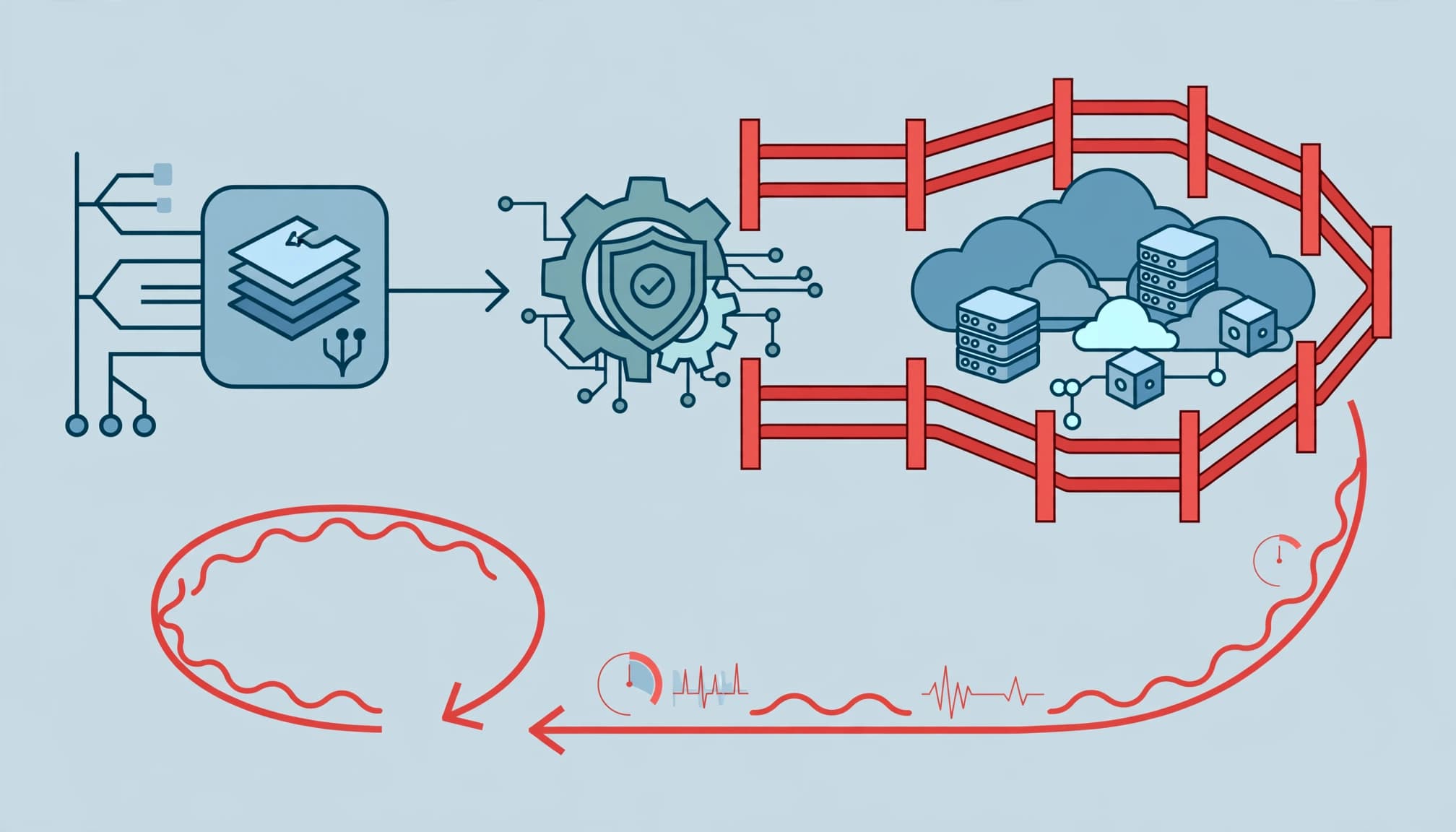
The rule should be clear enough to automate and narrow enough that it does not punish legitimate work. Automated controls support cloud cost optimization without slowing delivery.
Keep exceptions visible and time-limited
Some teams will need an exception. A major customer migration may require temporary capacity. An incident may call for rapid scale-out. These controls aren’t blanket denials, so keep fast paths open for incidents and customer migrations.
Make each exception explicit: who approved it, what it costs, when it expires, and what result it supports. Baseline policies, named exceptions, expiration dates, and monthly review create a governance framework.
Time-limited guardrails preserve engineering agility while preventing temporary choices from becoming permanent spend.
Measure Cloud Value, Not Only Cloud Spend
Cloud cost governance needs context: a flat cloud bill can hide falling revenue, customer experience, or delivery capacity. A rising bill can be healthy if it tracks profitable growth.
Your dashboard should connect cloud spending to output, linking cloud cost optimization and cloud financial management with reporting, forecasting, and operational results.
Use unit economics your operators recognize
For a SaaS company, that might mean cloud cost per active customer, per tenant, or per API transaction. For a distributor, it may be cloud cost per order processed. For a service organization, it could be cost per case, claim, or appointment.
AWS’s CFO guidance uses measures such as cloud cost per active customer and cost per unit of storage or data transfer. The right unit economics metric depends on what your business produces and whether increased usage improves resource optimization.
Use a small scorecard for each major product or platform, with a consolidated view across multi-cloud environments:
| Measure | What it tells you | Leadership question |
|---|---|---|
| Spend trend versus forecast | Whether assumptions still hold | What changed, and is it temporary? |
| Cost per business unit | Whether resource optimization, such as rightsizing, improves margins | Is cost per customer or transaction falling? |
| Tagged spend share | Whether spend has an accountable team | Which teams still have unaccountable spend? |
| Commitment coverage and use | Whether discounts match demand | Are we paying for capacity we use? |
| Idle or avoidable spend | Whether cloud waste is being reduced | What has been removed, not only identified? |
A useful technology dashboard for CFO decision-making should show the trend, the business driver, the accountable owner, and the decision required. Anomaly detection can flag sudden changes before the monthly review. It should not bury leadership in service-level detail.
Treat Commitments as Financial Decisions
Savings Plans, reserved instances, and committed use discounts can reduce unit cost. They also create a financial obligation that affects cloud spending. That makes them a cloud cost governance issue, not a purchasing exercise.
AWS Savings Plans are commitments to a consistent dollar amount of usage per hour for one or three years. Google Cloud committed use discounts work on the same basic principle: you accept a defined commitment in exchange for a lower rate.
Buy coverage only for stable demand
Don’t approve commitments based on a single busy month or an optimistic sales forecast. Build a baseline forecast from stable usage, then test it against realistic scenarios. Exclude workloads likely to be retired, moved, or redesigned.
Then name one executive owner for each material commitment, with clear ownership of the decision. That person should review reserved instances, coverage, utilization, upcoming expirations, and the assumptions behind the forecast.
A 40 percent discount on unused capacity is still wasted money.
Your commitment review should include Finance, the technology leader, and the business leader who owns demand. Test the baseline forecast against realistic scenarios before approving the purchase. If no one can explain the demand, keep the workload flexible.
Create a Monthly Operating Rhythm
Cloud cost governance works when it becomes ordinary management work for cloud spending. It fails when it appears only after a billing spike.
Hold a monthly 45-minute review with Finance, technology, operations, and the leaders who own the largest cost centers. This recurring cycle supports cloud financial management through reconciliation, forecasting, budget review, and decision review. Use the same agenda each time:
- Review material budget variance alongside material anomaly detection alerts, rather than treating alerts as isolated technical incidents.
- Use showback to give product and platform leaders visibility into their consumption.
- Address untagged spend and unresolved ownership gaps.
- Decide on major commitments, renewals, or architecture changes.
- Track savings or avoidance that has been realized, not merely identified.
- Escalate risks that affect customer delivery, margin, or planned growth.
Quarterly, bring a shorter version to the executive team or board. Good technology governance for boards gives directors oversight of material investments, risks, commitments, and decisions, supporting financial discipline without asking them to run infrastructure.
Do not let vendors define your roadmap
Cloud providers and software vendors can offer useful recommendations. Their incentives are not identical to yours.
Keep a current systems inventory of cloud assets, a contract register, and a view of renewal dates across multi-cloud environments. Ask whether a proposed service improves a stated business outcome, reduces a named risk, or replaces a cost you can retire.
This monthly rhythm makes the governance framework practical by clarifying decision rights, reviewing exceptions, tracking commitments, and supporting vendor accountability. That’s also where a strong vendor accountability framework earns its place. You need evidence of performance, cost, renewal risk, and ownership before a vendor becomes too embedded to challenge.
Frequently Asked Questions
What should a CFO own in cloud cost governance?
You should own financial integrity, forecast discipline, material commitments, and clear decision rights for spend. You shouldn’t own technical configuration decisions. Your role is to require a credible business case, useful reporting, and an accountable leader who can explain variance.
Will governance slow engineering teams down?
It will if you rely on manual approvals for routine work. Guardrails, automated rules, pre-approved patterns, and time-limited exceptions reduce friction. Engineers should know the boundaries before they build, not discover them after deployment.
When does a company need outside technology leadership?
You may have a technology leadership gap if spend is rising, accountability is scattered, vendor choices are driving strategy, and nobody can connect the bill to business priorities. A fractional CTO can establish a business-aligned technology strategy and decision rights without forcing an early full-time hire. An interim CTO may be the better fit when the leadership seat is vacant or trust has broken down.
Make Cloud Spend Easier to Defend
Cloud cost governance is not about making engineers ask permission to grow. It is about giving your company clearer ownership, reliable cost visibility, and practical boundaries that support good decisions at speed.
When cloud spending rises, anomaly detection should clarify what changed and who owns it. It should also show the business value involved and whether the trend is acceptable. That’s control without drag, with cost control built on predictable decisions and guardrails rather than blanket cost cutting.
If those answers still feel scattered, Get an Executive Technology Clarity Check and start with the decisions, accountability gaps, and risks that need attention first. Those priorities can shape a governance framework covering forecasts, value measures, tagging, anomaly response, commitments, and exception handling.