
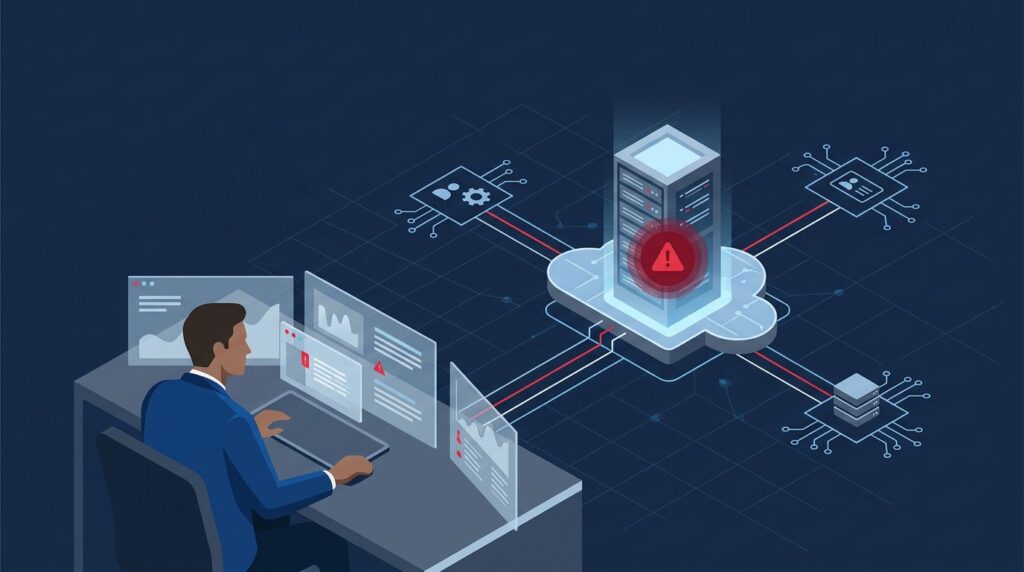
A competitor data breach is more than bad news for another company. It is a warning that your customers, vendors, cloud systems, or shared integrations may be exposed to the same attack path.
The first 48 hours are not the time for speculation, public criticism, or a rushed technology purchase. They are for establishing facts, reviewing shared dependencies, reducing comparable exposure, and giving leadership a clear view of what happens next.
Key takeaways
- Treat the breach as intelligence about your own attack surface, not as a competitor’s isolated problem.
- Review shared vendors, integrations, credentials, identity systems, and multi-factor authentication controls first.
- Patch analogous weaknesses before customers, regulators, insurers, or the board ask about them.
- Give one person authority to coordinate technology, legal, communications, vendors, and executive decisions.
- Convert the first 48 hours into a 90-day plan with owners, deadlines, and measurable outcomes.
What to change first after a competitor breach
A headline does not establish the full scope of a security incident or a data breach investigation. Public reports may describe a consumer data breach, but a third-party data breach does not confirm your exposure. Before your team starts changing systems, verify what happened and what is known.
Assign one incident lead. That person may be your CTO, CIO, security leader, or an outside executive. They need authority to coordinate internal teams and vendors, not another committee that debates every decision.
Bring legal counsel and your cyber insurer into the conversation early, with controlled information sharing among those who need to act. Preserve relevant logs, contracts, emails, security alerts, and vendor notices. Don’t delete or alter information because it looks unimportant. Small details often become important later.
Ask four questions:
- What systems or data did the competitor confirm were affected?
- Which third parties, cloud providers, platforms, or service partners were involved?
- Do you share any of those relationships or technical connections?
- Do you use the same attack vector, identity process, or software dependency, and does multi-factor authentication protect that path?
Don’t contact the competitor’s customers with unverified claims. Don’t speculate publicly about the cause. A competitor’s crisis is not a marketing opportunity. Your advantage comes from better preparation, faster decisions, and clearer customer communication.
The right starting point is a short executive incident response checklist that separates verified facts, open questions, owners, and decisions required.
Hours 4 to 12: Audit shared vendors and integrations
Many serious incidents begin with a provider relationship, not a direct attack on the company that suffers public damage. A third-party data breach can start with a vendor, software provider, managed service firm, identity platform, or connected partner. That relationship may become an attack vector into your environment.
SolarWinds and MOVEit showed how a supply chain attack can spread through connected relationships. Weaknesses in the software supply chain can affect many downstream organizations. Recent cloud credential campaigns reinforce another point. An attacker may not need to break your network when stolen credentials already provide access.
Black Kite’s 2026 third-party data breach report reported an average of 5.28 downstream companies publicly compromised for every breached vendor. That number should change how you read a competitor incident.
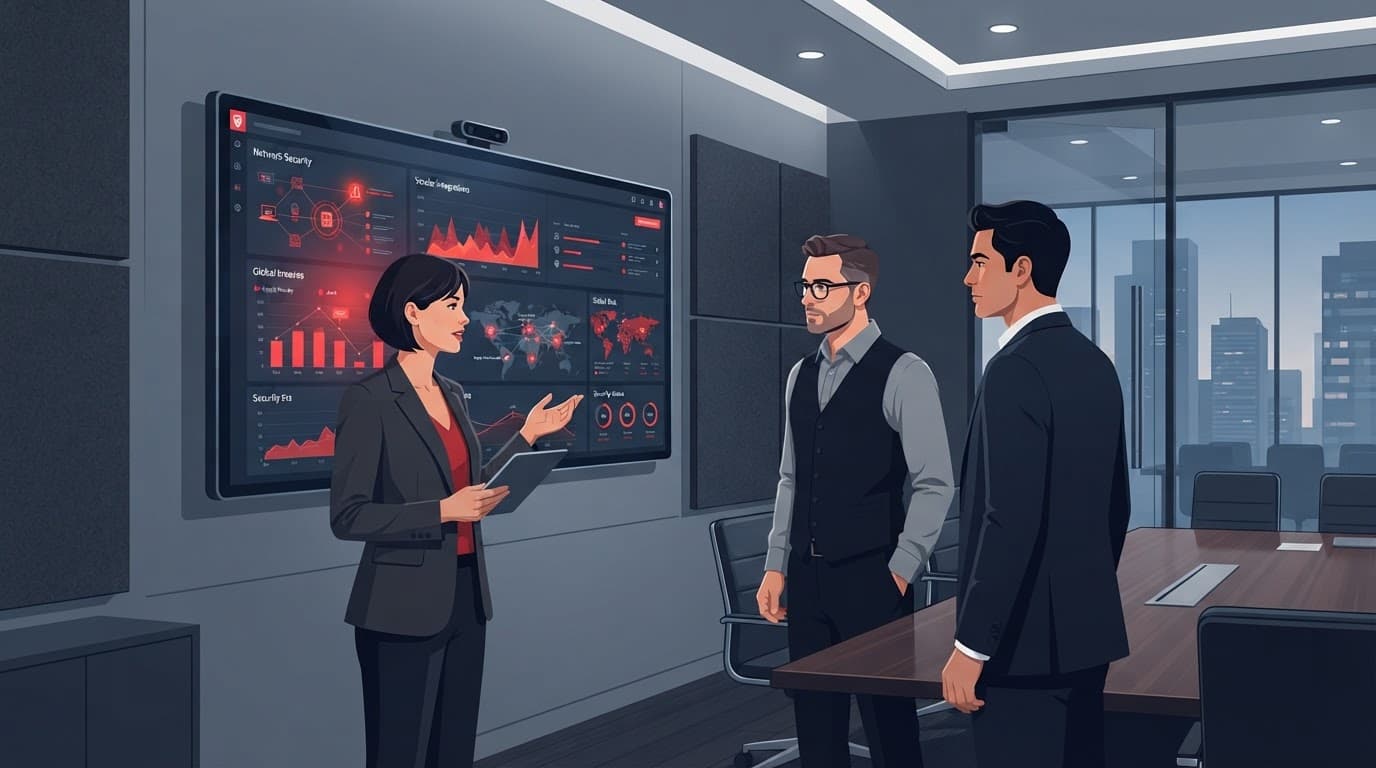
Review the following before the first business day ends:
- Compare the competitor’s disclosed vendors against your own supplier and SaaS inventory.
- Identify shared APIs, data processors, payment providers, customer platforms, and managed service providers.
- Check whether the same vendor has administrative access, single sign-on access, service accounts, or unattended integrations in your environment. Verify multi-factor authentication for shared SSO and administrative access. Check shared cloud services for a cloud misconfiguration.
- Ask each relevant provider for a written incident statement, affected versions, indicators of compromise, and details about the security vulnerability. Confirm required customer actions, including multi-factor authentication, through structured information sharing.
Your review should include vendors that do not store customer data. A provider with privileged system access can create serious exposure even when it does not hold your primary database.
If your vendor list is incomplete, treat that as a risk finding. A useful third-party vendor risk management guide can help you create one source of truth, tier vendors by access and business impact, and assign an accountable owner.
Do not shut down every connection without understanding the business consequence. Instead, follow your vendor incident response plan. Restrict unnecessary access, rotate exposed credentials and tokens, and confirm that vendor offboarding works when access must be removed quickly.
Hours 12 to 24: Patch analogous weaknesses
The question is not, “Were we breached in the same way?”
The better question is, “Could the same conditions exist here?”
A competitor incident may expose an attack vector involving phishing, stolen credentials, missing multi-factor authentication, infostealer malware, cloud misconfiguration, exposed remote access, weak service accounts, or vulnerable software dependencies. Supply chain research from Iowa State University discusses cases involving certificate theft, malicious software dependencies, and other weaknesses that can enable a supply chain attack across connected business relationships. You can review the supply chain cybersecurity research for additional software supply chain context.
Run a focused cybersecurity risk assessment or IT security assessment. Do not begin with a broad audit that produces a long report. Start with the access paths most similar to the competitor’s incident.
Check:
- Whether privileged and remote users have phishing-resistant multi-factor authentication.
- Whether former employees, contractors, and vendors still have active accounts.
- Whether service accounts use shared passwords or permanent credentials.
- Whether monitoring and response plans address an insider threat.
- Whether important logs are retained and reviewed.
- Whether backups are isolated, tested, and usable after a ransomware attack.
- Whether high-risk software and internet-facing systems are patched to address each known security vulnerability.
- Whether your teams know who can approve emergency access changes.
This is where access control best practices become a leadership issue. A technical fix has little value if nobody owns the decision, funding, testing, and follow-through.

Do not assume that a vendor’s clean statement closes the issue. Compare its claims against your logs, contracts, data flows, and system behavior. If the threat actor exploited a cloud platform, review your own cloud permissions and identity settings, including multi-factor authentication. If it involved a software update, check your dependency and deployment process. If the competitor used a different attack vector, compare the related controls anyway.
A third-party data breach should trigger a comparable-control review, even before you know the full details.
The goal is not to create panic. It is to close the gaps that are easiest to explain later and improve your security posture.
Hours 24 to 36: Bring legal and board oversight into the room
A third-party data breach can create more than consumer claims, including a class-action lawsuit. Business partners may allege contract violations or demand investigation costs, while shareholders may question whether directors and executives took reasonable steps to manage known cyber risk. Those possible claims create litigation risk, even when liability remains uncertain.
In the European Union, a recent Court of Justice of the European Union interpretation of GDPR has widened the conversation. In some circumstances, competitors may bring claims under an applicable unfair competition act when a data protection violation gives another company an advantage. That does not make every incident a competitor lawsuit. It does mean your legal review should consider more than regulator notices and customer lawsuits.
The FTC in the United States and the ICO in the United Kingdom can examine whether an organization’s security safeguards matched the relevant security standard for its data, public promises, and known risks. A regulatory penalty is one possible outcome, and findings from a consumer data breach may create separate notification or privacy obligations. Contractual duties, sector rules, privacy laws, and cyber insurance requirements may create separate obligations.
Your board does not need a technical incident diary. It needs a decision-ready view covering:
- What happened and what remains unknown.
- Which business services, customers, and vendors may be affected.
- The current business consequence and credible worst case.
- The accountable executive and the next mitigation deadline.
- Whether notification, public communication, or insurance action is required.
- What decision or funding approval leadership needs from directors, including investments such as multi-factor authentication.
Management should document information sharing with counsel, insurers, regulators, and leadership. It should also map each obligation and its supporting evidence to a compliance framework.
Good board cybersecurity reporting and risk oversight keeps attention on exposure, ownership, timing, and tradeoffs. It also gives the board a basis for discussing cyber risk appetite. A board cannot govern a risk that management cannot describe.
Hours 36 to 48: Build the 90-day control plan
The first 48 hours should end with more than a list of emergency fixes. You need a 90-day operating plan after a third-party data breach. It should keep cyber risk management visible after the news cycle ends.
Create a 90-day plan with no more than a few major outcomes. For example, complete a systems inventory, replace weak authentication with multi-factor authentication, tier critical vendors, test recovery, and close the highest-risk attack vector.
Each item needs a business owner, a technology owner, a deadline, and evidence of completion. Assign an accountable owner to vendor risk management, then add the work to your normal technology operating rhythm. Keep it in executive and board reviews until the risk is controlled.
Your plan should also cover:
- Vendor risk management, including vendor due diligence and contract requirements.
- Vendor management, access reviews, and offboarding, with multi-factor authentication for vendor access and structured information sharing with key providers or industry groups.
- Business continuity planning and disaster recovery planning, including recovery tests for a ransomware attack.
- Incident response readiness and ransomware readiness.
- Cyber insurance renewal requirements and evidence requests.
- Data governance, privacy obligations, and critical data flows.
- The technology roadmap changes required to reduce repeated exposure.
Black Kite’s reporting on cascading supply chain risk shows why vendor risk cannot remain a procurement exercise. A supply chain attack can begin with a commercially important vendor and still create unacceptable operational exposure.
Review the plan weekly for the first month, then at a cadence that matches the remaining risk. Use continuous monitoring to keep progress visible between formal reviews. Define measurable controls, such as the percentage of privileged accounts protected by multi-factor authentication. If a control has no owner or no test, it is not complete.
When the breach exposes a technology leadership gap
Your internal team may already be working hard. You may have technical managers, an MSP, security tools, and outside counsel. The problem may still be unclear ownership, weak reporting, and decisions no one feels confident defending. Those gaps can make your security posture harder to manage.
That is a technology leadership gap. Executive technology leadership connects the incident, business priorities, vendors, spending, risk, and board communication into one operating picture.
A fractional CTO, part-time CTO, virtual CTO, or outsourced CTO can provide fractional technology leadership when you need senior judgment without a full-time hire. An interim CTO and interim CTO services fit better when the leadership seat is open, trust has been damaged, or stabilization cannot wait for a search.
If the pressure is mainly security-related, a fractional CISO, virtual CISO, or interim CISO may be the right complement. That role can lead identity-control remediation, including multi-factor authentication. If the problem crosses enterprise systems, data, and operations, a fractional CIO may fit better.
The title matters less than the mandate. You need someone who can establish a business-aligned technology strategy, adjust the technology roadmap, clarify decision rights, and give leaders reporting they can trust. That includes clear coverage reporting for controls such as multi-factor authentication. If the situation feels scattered, Get an Executive Technology Clarity Check can help identify what needs attention first.
Conclusion
A competitor data breach gives you a rare view of how attacks move through vendors, credentials, software, and unclear ownership. Use that insight before similar conditions create your own incident.
Verify the facts, inspect shared dependencies, reduce comparable exposure, involve legal and the board, and assign owners for the next 90 days. The best response is not the loudest one. It is the one that gives your business clearer visibility and more confident decisions.
FAQs
Can a competitor’s breach create legal exposure for my company?
Not by itself. A competitor’s breach does not mean your company experienced a consumer data breach. It can reveal shared vendors, contractual dependencies, or similar weaknesses that create obligations for your business. Partners, shareholders, regulators, customers, or competitors may raise questions if your safeguards, disclosures, or response fall short.
Should you stop using a shared vendor immediately?
Not automatically. First confirm what access, data, versions, and systems are involved. Then restrict unnecessary access, rotate credentials, preserve evidence, and enforce multi-factor authentication. Follow your vendor incident response plan before restoring or expanding access. A rushed shutdown can create operational damage without addressing the underlying exposure.
Could an unfair competition act apply if a competitor gains an advantage?
Possibly, but not automatically. Whether an unfair competition act creates exposure depends on the jurisdiction, the competitor’s conduct, and the facts surrounding the advantage. Consult qualified counsel before assuming the breach supports a claim or creates liability for your company.