
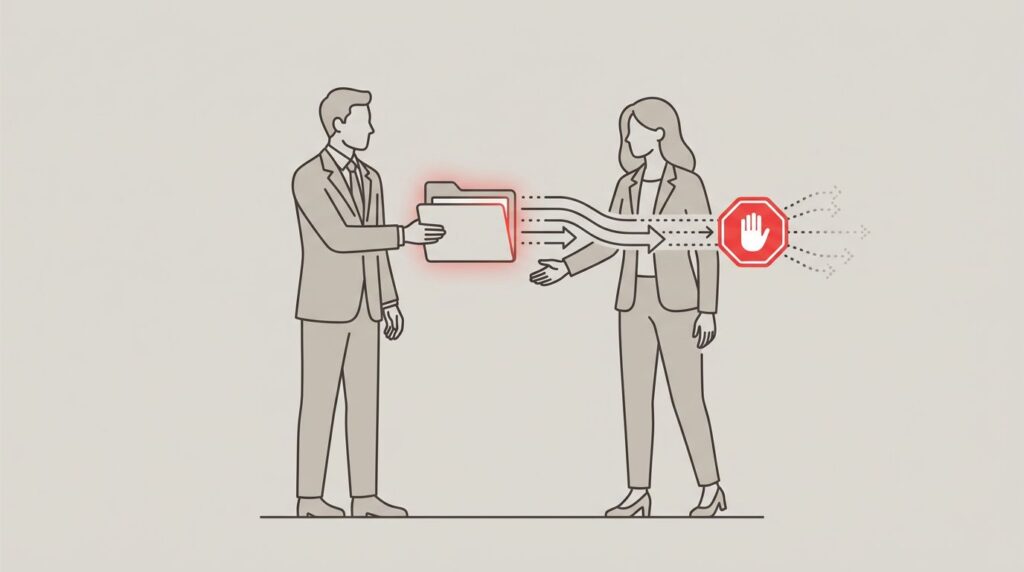
A client can give informed consent to a referral in one conversation and withdraw consent in the next. If your system can’t keep up, trust breaks fast.
This is where many partner networks get exposed. Personal data moves across staff, forms, inboxes, and outside organizations. One missed update can turn a routine handoff into a privacy problem.
You don’t need a thick policy to fix this. You need a consent withdrawal process that is clear, owned, and fast.
Key takeaways
- Exercising the right to withdraw should be as easy as giving consent.
- Future sharing must safely stop fast, not after internal debate.
- Partner notices need confirmation, not hope.
- One owner should track the request through completion.
- Honor the right to object to future data usage.
Why referral consent gets messy
Consent withdrawal sounds simple on paper. In practice, it breaks where your referral flow data processing is already weak.
As the data controller, who receives the request? Who updates the case record? Who tells the partner? Who confirms back to the client? If those answers change by person, office, or tool, you do not have a real process. You have a memory test.
By 2026, the direction across privacy rules is clear, with GDPR compliance demanding a strong legal basis for all activities. Make withdrawal easy. Handle it quickly. Keep a record. The Law Society’s guidance on withdrawing consent puts it plainly: data subjects should be able to withdraw consent in the same way they gave informed consent, respecting their right to withdraw as per your privacy policy. The IRIS Consent Guide also makes an important point for referral networks: consent should not be a condition of receiving services, so you need an alternate path when a client submits a withdrawal request.
That last part matters. A withdrawal request is not only about compliance. It is about service continuity, safer data handling, and calmer leadership under pressure.
“Sent” is not a safe status once consent has changed.
What a sound consent withdrawal process looks like
A good process is not a policy paragraph buried in a handbook. It is a short operating sequence your team can follow on a busy day.
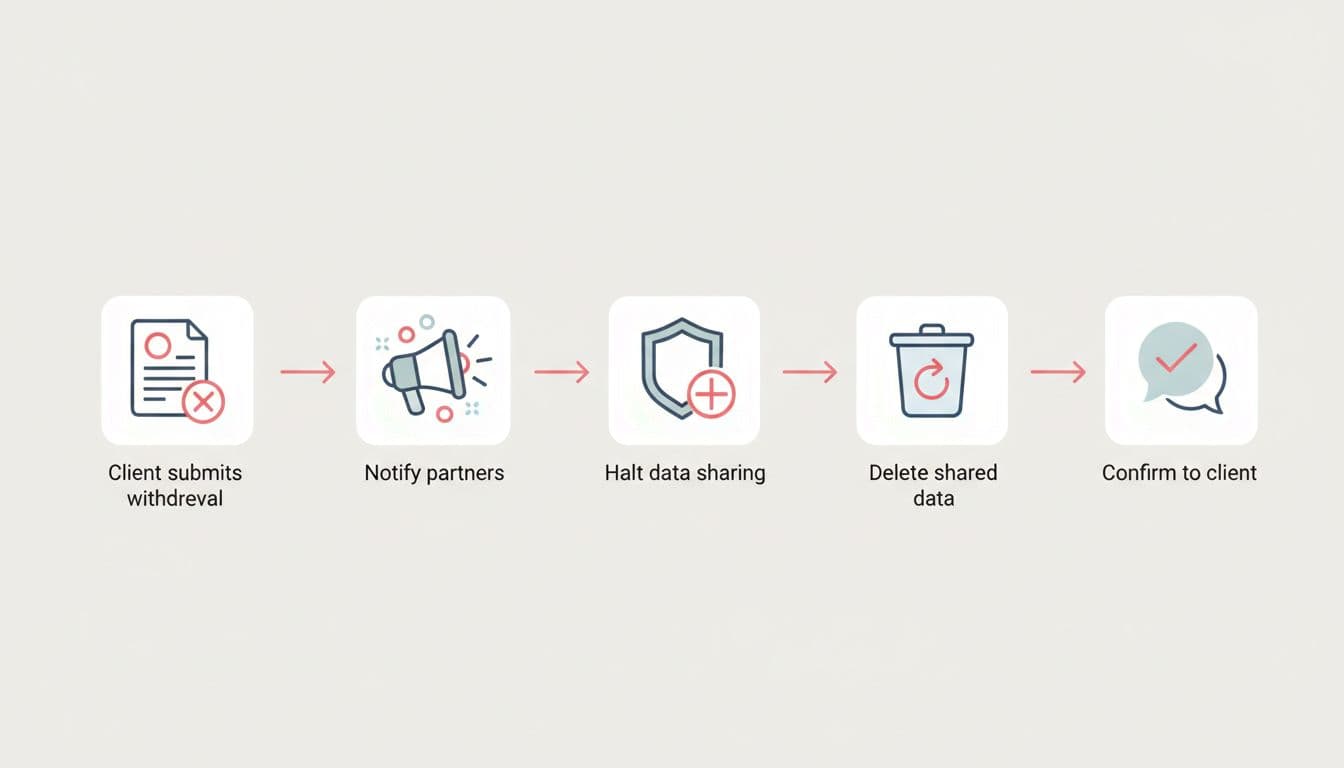
- Accept the request through the same channels where unambiguous consent was given. If clients can consent by phone, form, email, or portal, they should be able to withdraw there too.
- Verify the withdrawal request and define the scope. Are they revoking permission for one partner, one referral, or all future sharing?
- Cease processing future sharing right away. Freeze queued referrals, follow-up activities, and automated notices tied to that consent.
- Notify affected partners using a standard message. Ask for confirmation that the referral record is updated and no new use will continue beyond what law or contract allows.
- Confirm back to the client. Tell them what changed, when it changed, and whether any prior sharing cannot be undone.
One person should own this from start to finish. Not five people half-owning it. You also need one place with solid record-keeping where current consent status is visible. If the CRM says “yes” but the spreadsheet says “unknown,” your process will fail under stress.
This is also where referral design matters. A closed-loop referral playbook helps you define when a handoff is truly complete, and the intake-to-outcome clarity checklist helps you spot where informed consent, status, and ownership break between intake and outcome.
Where withdrawals fail, and what that costs you
The most common failure is not bad intent. It is scattered operations.
A staff member updates one system but forgets the partner email thread. A partner gets notified of the withdrawal request, but no one confirms receipt. A blanket consent form is treated as permission for every future handoff, including marketing communications. An urgent client situation leads to side-channel sharing of personal data, identifiable private information, and genomic and health-related data that never makes it back into the official record.

The cost is bigger than a privacy mistake. You lose cleaner visibility. Staff waste time reconciling records. Partners lose confidence in your process. Boards and funders hear that client data is “handled carefully,” but as data controller, leadership cannot prove it.
You also create a service problem. The 603 Legal Aid privacy rights request page shows the balance well. Withdrawing consent may change what services can continue, but it does not invoke the right to erasure for what was lawfully done before the request on a valid legal basis. If your team cannot explain that clearly, clients get confused and staff improvise.
If requests arrive through too many doors, fix that first. A single front door intake guide can help you set one entry point, shared rules, and safer routing for sensitive information.
Conclusion
When a client wants to withdraw consent for data processing and sharing, your system should stop with them. Not next week. Not after three internal messages. Right then, with a record.
The strongest version of this process is boring on purpose. One owner. One visible status. One partner notice path. One client confirmation. That is how you protect trust through proper record-keeping when pressure is high.
FAQ
Does a withdrawal apply to every partner?
Not always. You should confirm the scope with the client. Partner-specific consent is safer than guessing from a broad old form.
Do you have to delete everything already shared?
Not in every case. You usually need to cease processing and stop future sharing first, then follow policy, law including federal regulations, and partner terms for data retention, deletion, retention, or anonymization of the data subject’s personal data.
How fast should you handle a withdrawal request?
As fast as your team can act, with same-day operational stop as the target. The current expectation across privacy practice is simple: easy opt-out to withdraw consent, fast action, clear records on data processing.
How does withdrawal apply in clinical trials and research participation?
In clinical trials and research participation involving human participants, withdrawal of participants requires prompt cessation of participation. Certain requirements might stem from an IRB application, with added protections for human participants in research participation.