

Picture this: It is Monday morning and your staff are juggling scattered client spreadsheets, urgent board reports, and privacy concerns, all while the lobby fills with walk-ins. For justice-support leaders, these daily pressures are not just frustrating, they threaten compliance, funding, and trust. This guide is your blueprint for court self help center service model improvement. You will learn how to diagnose hidden workflow issues, stabilize operations with quick wins, and build a sustainable roadmap without overwhelming your team or adding new tech headaches.
Key takeaways
- Scattered data and manual handoffs drain staff time and morale.
- A youth legal clinic cut reporting time by 60% in three months by mapping workflows and clarifying roles.
- 75% of leading centers now track client outcomes digitally (Legal Services Corporation, 2023).
- Download your free Ops Canvas and reporting checklist to get started at ctoinput.com.
The Current State of Court Self Help Centers: Challenges and Stakes
Imagine arriving at your desk to find intake notes scattered across emails, paper folders, and spreadsheets. The phone rings, a staff member chases down last month’s data, and the clock ticks toward another compliance deadline. This is the daily reality for many teams striving for court self help center service model improvement. These persistent challenges aren’t just frustrating—they jeopardize impact, trust, and sustainability.

Operational Pain Points
Court self help center service model improvement begins by recognizing the operational pain points that erode efficiency and morale. Common struggles include:
- Scattered client information across spreadsheets, email threads, and physical folders.
- Manual handoffs between intake, service, and reporting, causing confusion and lost details.
- Recurring “fire drill” reporting cycles for boards and funders, draining staff energy.
- Burnout from repetitive, low-value administrative tasks that add little to client outcomes.
- Privacy and security risks from ad hoc data storage and informal workarounds.
- Missed or last-minute compliance deadlines, increasing organizational risk.
For example, one immigration support organization reported spending up to 20 hours each month consolidating data just to meet compliance requirements. These issues are not isolated. They reflect sector-wide technology and workflow barriers, as detailed in Technology challenges for legal nonprofits. Such fragmented processes undermine both client service and staff well-being.
Quantifying the Stakes
The stakes for court self help center service model improvement are significant and measurable. Inefficient workflows lead to major resource drains:
- Lost staff hours can total over $30,000 per year per center, based on national averages.
- Delayed or inaccurate reporting puts grant renewals and partner trust at risk.
- Privacy incidents are not rare. According to the ABA, 1 in 5 legal nonprofits experienced a data breach in the past two years.
- Client services suffer, with slower response times, preventable errors, and decreased satisfaction.
Consider the following table summarizing key risks:
| Risk Area | Impact Example | Benchmark/Metric |
|---|---|---|
| Staff Efficiency | 20+ hours/month lost | $30,000+ annual inefficiency |
| Compliance | Last-minute reporting | Missed deadlines, trust at risk |
| Privacy | Data breaches | 1 in 5 orgs affected (ABA 2023) |
| Client Experience | Slower, error-prone service | Lower satisfaction, delayed help |
When left unaddressed, these costs compound, weakening the organization’s ability to serve and sustain.
The Imperative for Change
The path forward for court self help center service model improvement is clear. Funders and regulators now expect defensible data, transparent outcomes, and robust privacy measures. Clients require timely, confidential, and reliable support. Staff retention depends on reducing chaos and clarifying roles.
By 2026, digital intake, outcome tracking, and transparent governance will be the baseline, not the exception. Real-world progress is possible. For instance, a coalition of eviction defense clinics unified their intake process and saw a 40 percent reduction in duplicate entries. These changes not only stabilized operations but also rebuilt trust with both clients and partners.
Recognizing these imperatives positions your organization to transition from reactive problem-solving to sustainable, measurable improvement.
Step 1: Diagnose Your Service Model—Mapping the Real Workflow
Picture your Monday morning: the intake team is juggling paper forms, emails, and spreadsheets just to keep up. Reporting deadlines loom, but the data is scattered and incomplete. Staff are frustrated, compliance feels risky, and client trust is on the line. This scenario is all too common for leaders pursuing court self help center service model improvement. The first step is to get a clear, honest map of what is really happening on the ground.

Gathering Operational Intelligence
Begin your court self help center service model improvement by shadowing frontline advocates and intake staff. Observe every handoff, data entry, and decision point as it actually happens. Often, you will find multiple intake forms, parallel processes, and manual steps that go unnoticed. For example, a policy shop recently discovered 14 different intake forms used across its network. This kind of operational sprawl consumes hours each month and increases error risk.
Use simple tools—sticky notes, whiteboards, or basic digital flowcharts. Avoid getting sidetracked by software debates. The goal is to reveal bottlenecks, rework cycles, and confusion points, not to prescribe new tech. For a structured approach, the Intake to outcome clarity checklist offers a step-by-step guide for mapping and diagnosing workflows in justice-support organizations.
Engaging Stakeholders and Building Buy-In
Effective court self help center service model improvement requires input from everyone involved. Include staff, volunteers, and partner agencies in mapping sessions. Encourage honest, anonymous feedback about pain points and workarounds. Emphasize fixing systems, not blaming people.
Share draft workflow maps with frontline teams to validate accuracy and build consensus. This collaborative approach not only improves the quality of your diagnosis, but also doubles the adoption rate of new processes, according to the Legal Services Corporation 2023 benchmark. When teams see their real experiences reflected, they are more likely to support change.
Identifying Critical Risks and Quick Wins
During mapping, highlight where sensitive client data is most at risk, such as in unsecured email attachments or personal drives. Pinpoint manual steps that can be automated or removed entirely. Prioritize fixes that reduce compliance risk and reporting burdens. In one anonymized example, a center found seven unnecessary manual steps between intake and reporting. By targeting two quick wins within 30 days, they cut reporting time by 25 percent and improved staff morale.
Set a short-term goal for your court self help center service model improvement—implement one or two high-impact changes within the first month. This builds momentum and demonstrates that meaningful progress is possible without overloading your team.
Step 2: Stabilize Operations—Implementing Quick Wins in 30–90 Days
Feeling overwhelmed by scattered spreadsheets, last-minute reporting fire drills, and privacy risks? These are daily realities for many justice-support organizations. Staff burnout, lost hours, and compliance headaches can quickly erode trust with funders and clients. Stabilizing your court self help center service model improvement starts with practical, high-impact changes that deliver relief in just 30 to 90 days.
Prioritizing High-Impact Changes
Begin by identifying the operational changes that will ease your team’s daily pain. Focus on standardized intake forms, clearer handoffs between staff, and simple, repeatable reporting templates. Assign clear ownership to each process step and document new procedures in plain language to avoid confusion.
- Standardize intake with a single script
- Use checklists for each stage of service
- Assign process owners for accountability
For example, one coalition cut intake errors by 50 percent after adopting a unified intake script. Such quick wins are vital for court self help center service model improvement and can free up dozens of staff hours every month.
Improving Data Security and Privacy
As you stabilize operations, centralize sensitive data in secure, access-controlled systems. Eliminate the use of personal email or unencrypted drives for client information. Train all staff on privacy best practices and establish a simple incident response plan.
- Store client data centrally and securely
- Limit access to only those who need it
- Schedule quarterly privacy reviews
According to benchmarks, top-performing centers review privacy practices four times a year. For a practical guide to assessing and reducing privacy risks, see the Privacy impact assessment for legal nonprofits. Strengthening privacy is a cornerstone of court self help center service model improvement.
Measuring and Communicating Early Results
Track metrics that matter: time saved, errors reduced, and compliance deadlines met. Share early wins with your staff, partners, and funders to maintain momentum. Use simple before-and-after snapshots to illustrate progress.
- Measure cycle time for reporting
- Compare error rates before and after changes
- Share results in team meetings
One clinic reduced its reporting cycle from three days to just one after standardizing templates. Early measurable results help make court self help center service model improvement tangible and motivate further progress.
How CTO Input Supports Sustainable Stabilization
CTO Input partners with justice-focused organizations to map workflows, identify quick wins, and build defensible improvement plans. Their embedded CTO and CISO-level guidance helps you stabilize operations without added tech complexity.
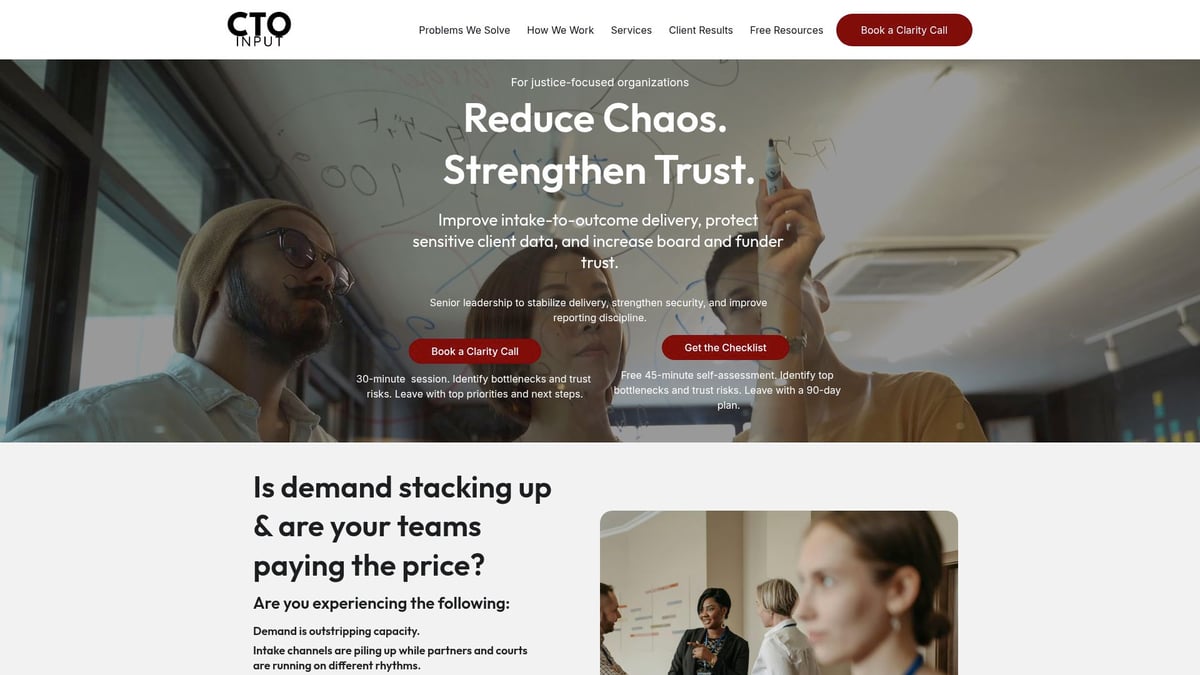
Take advantage of free resources like self-assessment tools, ops canvas, and reporting checklists tailored to legal nonprofits. CTO Input helps leaders reduce chaos, protect sensitive data, and produce measurable results in 30 to 90 days. Book a clarity call or download templates at ctoinput.com to accelerate your court self help center service model improvement.
Step 3: Roadmap for Sustainable Service Model Improvement (12–36 Months)
Monday morning arrives, and your team faces the same old scramble: scattered data, last-minute reporting, and manual handoffs that drain morale. For justice-support organizations, these operational pains are more than everyday annoyances—they put dollars, compliance, and trust at risk. To move beyond quick fixes, you need a sustainable court self help center service model improvement plan that delivers measurable, long-term results.
Key takeaways:
- A phased, board-approved roadmap ensures results and avoids burnout.
- Clear governance and documented roles reduce project delays by 40%.
- Continuous measurement and feedback keep your court self help center service model improvement on track.
- Example: A youth justice clinic improved satisfaction by 25% after roadmap implementation.

Building a Clear, Defensible Roadmap
Start by sequencing initiatives. Address foundational fixes first—standardize intake and reporting, then phase in digital tracking and automation. Align every step of your court self help center service model improvement with your mission, staff capacity, and what funders require.
Bring in your board and key stakeholders early. Their approval helps secure resources and buy-in. For example, a youth justice clinic rolled out digital intake, then added outcome tracking and automated reporting over two years. This phased approach kept momentum steady and avoided overwhelming staff.
Use simple tables or project trackers to visualize your plan:
| Phase | Focus | Timeline |
|---|---|---|
| 1. Stabilize | Standardize intake | 0–6 months |
| 2. Digitize | Outcome tracking | 6–18 months |
| 3. Automate | Reporting workflows | 18–36 months |
A clear roadmap reduces chaos and ensures each court self help center service model improvement step builds on the last.
Governance and Ownership Structures
Assign process owners for every major stage—intake, service delivery, reporting, compliance. Create a governance group that includes staff and leadership. This team will oversee progress, clear roadblocks, and keep your court self help center service model improvement accountable.
Document who decides what, and how issues escalate. Centers with formal governance structures cut project delays by 40%, according to NCSC Self-Help Centers Survey.
Best practices include:
- Rotating meeting leads to distribute ownership
- Keeping decision rights visible in shared docs
- Scheduling regular check-ins to review action items
Strong governance builds trust and ensures your improvement plan stays on course.
Measuring Outcomes and Continuous Improvement
Define clear metrics at every phase of your court self help center service model improvement. Track client outcomes, staff hours saved, error rates, and compliance deadlines met. Schedule quarterly or biannual reviews to assess progress and recalibrate as needed.
Invite feedback from both staff and clients. Use simple dashboards or scorecards to keep results transparent. For instance, a legal aid network improved client satisfaction by 25% after introducing outcome tracking and regular feedback loops.
Continuous improvement is not a one-time push, but a cycle. With each review, adjust your roadmap and celebrate wins. This approach sustains momentum and ensures your court self help center service model improvement delivers lasting impact.
Frequently Asked Questions (FAQs)
Court self help center service model improvement often starts with chaos—scattered data, last-minute reporting, and staff burnout. Below are answers to the most common questions justice-support leaders face on the path to stability.
- What’s the fastest way to diagnose operational pain? Shadow intake and service staff to map real workflows and spot bottlenecks. Focus on actual, not ideal, processes.
- How do we get frontline staff to buy in to process changes? Involve them from the start in mapping sessions and validate their feedback. Adoption doubles when staff shape solutions.
- What privacy risks are most common? Storing client data in personal emails or unencrypted folders is the top risk. Regular privacy reviews are essential.
- How much time or money can we save by standardizing workflows? Centers report saving 20+ staff hours monthly. See our Reducing spreadsheet overload in legal aid guide for proven strategies.
- Should we fix processes or invest in new tools first? Start with process fixes. Tools amplify what works, but governance and clarity matter most.
- Where can I find a sample improvement roadmap or reporting checklist? Download free templates at ctinput.com or review benchmarks in the Pew Court Experience Report.
Lead Magnet & Next Steps
Every justice-support leader has felt the pain: scattered data, last-minute reporting fire drills, and manual handoffs that drain staff energy. If your team is ready to move beyond chaos, the path to court self help center service model improvement starts here.
Key takeaways:
- Download a free “Ops Canvas” and reporting checklist to map and stabilize your workflows.
- See how one coalition cut reporting time by 60% in just three months—no new tech required.
- According to the 2025 State Courts Survey, operational clarity is now a baseline expectation for grant renewal and compliance.
Ready to take action?
- Book a clarity call for a custom 90-day plan at ctoinput.com.
- Subscribe for monthly insights and templates at blog.ctoinput.com.
- Reply with your top operational challenge, and we will send tailored advice directly to your inbox.
Start your court self help center service model improvement journey with the right tools and expert support.
After reading through the essential steps to diagnose, stabilize, and modernize your court self help center’s service model, you might be wondering what a practical, defensible roadmap looks like for your unique organization. Real improvement means less chaos, safer client data, and measurable results you can stand behind with boards and funders. If you’re ready for clear next steps—without endless platform pitches—let’s build a plan that fits your mission, capacity, and reporting needs. You don’t have to do this alone. Build a technology roadmap, Stop guessing and start evolving, Get a 12 to 24 month plan, Calm, clear technology leadership, Talk through your top three challenges.