
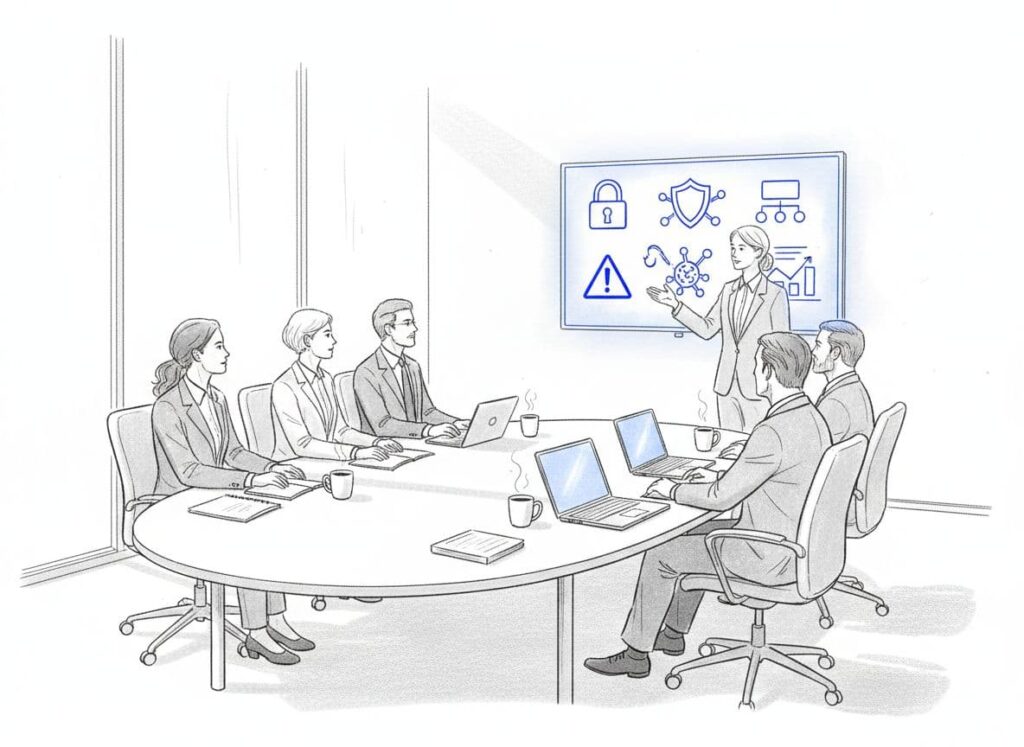
You are a CEO or non-technical board member who keeps hearing, “Cybersecurity is under control.” Then you read about another ransomware story and wonder if your fiduciary duty would make you the one blamed when it hits your company.
Regulators, lenders, and customers now expect boards to show real board oversight on cybersecurity basics for board members, yet the reports you get are full of acronyms and tools. You see rising IT and security spend, but you are not sure what risk has actually gone down.
CTO Input exists to sit on your side of the table. The work is simple in concept: connect tech, cost, and cybersecurity risk to the real business, in language the board of directors understands. By the end of this guide, you will have a short list of moves and questions you can bring to your next meeting so cyber risk stops feeling like fog and starts looking like a clear strategic priority.
Cybersecurity Basics For Board Members: What You Actually Need To Know
Cyber, a key digital risk, is now a core business risk, like financial, legal, or operational risk. It is part of how you protect revenue, cash, and reputation.
A simple definition works best: cybersecurity, or information security, is how your company protects its systems (including medical devices), data, and sensitive information like personally identifiable information (PII) from cyberattacks so you can keep serving customers and hit your goals. That is it. Everything else is detail.
The data is blunt. Recent reports show about 18% of mid market companies suffered data breaches from cyberattacks in the last year. Around 44% of all breaches involved ransomware. Almost half of all breaches hit firms with fewer than 1,000 employees. Weak or stolen passwords are involved in more than 80% of breaches, and phishing emails trigger about 16%.
You are not too small to be interesting. You are just big enough to be profitable for attackers.
If you want a more formal governance view, the Corporate Governance Institute has a helpful cyber security guide for board members that echoes the same message: this is now normal board work.
The real stakes: money, downtime, reputation, and personal liability
When a mid market company is hit, the damage shows up in familiar places.
You can lose cash directly through fraud or ransom payments. Recovery from ransomware now averages close to two million dollars when you include cleanup, legal, and lost productivity. Operations can grind to a halt for days if core systems are locked or data is corrupted.
Then the second wave hits. Customers question your reliability. Sales teams lose deals because information security questionnaires are painful to answer. Lenders and investors start asking harder questions about controls, business continuity, and regulatory compliance.
There is also personal risk. SEC rules now define the board’s role in overseeing cyber risk and disclosing material incidents within four business days. Weak oversight can turn into regulatory scrutiny or reputational damage for individual directors, not just the company logo.
This is why non technical board members need a clear, repeatable view of cyber risk, backed by solid cybersecurity practices. It protects the company and it protects you.
The main types of cyber threats your board should recognize in today’s threat landscape
You do not need a long threat catalog. You should at least recognize these patterns:
- Ransomware: Hackers lock or steal your data and demand payment. It matters because it can stop billing, shipping, and customer service overnight.
- Phishing and AI powered scams: Fake emails, texts, or voice calls trick staff into sharing passwords or paying fake invoices. This hits finance, HR, and executives directly.
- Stolen or weak passwords: These vulnerabilities let attackers log in like a normal user, then move around quietly. Most breaches still start here, which is why strong passwords and multi factor authentication are non negotiable.
- Cloud attacks: Misconfigured cloud systems or shared accounts, common vulnerabilities, let outsiders reach data that once sat behind your office firewall. As more of your stack moves to SaaS, this grows.
- Third party and vendor risk: A third-party vendor gets breached and attackers jump into your environment through that connection. You can outsource functions, not accountability.
Each of these is a business problem. The impact is lost revenue, broken trust, and more scrutiny from regulators and partners.
Board Oversight Duties: Simple Questions That Turn Cyber From Fog Into Facts
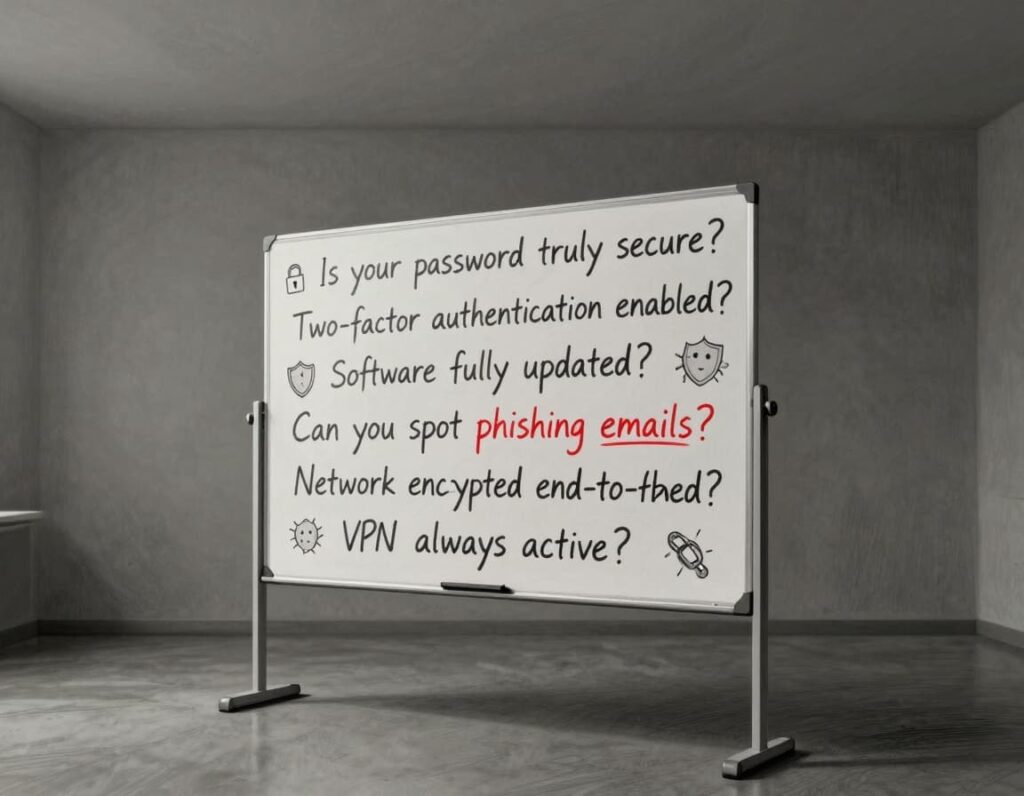
The board’s role in cybersecurity oversight does not require a degree in security. You need a small set of duties, translated into questions, that tie directly to business outcomes.
Think of your governance job in three parts: set expectations, ask better questions, and track a small handful of numbers. If you do that, you will get fewer surprises and faster, cleaner responses when something goes wrong.
Set clear expectations: what “good enough” cyber risk management looks like
For a company in the 2 to 250 million revenue range, “good enough” cyber does not mean perfect. It means intentional.
At a minimum, expect:
- Cyber risk on the board of directors agenda at least quarterly, with a clear owner presenting. That owner might be a CIO, CISO, fractional leader, or a cross functional committee.
- A short, written incident response plan that names roles, decisions, and outside partners.
- A few basic controls in place: multi factor authentication on critical systems, tested backups kept separate from production, employee phishing training, and vendor security checks.
- Regular tests of plans, even simple tabletop exercises where leaders walk through a fake incident.
Your role is to ask: “Is our level of cyber risk in line with our enterprise risk management, growth plans, regulatory duties, and contracts?” If the honest answer is no, the board can adjust strategy or investment.
For a practical reference, many boards find the NCSC Cyber Security Toolkit for Boards a useful checklist.
Ask better questions: a short list you can take to your next board meeting
You do not need ten pages of charts. You need plain answers to pointed questions. For example:
- What are the top three cyber risks to our revenue this year, in plain language?
- If ransomware hit us tonight, how long would we be down and who would decide whether we pay?
- Do we use multi factor authentication for our most important systems and data?
- How are we checking the security of our key vendors and cloud providers?
- Which cyber incidents would we need to report under SEC or other rules, and who makes that call?
- When was the last time we tested our backups and our incident response plan?
These questions force clarity, impact, and clear ownership.
Track a few simple metrics instead of drowning in information technology (IT) detail
Ask for a one page view with a stable set of metrics, for example:
- Number of material incidents this quarter (up, down, or flat).
- Average time to detect and contain an incident.
- Percent of staff who completed phishing training and passed tests.
- Percent of critical systems with multi factor authentication turned on.
- Number of high risk vendors without a recent security assessments.
You care most about trends. Are we getting better, holding steady, or sliding backward?
A Simple Cyber Action Plan For Non Technical Boards
Knowledge is helpful, but action is what changes your risk profile. You do not need a 100 step plan. You need a short, believable roadmap for the next 3 to 12 months.
Here is a simple sequence your board can sponsor.
Move 1: Get a clear baseline of your current cyber risk
Ask management, or an independent advisor like CTO Input, to create a one to two page view of current cybersecurity exposure. It should cover:
- Key systems and data you rely on
- Main threats that could hit them
- Biggest vulnerabilities
- Likely business impact in money, downtime, and customers
No jargon, no tool lists. This becomes your common map.
Because CTO Input is vendor neutral, the baseline is not shaped to sell a product. It becomes the reference point for future investments, board updates, and lender or investor conversations.
Move 2: Strengthen a few high impact controls first
Seatbelts and locks before fancy alarms.
Start with multi factor authentication on finance, HR, email, and core operational systems. Confirm that backups are recent, separate, and tested so you can restore quickly. Roll out short, regular employee education and simple rules for vendor access to address supply chain risk and maintain security hygiene.
Push for a written incident response plan and one tabletop test in the next year. Each of these steps cuts the chance of a successful attack or shortens the pain if one lands.
Move 3: Bring in experienced cyber leadership without overhiring
Most mid market companies cannot justify a full time CISO, yet the risk is too large to leave to a stretched IT manager or a single vendor.
Fractional CTO, CIO, or CISO leadership from a firm like CTO Input gives you someone who speaks board language, translates technical cybersecurity risk into dollars and days, and designs a right sized roadmap. The result is clearer decisions, better fit with regulatory expectations, and fewer late night “are we exposed?” conversations.
Conclusion
Non-technical board members do not need to become cybersecurity experts. The board’s role does require you to grasp the basics of risk management, ask sharper questions, and sponsor a simple plan that ties cybersecurity risk to revenue, customers, and compliance.
The stakes are high, but they are positive when you act. You protect revenue, keep customers confident, ensure regulatory compliance, avoid personal and reputational damage, and free your company to focus on growth instead of fire drills.
Picture a board pack where cybersecurity shows up as one clean page: clear risks, simple metrics, a short roadmap, and no jargon. Shorter discussions. Fewer incidents. Faster recovery when something does happen. A board of directors that feels informed, not exposed.
If that is the kind of oversight you want, visit CTO Input at https://www.ctoinput.com and explore more practical guidance on the CTO Input blog at https://blog.ctoinput.com.