
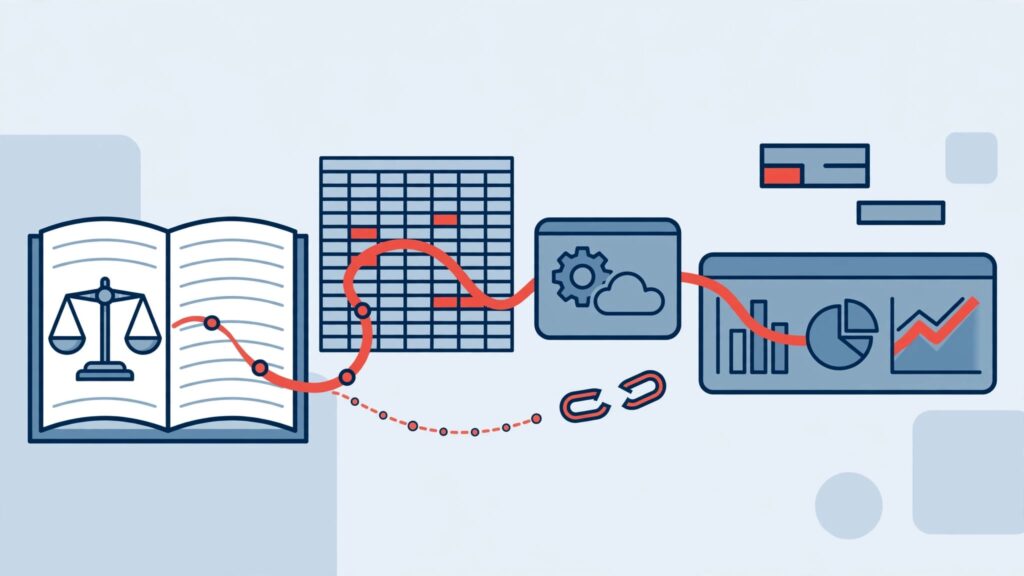
Your month-end close can balance while the data underneath it remains unreliable. Financial data integrity becomes a leadership issue when missing records, broken integrations, or uncontrolled spreadsheets undermine reporting accuracy. That makes reported numbers harder for leaders to defend.
You may have capable finance staff and responsive IT support, yet still lack clear ownership across the reporting process. Start by tracing the numbers that matter most, then identify where technology can change, lose, or misclassify them.
Key Takeaways
- Financial data integrity depends on complete, traceable records throughout the reporting process.
- A balanced ledger and a secure system don’t prove that source data is reliable.
- Your first review should target high-risk balances, interfaces, and spreadsheets.
- Finance owns accounting judgments. Technology leadership owns the reliability of systems supporting those judgments.
- Board-ready reporting should show exposure, ownership, remediation, and decisions required.
What Financial Data Integrity Means for Leadership
Financial data integrity means your records remain complete, accurate, consistent, and traceable as they move through systems and reporting processes.
You need confidence in both the number and its history.
Integrity, quality, and security answer different questions
Data quality asks whether information is fit for its intended use. Whether it’s useful depends on the decision being made, so data quality also requires the right level of detail. Data security addresses unauthorized access, disclosure, or alteration. Integrity addresses whether records remain trustworthy through their lifecycle.
In relational databases, integrity includes several safeguards. Entity integrity keeps records uniquely identifiable, while referential integrity keeps links between records valid. Domain integrity limits values to accepted formats or ranges.
Logical integrity keeps data and calculations coherent. Physical integrity protects stored records from corruption or loss.
These concerns overlap, but one doesn’t establish the others.
You can restrict access to a spreadsheet that contains duplicate invoices. A system may also use domain integrity to reject an invalid date, yet produce a clean-looking report from an incomplete extract. Neither gives you reporting leaders can trust.
Trust requires a visible chain of evidence
For a reported balance, you should be able to identify the source records, transformations, accounting rules, and approvals.
That chain matters when an auditor questions a balance or a buyer challenges earnings.
A single source of truth requires agreed definitions and controlled reporting paths. Naming a platform doesn’t resolve disagreements about what its figures mean.
How Unreliable Data Reaches Financial Statements
Technology risk often sits between systems. A transaction can be valid at its source and still reach finance incorrectly.
Interfaces can lose completeness or timing
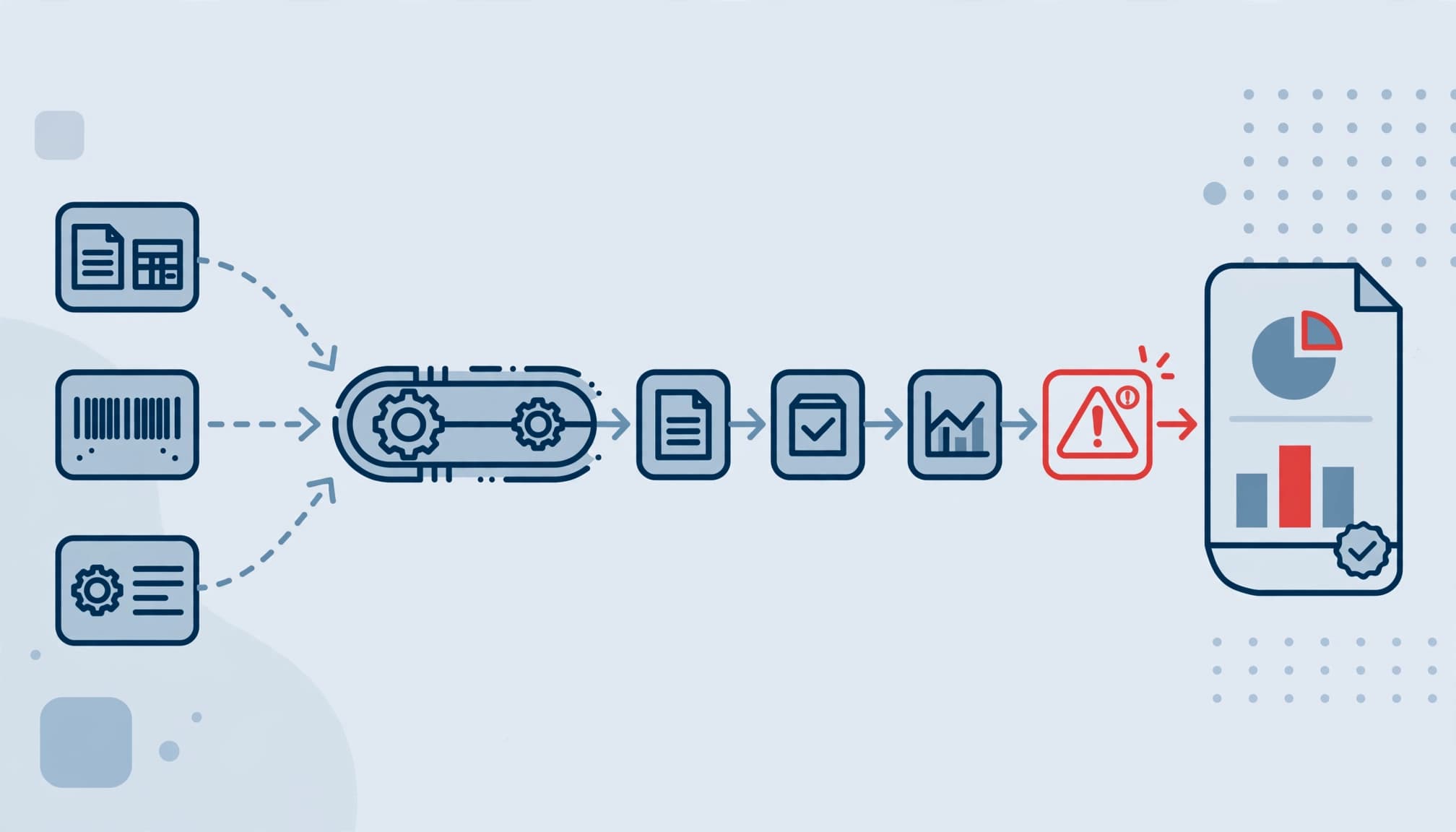
Billing, payroll, inventory, and accounting platforms are connected financial systems, often through interfaces, exports, or manual uploads. Data validation at the interface or upload stage can catch invalid dates or currencies, which are domain integrity failures.
Failed transfers, duplicate retries, and incorrect date filters can keep earned billings from reaching the ledger, creating revenue leakage. A rule or mapping that incorrectly transforms a valid source transaction weakens logical integrity.
Revenue completeness and cutoff deserve particular attention. An invoice date, service period, and posting date answer different questions about the accounting period.
You also need to separate sales bookings, billings, cash receipts, and recognized revenue. A CRM total shouldn’t become an accounting number without documented rules and reconciliation.
Spreadsheets can bypass established controls
A workbook may determine allocations, consolidation adjustments, or inventory valuation outside the main financial system.
Broken formulas, hidden rows, overwritten inputs, and outdated account mappings can survive review when reviewers focus on the final total. These mistakes may stem from human error and weaken data quality.
Shadow IT adds another problem: leadership may not know which unofficial files influence reporting. Your systems inventory should include these workbooks, their owners, source files, and approval paths.
What Weak Data Can Cost Your Business
The immediate cost is often rework. Your finance team spends close week rebuilding extracts, explaining differences, and chasing approvals.
The larger exposure appears when unreliable records affect revenue, expenses, asset values, or liabilities. Incomplete billing or transaction records can cause revenue leakage, and weak data can complicate financial management decisions. You may face reporting corrections, audit delays, covenant concerns, or harder questions during acquisition due diligence.
A data security incident, including data breaches, is distinct from a books-and-records accuracy failure, though either can raise regulatory compliance concerns. The SEC announced that L3 Technologies agreed to a settlement that included a $1.6 million penalty for failures to maintain accurate books and records.
That case doesn’t establish a technology cause. It does show why reliable records deserve executive attention.
Your priority is to understand which data failures could change a reported balance or disclosure, rather than treating every defect as equally urgent.
Run a Focused Financial Data Integrity Review
You don’t need to begin with an enterprise-wide replacement project. Start with a bounded review of the reporting paths carrying the greatest financial exposure.
Choose the scope with your CFO or controller. Include revenue, cash, inventory, or another balance where complexity and weak evidence create concern.

Map the records and decisions
Document the source system, each transfer, intermediate workbook, ledger entry, and final report. Record who owns every handoff.
Ask where data is filtered, combined, translated, or manually changed. Capture report parameters and account-mapping rules. Weak data quality or a failed transfer can create revenue leakage.
Include vendors that operate interfaces or hold essential records. Vendor management should address access to logs, export availability, change notification, and support during close.
A practical data governance framework for leaders can help formalize ownership and definitions. Keep the initial scope tied to specific financial decisions.
Test transactions in both directions
Trace selected source transactions forward into the ledger and statements. Then trace selected reported amounts backward to supporting records.
Use a risk-based sample. Include the accounting period under review, period-end activity, reversals, manual adjustments, and known exceptions. Sampling provides evidence, not proof that every record is correct.
Use data validation to check required fields and accepted values. Apply data reconciliation to compare record counts and amounts across transfers. Investigate missing identifiers, duplicates, rejected batches, and unexplained timing differences.
Matching net totals can hide offsetting errors. Compare record counts and investigate exceptions as well as amounts.
Preserve the extracts, parameters, exception investigations, and reviewer sign-offs as audit trails. These records help another person repeat the work and strengthen audit readiness.
Strengthen Controls Before Adding Automation
PCAOB’s standard on internal control over financial reporting describes reasonable assurance about reporting reliability. Controls reduce risk; they don’t guarantee that errors cannot occur.
Use internal controls across financial systems to prevent, detect, and remediate errors. Start with access, change approval, reconciliation, and exception handling.
Limit permissions to business need to support data security. Separate preparation and approval where practical. Review privileged accounts and remove access when staff or vendors leave.
Control changes to interfaces, report logic, and account mappings to protect logical integrity. Review close-period changes and retain evidence of what changed, who approved it, and how it was tested for each accounting period.
For spreadsheets, protect formulas, distinguish inputs, control versions, and document review. Separating preparation and approval can reduce human error. Prioritize files that affect external reporting rather than applying equal effort everywhere.
If SOX applies to your organization, risk-based IT control readiness helps connect system controls to financial reporting.
Finance work involving artificial intelligence needs the same discipline. Compare outputs with approved source records and retain human review for accounting decisions. Your AI governance should define approved tools, permitted data, and authorization boundaries.
Also test recovery. Restoring a database isn’t enough: physical integrity depends on usable restored records and supporting files, along with available interfaces and mappings.
Close the Technology Leadership Gap
Cross-functional control failures need executive ownership. A vendor can repair an interface, but management must decide who monitors it and what happens when it fails.
Keep accounting accountability with finance
Your CFO or controller owns accounting policies, reporting judgments, and the assessment of financial significance.
Business teams own the accuracy of transactions they initiate. Technology teams own system operation, controlled changes, and reliable data movement.
Create a data governance map for decision rights, definitions, ownership, access, and escalation. This helps resolve conflicting definitions across data silos and prevents teams from assuming another group owns the risk.
You need one accountable owner for each issue, even when several teams contribute.
Give technology leadership an explicit mandate
A fractional CTO can coordinate systems, vendors, technical debt, and remediation when you lack senior ownership. An interim CTO may fit a leadership transition requiring concentrated attention.
Fractional CTO services should connect the work to reporting reliability and business priorities. Where access or cyber exposure is central, fractional CISO support can strengthen security oversight.
CTO Input helps management teams connect these responsibilities into a clearer operating picture. The role supports financial management through reliable systems and timely decisions, without taking over accounting judgments.
Give the Board Evidence It Can Use
Your board needs to understand what could affect reporting, how management is responding, and where oversight or investment is required.
A board-ready risk summary should identify the affected balance or process, unresolved exceptions, accountable owner, deadline, and required decision. Separate confirmed errors from possible exposure.
Useful measures include reconciliation exceptions, unresolved billing or interface failures, overdue access reviews, and repeated manual adjustments. These issues can signal possible revenue leakage and affect forecast accuracy, so track them over successive closes.
Keep a small evidence pack containing the systems map, control register, reconciliations, access reviews, recovery tests, and open actions.
COSO’s internal control guidance supports monitoring the effectiveness of internal controls over time. Documented checks need evidence they continue to work, including tests of logical integrity in mappings, transformations, or reporting rules.
Use technology risk reporting in business terms to connect remediation with consequences. Your technology roadmap should distinguish urgent control repairs from longer-term consolidation, with technology ROI assessed against reduced rework, stronger reporting, and operating continuity.
Frequently Asked Questions
Does every data problem put financial statements at risk?
No. Significance depends on the affected accounts, transaction volume, timing, and compensating controls. Your finance leader should assess potential reporting impact with audit or accounting support when needed. Keep operational defects visible without presenting every issue as a potential material misstatement.
Should you replace legacy systems immediately?
Replacement should follow evidence. Reliable interfaces, controlled spreadsheets, and repeatable reconciliations may reduce exposure while you assess options. Build a 90-day technology plan around the highest-risk gaps first. Approve larger investments when the existing environment cannot support required controls or business needs.
Can backups establish financial data integrity?
Backup systems protect availability and recovery. They don’t establish whether captured records were complete or accurate. Source validation and reconciliation assess record quality, while access controls support data security. Recovery tests should also confirm that restored records support the reporting process.
Make Your Next Close Easier to Defend
You gain confidence when critical numbers have traceable evidence and named owners. Start with one high-risk reporting path and resolve the breaks you can demonstrate.
If ownership remains scattered, Get an Executive Technology Clarity Check to identify the leadership decisions and priorities that need attention first.
Your next close should depend less on individual memory and last-minute repairs. It should rest on records your team can explain, controls they can repeat, and decisions you can defend.