
In today’s fast-changing business world, organizations need technology leadership that is both agile and deeply knowledgeable. Many companies struggle with technology confusion, wasted IT investments, and growing cybersecurity threats. These challenges can slow growth and limit innovation.
A fractional cio offers a modern solution, providing on-demand expertise to unlock growth, drive innovation, and secure a competitive edge. This guide gives you a clear, step-by-step roadmap to harness the value of fractional CIO services for your organization’s success.
You will learn about the role of a fractional CIO, the key benefits, how to engage and maximize this partnership, critical success factors, and real-world examples of impact. Keep reading to discover how this approach can transform your business.
To learn more, visit CTO Input to connect with our team. Explore further expert insights on the CTO Input blog.
Understanding the Role of a Fractional CIO
The demand for agile technology leadership is growing as organizations seek to navigate complex digital landscapes. Understanding the role of a fractional cio is crucial for businesses considering this modern approach to executive IT leadership.
Defining the Fractional CIO Model
A fractional cio is a seasoned executive who provides strategic IT leadership to organizations on a part-time or contract basis. Unlike traditional, full-time CIOs, fractional leaders bring flexibility and scalability, allowing businesses to access high-level expertise without a long-term commitment.
This model is ideal for companies that need executive guidance but may not require or cannot justify a full-time CIO. Common misconceptions include the belief that fractional roles are less committed or only suitable for short-term needs. In reality, fractional CIOs often serve as ongoing partners, aligning IT with business goals.
To learn more about how this model operates in practice, see the Fractional technology leadership model.
Core Responsibilities and Deliverables
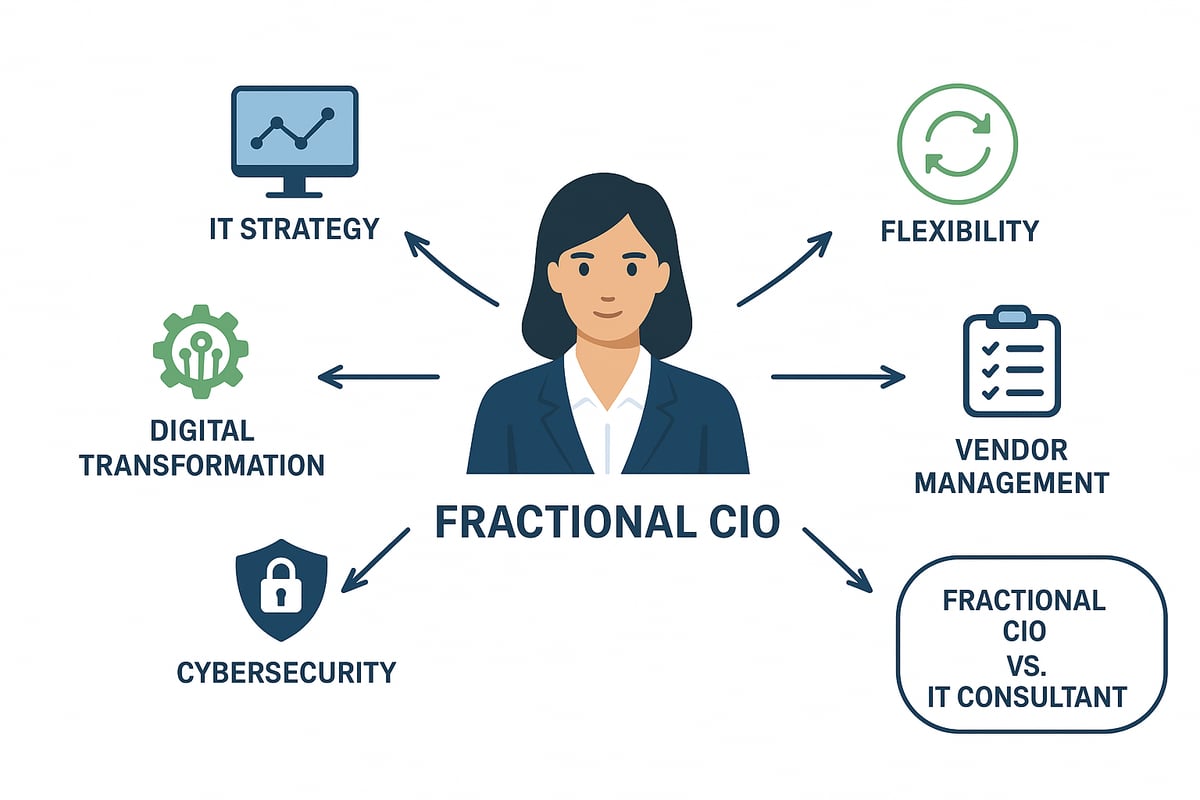
The fractional cio takes on a comprehensive set of responsibilities, mirroring those of a full-time executive. Core duties typically include:
- Developing and executing IT strategy aligned with business objectives.
- Leading digital transformation projects to modernize systems and processes.
- Overseeing cybersecurity policies and risk management.
- Managing technology vendors and contract negotiations.
- Delivering executive-level reporting and board presentations.
For example, in a mid-sized healthcare company, a fractional cio might streamline digital patient records while ensuring HIPAA compliance. In financial services, they could lead secure cloud migrations to meet regulatory requirements.
When to Consider a Fractional CIO
Organizations should consider engaging a fractional cio during periods of rapid growth, digital transformation, or when facing new regulatory demands. This approach is also valuable when there is a gap in in-house IT leadership.
Recent industry surveys reveal that 65% of mid-sized firms lack dedicated technology leadership, leaving them vulnerable to inefficiencies and security risks. Real-world triggers include mergers, acquisitions, or a sudden need to scale operations quickly.
Recognizing these scenarios early helps ensure the right leadership is in place to guide technology strategy and execution.
Key Differences: Fractional CIO vs. IT Consultant
It is essential to distinguish between a fractional cio and a traditional IT consultant. While both provide expertise, their roles and impact differ significantly.
| Aspect | Fractional CIO | IT Consultant |
|---|---|---|
| Strategic Involvement | Deep, ongoing | Project-specific |
| Leadership | Executive, continuous | Advisory, limited |
| Accountability | Long-term partnership | Short-term engagement |
A fractional cio becomes an integral part of the executive team, providing sustained leadership and accountability, compared to the more transactional, project-based nature of IT consulting.
To learn more about how a fractional CIO can transform your organization, visit https://www.ctoinput.com to connect with a member of the CTO Input team.
Spend a few minutes exploring the rest of the articles on the CTO Input blog at https://blog.ctoinput.com
The Business Case for Fractional CIOs
The business landscape today demands agile technology leadership, but hiring a full-time executive is not always feasible. Organizations turn to the fractional cio model for access to C-suite expertise without the long-term financial burden.
Fractional cios offer cost-effective leadership, driving technology initiatives while controlling expenses. According to industry benchmarks, organizations can reduce technology operating costs by up to 30% by leveraging a fractional cio. For a deeper dive into these savings, explore technology cost reduction strategies and discover how this approach balances budget with executive impact.
Cost Efficiency and Executive-Level Impact
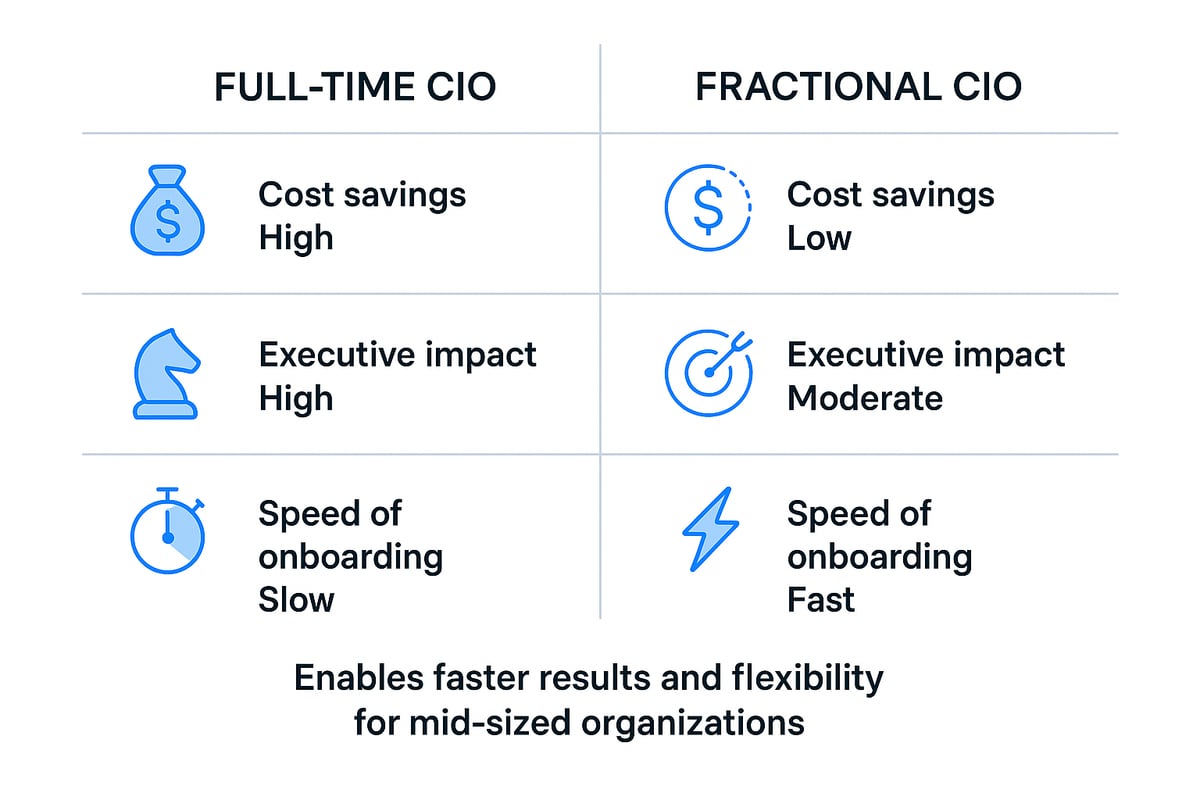
A fractional cio brings executive-level leadership at a fraction of the cost of a traditional hire. This model eliminates salary overhead, benefit expenses, and long-term commitments.
Organizations gain access to experienced technology leaders who can make critical decisions quickly. The result is improved performance, smarter IT investments, and measurable cost reductions.
Strategic Technology Alignment
Aligning IT initiatives with business goals is critical for growth. A fractional cio ensures that technology strategies directly support organizational objectives, driving operational efficiency and innovation.
For example, mid-sized companies have reported significant improvements in process automation and data-driven decision-making after engaging a fractional cio. This alignment often leads to measurable ROI and a stronger competitive edge.
Risk Management and Cybersecurity
Modern organizations face increasing cybersecurity threats and regulatory pressures. A fractional cio provides proactive risk identification, compliance oversight, and leadership during incidents.
Sectors such as healthcare and finance benefit greatly from this expertise, meeting compliance requirements while minimizing vulnerabilities.
Enabling Digital Transformation
Digital transformation is a priority for many businesses, but execution can be challenging. A fractional cio leads modernization initiatives, from cloud migration to process automation.
Success stories in retail and manufacturing highlight how this approach accelerates modernization, enhances customer experiences, and unlocks new capabilities.
Flexibility and Speed to Value
A key advantage of the fractional cio model is its flexibility. Organizations can scale leadership up or down as needs change.
Rapid onboarding means immediate impact, allowing companies to see results in months instead of years. Case studies show that businesses achieve strategic milestones much faster with this model.
CTO Input: Your Trusted Partner in Fractional CIO Leadership
CTO Input stands out as a proven provider of fractional cio services for mid-sized organizations. Their business-first strategy ensures measurable results and ongoing executive partnership.
Clients have realized substantial cost reductions, achieved regulatory compliance, and unlocked new revenue streams by partnering with CTO Input. To learn more about how a fractional cio can transform your organization, visit https://www.ctoinput.com to connect with a member of the CTO Input team.
Spend a few minutes exploring more expert insights on the CTO Input blog at https://blog.ctoinput.com.
Step-by-Step Roadmap: Engaging and Maximizing a Fractional CIO
Engaging a fractional cio is a strategic process that requires careful planning and execution. By following a clear roadmap, organizations can unlock the full value of this flexible executive model. Here is a practical, step-by-step guide for successfully leveraging a fractional cio to drive technology leadership and business growth.
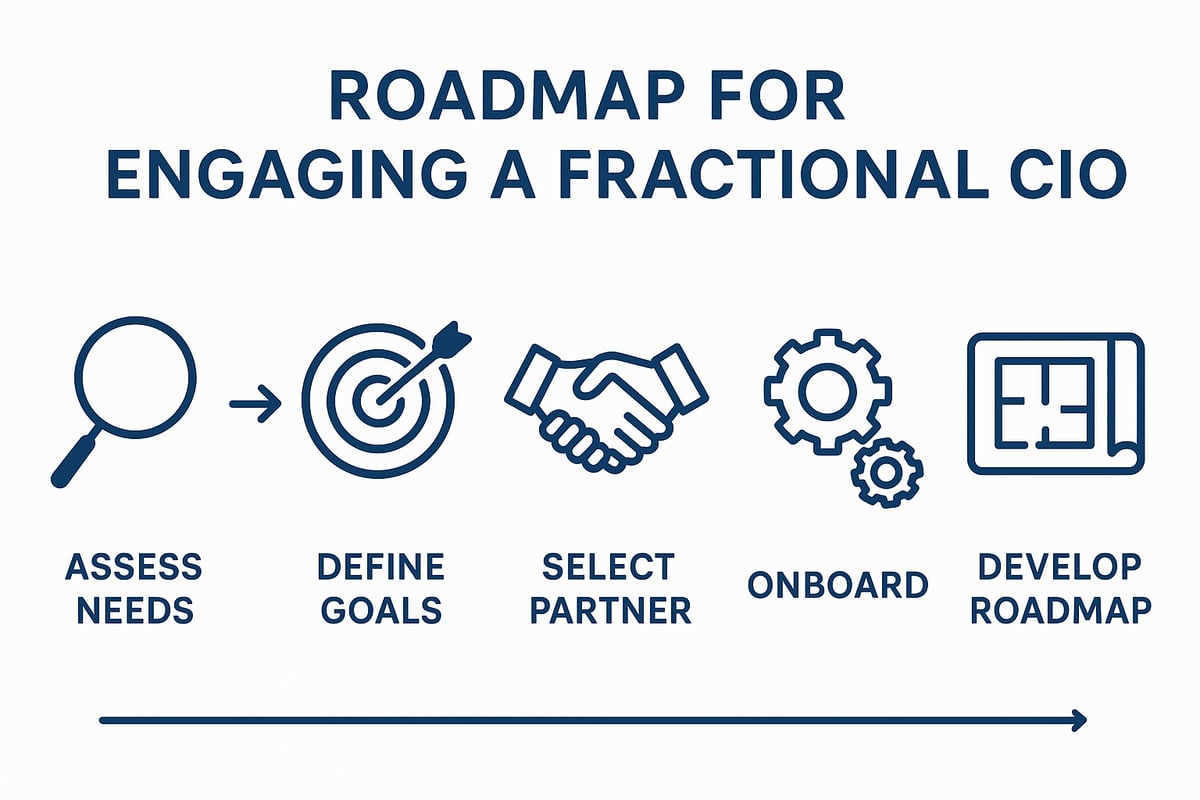
Step 1: Assess Organizational Needs and Readiness
Begin by evaluating your current technology landscape and leadership structure. Identify gaps in IT leadership, technology alignment, and how these impact your business strategy. A fractional cio can only deliver value if there is a clear understanding of existing pain points and opportunities.
Conduct stakeholder interviews across departments to gather diverse perspectives. Review recent technology audits, incident reports, and project outcomes. Document where decision-making bottlenecks or misalignments have occurred. This foundational assessment ensures that the engagement with a fractional cio addresses the most critical business needs.
Step 2: Define Goals and Success Metrics
Setting clear, measurable objectives is essential for a successful fractional cio engagement. Define what success looks like for your organization, whether it is cost reduction, improved digital capabilities, or enhanced risk management.
Use goal-setting templates and key performance indicators (KPIs) to track progress. The table below provides examples:
| Objective | KPI Example |
|---|---|
| Reduce IT costs | 20% lower annual spend |
| Improve security posture | Zero critical incidents |
| Enable digital adoption | 80% cloud migration complete |
Align these goals with business priorities. A fractional cio will use these metrics as benchmarks to measure and communicate progress, ensuring everyone is aligned from the start.
Step 3: Select the Right Fractional CIO Partner
Finding the right fractional cio partner is critical for long-term success. Look for candidates who demonstrate:
- Relevant industry experience
- Proven track record in similar organizations
- Strong cultural fit with your team
- Excellent references and testimonials
Vetting should include structured interviews, scenario-based questions, and reference checks. Ask how the candidate has navigated similar challenges before. A strong fractional cio will provide both strategic leadership and hands-on execution skills, adapting to your unique business environment.
Step 4: Onboard and Integrate the Fractional CIO
Once selected, a smooth onboarding process sets the stage for impact. Provide the fractional cio with access to key systems, teams, and documentation. Arrange introductions to executive sponsors and primary stakeholders.
Establish regular communication channels, such as weekly check-ins or executive briefings. Encourage open dialogue and feedback from all levels. Clarify roles, responsibilities, and decision-making authority. Effective onboarding helps the fractional cio quickly understand your culture, priorities, and processes, accelerating their ability to drive results.
Step 5: Develop and Execute the Technology Roadmap
Collaborate closely with your fractional cio to build a strategic technology roadmap. Prioritize initiatives that align with business goals, such as cloud migration, cybersecurity enhancements, or process automation. Establish timelines and assign accountability for key milestones.
A well-designed roadmap enables swift progress and measurable outcomes. For organizations pursuing modernization, leveraging a Fractional CIO in Digital Transformation can accelerate innovation and ensure technology investments deliver real business value.
Review progress regularly, adjust priorities as needed, and celebrate quick wins. This collaborative approach ensures the fractional cio remains focused on delivering value throughout the engagement.
To learn more about how a fractional cio can transform your organization, visit https://www.ctoinput.com to connect with a member of the CTO Input team.
Spend a few minutes exploring the rest of the articles on the CTO Input blog at https://blog.ctoinput.com
Key Success Factors for Fractional CIO Engagements
Achieving maximum value from a fractional cio engagement requires more than just technical expertise. Success is built on the foundation of executive alignment, clear communication, adaptability, and a commitment to measurable outcomes. Understanding these key factors helps organizations realize the full potential of fractional cio leadership.
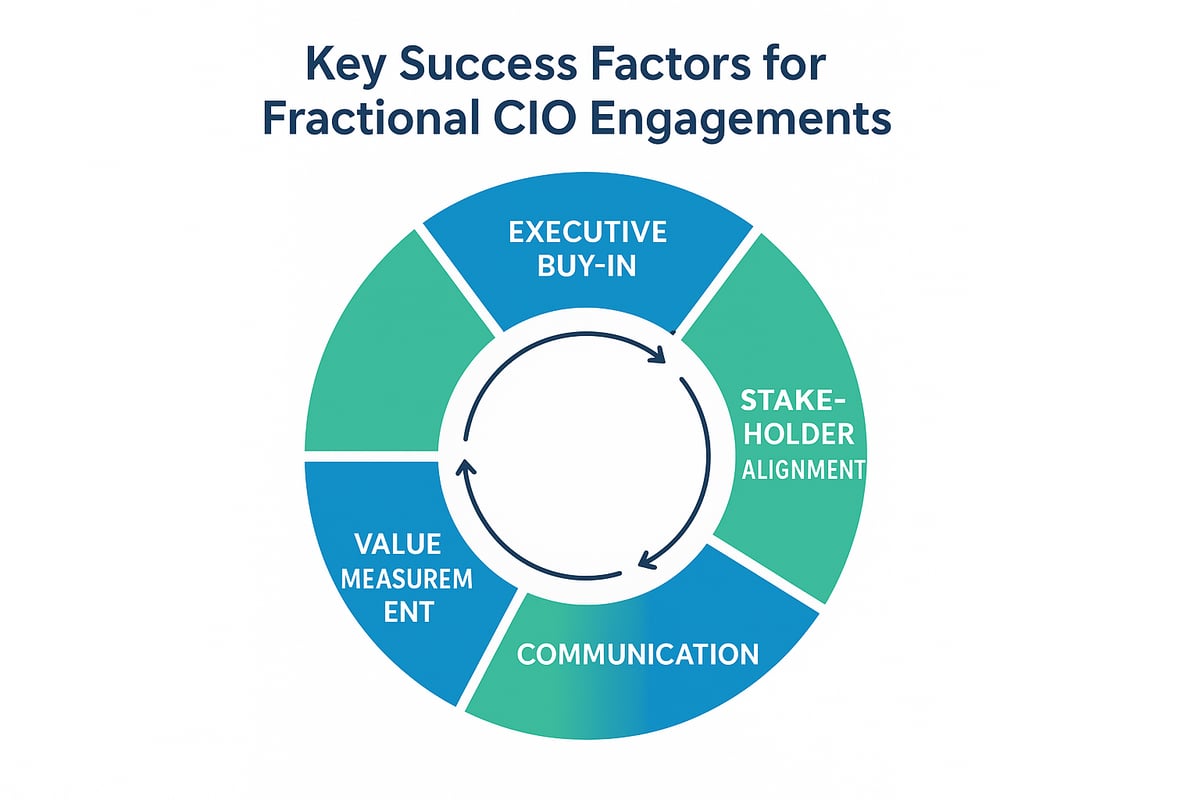
Executive Buy-In and Stakeholder Alignment
Securing executive buy-in is the cornerstone of any successful fractional cio initiative. Without visible support from the C-suite, even the best technology strategies can stall. Leaders must actively champion the engagement, allocate resources, and communicate the value of the fractional cio to the wider organization.
Stakeholder alignment is equally vital. Departments often have competing priorities or varying levels of digital maturity. Facilitating cross-departmental collaboration ensures that IT initiatives are aligned with business needs. Common roadblocks include resistance to change, unclear roles, and misaligned incentives. Overcoming these challenges requires transparent communication and joint planning sessions.
For a deeper exploration of how executive involvement shapes outcomes, see the Role and Benefits of Fractional CIOs.
Communication and Transparency
Regular updates and open communication channels are critical for maintaining momentum. The fractional cio should provide clear executive reporting, share progress against milestones, and encourage honest feedback.
Transparent communication builds trust, reduces misunderstandings, and enables quick resolution of issues. Establishing structured reporting routines, such as weekly briefings or dashboard reviews, keeps everyone informed and engaged.
Agility and Adaptability
In today’s fast-changing business environment, agility is a must. A fractional cio brings the flexibility to pivot strategies as market conditions or internal priorities evolve. This adaptability ensures technology investments remain relevant and effective.
When disruptions or new opportunities arise, the fractional cio can quickly reassess plans, adjust roadmaps, and guide the organization through necessary changes. This responsiveness is essential for sustained competitive advantage.
Measuring and Communicating Value
Proving the impact of a fractional cio engagement means tracking results against defined objectives. Organizations should establish meaningful KPIs and review them regularly. Progress reporting should highlight both quick wins and long-term achievements.
Sample KPIs for fractional cio engagements:
| KPI | Description | Frequency |
|---|---|---|
| Cost Reduction | IT spend vs. baseline | Quarterly |
| Project Delivery | On-time, on-budget completion | Monthly |
| Risk Mitigation | Security incidents, compliance | Quarterly |
| User Satisfaction | Stakeholder survey results | Bi-annual |
Celebrating milestones and openly sharing results reinforces the value of the fractional cio and maintains stakeholder engagement.
Continuous Improvement and Knowledge Transfer
Long-term success depends on continuous improvement and effective knowledge transfer. The fractional cio should document processes, share best practices, and mentor internal teams.
Ongoing learning and upskilling help the organization retain benefits after the engagement. Investing in documentation and training ensures that progress is sustainable, and the organization can build on the foundation established by the fractional cio.
To learn more about how a fractional cio can transform your organization, visit https://www.ctoinput.com to connect with a member of the CTO Input team.
Spend a few minutes exploring more expert insights on the CTO Input blog at https://blog.ctoinput.com
Real-World Examples and Case Studies
Organizations across industries are increasingly turning to a fractional CIO to drive meaningful change. These real-world examples demonstrate how a fractional CIO delivers measurable impact, unlocking growth, compliance, and new opportunities.
Digital Transformation in Retail
A national retail chain faced outdated legacy systems that limited visibility and slowed operations. Engaging a fractional CIO, the company launched a digital transformation initiative. The roadmap prioritized cloud migration, process automation, and real-time analytics. Within six months, the retailer saw a 28 percent increase in bookings and a 15 percent rise in average booking value. The fractional CIO’s leadership ensured seamless integration with minimal disruption. This approach empowered the retailer to respond swiftly to market changes and deliver a superior customer experience.
Achieving Compliance and Reducing Risk
A financial services firm operating in a highly regulated sector struggled to keep pace with evolving compliance requirements. A fractional CIO stepped in to provide executive oversight, guiding the organization through a structured PCI DSS compliance program. The result was a dramatic reduction in risk exposure—over $175 million in potential liabilities were mitigated. The fractional CIO also implemented proactive risk management protocols, ensuring continuous monitoring and rapid incident response. This case echoes findings from Cost Savings with Fractional CIOs, which highlight both financial and regulatory benefits.
Unlocking New Revenue Streams
A mid-sized manufacturer sought to diversify its revenue sources but lacked a clear technology strategy. The fractional CIO conducted a technology audit and identified opportunities for new digital products and data-driven services. By leading the implementation of e-commerce platforms and IoT-enabled solutions, the company generated between $5 million and $15 million in new annual revenue. The fractional CIO’s ongoing partnership enabled continuous innovation and positioned the business as an industry leader. This example underscores the strategic value a fractional CIO brings to growth-focused organizations.
Lessons Learned and Best Practices
Each example reveals several best practices for engaging a fractional CIO. Early executive buy-in, cross-functional collaboration, and clear KPIs are critical for success. Regular progress reviews and transparent communication foster trust and accountability. Organizations that empower a fractional CIO to act as a true partner consistently achieve stronger results, from cost savings to innovation. These lessons highlight why the fractional CIO model is gaining traction with companies seeking agility and measurable outcomes.
To learn more about how a fractional CIO can transform your organization, visit https://www.ctoinput.com to connect with a member of the CTO Input team.
Spend a few minutes exploring the rest of the articles on the CTO Input blog at https://blog.ctoinput.com
Now that you’ve seen how a fractional CIO can help you turn technology challenges into real business results, the next step is to see where your organization stands today. Understanding your current technology health is the foundation for building a roadmap that supports growth, innovation, and security. If you’re ready to pinpoint hidden risks and opportunities, I encourage you to Get Your Technology Health Check. This simple step will give you a clearer picture of how your systems align with your goals—and set you on the right path for 2026 and beyond.